Read more
Home


Find out more at AXA IM’s Invested In Tomorrow site
LinkedIn
@AXAIM_UK
© CENTAUR COMMUNICATIONS LTD 2018. ALL RIGHTS RESERVED
Sponsored by


Stability in a sea of uncertainty
by Cherry
Reynard

The 60:40
model – time
for a review?
by Cherry
Reynard
Fixed income:
A wider view
by Emma Simon
go to
AXA IM Fund data profile

scroll


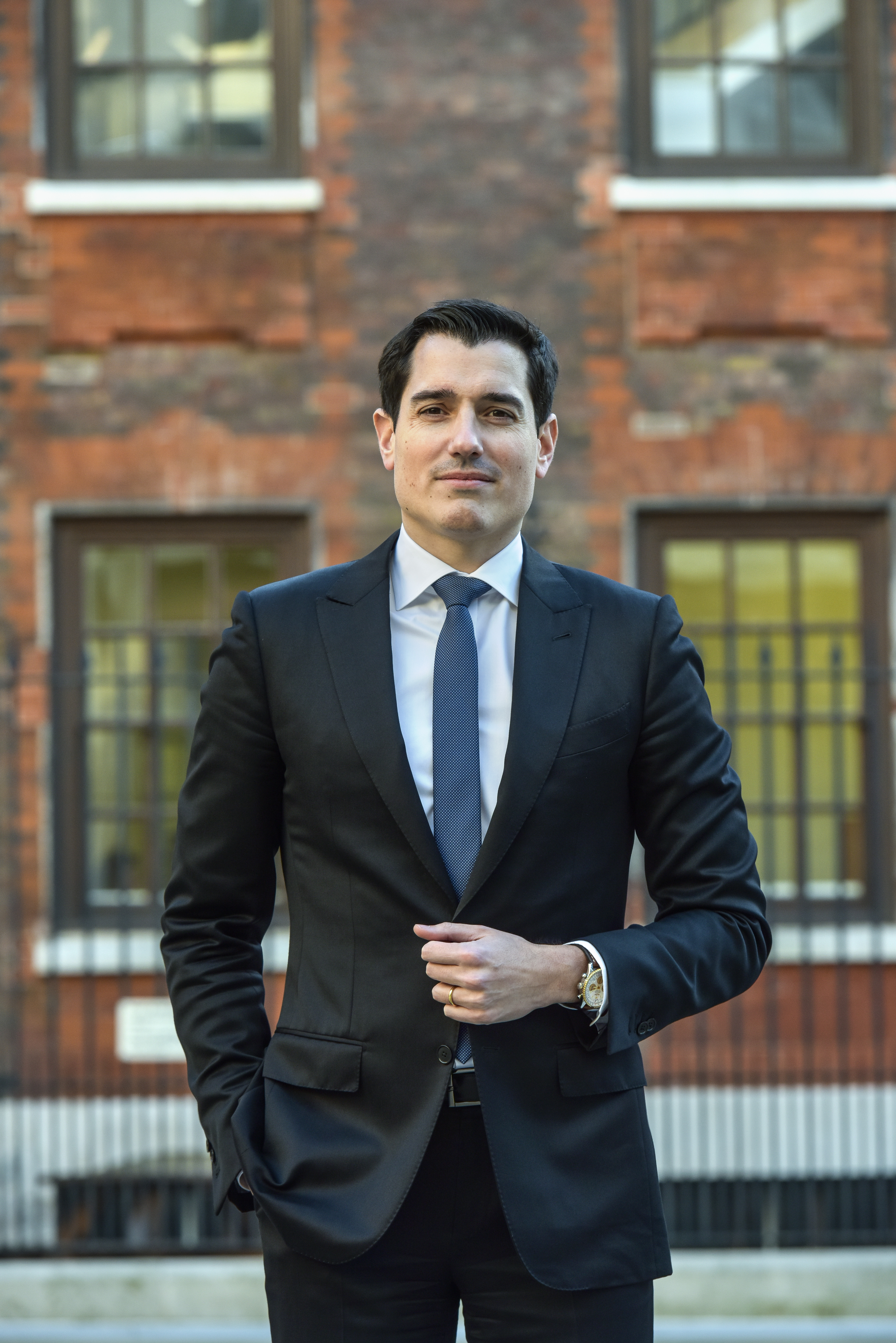
Nicolas Trindade, CFA | Senior Portfolio Manager
• Nicolas is a Senior Portfolio Manager within the London-based Active Credit team. He is responsible for managing both global and sterling credit portfolios amounting to approximately £2bn as at 28 February 2018. He is the lead portfolio manager of the AXA Sterling Credit Short Duration Bond Fund, AXA Global Short Duration Bond Fund and AXA WF Global Credit Bonds. In addition to his portfolio management responsibilities, Nicolas heads the ‘Sterling Credit Alpha Group’ during the Fixed Income department’s quarterly Forecasting Forum.
• Nicolas joined AXA IM in 2006. Prior to his appointment within the investment team, he was a Fixed Income Product Specialist responsible for the development of the UK, US and high-yield product ranges.
• Nicolas holds two Master’s degrees, one in Diplomacy and International Strategy from the London School of Economics and one in IT Engineering from Telecom Sud Paris. He is also a CFA Charterholder.

“There is always a
need for income and
Fixed Income is still one of the best asset classes to deliver it. Performance has been strong over recent years and
that tends to attract investors.”
“The flow of money created by quantitative easing has been artificially suppressing volatility, but this is coming to an end.”


asdasdasd
CAUSE FOR EXCITEMENT
+


Trindade has been with AXA IM since 2006 and has always specialised in Fixed Income investments, starting with a sterling focus before looking globally. With total assets of approximately £2bn under management**, the Senior Portfolio Manager is excited to explore new areas within the market. “I have been doing investment grade and high-yield bonds for a while, so it’s really exciting to add other areas such as emerging markets into my remit, and I think it benefits my other funds too,” he says.
Low costs help the Fund to achieve its goals – the ongoing charge is around 0.4 per cent‡, while being short duration means Trindade can be active in his asset allocation without necessarily incurring trading costs; instead of having to sell bonds in order to change the portfolio, he can wait for them to hit redemption. Around 20 per cent of his holdings will mature each year, which means the Fund can move with the market rather than get stuck in illiquid, poor-value assets.†
That’s a particularly useful feature at a time when volatility is widely expected to remain elevated. “Central banks are withdrawing liquidity from the market – the US Federal Reserve [Fed] is hiking rates and tapering its balance sheet reinvestments and the European Central Bank has reduced monthly purchases to €30bn***. The flow of money created by quantitative easing has been artificially suppressing volatility, but this is coming to an end,” Trindade explains.
There is also the worry that inflation will rise this year; if it creeps up faster than central banks expected, they could hike rates more quickly, which might shock markets. Trindade believes inflation will be the key indicator for investors to watch this year; it will be paramount in determining interest rates, yields and credit spread expectations.
Currently the average duration within the portfolio is around just 2 years. When you consider his US investment grade holdings alone, that falls to an even lower average of 1.5 years. Trindade is concerned about the Fed’s rate hikes, four of which are expected this year. “I still want to own US investment grade assets because they are attractive, but I want to be even shorter duration on them,” he says.
With about 20 per cent of the portfolio due to mature within 12 months, it seems possible Trindade could run out of ideas about where to invest. It’s not something that concerns him, though; if there are no opportunities he wishes to take advantage of, he can hold up to 10 per cent of the portfolio in cash. Not only does that provide a helpful liquidity buffer, it means he has capital ready to put to work when the occasion arises.
Trindade thinks diversification is crucial to managing risk in the year ahead, and he is picky about the issuers he chooses within each area of the credit spectrum. He doesn’t like core government bonds at the moment, has a bias towards financials within investment grade, and particularly likes Latin America within emerging markets.
Returns this year may well be lower after markets’ stellar 2017 but, while some investors may be tempted to take on more risk to offset that, Trindade thinks targeting a specific yield and raising risk to meet it is “the worst thing a manager can do” and that now is the time for caution. He says, “It’s like trying to pick up the last few pennies in front of the upcoming train; it’s not really worth it for the risk you are taking.”
Despite that, the Fund is well placed for strong performance this year. The steady stream of maturities in his portfolio means it should fare well in an environment of rising yields and widening credit spreads. Is there any downside to a short duration strategy? “One downside to this strategy,” says Trindade “is if you’re in a very strong market, you will benefit less; that’s the time we will lag. When things get ugly, that’s when you appreciate an exposure to short duration.”‡
Fixed Income investors are bracing themselves for a bumpy ride in 2018. Volatility has already hit its highest point in over two years, central banks are set to continue tightening monetary policy and withdrawing liquidity, and inflation could make a long-awaited comeback. From Trump’s presidency to ongoing Brexit negotiations, there are serious political risks across the globe that also have potential to shock the market.
But Nicolas Trindade, Fund Manager of the AXA Global Short Duration Bond Fund, has reason to remain optimistic. Since being launched in May 2017, his fund has already surpassed £150m of assets, a milestone Trindade did not expect to hit so quickly. Bonds certainly seem to be back in favour among investors; according to Investment Association figures, a grand total of £14.26bn* was poured into Fixed Income funds
in 2017.
At a time when ‘cash doesn’t give you anything’, Trindade is not surprised by this.
“There is always a need for income and Fixed Income is still one of the best asset classes to deliver it. Performance has been strong over recent years and that tends to attract investors,” he says.
And he believes short duration has already started to come into its own this year, following the sharp rise in government bond yields.
The AXA Global Short Duration Bond Fund invests in assets around the world and across the full Fixed Income spectrum including sovereign, investment grade, high yield and emerging markets, but specifically in those assets with a maturity of five years or less. The focus is on capital preservation and liquidity as well as providing an attractive yield while limiting volatility.
Trindade argues that the Fund’s yield, which is currently 2.2 per cent**, is appealing when compared to other areas of the market.
“Getting 2.2 per cent with an average duration of around two years is attractive when you consider that you get just 2.6 per cent in the broad sterling corporate bond market where the duration is 8.5 years. In the case of the latter, you are taking a lot more duration and credit risk,” he explains.
The Fund is a recent addition to AXA IM’s already established short-duration fund range, and capitalises on its wealth of resources. Trindade uses a top-down framework for making decisions about regional and sectoral asset allocation and leverages off local portfolio managers across the globe to get their best ideas from AXA IM’s 10 short-duration funds. He factors these in to the construction of his portfolio, which currently has about 200 holdings**.
If he is taking all of the best ideas from his colleagues, it could be argued his Fund is in danger of cannibalising the rest of the range. But Trindade insists this is not the case; the various funds will appeal to different types of investor. “Some investors enjoy doing the asset allocation for themselves and others would prefer to delegate this task to us,” he says.
There are two main types of investor currently investing in the Fund: those who have been sitting on cash and are now looking to add a bit more risk in order to generate a return, and those who have investments in long-duration assets, high yield and emerging market debt and are looking to de-risk some of their assets but don’t want to move all the way to cash. “So far, we have seen more of the former than the latter,” he adds.
*Investment Association as at 08/02/2018. Net retail sales.
**AXA IM as at 28/02/2018
***Bloomberg.com as at 26/10/2017
†Past performance is not a guide to current or future performance. The value of investments, and the income from them, can fall as well as rise and investors may not get back the amount originally invested.
‡These are internal guidelines which are subject to change without notice. Please refer to the prospectus for the fund’s full investment guidelines and risks.
Click here for full disclaimer
This communication is for professional clients only and must not be relied upon by retail clients
With bonds back in favour among investors, and volatility expected to remain elevated, AXA Investment Managers Senior Portfolio Manager Nicolas Trindade believes this is the year short duration will come into its own
Sponsored by