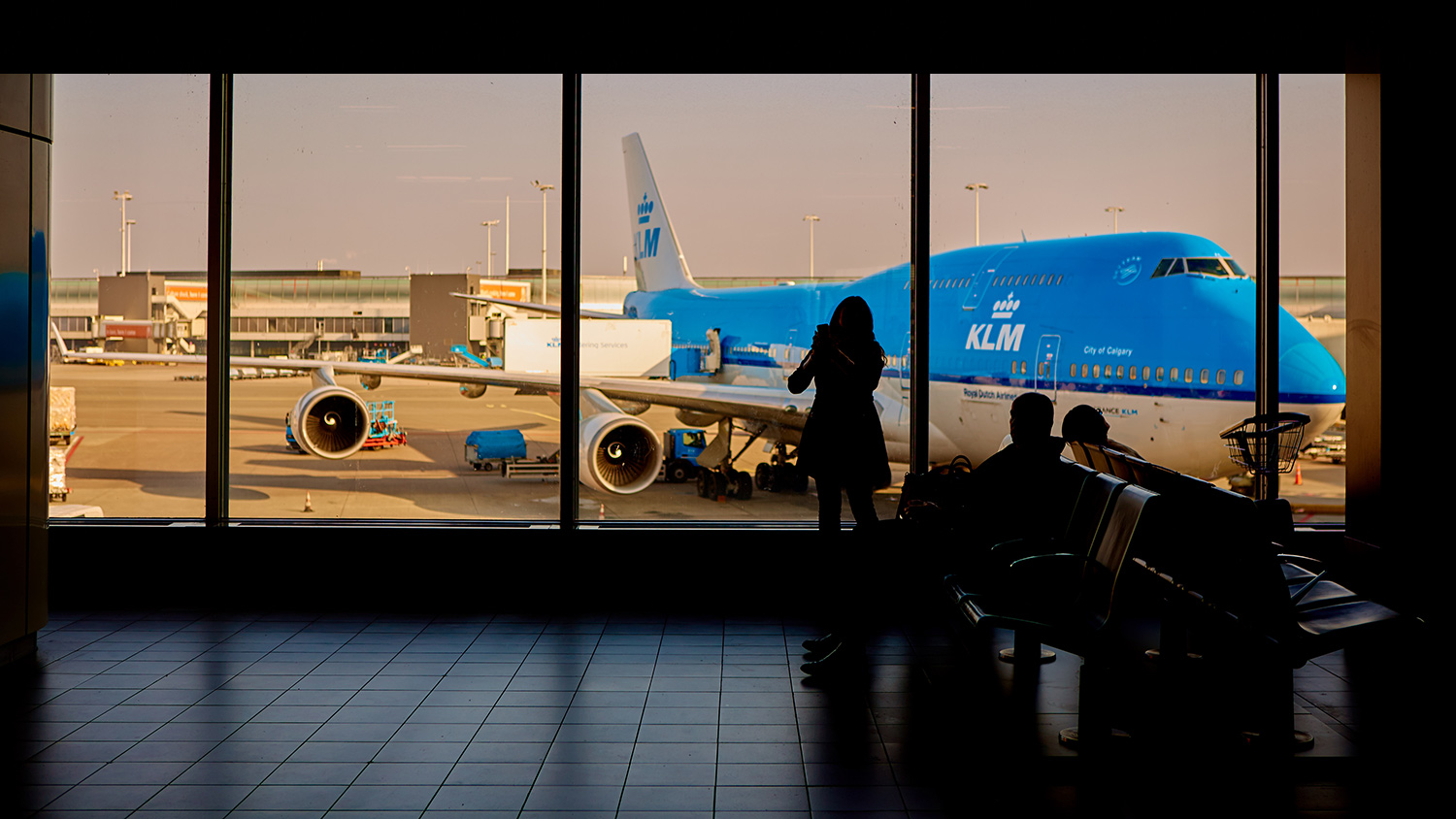
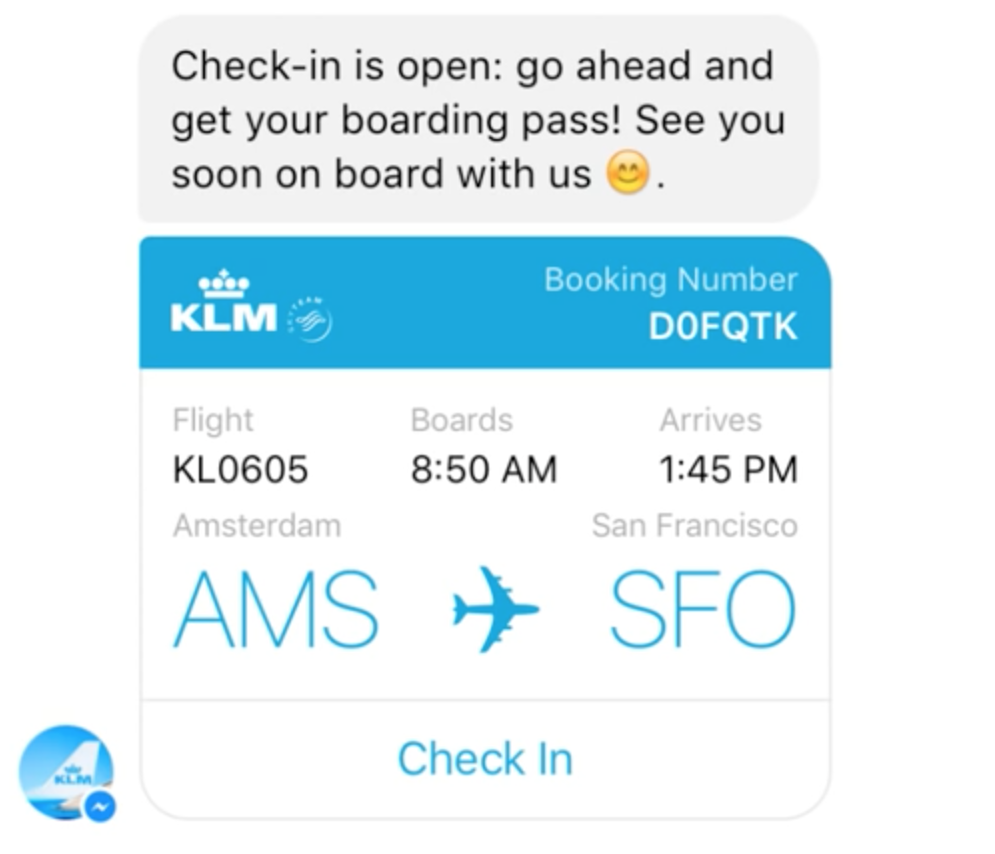
KLM passengers can access their bookings and contact customer services via Messenger


Facebook's Dan Robinson presented the KLM case study at Marketing Week's Supercharged event in May.

click to play talk
click to play interview


Facebook’s group director
Dan Robinson talking at Marketing Week event Supercharged.
Dan Robinson, Facebook
“Consumers want immediacy and this has become the new standard for customer service.”

"The KLM experience reveals the power of using messaging apps in marketing."


"The average Net Promoter Score (NPS) on Messenger is five points higher than KLM’s goal."
Source: Nielsen
80% of adults and 91% of teens use messaging every day
With consumers demanding ever-more immediate communication from brands, Messenger is now one of the customers’ favoured methods for interacting with the Dutch airline.
share

Lorem ipsum text for caption there here
Tips, tools and inspiration for effective campaigns
inspire
in partnership with facebook and Instagram

Great Work is part of Inspire, an ongoing partnership between Marketing Week, Facebook and Instagram to showcase outstanding creative work across both platforms. Facebook and Instagram’s Creative Hub was launched to help the creative communities understand mobile marketing. The online tool allows creatives to experiment with content formats – from Instagram video to Facebook Canvas – and produce mock-ups to share with clients and stakeholders. It also showcases successful campaigns created for mobile. Try out the mock up tool at facebook.com/ads/creativehub and see the inspiration gallery at facebook.com/ads/creativehub/gallery


“Consumers want immediacy and this has become the new standard for customer service,” he says. “There needs to be more of a focus on innovative customer experiences, particularly through social media channels. However, brands must offer content that is relevant and not intrusive, and this is what we have seen from KLM, which can let people know if there are delays to their flight, for example.”
Ultimately, messaging works for brands because their customers expect and want them to respond quickly. Messenger, for instance, ticks three crucial boxes for businesses. It allows existing and potential customers to ask questions about products and services, enables people to actually make a purchase and it provides companies with valuable feedback.
KLM sends customers a survey through Messenger after each conversation asking people if they were satisfied with the service and how likely they are to recommend KLM to a friend on a scale of 1 to 10. The average Net Promoter Score (NPS) on Messenger is five points higher than the brand’s goal when compared to other social channels.
The KLM experience reveals the power of using messaging apps in marketing. Many of these apps began life as a bit of a gimmick but they are becoming a vital communication tool. In fact, more than one billion people worldwide are now using messaging apps.
There are different reasons why consumers do message so much but its popularity is likely to continue because people want to use it for business and pleasure.
Some 80% of adults and 91% of teens use messaging every day, according to Nielsen, because social media messages are instant, direct, personal and often generate an immediate response. Plus, nearly two thirds (63%) of consumers have increased their use of messaging with businesses in the last two years and 53% say they are more likely to do business with companies they can message. Furthermore, 64% would prefer to message a company than call or email them.
When interacting with brands via messaging apps, consumers often feel empowered because much of the stress often experienced when dealing with big companies is removed. It can end the frustration of spending ages waiting to talk to an agent at a contact centre, for example. With a messaging app people can send their question and do something else while they wait for a response.
Robinson is confident that over the next few months more brands will demonstrate through their marketing and advertising that they are using social media to remove pain points in the customer experience.
He says this has to happen because the stakes are high. According to research by global professional services company Accenture, British businesses are losing £200bn a year because people switch brands.
“Improved customer experiences can and will boost retention and sales because it is poor service which usually drives people away from brands,” says Robinson. “Messaging is not a niche area of marketing; this is about attracting and retaining customers. The least brands can do is be where their customers are, use the channels they are using and help them to make the best use of their time.”
Artificial intelligence (AI) is powering the service organisation to support its 300 human customer service staff. The use of AI plays a major role in dealing with the growing volumes without having to add new agents all the time.
When agents receive a question from a customer, they are given a proposed answer through AI (which is trained to answer more than 60,000 questions). The agent decides whether the answer is the right one, makes any necessary adjustments, and replies through the appropriate social media channel. The system learns, based on the agent’s action, and becomes smarter in real time.
There can be challenges to meeting customers’ expectations so it is important the IT and marketing teams work closely together. Senior managers also need to trust members of the customer service team and give them the freedom to handle queries when talking directly to passengers in this way.
Across different messaging formats, KLM now receives about 130,000 messages a week And Facebook Messenger is having a very positive effect.
The results so far have been impressive. There has been a 40% increase in customer interactions since the airline began using Messenger and today 15% of all online boarding passes are now sent via Messenger.
Facebook’s group director Dan Robinson says AI will be at the heart of solving key business challenges because people’s expectations have changed. Every industry is being disrupted and having to adapt to different ways of doing things, while governments and regulators are encouraging more competition so brands must be more innovative.
KLM, part of the Air France-KLM group, was founded in 1919 to serve the Netherlands and is the world’s oldest airline operating under its original name. It knew people couldn’t share sensitive travel information on its Facebook page, so it added the ‘send message’ button allowing people to quickly, seamlessly and privately communicate with its agents. Messenger is now a favoured entry point for customers who want to interact with the brand.
According to its director of social, Martine van der Lee, the initial goal for the airline when it decided to use Messenger was to improve its customer experience. The aim was to make it easier for people to talk to its agents via social media and expand its services.
Customers are now using Messenger 24/7 to ask general questions about the airline’s service or making more personal requests. Some want to check their itinerary, access boarding passes, add a meal to their flight or upgrade their seat. Messenger is also being used to handle complaints more efficiently because personal grumbles are being handled in a more sensitive and speedy way to help an individual customer with specific needs. KLM is also developing the service for social commerce and generating ticket sales.
People concerned about their flights would post questions on KLM’s public wall at an alarming rate because they knew they were likely to get an immediate response.
This experience revealed how using social media can add value to the customer experience and improve customer service. Being able to help passengers during such a crisis prompted KLM to establish its Social Media Hub and it became the first airline to integrate its customer experience and service into Facebook’s Messenger platform.
hen a towering glacier-capped volcano erupted in Iceland in 2010 causing major disruption to air travel, Royal Dutch Airline KLM discovered the power of Facebook as a useful way to keep worried passengers informed.
W

Footage looks as if it was shot on a mobile, resulting in a campaign that feels native to the format and in keeping with the type of videos uploaded by users.
point uplift in brand awareness
3

point uplift in
ad recall
14

Reached
3 million


Lorem ipsum dolor sit amet, consectetur
2/4/15
Lorem ipsum dolor sit amet, consectetur
2/4/15
Lorem ipsum dolor sit amet, consectetur
2/4/15
Lorem ipsum dolor sit amet, consectetur
2/4/15
Lorem ipsum dolor sit amet, consectetur
2/4/15
Lorem ipsum dolor sit amet, consectetur
2/4/15

related content
KLM sees customer service fly with Facebook’s Messenger
21 June 2018 | By Steve Hemsley