

Asset allocation roundtable


By Thanos Papasavvas, CFA Chief investment officer,
ABP Invest, 13 Jan, 2020
Tell us a little bit about your business. How do you go about investing?
Steve Buttercase: The business is formed of three collective, independently-owned businesses within the Verve brand, of which Investment Planning is part. We have assets under advice of around £70 million. We try to keep it bespoke. But the proposition starts from a relatively simplistic process of five in-house portfolios.
Andy Bracken: Timothy James and Partners started back in 1997. We’ve now grown to 89 people and about 20 advisers. We’re managing about £1.5 billion assets. Historically, at least 90% of it was advisory, but we are incorporating quite a lot of discretionary models. It’s about consistent outcomes, flexibility and cost.
Andy Butcher: My business partner Ed Froggatt and I set up a branch of Raymond James two and a half years ago. We manage just shy of £60 million across about 100 clients. 95% of the assets we manage are under discretionary permissions – some model and some bespoke.
Our average cover star firm is 60% active. Are your firms the same?
Andy Bracken: We’ve been horribly wrong for 10 years. We always felt active managers should outperform, but in the last 10 years that hasn’t been true. Maybe I should have closed my eyes and put it in a US tracker 10 years ago. We have added passive solutions to our core fund lists, such as Vanguard and Legal & General (L&G), and we’ve included some exchange-traded funds. But we are at least 90% active.
Andy Butcher: We use passives within our proposition because there are areas where we don’t think a manager can add much alpha. In US bonds, government bonds, treasuries and global bonds – we would buy that. So we are about 20% passives.
Steve Buttercase: It’s getting towards 50:50 now. I guess that is driven partly by Mifid II and the heightened focus on cost. But it is also partly to do with the alpha from various regions. There’s a limited amount of opportunity out there. We like Neil Veitch’s SVM funds, and the Rathbone Global Opportunities fund [managed by Citywire A-rated James Thomson], both of which do well in chaos. We are very long on chaos at the moment, which is what we have coming over the next two or three years.
Andy Butcher: There’s a danger there. If money is all flooding into passives and it’s going into the same companies and then there’s a selloff, the money comes out of the same companies.
Steve Buttercase: What’s happening undoubtedly at the moment – right, left and centre – is this move towards more fiscal stimulation everywhere. Spending is back on the agenda. That is happening across Europe and will happen across America.
Andy Bracken: I think active managers need to change. If you look at a fund like Artemis Global Income, it is eye-wateringly expensive to hold that fund. It’s costing you the best part of 1.4% a year. Add an advice fee and platform fee, and it costs over 2% to hold that fund. It is too expensive and yet many groups are reluctant to change their fees. I am hoping we’ll see a seismic shift in the next year. Baillie Gifford is, however, clearly doing something different: as they gather money, they are reducing the fee.
Turning directly to asset allocation, do you have a committee? Who sits on it, and when do you make your important decisions?
Steve Buttercase: A portfolio is like a house. You build a house to withstand all weather conditions. You have to keep it maintained and you have to keep it repaired, but you don’t knock it down and build a new one every time. Fiona, Steph and myself – the three principles – meet quarterly. Formal reviews may be driven by a major event like Brexit or an election, so we’ll be very busy this New Year.
Andy Bracken: We have a seven-person investment committee, which I chair, that meets every month. In an advisory space, we have a core portfolio with 62 funds. We expect every adviser to build their models or their portfolios for clients out of those, and our models are also built out of those 62 funds.
We also have a traffic light system of red, green, amber. If we have a concern around a fund, we amber-light it and that fund is discussed on the committee every month until it clears itself. When funds go red, everybody sells and gets it out of client portfolios.
We rotate the committee every 12 months, I’m the only consistent member. We’ve always had an external third party. Currently, it is Fundhouse. We are thinking of bringing in another third party in the New Year.
Andy Butcher: We have two committees. One is external: a group of IFAs, predominantly based down in Kent. That committee shares ideas and gives us a bit of leverage. We meet monthly and we sit down with a different fund house each time. Internally, there’s four of us in the office and all we do is talk about investment portfolios. We have a formal meeting every quarter where we run through the performance of every fund and document everything. Something comes up pretty much every day. We have an analyst that spends all his time meeting fund managers and discussing investments. When something happens overnight we come in and discuss it and if we want to formalise something, we implement.
When sterling was volatile around Boris Johnson’s proposed Brexit deal, we made some decisions: ‘If it falls to this, we’ll start hedging. And if it goes back to this, we’ll un-hedge some positions.’
How do you go about comparing funds and setting benchmarks? What tools do you use?
Steve Buttercase: FE Analytics and Trustnet.
Andy Butcher: We use FE Analytics to track everything. It sounds so cliché, but we are genuinely benchmark agnostic. We are targeting inflation plus. We do not look at something and say we should have 60% in equities. We look at other multi-managers, Brewin Dolphin or 7IM, and see what they’re doing.
Andy Bracken: No tool can tell me that [+ rated]Sebastian Lyon is a cautious, safe pair of hands. I can learn that by meeting the man, over time. With new ideas, we have a rule that every single consultant – that’s 20 of us – has to see the fund manager of all 62 funds on the core list every 12 months. If a manager is not prepared to give us his time, he’s not on the list. That has proved to be valuable. Mr. Woodford was the one case where it wasn’t.
Have any of you had clients with Neil Woodford?
Andy Bracken: We got caught with tiny bits of it. Having said meeting the fund manager is a good idea, in hindsight – and we’ve known Neil for 25 years – we allowed him a platform to convince us everything was fine. He wasn’t breaching any limits. He was still a Brexit play, which was something you could support in a portfolio. That’s not completely a bad thing, that he was invested in things that everyone else wasn’t.
Steve Buttercase: That is how he made his reputation.
Andy Butcher: We sold Woodford’s Equity Income fund in 2018 over liquidity concerns, and then we sold his Income Focus fund. It was annoying because it was a pure Brexit play. We had it in there as a hedge and sold that early June. It is portfolio diversification, if you’re buying the same things, you might as well stick it all in one fund.
What changes have you made in 2019 and why?
Andy Butcher: In the first quarter (Q1), we were a little defensive. It was the position we had taken at the end of last year, and it worked out well for Q4 2018. We were a little slow to add that risk back. We did eventually and had a good Q2 2019. We made some changes mid-year. Mainly, we sold completely out of property, because we are convinced that everything is going to freeze up and suspend at some point. We’ve lost a lot of confidence with the absolute return sector. So, we sold a big chunk of our holdings there, because it wasn’t doing what I wanted it to do as a diversifier. Yes, some of the funds protected in Q4, but they gave it all back in the first week of Q1 this year. So, we moved into more genuine diversifiers. We bought gold in May and started playing a bit around currency towards the end of this year. Sterling is at 1.20. Yes, it might go to 1.10 if there’s a no-deal Brexit, but when it looks like that is coming off the table, it creates an opportunity to hedge some currency.
Andy Bracken: There’s been a tilt towards UK value domestic focus, partly currency-driven and partly because those areas have done badly over the last three years due to Brexit. Any sort of resolution to Brexit is going to make that all look quite rosy.
We were always a big holder of gold. We were big fans of gold a long time ago. Most of us hold a lot of Troy Trojan, for example, which is gold-laden and has had a good 12 months. But reflecting on the year and saying what we had done, we’ve moved a bit of US-tilted allocation and made it a bit more UK biased. Take Rathbone Global Opportunities, for example. We have been a big holder of that fund for a long time.
Andy [Butcher] makes a good point about absolute return funds. That whole sector has been maligned for a few years now for failing to deliver what it says on the tin. But I had a two-hour meeting with James Clunie at Jupiter Absolute Return fund, which is something that people have used a lot as a diversifier. If you look at most of the key MPS models, they still hold it.
It’s just a simple long-short with a bit of hedging in the middle and he’s still negative, I think 12% net equity negative, but he’s UK value-tilted. When Boris’ deal almost made it over the finishing line a month ago, that fund had a real tick up. The other reason we haven’t lost conviction in that fund, within models particularly, is because 78% of the time it is negatively correlated to equities. You can’t lose sight of that. It’s there for a purpose. It’s doing something different.
Throughout the year, advisers we have polled have wanted to keep or increase UK equity allocations.
Andy Bracken: When we created our portfolios, 20 years ago, we had at least 50% allocated to the UK. But it has decreased over the years. This morning, I opened up Brewin Dolphins’ managed portfolio service factsheets and they’ve pretty much gone equal holdings global–UK. That is a big statement, to say the UK is where we want to position ourselves. There are still people out there prepared to take a bet.
Andy Butcher: We like the UK. It has underperformed dramatically. If you were an overseas investor, why would you put money into sterling assets when you could lose 10% or 15% in a matter of weeks? But it’s not necessarily a value trap. There are some incredible companies and opportunities if sterling ever normalises, and we don’t have this emerging-market-like volatility. You wouldn’t put all your eggs in one basket, but you need that exposure.
Steve Buttercase: Over the last 12 months, we have made a move towards passive that incorporates Vanguard, L&G, and Standard Life MyFolio.
Let’s take a quick sideline onto ESG. How are you thinking about it?
Andy Bracken: Pretty much every client says, ‘Yes, I’m quite interested’. And every single fund house is saying ESG [environmental, social and governance] has been central in everything they’ve ever done for the last 25 years. I was in Schroders’ office the other day and I had to be pulled off the floor from laughing so much. I said, ‘I have come in here for 25 years and you’ve never mentioned it once before, never’.
The company that strikes us as ahead of the curve is Vestra. They would set up an ESG model and they are building a bespoke ESG model that is more focused on cost for us.
Andy Butcher: We started this process about 11 months ago. We’re focusing on impact. I was at the Worthstone conference last week and I think we’re all on the same page now, where there’s a way you can screen. It used to be just negative screening and performance was secondary.
Steve Buttercase: It’s bigger than that though. I can’t remember who said ‘finance should be the intelligent servant of society, not the stupid leader of it’. If we have ever had a stupid leader, finance has been it up until 2008. The Saudi Aramco float is just around the corner now, isn’t it?
Andy Butcher: No one wants to buy it. I think that’s telling. There’s definitely merit in ESG. I met with Henry Boucher of Sarasin [AA-rated manager of Sarasin Food & Agriculture Opportunities] yesterday. He used the example of Coca-Cola. They have a pledge that by 2030 for every bottle they produce they are going to recycle one. They are a profitable company, but there’s nothing in the accounts for this cost of recycling. Where’s it coming from? Why buy Coca-Cola on whatever earnings now when – although it is 11 years away – they have to find this money?
Andy Bracken: We did 26 fund manager meetings in three days about four weeks ago. Everyone was either a multimanager or an equity manager. All but one had sold out of tobacco. Only James Harries [manager of Troy Global Income] had not: he’d just bought masses of British American Tobacco because he thought it was too cheap.
Has getting a portfolio perfect for ESG ever shifted it from where the client needs to be with risk?
Andy Butcher: Yes, it’s a problem we’re having. If you look at the genuinely specialist funds, they performed phenomenally well over the last couple of years. That is because a lot of them are quality growth – strip out all the tobacco, all the oil, all the value and they perform in a growth market. The problem is, if there’s a rotation into value, it doesn’t have the necessary diversification. It makes the portfolios more volatile.
What’s your process for measuring risk appetite and capacity for loss?
Steve Buttercase: We follow an audit trail questionnaire process as a starting point for the discussion, and then that discussion is goal-driven. That goes both ways. If someone comes to me and they have £1 million sitting around in building societies earning £25,000 a year, why the hell am I going to be putting them into a diversified equity portfolio? But if they don’t have enough and they need to save and build, are they prepared to pay the price in volatility to achieve their goals?
Andy Bracken: How you risk-rate funds is challenging. And then you have to think about how those funds come together. We’ve had so many conversations about this. We use Fundhouse, Dynamic Planner [see page 16] – lots of tools – but we keep coming back to a simple 1 to 10 scale, because clients can understand it. Gold is a good example. Even a gold fund would probably be 10 because the volatility is bananas. But if you are putting it in a portfolio, the argument is that it’s a much lower risk asset class. It is creating diversity in the fund.
Steve Buttercase: I have never met an adviser who could explain the difference between moving a client from a five to a six versus from a five to a seven. It has never happened. It’s meaningless. I think clients feel more comfortable being led, and we feel more comfortable leading them with that number system.
Andy Butcher: We use FinaMetrica as our risk tolerance tool [see page 20]. Then we have a conversation with the client about the required returns, if there is a goal. Really, everyone wants as much money as possible for as little risk as possible. But capacity for loss is something that we use cashflow modelling and scenario analysis to demonstrate pictorially.
When someone comes to you with a drawdown portfolio, how are you investing them?
Andy Bracken: I’ve seen so many presentations from groups claiming to have the deaccumulation answer, because it would be like the Holy Grail. I have never sat in their presentations and come out thinking they had told me something I didn’t already know. Some people put a couple of years’ worth of income into cash. I think that is prudent. We do run portfolios for natural income if the client’s happy with that. But do we fundamentally change stuff? No.
Natural income can be as volatile as anything else.
Andy Bracken: You have to be careful, because people have been through a period of 10 years or so where income funds have done well. But it feels a bit dangerous. It feels overpriced.
Steve Buttercase: I have re-embraced annuities and guaranteed income for clients. It’s simply the best solution to volatility, given the guarantee of a base level. Annuity rates don’t look quite such bad value: who knows how long you are going to live? They do give you that security. Huge portfolios are a different situation. They may be able to live on natural income.
We recently found that some advisers have been piling into cash.
Andy Butcher: There is a huge risk there, because you’re timing the market twice – coming out and then going back in. If you want safety, government bonds hold up well in times of extreme stress. But I can’t justify charging a fee for holding tactical cash. Instead we sit down with the client to work out the right multiples of expenditure or just a psychological figure.
What is cash there for? There seems to be all sorts of reasons. Buying opportunities, safety…
Andy Bracken: We don’t use tactical cash. But we offer a cash management service from Flagstone for clients with big dollops as an easy way of diversifying. You have a hub, you put the money in and you spread it into as many banks as you like.
Andy Butcher: We expect most clients to have cash reserves anyway. So, when managing portfolios for them, you’re not expecting to include cash reserves.
People are living longer, how is that engrained into your investment thinking?
Andy Butcher: When we look through the cashflow planner, we always run up to aged 110. Don’t ask me why. Ithink it’s just a number we picked out. But you run the assets and then you can work around assumptions. For a client in accumulation, we will go into a higher-risk portfolio and reassess that as we move through life and different events come up.
Turning to bonds, we have seen negative yields, but presumably they’re still part of your portfolios. How and why are you using them?
Andy Bracken: We pretty much ran away from them about six years ago. After meeting so many leading bond managers who looked frightened themselves, we felt it wasn’t a great place to be invested. We decided to have some absolute return type strategies that had similar risk, but that do not expose clients to one particular asset class.
Now we are running models and using third parties to help to create them, and we certainly have more bond exposure than we’ve had in the past. Those third parties want to play with quite a straight rulebook. With quantitative easing starting to move away, they feel we are returning to a time when asset classes will move more traditionally against each other.
We have incorporated bonds into portfolios, but the funds we are supporting tend to have flexible mandates. We don’t want to handcuff managers. So, although Richard Woolnough’s M&G Optimal Income Fund is not on the list now, we liked the fund historically, because he could have 20% in equity. We feel a little nervous about the asset class, but we accept we have to hold it.
Andy Butcher: We like government bonds. It is probably not a great thing to say when they don’t yield anything, but they provide great protection and we think they will continue to do so when there’s a big selloff. It showed in Q4 last year, when they did very well. If we can lend money to the US government and get paid two-and-a-bit percent after hedging costs, why wouldn’t we?
We’re not buying many traditional corporate bonds, but we have a big allocation in more esoteric areas of the bond markets. We don’t like high yield, but you can buy funds that will focus on bank debt: investment-grade credit, but lower down the tier structure. Subordinated debt, for example. They act a bit like equities, but they’re not going to default, because they are A-rated or above.
For example, look at the GAM Star Credit Opportunities fund. It had issues, maybe at the beginning of 2019, with some preference shares of the Aviva debacle. If there’s a big sell-off, it will perform like an equity fund. But it does the job as a bond fund. We also like the TwentyFour Monument Bond fund, it does something different.
Have any of you used structured products in your portfolios?
Andy Bracken: You’ve hit the nail right on the head here. We have used individual structured products for clients, historically. But one of the problems was tax events, which make them difficult to control. What we always wanted was a product that could be more usable in portfolios.
Brooks Macdonald has a decumulation offering, but they were rather complicated. Now we are far down the line with a company called Atlantic House. We’ve had a good look at the fund and, I have to say, we like it. We think it’s a diversifier. It can be used easily, and it’s not ridiculously expensive. They’re all in the indexes you hope they’re going to be: just FTSE and nothing crazy. It’s quite simple.
Andy Butcher: We have a couple of clients that we build bespoke portfolios for and they like [structured products]. Personally, I’m not a huge fan.


Allocating for a smooth outcome
Mixed assets still popular despite icy returns in 2010s
Dynamic planner: Much is luck, so make sure client needs drive decisions
‘I’m an asset
liability matcher’
What advisers need to know about behavioural biases
Why you can’t ignore geopolitics in 2020
Asset allocation roundtable
As liquidity dries up, it’s time to wet the whistle
How three firms are tackling the 2020s
Bond investors: shaken, not stirred
Six twists that might
affect asset allocation in 2020


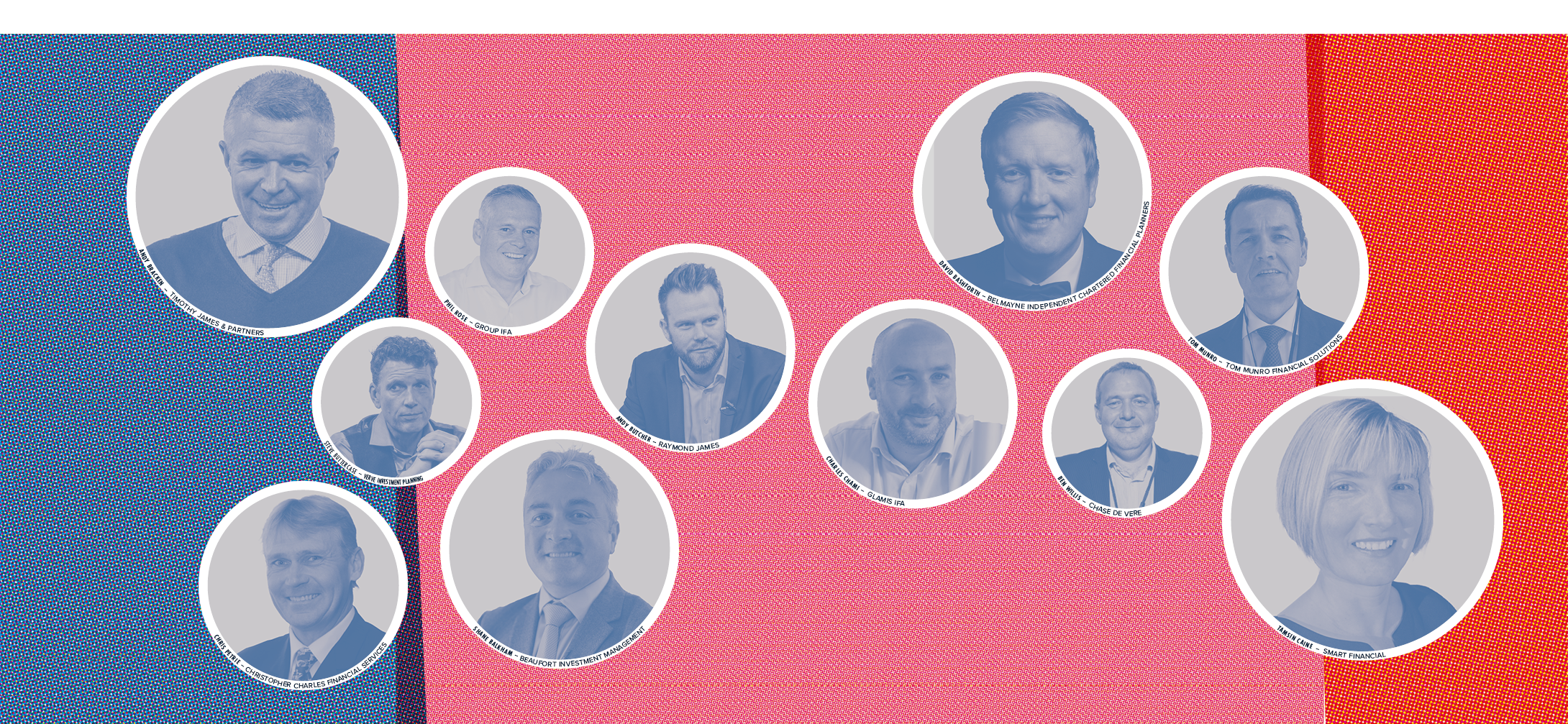
We asked advisers Andy Bracken, Andy Butcher and Steve Buttercase about their firms' investment choices.