


This is where
Meets
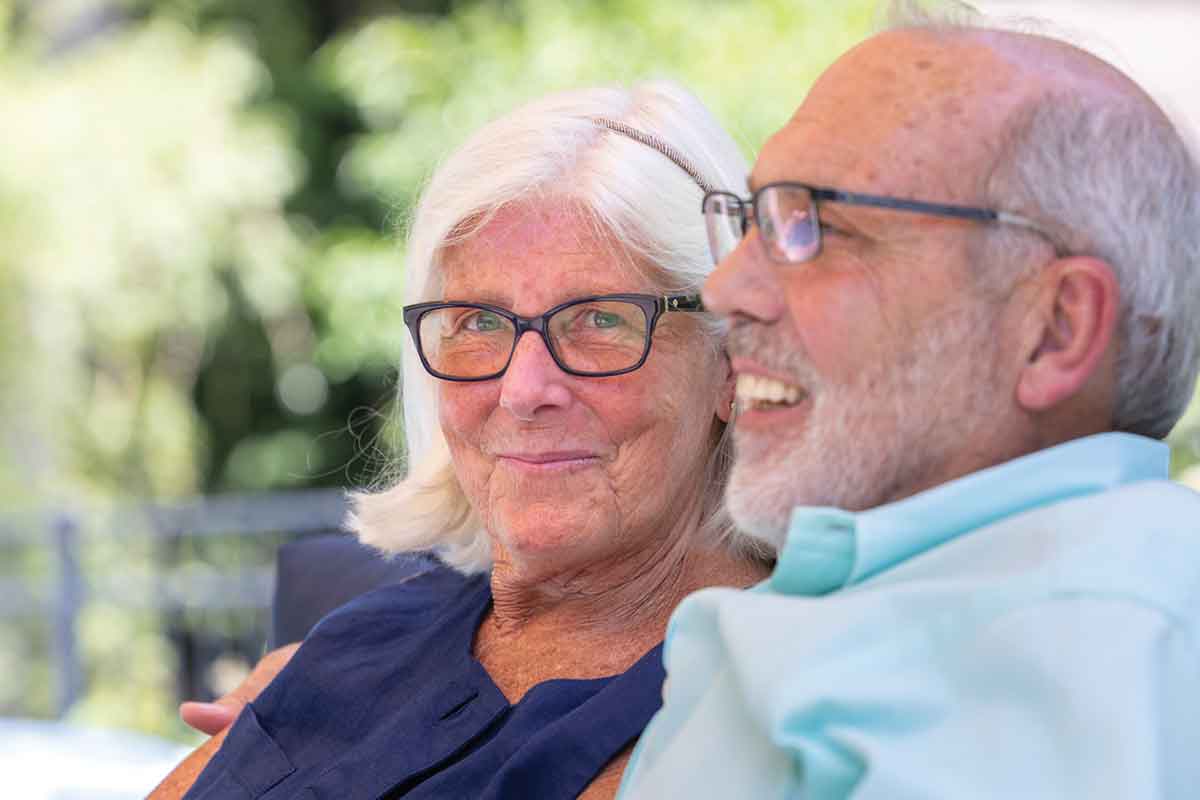
The generosity of Ms. Laube, her husband, Mark, and their family supported the creation of a traumatic brain injury roadmap. Click here to learn how their gift is helping others on the road to recovery.

I’ve always been an independent person, and I love to go on adventures. When I fell off my bike and suffered from a traumatic brain injury, suddenly my independence was taken away from me. My family struggled because there were so many steps to take in my recovery. A year after my accident, we decided to give other families the tools to work with a multidisciplinary team. While every traumatic brain injury is different, having a community of people with similar experiences can make the process easier. — Cathy Laube
After Cathy Laube sustained a traumatic brain injury, she wanted to help others in similar situations. A gift from the Laube family created a roadmap to guide patients and their loved ones along the journey back to wellness.


At Cleveland Clinic these powerful forces intersect to create lasting impact.
Hover over the arrows to reveal more
Next story
All of this is made possible by our supporters. We’re grateful for their generosity.
It's a guiding light. It's the star we steer by. It infuses action with intention. Below, you'll meet caregivers whose PURPOSE is saving and changing lives.
It's a burning flame. It's the fire inside. It ignites the soul. Below, you'll meet donors whose PASSION is the greater good.




Explore the stories below to find out what happens when passion meets purpose at Cleveland Clinic.


Click the icons below to view stories from Cleveland Clinic's Little Book of Big Impact


Get informed, inspired and involved at clevelandclinic.org/giving.
9500 Euclid Avenue, Cleveland, Ohio 44195 | 800.223.2273 | © 2023 Cleveland Clinic. All Rights Reserved.
Mr. and Mrs. Howley are the driving force behind programs that provide pathways to healthcare careers for high school students from economically marginalized communities. Click for the rest of the story.

Nick went to Cleveland Clinic to have a knee replacement. People kept coming in, taking his blood pressure and doing other things. He interviewed everybody. “What’s your background? What are the job requirements? How much education do you need?” When he came home, he said, “Students need these jobs. How can we get them trained?” We’re looking to give people opportunities. — Lorie Howley
The best path to upward social and economic mobility is a quality education. Too many students, particularly in the inner city, are deprived of that. We can’t guarantee you an outcome, but we sure as heck want to give everybody as fair an at-bat as we can. — Nick Howley
Mr. Carson is Director of the Carson Sarcoma Foundation, launched by himself and his son, the late Chris Carson. Click to learn more about research supported by the foundation.

We saw young kids dying when they hadn’t even had a life yet. We thought if we could help save even a few of them, it would be a start. How can you not be passionate about a cause like this? From the beginning, our goal was to support the development of better treatments in shorter periods of time. Speaking of passion, it’s something we look for in doctors and researchers, too — and Dr. Jake Scott is off the charts. He’s doing extraordinary work. — Randy Carson
The generosity of Mr. and Mrs. Shulman supports research and education at Cleveland Clinic Weston Hospital in the field of digestive disease. Click for the rest of the story.

Crohn’s disease has been a part of my life for decades. I know firsthand the uncertainty, pain and debilitating effects that accompany it, as well as the emotional impact on those who love you. And yet I consider myself to be extremely lucky. I’ve always had the unwavering support of family and friends, and for that I am forever grateful. It’s this sense of gratitude that drives Steve and me to help others fighting digestive diseases.
— Ellen Leifer Shulman
For patients and their families, Ellen and I want to spark hope through action that will yield important results. — Steve Shulman

Mr. and Mrs. Wendel have always shared a love for philanthropy. Because of their support, a new dog is joining Kid and Trotter in the Dogs for Joy program, launched with a grant from the Dunkin’ Joy in Childhood Foundation. Click to learn more.

Philanthropy brought my husband, Gerry, and I together. We’re in the sunset of our lives, and we’ve adjusted our giving to see as much joy as possible. Gerry was a patient at Cleveland Clinic when we met Kid. Our stay was extended, and we ran into him with his handler. Kid and Gerry were instantly friends. We saw them bring such joy to the Children’s Outpatient Center, and we knew we wanted to expand this program. With the dogs, we saw instant joy — a gift for us as well! — Diane Wendel

In memory of Bill Macaulay, who died in 2019, his family established the new William E. Macaulay Chair for Cardiovascular Genetics. Click to read about this emerging field’s bright future.

My husband, Bill, was incredibly smart, and his ability to look ahead and see possibilities was unique. He was an optimist; he never dwelled on negatives. Bill was very generous, and he changed a lot of lives by backing initiatives with the potential to be transformative. He was especially interested in forward-thinking people who could make a difference. He lived with heart issues for years, so our goal is to support research related to cardiovascular disease. If we can find the root causes at the genetic level, there will be a real benefit for future generations. — Linda Macaulay

Mr. and Mrs. Bickett knew they wanted to support Alzheimer’s research after her father developed the disease. Read more about how philanthropy is making a difference at the Women’s Alzheimer’s Movement Prevention Center at Cleveland Clinic.

Philanthropy has always been important to my wife, Sue, and me. When close members of our family developed varying degrees of dementia, including Alzheimer’s disease, we knew we wanted to support this research. It’s really difficult to watch a loved one’s body wanting to continue while their mind is left behind. We learned that Alzheimer’s disproportionately affects women, and we decided to support the area of greatest need. We’re hopeful that we’ll get to see a breakthrough someday, but we understand that these things take time. We just hope that our gift will bring Alzheimer’s prevention and risk-reduction strategies to life.
— Brent Bickett

Mr. Roberts is CEO of J.B. Hunt Transport Services, a leading provider of supply chain solutions. The Fortune 500 company provided funding for robotic operating suites. Click to learn more.

Our company embraces community. We listen closely to our employees to determine which areas of the community to support — specifically, veterans, education, crisis management and healthcare, which touches everyone. When I first came to Cleveland Clinic myself nearly 10 years ago, I saw firsthand the quality of the patient experience there. We’re so proud to support the No. 1 hospital for heart care. The advances in robotic heart surgery at Cleveland Clinic are saving lives and unlocking new ways of healing. — John Roberts

Mr. Brooks is one of thousands of donors who make gifts of all sizes that are pooled to support Cleveland Clinic’s Catalyst Grants. Click to learn more about this innovative program.

When it comes to treating patients, Cleveland Clinic is the best. I know people come there from across the country and around the world, and it doesn’t surprise me. My father and my mother were patients there, and so am I. I donate to Cleveland Clinic because I want to support something worthwhile. I’m not wealthy, but I’m happy to give what I can. When I write a check, I know they’ll know what to do with it. I’d like to see Cleveland Clinic continue to grow, and I trust them to use my donations in any way they can. — Robert Brooks

Mr. and Mrs. Korth were married 47 years. Over the past decade, more than $37 million has been raised by VeloSano, Cleveland Clinic’s premier cancer research fundraising initiative — with 100% of funds directly supporting 200+ research projects. To learn more about one of these projects, click here.

When I lost my husband to lymphoma, I knew I wanted to support cancer research. One of the things that got us through John’s treatment was the team of caregivers on our side. That team — I can still see their faces. You see them more than you see your own family. Giving to VeloSano helps keep John’s legacy alive. He was such a happy person, and his smile stuck with every person he met. I’m hopeful that supporting VeloSano will lead to breakthroughs for other families affected by this terrible disease.
— Cheryl Korth

Dr. Yu is a staff physician in the Department of Radiation Oncology and the Department of Cancer Biology. Click to learn more about one donor whose support is advancing high-risk, high-reward cancer research.

Funds I received from VeloSano have allowed me to research new therapies for glioblastoma, an incurable primary brain tumor that is resistant to standard cancer treatments. We are finding new ways to target the most aggressive cancer cells more effectively. Ten years down the road, I hope we’ve accomplished two things. One, that we will have helped more patients. Two, that we will have trained the next generation of caregivers. With the continued support of the communities who fundraise and give to VeloSano, I am optimistic that we will achieve these goals.
— Jennifer Yu, MD, PhD

The examples above are among 200+ projects funded by Cleveland Clinic’s Catalyst Grants, which have pooled donations to provide a total of $9.5 million in support to date. Click to meet one donor.

Philanthropy allowed us to acquire robotic technology for use in rehabilitation, including robotic gloves that can improve hand function for patients with severe hand impairments because of a brain injury or a stroke. — Richard Aguilera, MD, staff physician in the Department of Physical Medicine and Rehabilitation | We’re developing an expandable spinal implant that can be used with minimally invasive tools that will lead to more successful spinal fusion surgeries, especially in older patients with osteoporosis. — Swetha Sundar, MD, neurosurgery resident | We’re creating and clinically evaluating immersive education utilizing 3D virtual reality for pediatric patients with cancer and their families, with a focus on reducing anxiety and fear associated with cancer therapies and illness perception. — Charles Martin III, MD, interventional radiologist

Dr. Gillinov is Chair of the Department of Thoracic and Cardiovascular Surgery in the Sydell and Arnold Miller Family Heart, Vascular & Thoracic Institute, where robotic operating suites are powered by philanthropy. Click to learn more.

With robotic surgery, patients are able to experience shorter hospital stays and generally faster recovery periods for cardiac treatment. Our new robotic operating suites enable us to put two surgical robots directly adjacent to one another. Very few other hospitals can do this. Our cardiac team and our thoracic team will be able to come together as one large team. We expect it to lead to great synergy and innovation between related disciplines. — Marc Gillinov, MD

Dr. Caldwell is Director of the Women’s Alzheimer’s Movement Prevention Center at Cleveland Clinic, which opened in 2020 at the Cleveland Clinic Lou Ruvo Center for Brain Health in Las Vegas. Click here to meet a couple with personal reasons for supporting the center’s mission.

The Women’s Alzheimer’s Movement Prevention Center is the first and only center in the nation focused exclusively on providing women with personalized assessment of their risks for Alzheimer’s disease. I want people to know they can change the trajectory of Alzheimer’s disease, whether that’s supporting research through philanthropy or incorporating individual, sustainable lifestyle modifications for the long haul. These interventions you begin today are going to change what you and your brain look like when you’re 80 years old, not what you look like on the beach this summer. This is about you and prioritizing your health.
— Jessica Caldwell, PhD

Dr. Nissen is Chief Academic Officer of the Sydell and Arnold Miller Family Heart, Vascular & Thoracic Institute. Click to read about how the promise of cardiovascular genetics aligns with one family’s philanthropic goals.

We’re beginning to understand more about genetic factors that can lead to cardiovascular disease. This is difficult work that requires tremendous expertise, so we are recruiting a cardiovascular geneticist with the necessary scientific skills. The generosity of donors will allow us to hire the best person and to fund ongoing research. As we learn more about genetic factors, we’ll be able to provide more intensive interventions earlier to the right people. Precision medicine, informed by genetics, will enable us to determine which patients respond best to which therapies.
— Steven Nissen, MD

Ms. Gross is a child life specialist and facility dog handler at Cleveland Clinic Children’s, where Kid and Trotter continue to spread joy. Click to learn more.

Specially trained pediatric facility dogs Kid and Trotter are full-time caregivers at Cleveland Clinic Children’s. They bring so much joy and emotional support to children battling illnesses. The dogs perform a range of tasks that help medical teams achieve their clinical goals, like keeping a child calm during a medical intervention or providing an incentive for a child to get out of bed and go for a walk. Working with Kid is truly an honor. I’m able to see the magic of his presence every day. He has the ability to build rapport with patients, families and staff within minutes, and he helps to make the hospital less scary. — Molly Gross, MS, CCLS

Dr. Wexner is Director of the Ellen Leifer Shulman and Steven Shulman Digestive Disease Center at Cleveland Clinic Weston Hospital. Click to meet the namesake donors who are making a difference there.

Over the past 35 years, we’ve made numerous advances in the treatment of digestive disease that have become global standards. Now, with record-setting philanthropic support, we’ll accelerate our already prodigious research. Toward that end, we’ve recruited one of our stellar alumni, Dr. Marylise Boutros, one of the premier researchers in patient-reported outcome measures (PROMs). Through her work and our teaching, we’ll continue to share innovations with residents and fellows who come to us from around the world. It would be hard to drop a pin anywhere on the map where we don’t have alumni, all of whom have touched the lives of hundreds or thousands of patients. The effect is multifold.
— Steven Wexner, MD, PhD (Hon)

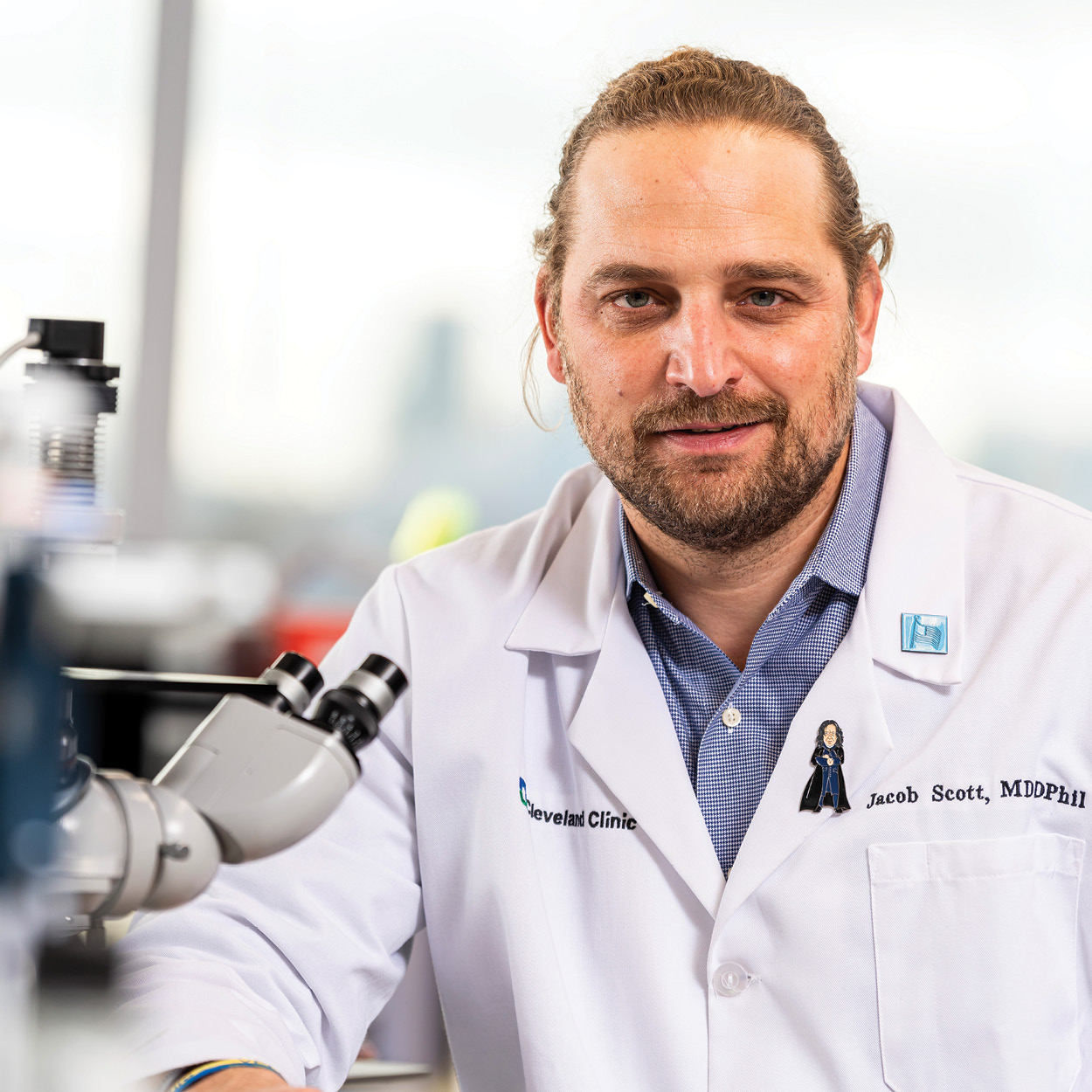
Dr. Scott is a radiation oncologist and physician-scientist whose research is supported by the Carson Sarcoma Foundation. Click to learn more.

Chris Carson was a good friend of mine. I can still hear his voice in my head. He’s always there, reminding me to keep pushing harder. Eventually, evolution will figure out how to beat a new cancer drug. In our lab, we’re focused instead on drugs that already exist. As cancers develop a resistance to certain drugs, does that resistance result in a sensitivity to other drugs? To find out, we need to be able to take more big chances as researchers. Philanthropy allows us to do that. — Jacob Scott, MD, DPhil
Ms. Lewis is a registered nurse in the coronary ICU at Cleveland Clinic’s main campus. She was part of the first cohort to graduate from the Howley ASPIRE Nurse Scholars program. A similar program, Howley ASPIRE Pathways, focuses on future respiratory therapists, surgical technologists and sterile processing technicians. For the rest of the story, click here.

In the ICU, you’re caring for people when they need it most. I find that very rewarding. A nursing career wasn’t even on my radar until I joined the ASPIRE program. We did so many different things. We learned CPR. We talked about health literacy. We shadowed nurses. It definitely held my attention. The program covered 100% of nursing school tuition, which helped a lot, and I felt supported every step along the way.
— Ayanna Lewis, RN

Dr. Runion is the Manager of Rehabilitation Services at Cleveland Clinic Akron General. Click to learn about the donor whose traumatic brain injury led to a roadmap for others.

Thanks to philanthropic support, the Steps of Care for Traumatic Brain Injury Roadmap is available to help families on the journey of recovery. This reference guide covers multiple steps, from acute care to outpatient services. Understanding what to expect can provide some guidance during a difficult time. I’m thankful to Cathy Laube for sharing her story, as it helped bring our team together to enhance our communication, connection and care for patients with traumatic brain injury.
— Brenda Runion, PT, MEd, DPT


Tap to view