t the Cardhu distillery in Knockando, overlooking the rolling
green hills of Speyside, a red flag flutters. It’s a symbol of tenacity,
innovation and perseverance, as well as a testament to the women who ran the distillery — legally, at least — 200 years ago.
Cardhu celebrates its bicentenary this year, and its longevity is largely thanks to the courage and persistence of Helen and Elizabeth Cumming.
Officially, Helen Cumming and her husband John were tenant farmers trading in barley and cattle, but Helen’s real passion was distilling. Like many across Scotland in the early 19th century, she had all the means to make whisky, but couldn’t afford to pay for the licence to do so. She set up an illicit still, pioneering production on the farm, hiding the equipment when the excise men paid a visit, and warning her customers by waving a red flag visible across the fields.
With the Excise Act of 1823, the game of cat and mouse came to an end, and the following year Cardhu became a legal whisky distillery. John died, leaving Helen a widow, but she continued making whisky with her son Lewis and his wife, Elizabeth.
While Helen had the courage to craft an excellent spirit, it was Elizabeth who turned it into their family’s legacy. When she was just 45 years old, her husband Lewis died, and the two women were left to work shoulder to shoulder to provide for the family. Elizabeth registered the name Cardhu as a trademark, bought up land for barley growing, and oversaw the construction of a new distillery.
Cardhu distillery is the jewel in the crown of Scotland’s famous Speyside whisky region, �thanks to two pioneering women, Helen and Elizabeth Cumming. As Cardhu �celebrates its 200th anniversary, we explore how the pioneering spirit of 1824 lives on.
SHARE


Jawahir Al-Mauly
founder of Ujamaa Spice
SPONSORED CONTENT
Stepping forward:
Lisa Lawson,
Siobhan Mackenzie and Jawahir Al-Mauly
Flag bearer
A statue of Helen Cumming raising the famous red flag alongside the Johnnie Walker striding man, on the grounds of the Cardhu Distillery in Speyside
Pull quote in Times font
Acta display bold in this case
Discover the pioneering spirit behind Cardhu
The pioneering spirit that began with Helen and Elizabeth Cumming at Cardhu prevails today. All distilleries have unique histories — after all, it’s people who make whisky — and the story of the Cummings is a large part of what makes Cardhu a must-visit distillery on any trip to Speyside.
Thanks to the work of archivists, creatives and the team at the distillery, their story — and the stories of the people who helped to build and sustain Cardhu — can be experienced in full, brought to life in an exciting and engaging experience.
What’s more, to celebrate its 200th anniversary, Cardhu has unveiled a limited-edition 12-year-old bottling of Cardhu, aged in wine casks. Featuring red and gold imagery that recalls Helen Cumming’s red flag, it’s a fitting tribute to take home in honour of two centuries of pioneering spirit.
Follow Helen and Elizabeth’s journey at Cardhu Distillery: CardhuDistillery.com
The Cardhu experience

Cutting edge:
Fashion designer Siobhan Mackenzie
Growing up in Zanzibar, Jawahir Al-Mauly was immersed in the vibrant and aromatic world of spices, deeply connected to her family’s rich cultural heritage. “Spices were more than ingredients,” she says. “They were a link to my ancestors, traditions, and identity.”
As a young woman she worked and travelled across various regions of Africa, including countries where spices are grown for export to the UK. “I witnessed first-hand the profound impact fair trade practices have on local farming communities,” she says. “I saw how ethical sourcing could transform lives, providing fair wages, better working conditions and dignity to farmers.”
“The Black Isle isn’t exactly known as a fashion capital,” laughs Siobhan Mackenzie, “but I was always sketching clothes, and when I was 10, I announced to my parents that I was going to be a fashion designer.”
Siobhan’s journey to fulfilling that dream was a community effort. With her pocket money and help from her parents she bought her first sewing machine when she was 13. Her Home Economics teacher showed her how to sew, and when she was 17 she moved to Glasgow to begin her degree.
“I’m from a huge family,” she says. “My dad is one of ten siblings, and we lived on the street he was born on, with my aunts, uncles and cousins living as our neighbours. We’re a very close-knit family.”
So when it came to her final degree project, she looked to her family, the clan Mackenzie, for inspiration. “I wanted to make something that meant something to me,” she says.


Discover the
spirit behind Cardhu
pioneering
A
Cardhu gained a name for itself for the quality of the spirit. And it was this reputation that led the sons of a grocer from Kilmarnock named John Walker to pay the distillery a visit, as they searched for the best single malts for their signature blend. They were clearly impressed with what they found because in 1893, they purchased Cardhu for what in those times was the princely sum of £20,500.
Elizabeth Cumming could have enjoyed her new-found wealth for herself. Instead, she negotiated jobs for the existing workers and made sure they all had electricity fitted in their homes, too. It comes as no surprise, therefore, that when she passed away the following year, her funeral was one of the largest in the district.
Today the symbol of a woman waving a flag appears on every bottle of Cardhu, and you can see the statue of Helen Cumming standing proudly in front of the distillery, flag in hand, when you visit. The statue and the whisky bearing her image is a testament to the pioneering spirit of Scotland’s women, and Cardhu has commissioned films celebrating three modern-day entrepreneurs who carry that same spirit today.
Watch our series of films about the modern-day pioneers who embody the spirit of Cardhu’s Helen and Elizabeth Cumming at CardhuDistillery.com


Siobhan Mackenzie
fashion designer
As a business they’re leading the way in empowering communities, providing comprehensive support and resources to their farming partners, and helping farmers improve their agricultural practices for better yields through education, better tools and financial assistance.
“All of this strengthens communities and promotes long-term sustainability,” she says.
Jawahir shares the visionary thinking, unwavering passion and pioneering spirit shared by Helen and Elizabeth Cumming. “We remain dedicated to proving that a small company with a big heart can make a significant impact.” she says. “Each spice tells a story of resilience, tradition, and community, and every purchase supports the livelihoods of those who cultivate these precious crops.”
These experiences led her to found Ujamaa Spice in 2022, a multiple Great Taste Award-winning business that not only delivers high-quality, authentic spices but which also empowers the farmers who grow them.
“Ujamaa means togetherness and familyhood in Swahili,” she explains. “Starting Ujamaa Spice was more than launching a business; it was a commitment to fostering sustainable development, preserving cultural heritage, and promoting social justice. It’s a journey I embarked on with the hope of creating a positive ripple effect, one spice at a time.”
Setting up as a small, ethically driven start-up has
not been without its challenges. “It took
immense courage and relentless determination
to overcome significant obstacles and stay true
to our values,” says Jawahir, but she formed
alliances with other brands like hers and with
fair trade organisations to raise awareness.
“Being collaborative amplifies our voices and
helps create a movement where consumers
make more ethical choices.”

Traditional Highland dress, with its incredible heritage and use of sustainable materials such as local wool gave her the platform for creativity.
“After my final show, so many people asked me where they could buy the clothes I’d made,” she recalls. It was a pivotal moment. “I realised I had created something different, innovative and pioneering and that if I walked away from it, I was leaving it wide open for someone else to take it.”
She launched her own business and ten years on, she has no regrets, having designed clothes for members of the Scottish 2018 and 2022 Commonwealth Games teams, and even Justin Bieber.
“As young Scottish designers, we should embrace a fashion honed in Scotland. If our textiles are good enough for the world’s leading fashion houses, why can’t we create world-leading brands here?”
Siobhan has had to be resilient to criticism as she combines modern design with the traditional craft of kilt-making. “I’ve had to have a lot of self-belief,” she says. “If you stay within the lines, you’ll be like everyone else. You have to take the risk to do something different whether people like it or not, without fear. That’s what I’ve done.”
Pioneer spice:
Jawahir Al-Mauly, founder of Ujamaa Spice


Lisa Lawson
founder of Dear Green Coffee Roasters
Cool beans:
Indie coffee pioneer
Lisa Lawson of Dear Green Coffee Roasters
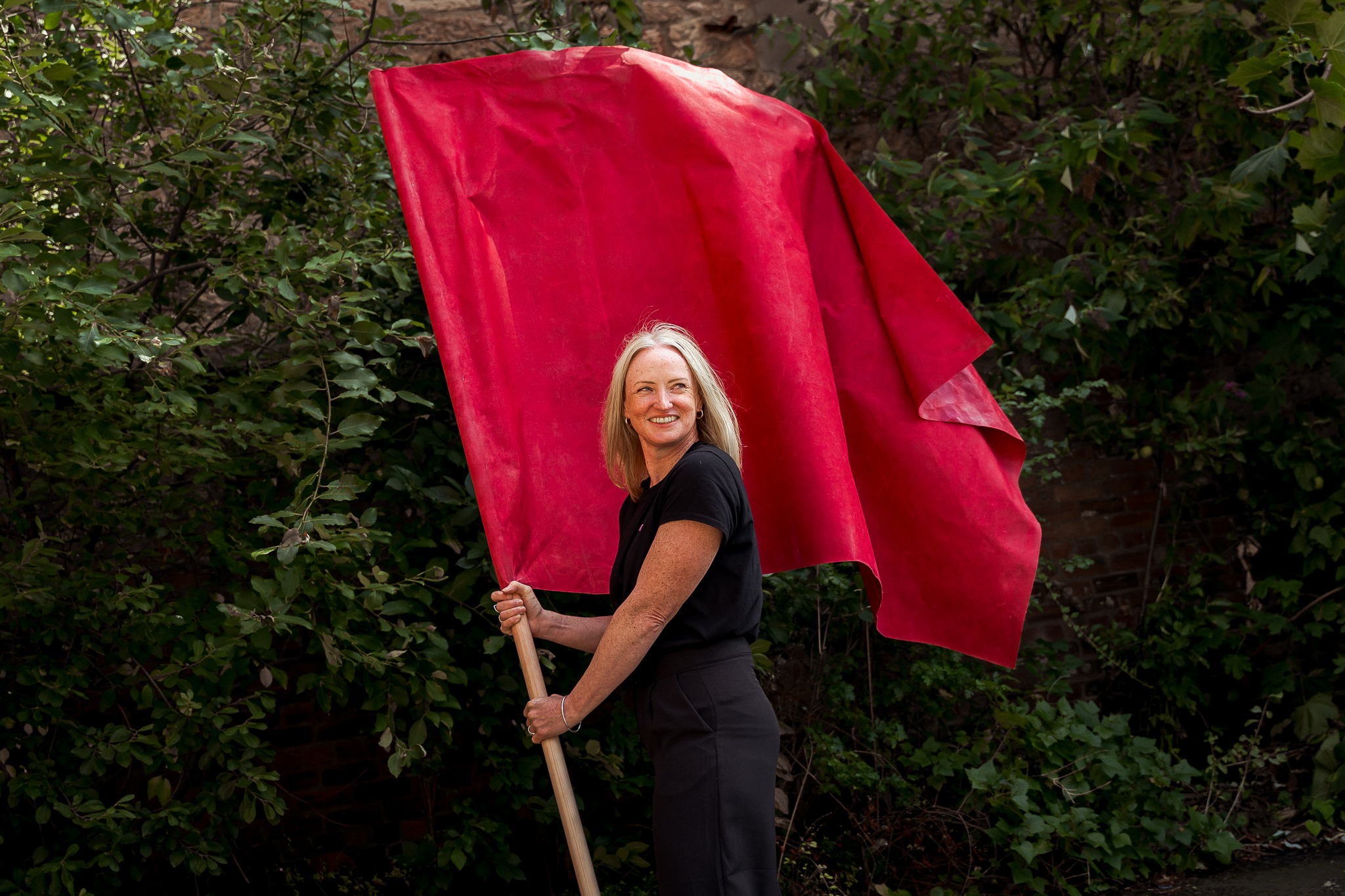
Lisa Lawson was a long way from her native Glasgow when she discovered her passion for coffee. While backpacking she was working in a deli in Sydney when the owner suggested she work for her son.
“He was roasting coffee in his garage, supplying fine dining restaurants across the city, and so in a haphazard way, that’s how the coffee thing started for me,” says Lisa.
When she returned home, she fell into the wine trade, but coffee culture had begun to arrive in the form of large coffee chains. When one of her customers told her they were going to open an independent coffee shop in Finnieston, she offered to run it.
“They bought a roaster, and I essentially launched Glasgow’s first coffee micro-roastery.” A few months into the job, she had a reality check. “I realised it was me who was making their business successful and that I could probably do the same thing for myself.”
After a research trip to London and the spontaneous purchase of a roasting machine, she took the leap and set up Dear Green. “I don’t think of myself as a pioneer,” she says. “I was just trying to find a way forward with something I am passionate about and I was willing to take risks.”
The first year of Dear Green was hard graft, finding wholesale buyers and persuading the people of Glasgow that “buying fresh coffee was better than buying stale, European, darkly roasted, commodity-grade coffee.”
But she knew she was at the head of a trend. “Every city had maybe a roaster and a specialty coffee shop. I could see that happening around the world and for me it was about timing and confidence in my own ability.”
That eye for what’s next has served her well — Dear Green was one of the first businesses to gain B Corp status in Scotland. Lisa also established Glasgow Coffee Festival, Scotland’s largest coffee event.
“If no one else is doing it and I can see it’s possible and want it to happen, then I’ll do it,” she says. “I’m lucky that I can set up a business. We need to push boundaries as women so that other women can follow. That’s what was happening at Cardhu. They set the path for us and I hope I’m still breaking down barriers.”


A
hDhp
ppf
spirit behind Cardhu
t the Cardhu distillery in Knockando, overlooking the rolling
green hills of Speyside, a red flag flutters. It’s a symbol of tenacity,
innovation and perseverance, as well as a testament to the women who ran the distillery — legally, at least — 200 years ago.
Cardhu celebrates its bicentenary this year, and its longevity is largely thanks to the courage and persistence of Helen and Elizabeth Cumming.
Officially, Helen Cumming and her husband John were tenant farmers trading in barley and cattle, but Helen’s real passion was distilling. Like many across Scotland in the early 19th century, she had all the means to make whisky, but couldn’t afford to pay for the licence to do so. She set up an illicit still, pioneering production on the farm, hiding the equipment when the excise men paid a visit, and warning her customers by waving a red flag visible across the fields.
With the Excise Act of 1823, the game of cat and mouse came to an end, and the following year Cardhu became a legal whisky distillery. John died, leaving Helen a widow, but she continued making whisky with her son Lewis and his wife, Elizabeth.
While Helen had the courage to craft an excellent spirit, it was Elizabeth who turned it into their family’s legacy. When she was just 45 years old, her husband Lewis died, and the two women were left to work shoulder to shoulder to provide for the family. Elizabeth registered the name Cardhu as a trademark, bought up land for barley growing, and oversaw the construction of a new distillery.
spirit behind Cardhu