
Tales from the Trail
Presented By

From expert tips and gear recommendations to trail inspiration and adventure stories, we teamed up with Swedish gearmaker Fjällräven to help you make the most of your time in nature


west
MIDWEST
ROCKIES
SOUTHWEST
EAST
1
2
3
4
5
6
7
8
9
10
11
12
13
14
15
16
17
18
N
W
e
s

Sort Treks By Degree of Difficulty
ALL

Traversing the most gradual, least technical terrain, these treks can generally be completed in just a few days by beginners and families alike.
easy
These treks are marked by steeper, more challenging segments and often span longer distances, requiring more time to complete.
moderate
Often traversing entire mountain chains or crossing uninterrupted stretches of wilderness, these treks demand the most planning, preparation, and physical fitness.
challenging
This circumnavigation of massive Mount Rainier is one of the true epic hikes in the national park system. You’ll pass through massive old-growth forests, climb into the high alpine zone to witness amazing wildflower shows, stare down a dozen or more glaciers, and cross the wild, foamy rivers they feed. All the while, you’ll sense the presence of the 14,411-foot behemoth—as impressive in girth as in height. You’ll behold its white-capped summit often as you undulate over its numerous ridges—total elevation gain (and loss) is more than 20,000 feet. Wonderland’s logistics are simpler than that of most thru-hikes. The trail can be accessed from any of nine trailheads, so it’s possible to break up the hike into shorter sections or to do it over the course of several seasons. Eighteen trail camps make life easier, plus you can stash caches at designated spots (accessible by car) in advance. And no small bonus: you end up where you started.
wonderland trail
washington

difficulty
distance
93 miles
time
10–14 days
1
x
No two treks—or trekkers—are the same. Customize your ideal trekking kit or check out our curated arrangements below.
ESSENTIAL TREKKING GEAR
Men's
Women's
all-terrain trekking kit


accessories


headwear
layers
bottoms
outerwear

layers
headwear
bottoms
outerwear
Abisko Sun HOODIE M
For sunny days on the trail, this long-sleeve hoodie protects your skin from the sun without making you overheat. The lightweight technical jersey knit fabric is moisture-wicking. Plus, the cut of the garment allows for air circulation to keep you cool on warmer days.
learn more >
x
In 1960, Åke Nordin founded Fjällräven in his basement in the Swedish town of Örnsköldsvik. Since then the brand has stayed true to its mission of developing timeless, functional, and durable outdoor equipment, acting responsibly toward people, animals, and the environment, and inspiring more people to discover outdoor life.
long-haul trekking kit
lightweight trekking kit


learn more >
This hooded zip-up jacket is made from two types of fleece for the right balance of warmth and weight conservation. The feminine cut includes a ponytail opening in the hood, plus three zippered pockets for plenty of on-the-go storage.
Abisko Trail Fleece W
x
learn more >
When you never know where your adventures will take you, an all-terrain jacket is the way to go. With enough ultralight padding to keep you warmer than a shell but still thin and pliant enough to be worn as a mid-layer, the Expedition X-Latt Jacket is prepared for it all.
EXPEDITION X-LÄTT JACKET M
x
learn more >
This lightweight, wind-resistant jacket protects against wind, sun, and even light rain. Ample ventilation means you won't overheat when temperatures rise. Plus the adjustable hood comes in handy on all kinds of adventures.
ABISKO MIDSUMMER JACKET W
x
learn more >
Summer hiking requires the perfect, lightweight jacket. The Abisko Lite Trekking Jacket is made from durable, wind-resistant G-1000 Lite Eco material. An adjustable hood, stretchy back and side panels, and ventilation zippers allow for a flexible fit, no matter the conditions.
Abisko lite trekking jacket M
x
learn more >
Summer hiking requires the perfect, lightweight jacket. The Abisko Lite Trekking Jacket is made from durable, wind-resistant G-1000 Lite Eco material. An adjustable hood, stretchy back and side panels, and ventilation zippers allow for a flexible fit, no matter the conditions.
ABISKO LITE TREKKING JACKET W
x
learn more >
If you’re trekking in foul weather, you need
a serious shell. Serious, not bulky. The waterproof Keb is stretchy, and the trim, contoured cut moves with you. It’s both breathable and ventilated (with side zippers) so that your hard work doesn’t leave you sweatsoaked.
Keb eco shell M
x
learn more >
If you’re trekking in foul weather, you need
a serious shell. Serious, not bulky. The waterproof Keb is stretchy, and the trim, contoured cut moves with you. It’s both breathable and ventilated (with side zippers) so that your hard work doesn’t leave you sweatsoaked.
Keb eco shell W
x
learn more >
Based on the brand's best-selling Vidda Pro pants, this design has improved ventilation for when you don't know what your adventure will bring. Ample pocket space and extra loops for toting gear plus adjustable snaps at the hems make these pant practical for any adventure.
VIDDA PRO VENTILATED TROUSERS M
x
learn more >
A true hiking-ready tight, the Abisko Trekking Tights are reinforced in high-stretch moisture-wicking fabric so they can stand up to tough terrain. The 7/8 length easily accomodates hiking socks, and tilted pockets provide easy access to anything you need to stash on the go.
ABISKO TREKKING TIGHTS PRO W
x
learn more >
Rugged yet lightweight, the Keb Agile Trousers give you protection where you need it and stretchy, breathable materials everywhere else. The result: The ultimate all-season pant. G-1000 Lite Eco Stretch material provides extra durability in the knees and pockets while double-woven stretch fabric protects the legs from any terrain you choose to explore.
Keb Agile Trousers M
x
learn more >
Crafted from two types of fabric (both partly made from recycled materials) the Abisko Midsummer Trousers provide the right combination of durability and stretch. With ventilation zippers and quick drying fabric, these pants are a lightweight option for treks where temps are warm but long pants are still the way to go.
ABISKO MIDSUMMER TROUSERS W
x
learn more >
Stretchy, extremely durable, and tailored for freedom of movement, these trousers will see a serious hiker through long trail miles. Huge thigh pockets are big enough to hold maps. Though durable enough for bushwhacking, they’re also amply ventilated with side zippers, so you’ll never overheat.
Keb Trouser M
x
learn more >
Stretchy, extremely durable, and tailored for freedom of movement, these trousers will see a serious hiker through long trail miles. Huge thigh pockets are big enough to hold maps. Though durable enough for bushwhacking, they’re also amply ventilated with side zippers, so you’ll never overheat.
Keb Trouser W
x
learn more >
Merino wool and recycled polyester combine for a first layer that offers the benefits of both natural and synthetic materials. The merino wool helps regulate temperature and keep odors at bay while the synthetic fibers bring durability and moisture-wicking to the table.
ABISKO WOOL SS M
x
learn more >
Merino wool and recycled polyester combine for a first layer that offers the benefits of both natural and synthetic materials. The merino wool helps regulate temperature and keep odors at bay while the synthetic fibers bring durability and moisture-wicking to the table.
ABISKO WOOL LS W
x
learn more >
Lightweight, moisture-wicking, and ultra soft, this short-sleeved t-shirt is made from a sustainable jersey knit that combines the softness of organic cotton with the functionality and durability of recycled polyester.
1960 LOGO T-SHIRT M
x
learn more >
Merino wool and recycled polyester combine for a first layer that offers the benefits of both natural and synthetic materials. The merino wool helps regulate temperature and keep odors at bay while the synthetic fibers bring durabilty and moisture-wicking to the table.
ABISKO WOOL SS W
x
learn more >
Fleece doesn’t mean hot and heavy. The Abisko Trail Fleece is a technical hoodie that’s perfect by itself on a chilly day or as a midlayer on a cold day. The chest and side pockets all have zippers.
Abisko Trail fleece hoodie M
x
learn more >
This midweight insulating layer is indispensable for treks when you’re likely to face chilly or damp weather. The wool/polyester blend keeps you cozy, whether you wear it solo or slide it under a shell. The hood is tailored to fit nice and snug.
Keb Fleece Hoodie W
x
learn more >
A classic trucker (in Swedish that’s långtradar) with perforated sides, featuring an embroidered Fjällräven badge and a G-1000 Eco front, the Långtradarkeps is equal parts sun protection, style points, and bad-hair concealment.
1960 Logo LÅngtradarkeps
x
learn more >
A classic trucker (in Swedish that’s långtradar) with perforated sides, sporting Fjällräven’s throwback 1960 emblem and a G-1000 Eco front, the Långtradarkeps is equal parts sun protection, style points, and bad-hair concealment.
Badge LÅngtradarkeps
x
learn more >
This packable, lightweight hat is easy to pop into your backpack or jacket pocket so you're prepared for anything. Made from partly recycled polyester, it dries quickly and is well-ventilated for use on warmer days.
Abisko hike lite cap
x
learn more >
Designed for comfort, flexibility, and reliability in the mountains, this technical pack is also a shape-shifter. The Bergtagen's wooden frame, top lid, and hip belt are all easily removed and installed, allowing you to customize the pack for your specific adventure.
Bergtagen 38 M-L
x
learn more >
This two-person, three-season, self-supported tent is superbly ventilated for muggy-night comfort, and the wide-opening doors give you front row seats to the sunset. Of course, it all seals up nicely in foul weather. Tandem trekkers appreciate having two doors, each with its own vestibule.
abisko view 2 tent
x
learn more >
The Keb 52 is big enough to carry everything you need for long stretches between resupply stops and durable enough to survive all weather and multiple thru-hikes. Its birch frame and simple adjustment system handle heavy loads with exceptional comfort.
keb 52
x

learn more >
This packable, lightweight hat is easy to pop into your backpack or jacket pocket so you're prepared for anything. Made from partly recycled polyester, it dries quickly and is well-ventilated for use on warmer days.
Abisko Hike Lite Cap
x
learn more >
Merino wool is the perfect material for a knit hat for almost any weather. This model's lightweight construction will keep you warm when it’s damp and chilly, and wicks away moisture when you’re working hard.
merino lite Hat
x
learn more >
Made from soft, supple 100% merino wool, this two-layered knit hat offers extra warmth even if it's damp, thanks to the moisture-wicking wool.
Classic Knit Hat
x
find a Fjällräven brand center or dealer near you

2
The reason most PCT thru-hikers start their journey at the Mexican border in spring is simple: the trail’s desert stretches, while beautiful, are wicked hot in summer. That, and the Sierra Nevada, whose passes can be snowbound into July, need time to melt out. Timing is everything. Planning is paramount. Section hiking is perfectly acceptable. And virtually every section is awesomely gorgeous. A stellar mini thru-hike of seven to ten days starts at Elk Lake Resort in the central Oregon Cascades and ends 93 miles north at Olallie Lake. It passes through 40 miles of the majestic Three Sisters Wilderness, a rugged landscape with lush forests of Ponderosa Pine and Douglas fir, all in the shadow of the three volcanic summits known as the Sisters. Want more? It’s only another 607 miles to Canada.
Pacific Crest Trail
oregon
Camp, California, one hour east of San Diego.
start
tip
info
The Pacific Crest Trail Association runs an annual webinar in February that delves into deep detail for thru or section hikers.
pcta.org
difficulty
distance
2,650 miles
time
5 months
x
Longmire is the most accessible trailhead, 2.5 hours from Seattle or Portland.
start
tip
info
Permits are in high demand. Apply between March 15 and April 1 and hope for the best.
nps.gov/mora

3
This remote stretch of California coast is so wild and rugged that it defied the Highway 1 road builders. The fabled Coast Highway had to veer inland between Fort Bragg and Eureka, leaving a pristine Lost Coast of 80 miles, 25 of which are blissfully hikeable. As you trek south to north, the ocean puts on a show to your left, while oceanfront cliffs and the rugged King Range rise dramatically to your right. You’ll see whales, river otters, sea lions, and wild surf. Mostly it’s an experience of wave-washed solitude, with one man-made highlight along the way: the 1912 Punta Gorda Lighthouse. Elevation gain is negligible, but the terrain is no cakewalk—bring trekking poles. And a few stretches are impassible at high tide—bring a tide table. Other logistics are simple: water sources and campsites are plentiful, and local shuttle services can help you stash a car at trail’s end.
lost coast trail
california
Shelter Cove, 4.5 hours north of San Francisco.
start
tip
info
Surfside bears? You bet. Bring a bear canister.
blm.gov
difficulty
distance
25 miles
time
4 days
x

4
Thanks to a 50-mile circuit of six perfectly spaced High Sierra Camps in the Yosemite high country—each with tent cabins and a chuck wagon doling out fresh and plentiful food—you can hike this High Sierra loop without being saddled with a bulging backpack. You’re freed up to tread daypack-lightly on some of the park’s most glorious trails. Most hikers start with an overnight at (drive-to) Tuolumne Meadows Lodge (8,500 feet) to acclimate, then proceed counterclockwise on the loop. The first day’s hike traces the Tuolumne River through wildflower-strewn meadows to Glen Aulin, within earshot of the White Cascade waterfall and swimming hole. The camps are all wondrously situated, and you’ll pass through serene meadows beneath exposed granite peaks en route.
High Sierra Loop
california
Tuolumne Meadows Lodge, three hours northeast of Merced.
start
tip
info
Add a couple of layover days to explore the Grand Canyon of the Tuolumne from Glen Aulin Camp, and to bag Vogelsang Peak (11,444 feet) from Vogelsang Camp.
nps.gov/yose
x
difficulty
distance
50 miles
time
7 days

5
The soaring, fluted palisades of the Na Pali Coast appear inaccessibly rugged when viewed from a kayak, helicopter, or coffee- table book. For hikers, they’re merely tough, occasionally slippery (read: trekking poles), and wildly rewarding. The Kalalau Trail negotiates those hairy ramparts in 11 steep, winding, narrow miles, plunging into river valleys and to beaches and always back up again until it deposits hikers on Kalalau Beach. Your views of the Pacific are likely to be electrified by the breaching of humpback whales. A layover at Hanakoa Valley (six miles from the trailhead) allows a leisurely pace, and a side trip to Hanakapi’ai Falls, an hour up a river valley from Hanakapi’ai Beach, is more than worth the detour. Kalalau, at the trail’s terminus, is an expansive valley with a lovely beach and convenient beachside waterfall for a post-hike shower. Plan to spend the free day exploring the valley, swimming in pools, and hiking through terraces overgrown with java plums, guava, and mango trees.
Kalalau trail
hawaii
Haena State Park, about an hour north of Lihue Airport.
start
tip
info
Ocean rip currents mean you should favor river swimming over playing in the surf.
dlnr.hawaii.gov
difficulty
distance
11 miles
time
3 days
x

6
Remote, wild, and relentlessly challenging, the CDT closely follows the backbone of the continent from Mexico to Canada. In between are the desert and volcanic landscapes of New Mexico, a high point of 14,270 feet in the Colorado Rockies, the spectacular western flank of Wyoming’s Wind River Range, Old Faithful in Yellowstone, the Idaho-Montana Bitterroot Range, and the alpine glories of Glacier National Park. The CDT is at times deeply remote, but it does intersect dozens of trail towns, making segmenting and resupply feasible. A classic segment is a six-day, 65-mile Montana stretch from Benchmark to the Headquarters Pass trailhead. It leads through lush forests over high passes to campsites on alpine lakes. Highlight: views of the ten-mile-long limestone cliff known as the Chinese Wall, in the Bob Marshall Wilderness.
continental divide trail
Montana
The Crazy Cook Monument near Hachita, New Mexico.
start
tip
info
The Continental Divide Trail Coalition recommends using the soft-sided, bear-resistant Ursack (ursack.com) for food storage.
continentaldividetrail.org
difficulty
distance
3,100 miles
time
5–6 months
x

7
The park’s signature backcountry hike threads along the interior spine of the Teton Range beneath the familiar craggy summits, linking high divides and passes, alpine lakes, and top-of-the-world views. Mid-July to mid-September is the usual window of opportunity. Camp anywhere in large zones within indicated sites. Once you reach Marion Lake (9,250 feet and a perfect first-night campsite), you’ll stay above 9,000 feet as you proceed north along the crest. Two miles later, at Fox Creek Pass, is the first of those sweeping views, and from there it’s nonstop alpine glory for 11 miles. At Hurricane Pass, you feel you can reach out and touch the three Tetons: South, Middle, and the 13,776-foot Grand. Savor carpets of lupine and streamsides choked with mountain bluebells as you carry on to Paintbrush Divide, named for the flowers that flourish there.
The hike ends at the Leigh Lake trailhead.
Teton crest trail
Wyoming
Granite Canyon Trail, just a mile north of Teton Village.
start
tip
info
Don’t miss the side trip into Alaska Basin, a glacially carved cirque sprinkled with lakes.
nps.gov/grte
x
difficulty
distance
37 miles
time
6 days
8
The 2022 Fjällräven Classic USA is a stunning loop up and over historic Rollins Pass. The trek begins at 9,300 feet in the town of Tolland, CO. On the first day, the trek will follow Rollins Pass Wagon Road and connect to the single-track Jenny Creek Trail. At 10,700 feet, Jenny Creek Trail ends at the beautiful, high alpine lake Yankee Doodle.
Day two is the real beauty as you will head above tree line passing many historical points along the way. In between is spectacular mountain scenery with long views across the peaks of the Continental Divide as you traverse meadows spangled with wildflowers, reaching a peak elevation of 11,700 feet. For the final day, savor the views of the Front Range mountains as you descend back down into the town of Tolland.
FjÄllrÄven Classic USA
Colorado
Tolland, Colorado, about 90 minutes west of Denver.
start
tip
info
Allow for a day or two at Tolland to acclimate before you head into the high country.
classic.fjallraven.com
difficulty
distance
28 miles
time
3 days
x


9
Epic and challenging, the Rim-to-Rim sends you down the Grand Canyon’s North Kaibab Trail and up the Bright Angel Trail: 14.3 knee-thumping miles, dropping 6,000 feet from the North Rim to the Colorado River—and then another 9.6 miles and 4,500 steep feet of climbing to the South Rim. But that doesn’t at all describe the wonder of hiking through two billion years of geological history and multiple layers of the earth’s oldest rock. You’ll switchback and corkscrew down steep faces of the Supai Sandstone and the Redwall Limestone, every twist revealing new views of buttes, hoodoos, and red-rock temples. It’s tricky going all the way; trekking poles are virtually obligatory. Plan on two hiking days, and treat yourself to a layover day at Bright Angel Campground (you’ll need a permit) to recover amid some of the most spectacular scenery on the planet.
Grand Canyon Rim-to-rim
Arizona
North Kaibab trailhead at the canyon’s North Rim, three hours and 45 minutes north of Flagstaff.
start
tip
info
Try to score the country’s most coveted reservation—a lottery win for a night at Phantom Ranch on Bright Angel Creek at the bottom of the canyon, via grandcanyonlodges.com.
nps.gov/grca
difficulty
distance
23.9 miles
time
3 days
x

10
The Arizona Trail snakes 800 gloriously varied miles border to border from Mexico to Utah. Over the course of 43 segments, called “passages,” the AZT runs through rolling grassland and stands of saguaro cacti, ascends several of the state’s “sky island” mountain ranges, reaches the dramatic Mogollon Rim, traverses forested terrain near Flagstaff, and serves up a crux plunge into and out of the Grand Canyon. Combine passages 11 and 12 near Tucson for a 34-mile, five-to-six-day journey through the Santa Catalina Mountains, where a welcome swimming hole called Hutch’s Pool greets you midway. Farther along you’ll skirt the Mount Lemmon ski area and pass through mining country near Oracle.
Arizona Trail
Arizona
Montezuma Pass near Coronado National Memorial, about 2.5 hours southeast of Tucson.
start
tip
info
The fierce desert heat makes full-on AZT thru-hiking a rarity. Think in terms of segments, and always get the latest word on water availability.
aztrail.org
x
difficulty
distance
800 miles
time
6–8 weeks

11
As you hike the ponderosa pine forests of the Black Hills and continue across the rolling prairies that lead to the Centennial Trail’s terminus at Wind Cave National Park, you’re never far from the Mount Rushmore–bound tourist crush. But you might as well be on a different planet. That’s how beautifully designed this trail is. It starts at Bear Butte, a dramatic monolith sacred to the Northern Plains Indians, then proceeds into the deeply wooded Black Hills, passing numerous lakes and granite-schist formations. As you ply Custer State Park’s rolling grassy hills, give the bison a wide berth and enjoy the prairie-dog show. The trail’s scenic highlight is a 23.3-mile northern stretch between the Alkali Creek trailhead and Dalton Lake. Between pine stands, you’ll hike through tallgrass meadows and plunge into deep shade beneath the towering granite walls of Little Elk Creek Canyon.
centennial Trail
South Dakota
Bear Butte State Park, 40 minutes north of Rapid City.
start
tip
info
Hiking southbound puts the more challenging segments first.
blackhillstrails.org
difficulty
distance
111 miles
time
7–10 days
x

12
The 300-mile Superior Hiking Trail feels utterly remote as it plunges into dark groves of birch, aspen, and balsam, climbs ridges blanketed by maple, and emerges to look dizzyingly down onto the wild northern shores of Lake Superior 1,000 feet below. Thru-hikes are simple to supply, and section hikes are easy to fashion, given 50 trailheads near roads and towns and the availability of shuttle service (superiorshuttle.com). A stellar three-day stint starts in Silver Bay near the south end of the trail and emerges at Finland Recreation Center, 25.4 miles north. En route you’ll follow the spine of the ancient Sawtooth Mountains. Sightings of moose, bears, beavers, wolves, coyotes, or migrating hawks are possible. The trail opens onto exposed ridges that reveal sweeping views, passes by several lakes, reaches a band of cliffs called Section 13 (haunted by local rock climbers), and crosses a 400-foot boardwalk over the Hoover of beaver dams before you take out in the valley of the Baptism River.
superior hiking Trail
Minnesota
Jay Cooke State Park, 20 minutes west of Duluth.
start
tip
info
Fall is brilliant here: fewer bugs, cool days and nights, and multiple waves of color.
superiorhiking.org
difficulty
distance
300 miles
time
2–4 weeks
x

13
The IAT is not like most thru-hikes. For starters, much of it is incomplete. And it’s not really a remote wilderness experience; most of the state’s population lives within a short drive of the trail. But it’s a gorgeous plunge back in time—drumlins, eskers, kettles, and moraines harken back to the last ice age. Add in old-growth forests, rolling hills, and the odd wolf pack and you have a great hike, no matter which sections you choose to ply. The seven-mile Chippewa Moraine segment, which threads around 20 kettle lakes with campsites galore, makes for a perfect long weekend. Heading east, add the five-mile Harwood Lakes segment—camp on an isthmus between lakes—and then the 6.5-mile Firth Lake stretch, which skirts the rims of kettle lakes in deep forest.
ice age Trail
wisconsin
Interstate State Park in St. Croix Falls, about an hour northeast of Minneapolis.
start
tip
info
Early summer is humid and buggy; hold off till late summer or fall if possible.
iceagetrail.org
difficulty
distance
1,200 miles
time
7–12 weeks
x

14
The Ozarks will surprise you with their rugged beauty, their dense oak and hickory forests interlaced with plentiful rivers, streams, and waterfalls—and the well-maintained, well-marked Ozark Highlands Trail. The 165-mile western section through the Boston Mountains is the original trail and still the highest and most scenic stretch. Ten trailheads allow you to break it into chunks or cache your goods for a thru-hike. The highlight segment is a 19.5-mile, three-day run through the Hurricane Creek Wilderness, replete with sandstone bluffs and swimming holes. Camping is permitted anywhere along the OHT, and the trail is rarely crowded. A newer segment continues east along the Buffalo River for 43 miles, though parts of it are still incomplete, and another eastern extension runs through Sylamore National Forest.
Ozark Highlands Trail
arkansas
Lake Fort Smith, 2.5 hours northwest of Little Rock.
start
tip
info
The trail is ideal early or late in the year when most other thru-hikes are snowed in. Summer is wet and buggy and best avoided.
ozarkhighlandstrail.com
difficulty
distance
270 miles
time
3 weeks
x

15
Florida may not have mountains, but it has astounding biodiversity, supremely showcased in the 1,500 miles of its namesake trail, which runs from Big Cypress National Preserve to Gulf Islands National Seashore in the Panhandle. In between are flatwood forests and Civil War battlefields, a long stretch of the Suwannee River, palmetto and pine flatwoods, the great Kissimmee Prairie, Lake Okeechobee, and the awesome sawgrass prairies of the south. With scads of access points, it’s easy to segment. A worthy three-day stint is the trail’s southernmost 30-mile stretch through Big Cypress’s Everglades-style ecosystem. It’s a profound experience of solitude, and a wet one—but that’s what you want. Savvy swamp trompers favor this trail in January through March, when its silty marl soil is covered in ankle- to knee-deep water. That’s when the footing is firmest; it all goes to muck in drier times. Camp on the hummocks beneath palms and pines. Marvel at the orchids and bromeliads, and listen for the cry of a panther at night.
the florida Trail
florida
Oasis Visitor Center in Big Cypress National Preserve, an hour east of Miami.
start
tip
info
Run silty swamp water through a coffee filter before pumping it through your water filter.
floridatrail.org
difficulty
distance
1,500 miles
time
3 months
x

16
The AT is the ultimate thru-hike. It crosses 14 states, from northern Georgia to Mount Katahdin in Maine, ascending some 465,000 feet along the way. That no point exceeds 6,700 feet only means you won’t face altitude sickness. Most of the topography is extremely rugged. Tired bodies are salved by awesome views and the chance to bed down in the trail’s famed shelters, scattered on average about every 8.5 miles. Section hiking is big, and one highlight is a glorious run of 77 miles through Great Smoky Mountains National Park starting at Fontana Dam: seven days of peaks, ridges, dense forests, and the highest point on the trail: Clingman’s Dome at 6,644 feet.
Appalachian trail
tennessee
Near Hiawassee, Georgia, about two hours north of Atlanta.
start
tip
info
Most thru-hikers start from the south in March or early April. The earlier the start, the less crowded the trail—but the more wintry the conditions. Upside: leafless trees mean better views.
appalachiantrail.org
x
difficulty
distance
2,193 miles
time
5–7 months

17
America’s original thru-hike, Vermont’s Long Trail is a 272-mile end-to-end traverse of the Green Mountain State. It has everything that makes Vermont so beloved: green pastures, happy cows, conifer and hardwood forests, bald granite peaks, placid ponds, swift streams—and pesky blackflies, mainly in early summer. Expect tough rooty terrain and steep climbs. The trail is marked by white blazes and maintained by the Green Mountain Club, which offers excellent guides and maps. The Long Trail predates the Appalachian Trail, but the AT coincides with the Long for the first 100 miles. The Long has dozens of shelters and tenting areas, each near a water source, and conveniently spaced trail towns. The northern stretches, like the four-day, 45.3-mile segment from Appalachian Gap near Waitsfield to Smugglers’ Notch near Stowe, feel wilder and more remote.
the long Trail
Vermont
At the state line just north of Williamstown, Massachusetts.
start
tip
info
“Walk with autumn” by starting in the north as the leaves begin to turn—typically around the first day of fall—and follow the spectacle as you progress southward.
greenmountainclub.org
difficulty
distance
272 miles
time
20–30 days
x
18
This aptly named trek links eight 4,000-foot-plus summits named for U.S. presidents, whose crowning glory is 6,288-foot Mount Washington. Add in two more peaks that lack chief-executive monikers and you’ve got the whole enchilada—24 miles and 9,000 feet of elevation gain. Zealots do it in a single day for bragging rights, but you can break it up by camping off-trail below tree line or bedding down in one of three Appalachian Mountain Club huts in the range. Still, there’s no getting around the steepness of the slopes, the rockiness of the trails, and the arctic weather high on the peaks. The upsides of those conditions are awesome macro views stretching 90 miles and colorful micro blooms like diapensia and Lapland rosebay.
presidential traverse
New Hampshire
The Appalachia/Valley Way Trailhead, about an hour north of Conway.
start
tip
info
Hiking north to south puts the tougher peaks first, when your legs are freshest.
outdoors.org
difficulty
distance
24 miles
time
2–3 days
x
Choose one or build your own

Treks
Even an easy trek requires serious pieces designed to perform. But these are also lightweight and stylish enough to see town duty.
Versatility is the key to this kit—serious trekking necessities that will see you through three seasons and nearly all conditions.
Whether you’re doing long treks or hiking challenging trails—or both—you want rugged gear that will serve you well in any weather.
challenging
moderate
easy
x
?
ALL
ALL
Appalachian trail
the florida trail
the long trail
presidential Traverse
East
presidential Traverse
the long trail
Appalachian trail
the florida trail
East
presidential Traverse
the long trail
Appalachian trail
the florida trail
East
presidential Traverse
the long trail
Appalachian trail
the florida trail
East
Ozark Highlands Trail
Ice Age Trail
Superior hiking trail
Centennial Trail
midwest
Ozark Highlands Trail
Ice Age Trail
Superior hiking trail
Centennial Trail
midwest
Ozark Highlands Trail
Ice Age Trail
Superior Hiking trail
Centennial Trail
midwest
Ozark Highlands Trail
Ice Age Trail
Superior hiking trail
Centennial Trail
midwest
Arizona trail
Grand canyon Rim-to-rim
southwest
Arizona trail
Grand canyon Rim-to-rim
southwest
Fjällräven classic usa
Teton Crest Trail
Continental Divide Trail
Rockies
Fjällräven classic usa
Teton Crest Trail
Continental Divide Trail
Rockies
Fjällräven classic usa
Teton Crest Trail
Continental Divide Trail
Rockies
High Sierra Loop
Lost Coast Trail
Pacific Crest Trail
Wonderland Trail
West
Kalalau Trail
Kalalau Trail
High Sierra Loop
Lost Coast Trail
Pacific Crest Trail
Wonderland Trail
West
Kalalau Trail
High Sierra Loop
Lost Coast Trail
Pacific Crest Trail
Wonderland Trail
West
Kalalau Trail
High Sierra Loop
Lost Coast Trail
Pacific Crest Trail
Wonderland Trail
West
Kalalau Trail
High Sierra Loop
Lost Coast Trail
Pacific Crest Trail
Wonderland Trail
West


x


select a region to find a trek
x
x
x
x
x
x
x
x
x
x
x
x
x
x
x
x
x


x
Back to Top
build below or select a kit
Men's or Women's
Back to Top
outerwear
headwear
accessories
long-haul trekking kit
all-terrain trekking kit
lightweight trekking kit
Men's or Women's
build below or select a kit
?
Skills
From how to stay hydrated and fueled up in nature to proper trail etiquette, here's everything you need to know to enjoy your next trek even more
Skills


From the Triple Crown thru-hikes to lesser-known gems, add these trails to your trekking bucket list
Trekking Inspiration
brand centers
Retailers
Hide All
All
Gear
Trekkers
handbook
From how to stay hydrated and fueled up in nature to proper trail etiquette, here's everything you need to know to enjoy your next trek even more
Skills


Stay Fueled
Trail rules
Packing TIps
SKILLS
Treks


Winter
Trekking
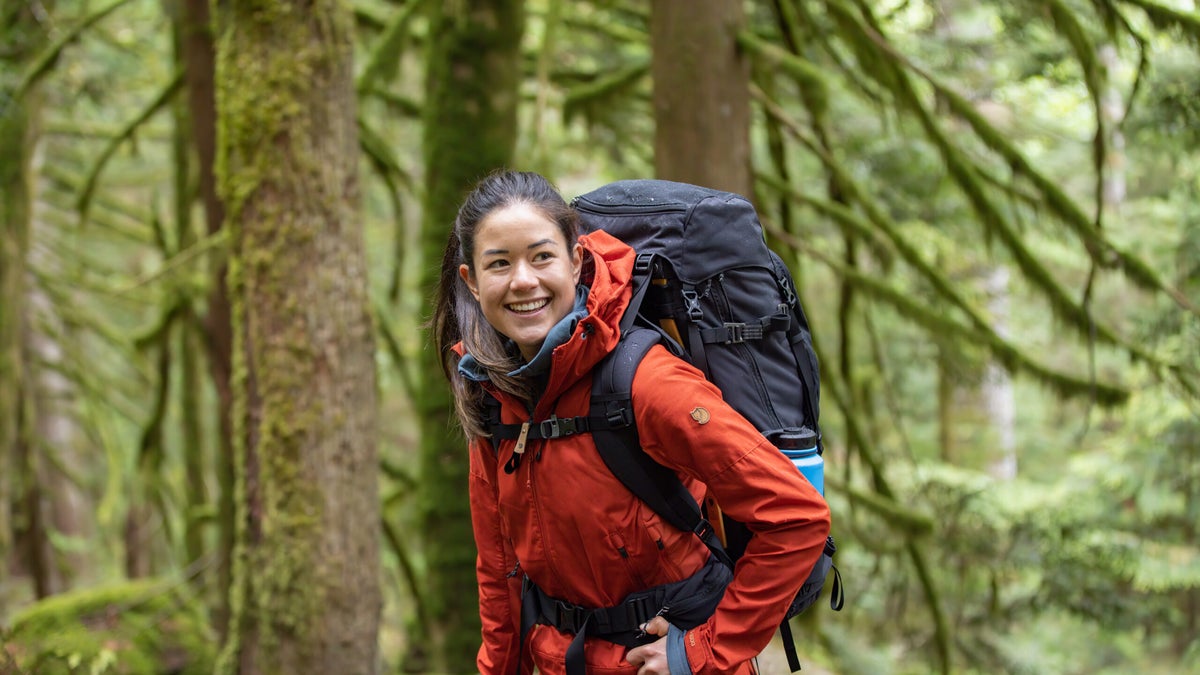
How to Spend More Time on the Trail This Fall and Winter
Read More
Winter Trekking
Read
Fjällräven Guides share lessons about the power of spending time in nature with others
Stories
stories


Packing Tips
Trail Etiquette
Staying Fueled
Fjällräven Guide Karrie Carnes discovered her love for the mountains when she moved to Portland in 2015. For much of her life before that, she lived on the East Coast and spent most of her time adventuring around the Atlantic Ocean, pursuing watersports like scuba diving and paddleboarding. In Oregon, Carnes immediately fell in love with the Cascades. “I’m still amazed by these mountains,” Carnes says. “I’m a desk jockey during the week, but I try to get out every weekend. Being in nature allows me to be present in the moment. It’s how I practice mindfulness.”
So naturally Carnes jumped at the chance to join other Fjällräven Guides on a scouting trip last summer, to test the newest Fjällräven Classic USA route in Colorado. The group hiked well above treeline (topping out at over 11,000 feet) through some of Colorado’s most iconic mountain wilderness, camped near high alpine lakes, and forged deep connections over their shared love for the outdoors. “It’s amazing what nature can do,” Carnes says. “Nature can be this quiet, meditative space, or it can be the backdrop for community, creating a common language that can bring different kinds of people together.”
One universal message that Carnes likes to share is about how she enjoys the emotional attachments we form with some pieces of gear. For Carnes, it’s her pants. “I know every time I put these Fjällräven Keb trousers on, I’m going to have an adventure. I get kind of giddy,” she says. All the better if it’s an adventure with others.
Karrie Carnes: Speak a Common Language
Alyssa Macy camped more in 2020 than she had ever camped before. The Fjällräven Guide and CEO of the Washington Environmental Council needed a release. So, she left her Seattle home and pitched a tent. A lot. The time outdoors not only served as a mental health cure during the pandemic, it gave Macy an opportunity to reconnect with her past. Macy is of Wasco, Navajo, and Hopi descent and a citizen of the Warm Springs Indian Reservation, and has been reflecting on that cultural identity in recent years. “Covid has been the great pause, an opportunity to reevaluate and look at the way we exist in this world,” Macy says. “My dad was an avid outdoorsman. A lot of our time together was hiking, just a couple of hours up a random hill and looking at the community from the top. It was always this time of joy for me, but he also taught me our responsibility as Native People to protect what we have.”
Macy sees outdoor adventure as a natural way of building the conservation community. Anyone who recreates in the outdoors, she hopes, will be inspired to protect it. “The people who love to fish and hike and swim and boat, we all want to protect these wild spaces,” Macy says. Hitting the trail with others helps turn sentiment into action. “It’s one thing to go out and enjoy it and another to take the steps to advocate for good policy. We all have to get in the same boat and start rowing in the same direction.”
She brought this mission to the scouting trip for the Fjällräven Classic USA. “I started every day of the hike with a prayer and song asking for safe passage and honoring those who had come before us,” Macy says. “We were hiking through the traditional territory of the Ute Tribe, and taking the time to acknowledge where you are and who came before you is a powerful, important step in acknowledging our responsibility for the land.”
Alyssa Macy: Stand Up for the Land
Want to make a relationship stronger? Share an outdoor adventure. The more intense the better. “You’re cooking meals over a fire together, sweating together. You smell together,” says Cal MacKintosh. Scouting the Fjällräven Classic USA route in Colorado promised all of that, and more.
When the Portland-based Fjällräven Guide was invited to test Fjällräven’s new Classic route in the Rockies, he knew to expect a challenge. “I look at Mount Hood every day. It’s so tall, and the idea of starting a hike at that elevation was intimidating,” he says.
The route peaked at over 11,000 feet and elevation was a constant factor. The group also had to navigate stream crossings and one evening they had to keep a watchful eye on a moose that parked itself on the edge of their campsite. It was a bucket list adventure for MacKintosh, but the fact that he got to experience Colorado at its wildest with others gave the trek another dimension.
He and the other Fjällräven Guides, strangers on day one, became fast friends. “In that kind of situation, people forget about their daily lives, the stress,” he says. “It just kind of melts away. And then people feel closer to each other. You get out to some wild places with strangers, and just let nature take the wheel.”
CAL MacKINTOSH: BUILD CLOSER BONDS


Learn more about Fjällräven's roots and the values the company prides itself on
explore
Why Fjällräven Is Going All In on Durability
Read More

Fjällräven’s History Will Make You Love the Brand More
Read More
A Trekker’s Guide to Sweden
Read More

A classic trucker (in Swedish that’s långtradar) with perforated sides, sporting Fjällräven’s throwback 1960 emblem and a G-1000 Eco front, the Långtradarkeps is equal parts sun protection, style points, and bad-hair concealment.
1960 LOGO LÅNGTRADARKEPS

Everything is better together, including nature. That’s why Fjällräven created a one-of-a-kind community hike. It’s called the Fjällräven Classic USA—a celebration of nature, of human connection, and of making every hike as fun as it is challenging. Fjällräven Guides recently scouted the Colorado route for the Fjällräven Classic USA and came away with some key takeaways about why coming together in nature is so crucial for our—and the planet’s—well-being.


learn more >
The 7/8 length Abisko Tights are build to accommodate hiking boots for use on the trail, while the flattering cut and high waistband make these tights comfortable for everyday outdoor use. Recycled polyester material provides the perfect combination of stretch and moisture wicking properties.
ABISKO TIGHTS W
x
stories
x
learn more >
ABISKO TIGHTS W
The 7/8 length Abisko Tights are build to accommodate hiking boots for use on the trail, while the flattering cut and high waistband make these tights comfortable for everyday outdoor use. Recycled polyester material provides the perfect combination of stretch and moisture wicking properties.
How to Spend More Time on the Trail This Fall and Winter
Read More
x


A classic trucker (in Swedish that’s långtradar) with perforated sides, featuring an embroidered Fjällräven badge and a G-1000 Eco front, the Långtradarkeps is equal parts sun protection, style points, and bad-hair concealment.
1960 Logo LÅngtradarkeps