
2025
HOME AND
DESIGN
TRENDS

FRAMING


THE FUTURE
CONTENTS
STYLE TRENDS
COTTAGECORE
Part historical, part storybook, all charm
70S REVIVAL
Retro Chic Meets Contemporary Comfort
ADAPTIVE LIVING SPACES
Lifelong aesthetic and comfort
WINDOW & DOOR TRENDS
TRANSOM & CLERESTORY WINDOWS
Elevated light for elevated spaces
COLORFUL DOORS AND WINDOW TRIM
Bright Trims, Bold Homes
THE SMALL “BIG” DOOR
Accessible grandeur for smaller spaces
Inflationary Pressures
and Thrifting Surge
High inflation has prompted consumers to adjust their spending when it comes to daily essentials and household goods. Home design is no exception. Thrifting, once associated with budget-conscious shoppers, is now a key enabler of unique spaces. By 2026, thrifting is projected to grow by more than 125%*, reflecting a desire for sustainable and cost effective choice.
Constrained Market
& “Lock-In Effect”
Housing supply remains tight and interest rates are uncertain, leading to stubbornly high home prices. As a result, many homeowners are increasingly hesitant to sell or move. This “lock-in effect” is leading to a
surge in home renovation. Longevity in form and function is the priority as owners see their houses become closer to “forever” homes.
Population Shifts and Regional Growth
Demographic shifts continue to shape
housing preferences as we return to prepandemic norms. While the Northeast experiences slower growth, other regions thrive**. Families, renters, and inter-generational
households are redefining “first- time buyers,” providing surprising benefits, fostering stronger family bonds and easier resource sharing.
INFLUENCES SHAPING 2025
What’s better than one kitchen? Two kitchens! One for the indoors and one for the outdoors to make cooking, entertaining, and enjoying your own backyard that much more enjoyable — get the details!�
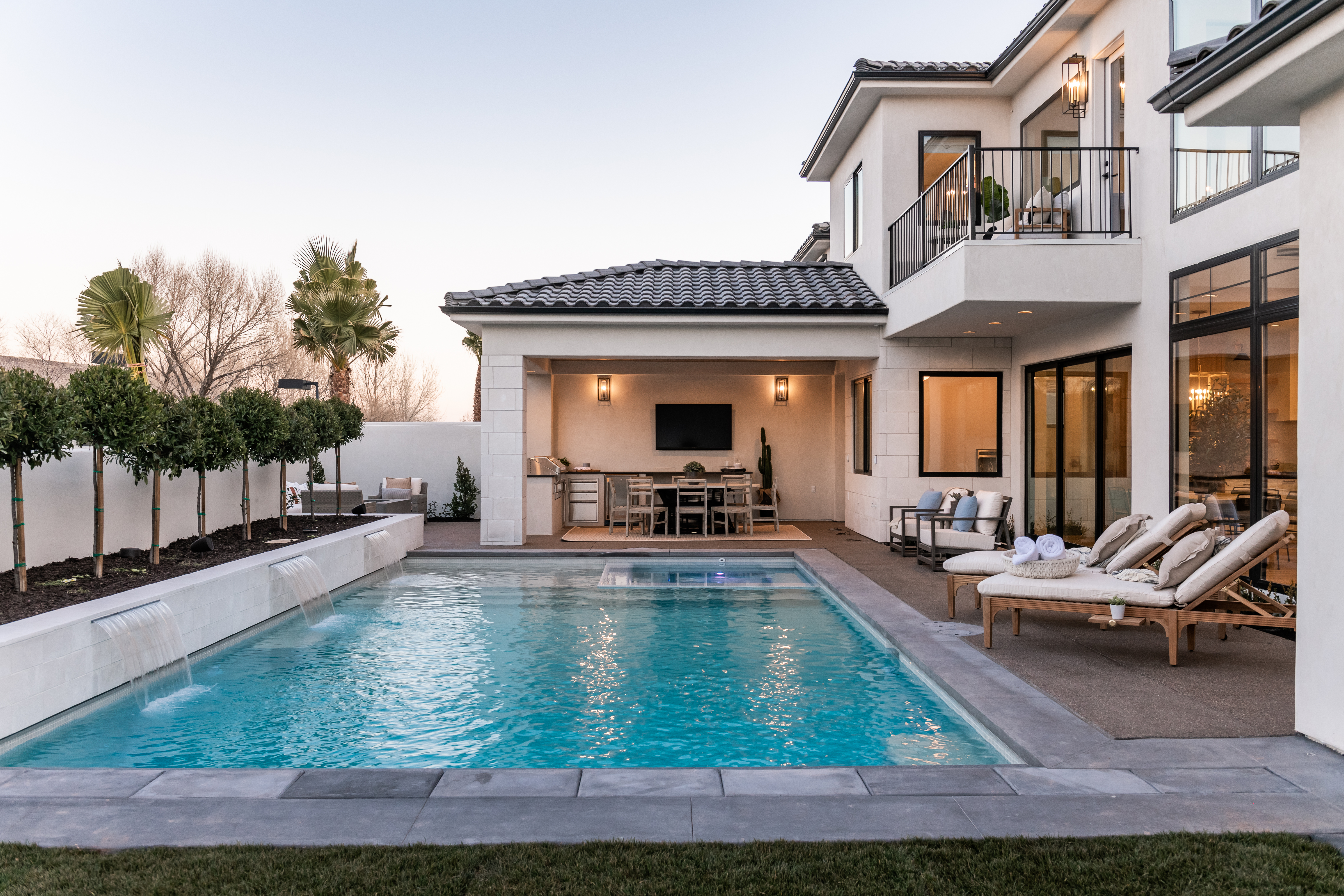
Indoor/outdoor living got a jumpstart during the pandemic. As more people focused on their homes, investing in swimming pools and upgraded patios didn’t seem so far-fetched. These amenities were a way to maximize square footage, and they offered an opportunity to gather safely with others. But as the pandemic waned, the desire to spend time outdoors remained. Spaces that were at home but outside of the home allowed for pursuits like cooking, gardening, socializing, and other activities that center around wellness and connection. And so, architecture began to shift, bringing us to the present moment where an outdoor kitchen is a natural next step in indoor/outdoor living.
So, what exactly is an outdoor kitchen? Much more than a patio with a grill, today’s outdoor kitchens parallel the elements found in traditional kitchens, including countertops, cabinetry, refrigerators, and sinks. Additional amenities to suit a homeowner’s preferences, like a dedicated pizza oven or wet bar with beer tap, are also common.
The dormer windows in Will Taylor’s (Bright Bazaar) guest room play well as an exterior element on a cottagecore home. Dormer windows not only enhance the aesthetic appeal but add character and a quaint, cozy feel to the space.
Andersen Aluminum Series Multi-slide Door
Learn more
3 essential ingredients for a perfect outdoor kitchen


While the recipe for success of an outdoor kitchen will depend on the space, region, and homeowner preferences, these three ingredients are critical to a harmonious and beautiful space:
2
1
3
1. Distinct “zones” or outdoor “rooms”

Defining distinct zones within the kitchen is just as important outdoors as it is indoors. Although an outdoor kitchen will naturally tend to be more open concept than an indoor one, an efficient layout will allow you to work more happily with your sous chef(s). The “kitchen triangle” rule might be modified to keep a convenient flow between the grill, fridge, and sink.
In addition, a kitchen might be one distinct room in your outdoor living area. And a good design will allow you to make the most of both your indoor and outdoor amenities. For example, it’s not uncommon for an outdoor kitchen to be right outside the indoor kitchen, so both spaces can be leveraged. And outdoors, chances are you’ll want a “dining room” where you can sit down and enjoy your meal. Thinking through how you’ll use the outdoor kitchen will help you come up with a good structure and flow.
EXPERT ADVICE
Expert perspective on how to build with longevity in mind
Adaptive Living
After years as an architectual designer, Andersen technical service manager Ann Hauer shares advice on designing for different age groups, abilities and eras.
Here are three tips to consider:
1 When planning for the future, consider the longevity of materials and energy efficiency. Look beyond momentary trends and opt for permanent finishes and fixtures that are timeless, as they are more challenging to replace compared to paint colors and textiles.
2 Mobility is paramount; with window choices, some may be easier to operate with aging. Consider a crank-out casement window vs. a double-hung that you need to lift up over your head. Doors like Andersen's MultiGlide offer automation, enabling ease of use. Accessibility should be woven into the design, minimizing the need for costly modifications.
3 For older individuals, wheelchair users, and toddlers alike, easy transitions from indoor to outdoor living fosters independence and freedom to move between spaces. Incorporating a flush sill into a door enhances accessibility, facilitating a deeper connection with nature and enriching overall quality of life.

E-Series Hinged Patio Door

inside a trendsetting project
Read how this “Japandi” home frames spectacular
views of a restored prairie's wetland
Nestled in the heart of White Oaks
Savanna, “Valdres” stands as a
testament to architectural harmony
with nature. This sculptural abode
draws its name from the Norwegian
words for “valley” and “pastures in
the forest,” reflecting the home’s
synergy with the vast prairie
wetlands it overlooks.
The residence boasts a “Nordic Zen”
aesthetic, designed to be visually
striking from every angle. The
Valdres respects the landscape and
the vistas of neighboring properties
by integrating into the rolling hills
rather than dominating them.
The design strategically balances
privacy with outdoor connectivity,
featuring a mix of discreet openings
and expansive trapezoidal windows
that frame the panoramic scenery.
The clerestory windows, align with
the vaulted ceiling, creating an airy,
light-filled space.
To make your outdoor kitchen work best for your specific lifestyle, it’s crucial to have a clear vision of how you see the space being used. For example, if you’re an avid gardener, you may want easy access to your backyard bounty. Or, if you find yourself frequently hosting, you will need a decked-out bar and ample seating. Some things to consider:
Weather-proofing – Outdoor kitchens are most popular in warm climates, but they can also be great in cooler climates, helping to make the most of warm summer months.. From roofs and fireplaces to high-quality countertops and cabinets, the right products and materials are important for withstanding the elements of your area. Our big doors and patio doors come in options for various climates, and your building professional can help you find the right one.
Orientation – Think about the cardinal direction of the space and how that may impact the placement or layout. For example, if you plan to use your kitchen primarily in the evening, do you want to face west to admire the sunset or east to avoid having the sun in your eyes?
Desired must-haves – Think about what excites you most about an outdoor kitchen, and make that a priority in the space. If it’s embracing a beautiful view, arrange the layout to maximize soaking in the vistas. If it’s access to the pool, consider pass-through windows and covered seating. If it’s entertaining, consider crowd-pleasing additions like an outdoor tap, wood-fired pizza oven, or mounted TVs.
3. A thought-through plan

This remodeled home is a case study in how to nail indoor/outdoor living in a small backyard. The Folding Outswing Door makes the living room and pool deck lounge space one, and there are distinct spaces for all the various activities, including a well-defined outdoor kitchen.�
Pass-through windows come in all shapes and sizes and can be a perfect way to connect indoor and outdoor kitchens. Both the Folding Pass-Through Window on the left and MultiGlide™ Pass-Through Window on the right are ideally set up to service outdoor bars — forget the cooler! One cool fact about the example on the right is that the window pockets (recesses into the wall when open) to maximize the opening.
Wall: SW 6060 Moroccan Spice
Trim: SW 6062 Vintage Leather


More to explore

Outdoor kitchens:
How to pull off this sizzling hot home design trend
Creating a strong connection between indoors and outdoors enablessures accessibility, convenience, and flexibility of the space, while also enhancing its beauty. The right opening will depend on your space, but options of all sizes exist. Here are some tips for picking out the perfect window or door:
Of course, a patio door makes a great connection to an outdoor kitchen. If you’re tight on space, consider a gliding patio door, which opens flush with the wall. On the other hand, if there’s plenty of space, you might appreciate the double-wide opening of a hinged patio door.
Really tight on space? Or want to set up an outdoor bar? The pass-through window is a perfect solution in either scenario. It works where there’s no room for a door or when you want a window that can be set into your countertop so it’s easy to pass the drinks through.
Looking for the most seamless blend of indoors and outdoors? This is where our big doors shine. They can create unobstructed openings that combine your indoor and outdoor spaces into one. And they come in various options that can work in a variety of scenarios. For example, a Folding Outswing Door works particularly well in a remodel because it runs along a single track, similar to a traditional sliding glass door.
2. A strong connection between indoors and outdoors
2. A strong connection between indoors and outdoors
Learn more
1. Distinct “zones” or outdoor “rooms”
Learn more
3. A thought-through plan
Learn more
Light sources are nature itself, with abundant windows and understated lighting fixtures, contributing to the cozy, rural aesthetic.
Inflationary Pressures
and Thrifting Surge
Constrained Market
& “Lock-In Effect”
Population Shifts and Regional Growth
+
+
+
+
+
+

Why are outdoor kitchens on the rise?
“Color is a powerful tool in interior design, and windows should be a place color is used as well. Gone are the days of sticking to just black and white – I love to drench a room in tone-on-tone hues, often choosing a shade darker for the windows and trim to create depth and sophistication. A contrasting trim color can add a playful touch, introducing an element of color blocking that brings dynamic interest to any space.” -Jess Davis
+
+
+

ABOUT THE DESIGN
Back
To further enhance the mid-century aesthetic, they decided to install
floor-to-ceiling windows in the living room. These expansive windows
not only flood the space with natural light but also create a seamless
connection between the indoors and the lush outdoor landscape.
The large panes of glass offer unobstructed views of the hillside,
making the room feel more open and inviting.
Tolbert selected Andersen® E-Series windows with white oak frames to
replace the original windows. The light tone of the frames warms up the
space in a perfectly, subtle way. Instead of wood trim, the windows
were installed with a drywall return, furthering the clean, modern look.
The three-bedroom, two-bath home backs into a steep hillside with mature trees, giant aloe plants, and cacti. On the inside, it has large windows, a dramatic staircase, and an open floor plan. Still, there was a problem. The beamed ceiling in the living room — that stunning space that had convinced them of the home’s potential — made the home feel dark and closed off.
Replacing the windows also offered the opportunity to improve
functionality, as they were able to remove the old jalousie windows —
windows made of horizontal slats of glass that louver open. With the
new dual-pane E-Series picture windows, the home is much more
energy-efficient and safer.
Pick bi-parting
A four-panel patio door that opens from the center and includes two stationary panels on either side of the moving panels will expand your glass while minimizing the amount of tracking on the floor.
Size up
A 10-foot tall patio door, or a door that’s about two feet taller than your average ceiling height, will give you a big door feel without the big door. So if you’ve got the height, go for it!
Add on
A window can be added above the door (transom), next to the door (sidelight), or you can go all out by adding an extra panel (or panels). All of the above were added to the E-Series Gliding Patio Door in this bedroom.


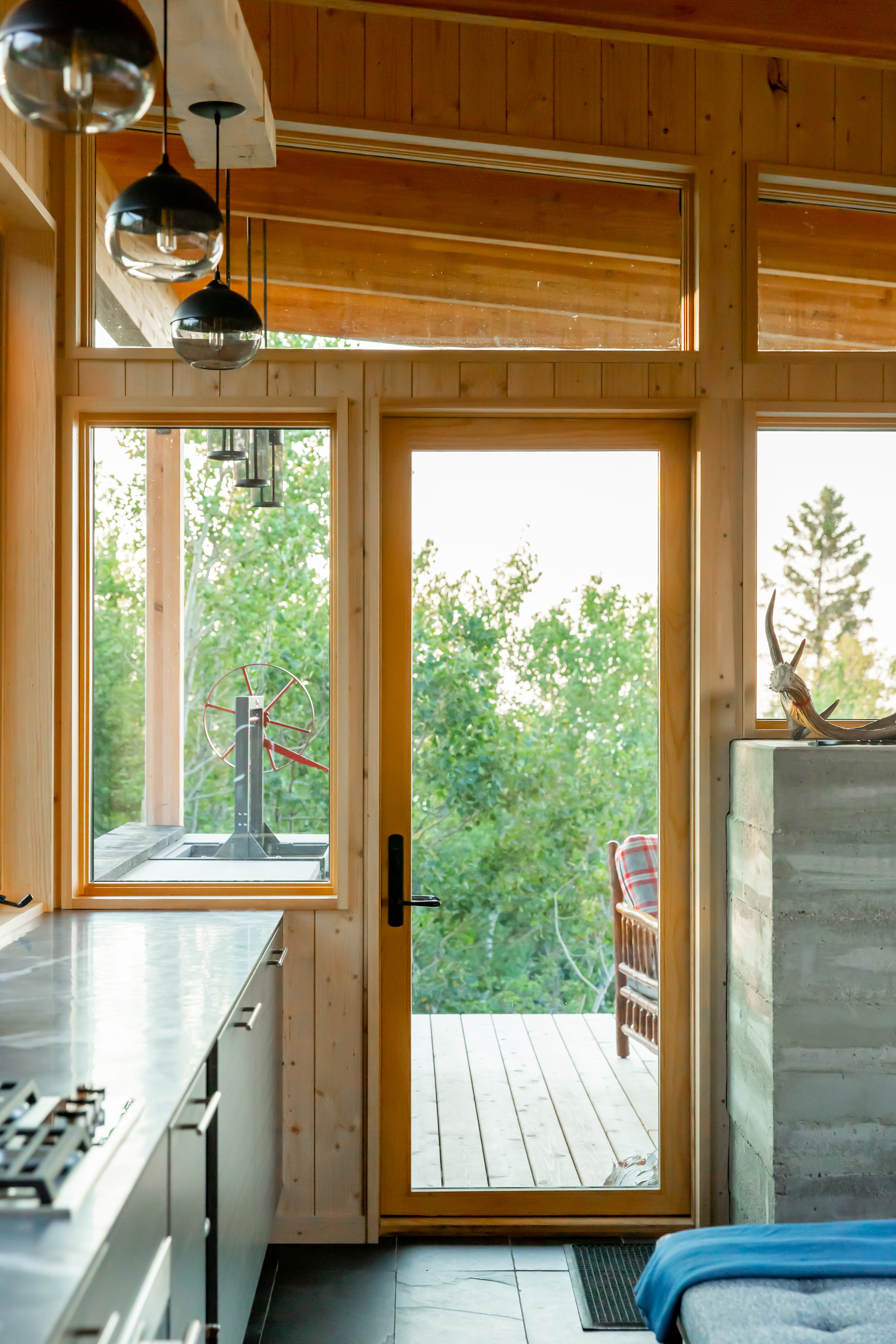
There’s no reason outdoor kitchens can’t work in a cold climate, and Krissie Mason’s Lake Superior cabin proves it! A single panel E-Series Hinged Patio Door makes an easy connection between her indoor kitchen and outdoor kitchen while a roof and fireplace keep the outdoor kitchen protected and comfortable in all sorts of weather.
Projects
Justina Blakeney’s home is California dreaming defined
What does it actually mean to design for indoor/outdoor living? And for that matter, how can you do it in your home? Step inside artist and designer Justina Blakeney’s LA home to see for yourself.
Learn more
Projects
The perfect home style for indoor/outdoor living? It might just surprise you!
Love indoor/outdoor living? Don’t overlook the ranch home! This California ranch is the ultimate example of how this classic home style can facilitate a casual lifestyle while also embodying a modern aesthetic and help meet sustainability goals.
Learn more�
Projects
Will Taylor’s indoor/outdoor home
If you’ve ever struggled to justify investing in your outdoor space because you live in a climate that’s warm only part of the year, we'd like to invite you on a mind-expanding tour of Will Taylor’s Scandi Barn addition.
Learn more�

To make your outdoor kitchen work best for your specific lifestyle, it’s crucial to have a clear vision of how you see the space being used. For example, if you’re an avid gardener, you may want easy access to your backyard bounty. Or, if you find yourself frequently hosting, you will need a decked-out bar and ample seating. Some things to consider:
Weather-proofing – Outdoor kitchens are most popular in warm climates, but they can also be great in cooler climates, helping to make the most of warm summer months.. From roofs and fireplaces to high-quality countertops and cabinets, the right products and materials are important for withstanding the elements of your area. Our big doors and patio doors come in options for various climates, and your building professional can help you find the right one.
Orientation – Think about the cardinal direction of the space and how that may impact the placement or layout. For example, if you plan to use your kitchen primarily in the evening, do you want to face west to admire the sunset or east to avoid having the sun in your eyes?
Desired must-haves – Think about what excites you most about an outdoor kitchen, and make that a priority in the space. If it’s embracing a beautiful view, arrange the layout to maximize soaking in the vistas. If it’s access to the pool, consider pass-through windows and covered seating. If it’s entertaining, consider crowd-pleasing additions like an outdoor tap, wood-fired pizza oven, or mounted TVs.


Outdoor kitchens:
How to pull off this sizzling hot home design trend