Join us at CCUS Latin America!
Join AspenTech at CCUS 2024 Latin America! The event, held this year in Rio, provides a multidisciplinary platform to highlight current CCUS work, address technical challenges related to implementation and explore best practices for policy instruments and economic incentives that could make CCUS a profitable enterprise in the region.
Shifting Toward a Carbon-Neutral and Sustainable Energy Future
Booth #109
Visit Us at Booth #109!

May 22-23, 2024 | Rio de Janeiro, Brazil
JW Marriott Rio de Janeiro
AspenTech digital solutions help ensure economics and safety across the CCUS value chain, enabling you to:
X
Top
Join us
Find us


Learn more

Evaluate risk in carbon capture and storage to make informed investment decisions
Reduce CAPEX by 5-20% and OPEX by 15-30%
Shorten project time by 20%
Accelerate cost-effective commercialization and scale up of carbon capture processes
Screen storage/sequestration candidates and select storage locations
Optimize injection conditions and track CO movements to show regulatory conformance
Drive Low-Risk CCUS Solutions at Scale

Accelerate Innovation for
Carbon Capture and Storage


View Now
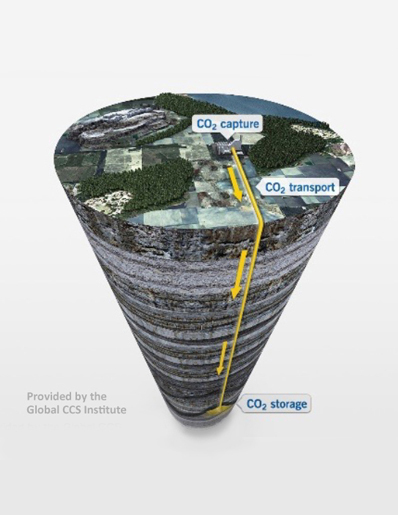
Carbon Capture and Storage (CCS) will be an essential pathway as industries move to decarbonization and net zero. The ability to handle CO2 at both emission sources and directly from air, together with long-term storage in the subsurface, make CCS a crucial part of the energy transition.
On-Demand webinar:
The Drive to Net Zero: The Key Role of Digital Technology in Carbon Capture and Storage (CCS)

View Now
Because there are many stakeholders involved and a wide variety of technologies being utilized in different stages and scopes of CCUS projects, it is clear that there is no one-size-fits-all solution. However, AspenTech solutions are backed by a strong track record, and the CCS/CCUS sustainability pathway provides the necessary tools to tackle the challenges related to cost, risk, and scalability across the entire carbon capture value chain.
Blog:
Carbon Capture: The Need to Act

View Now
To hold global warming within the range of the Paris Agreement goals, the world needs to reduce emissions by unprecedented volume—and at unparalleled speed. Ensuring a green future while continuing to provide reliable energy supplies is a dual challenge that will require new solutions, including advanced technology.
Executive Brief:
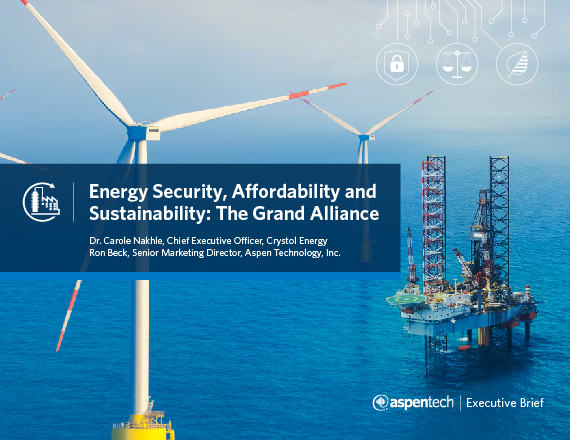
Energy Security, Affordability and Sustainability: The Grand Alliance

View Now
Carbon capture continues to be top of mind for energy and chemical companies as they navigate the energy transition, but what is the best approach to achieve mitigation goals? Accurate process modeling is a crucial requirement to select the right processes. In this white paper you will learn how advancements in predictive modeling technology enable you to design the most operable, energy efficient and sustainable solutions.
White Paper:
Innovating and Commercializing Carbon Capture Processes Through Predictive Modeling

View Now
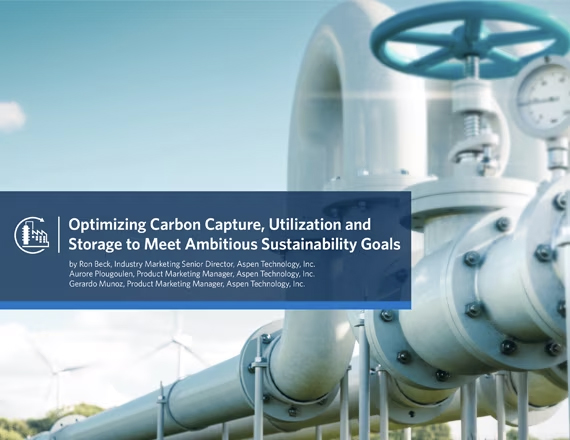
The race to a zero-carbon future is on. Global oil and gas, petrochemical and chemical companies have announced ambitious carbon mitigation, plastics re-use and water conservation targets. Carbon capture and storage (CCS) and carbon capture and utilization (CCU) are key technologies to help companies reach their sustainability goals.
White Paper:
Optimizing Carbon Capture Utilization and Storage to Meet Ambitious Sustainability Goals

View Now
This article shows how a machine-learning workflow based on a Self-Growing Neural Network (SGNN) was used by Aspen SeisEarth™ as an efficient and unbiased scanning tool for carbon capture and storage (CCS) monitoring, enabling faster identification of the confinement system.
Article:
Using a Self-growing Neural Network Approach to CCS Monitoring


View Now
Carbon capture, utilization and storage projects
are growing at record speed, resulting in an increasing need for subsurface technologies that can unlock fast time-to-results throughout all the steps of the project.
Article:
Accelerating Results in Carbon Storage Studies Using an Integrated and Automated Approach

View Now
Carbon Capture Utilization and Storage (CCUS)
has the potential to play a key role in reducing emissions, and permanently storing the captured CO2 in the subsurface makes it an essential part of the solution. However, storing the carbon has its challenges, ranging from assessing geologic reservoirs to containment for permanent and safe storage, among others.
Brochure:
Subsurface Science & Engineering Solutions for Carbon Storage
Learn More about AspenTech Solutions

Interested in learning how to accelerate competency development in Carbon Capture and Storage?
Join our training courses:
Get the Training Your Team Needs!
View Courses
On-Demand Presentations
Our experts will be on hand to offer on-demand presentations on the topics that most interest you:
Watch the video to learn more about AspenTech's Sustainability Pathway: Carbon Capture, Utilization & Storage.
Learn More about AspenTech Solutions for Carbon Capture and Storage.
Maximize project economics and performance for large-scale carbon capture through rigorous modeling of complex chemistry and thermodynamics, economic evaluation, equipment design and plant layout solutions that increase collaboration and improve project times.
Accelerate Feasibility and Delivery of Carbon Capture Projects through Digitalization
For full-scale implementation of CO storage, a number of challenges need to be addressed, including a reliable assessment of geomechanical risk at storage sites. A 3D mechanical earth model can be used to understand how rock types and stresses are distributed in the 3D space of the reservoir and surrounding formations. AspenTech Subsurface Science & Engineering provides a general solution to readily assess the geomechanical risk of CO geological storage while preserving the geology’s integrity.
Featured Technologies: Aspen SKUA™

De-Risk Carbon Storage Through an Integrated Geology-to-Geomechanics Workflow
Carbon capture, utilization and storage (CCUS) projects are growing at a record rate. In 2022, the global CCUS project pipeline increased by over 50%, resulting in an increased need for subsurface technologies that can unlock fast time-to-results throughout all the steps of the project. This presentation describes an advanced workflow that can serve as a catalyst for efficient carbon storage studies. It tightly integrates static and dynamic domains and offers the propagation of uncertainties, from seismic characterization to geological modeling and simulation.
Featured Technologies: Aspen RMS™, Aspen Tempest™,
Aspen Big Loop™
Accelerate Carbon Storage Site Identification and Development Using an Automated Subsurface Workflow
Storing carbon in a geological formation poses key technical challenges. These include assessing geologic reservoirs, estimating storage capacity, injectivity, containment for the permanent and safe storage of CO , and demonstrating the reliability and conformance of the process. AspenTech provides the technology needed to ensure the success of carbon storage projects throughout their lifetime.
Featured Technologies: AspenTech Subsurface Science
& Engineering Solutions
Enhance Carbon Storage Studies Reliability Using Comprehensive Subsurface Solutions
CCS is a major element of many companies’ plans for mitigating carbon emissions. Challenges still exist, however, and digital technologies are playing a key role in the rapid development, scaling and adoption of CCS technologies. Learn how software serves as a key lever for rapidly improving the economics, scale and speed of implementation, from carbon capture to storage.
Featured Technologies: AspenTech Performance Engineering and Subsurface Science & Engineering
Enable End-to-End Commercialization and Optimization with Digital Technologies for Carbon Capture and Storage










AspenTech solutions for CCUS maximize performance and energy security while advancing decarbonization initiatives with Industrial AI and digital technologies. Our solutions streamline exploration and production, advance operational excellence, maintain asset integrity and enable new energy pathways and business models.