Join us at the 65th SPWLA Annual Symposium!
Petrophysics Beyond Hydrocarbons
Booth #6

May 18-22, 2024 | Rio de Janeiro, Brazil
Sheraton Grand Rio Hotel & Resort
Improved Efficiency and Quality
X
Top
Join us
Find us


Learn more

A multi-well, multi-user, multi-zone borehole data storage and interpretation ecosystem
Enhanced collaboration and streamlined data management and sharing
Aspen Geolog – The Only Petrophysical Toolkit You’ll Ever Need

Petrophysics Beyond Hydrocarbons


View Now
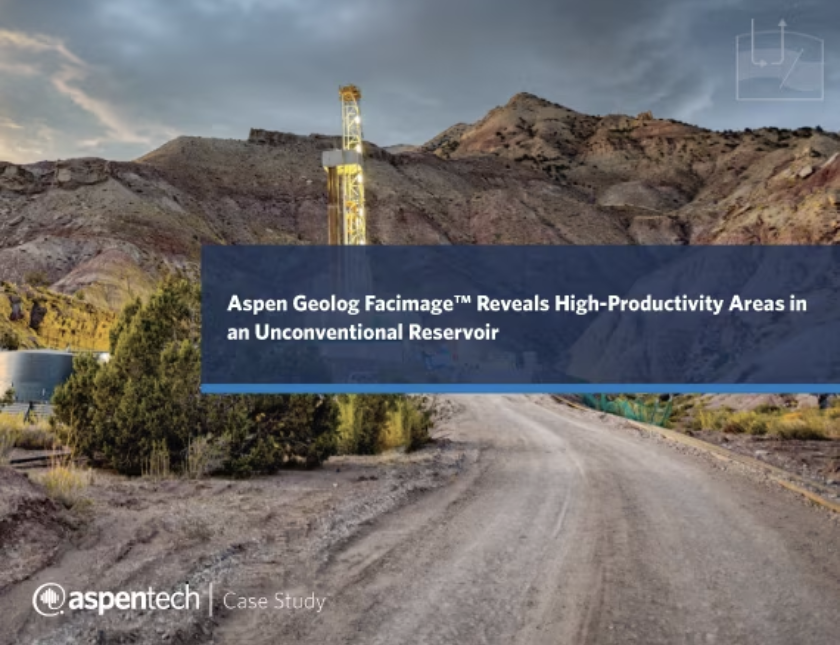
Read this case study to learn how Multi-Resolution Graph-Based Clustering (MRGC) in Aspen Geolog Facimage created value in an unconventional hydrocarbon play in the thick stratigraphic interval of the Montney Formation.
Case Study:
Aspen Geolog Facimage™ Reveals High-Productivity Areas in an Unconventional Reservoir
Learn More about Aspen Geolog

On-Demand Presentations
Our experts will be on hand to answer your questions about formation evaluation and Aspen Geolog, and to deliver these presentations on demand:
Watch the video to learn more about Aspen Geolog
Learn More about Aspen Geolog.
To ensure well stability and assess optimal orientation for fracture development, it is critical to understand regional stress orientations and magnitudes and determine their impact on wellbore formation rock properties. The Pore Pressure Prediction and Geomechanics workflow in Geolog provides users with a comprehensive workflow to assess these stress regimes as well as the formation wellbore mechanical environment.
Pore Pressure Prediction and Geomechanics
Petrophysical analysis and formation evaluation are vital inputs to most geoscience workflows. Key information includes porosity, saturation, permeability and mineral volumes, together with the identification of fluid contacts and free water level. The ability to provide a level of uncertainty around these petrophysical inputs increases confidence in reserves estimation and producibility, enabling better, more informed economic decisions.
Quantifying Petrophysical Uncertainty
Defining the porosity and permeability relationship is a pivotal component of reservoir characterization to maximize hydrocarbon recovery. Typically, core porosity and permeability measurements are evaluated and regression relationships are used to extrapolate permeability from wireline data. This presentation shows different methodologies for rock type characterization and leverages machine learning techniques to calculate an accurate permeability log.
Rock Type Classification and Flow Unit Identification: Understanding
Porosity-Permeability Relationships
This presentation will discuss how Aspen Geolog can be leveraged in the CCS workflow to determine and define storage reservoir characterization, well integrity and well monitoring. Aspen Geolog has a long history of providing customers with a highly flexible, customizable and easy-to-use tool kit for petrophysical evaluation in traditional reservoir characterization workflows and these same capabilities can be applied to CCS project development.
Formation Evaluation Solutions for a Low-Carbon Future

View Now
Learn how machine learning-based algorithms
were used to analyze complex borehole and seismic studies employing unique classification approaches embedded in Aspen SeisEarth™ and Aspen
Geolog Facimage™.
Case Study:
AspenTech Solutions Combined with Machine Learning Help Reduce Geological Risk During Well Planning and Drilling
We invite you to stop by our booth #6, where you can talk
to our experts and learn about the latest developments in Aspen Geolog™, the industry-leading system for advanced formation evaluation and petrophysical analysis.
Join AspenTech at the 65th SPWLA Annual Symposium in
Rio de Janeiro, an outstanding gathering of petrophysicists
and well log analysts from around the world.

Aspen Geolog enables informed decisions by assessing and analyzing the physical, geomechanical and fluid properties of reservoirs for diverse exploration and production projects.
In addition to traditional oil and gas use cases, its versatility makes it well suited to sustainability applications such as
carbon sequestration and geothermal energy development.

Agnostic, Scalable, Customizable
Flexible, modular design open to any well log source
Incorporate proprietary algorithms and tailor the system to your unique workflow
Supports the Open Subsurface Data Universe initiative R3 read-write connectivity
Expanded Connectivity
Modern, intuitive interface
Easy to use and consistent across multiple platforms
Powerful Tools, Elegant Interface
Easy adaption of technology to support alternative energies, such as geothermal, CCS, lithium brine, hydrogen production or storage, and offshore wind projects
Flexible, Versatile
This presentation will discuss our vendor-agnostic solution for processing raw borehole image data to produce borehole images. The extensive tools within Aspen Geolog can be used to interpret borehole image data, including threshold analysis, fracture density and fracture aperture workflows, among others.
Borehole Image Processing and Interpretation
This presentation describes a workflow that evaluates the mineralogy and geomechanical rock properties of a pilot well and uses the resulting logs to identify sweet spot facies in terms of original oil in place, mineralogy and mechanical properties. This information is used to optimally place a lateral well within the targeted zone.
Integrated Petrophysical Interpretation to Unlock Unconventional Reservoirs

View Now
Read the case study to learn how the Aspen Geolog connector was recognized by TotalEnergies as a fit-for-purpose solution.
Case Study:
Aspen Geolog Connector to OSDU Helps TotalEnergies Accelerate Decision-Making and Project Delivery

View Now
The relationship between porosity and permeability is a key component of reservoir characterization when trying to maximize hydrocarbon recovery. Watch this webinar to learn how innovative technologies in Aspen Geolog enable you to gain a more accurate model of permeability for all reservoir rocks.
On-demand Webinar:
Understanding Porosity-Permeability Relationships in Rock Type Classification and Flow Unit Identification

View Now
Learn how Aspen Geolog uses modern well logs to produce superior results when characterizing unconventional reservoirs.
Data Sheet:
Aspen Geolog™ Formation Evaluation for Unconventional Shale Plays

View Now
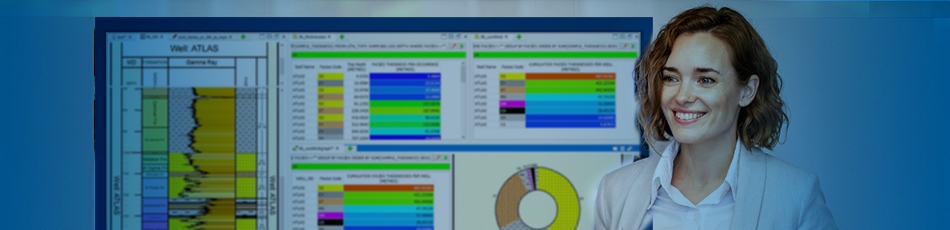
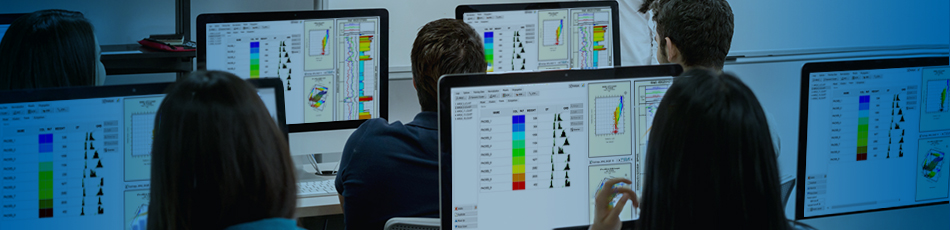
Aspen Geolog is unmatched in terms of its best-in-class petrophysical and geological analysis tools, well data management, superior graphics and robust data integration. Download the brochure to learn more.
Brochure:
Aspen Geolog







View Now
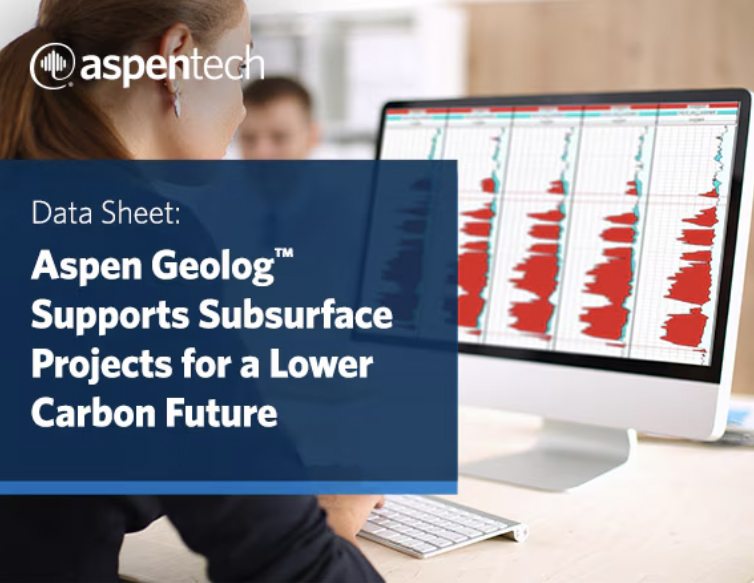
Aspen Geolog is the leading solution for
advanced formation evaluation and petrophysical analysis, with versatility that also makes it well suited to a diverse number of energy industries such as carbon sequestration and geothermal energy development.
Data Sheet:
Aspen Geolog™ Supports Subsurface Projects for a Lower Carbon Future

View Now
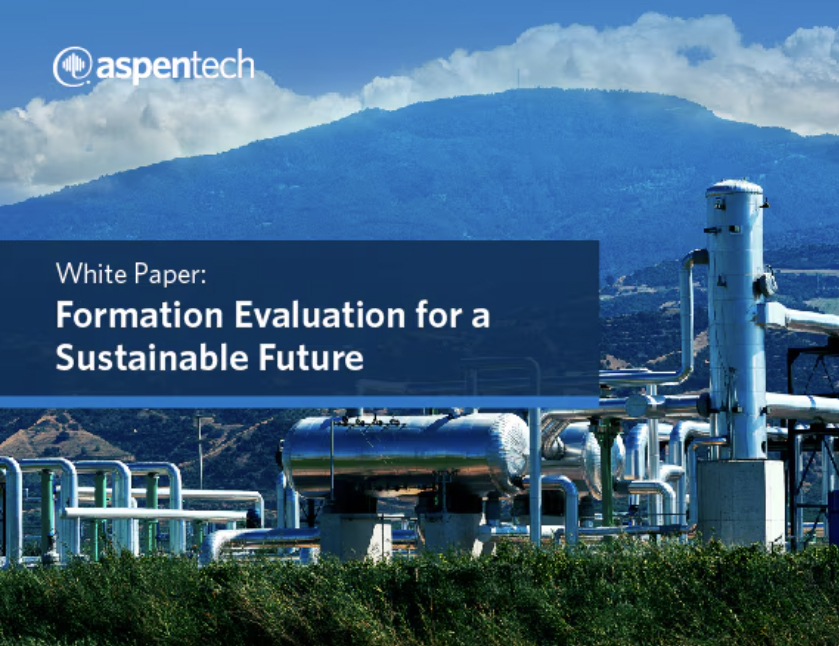
Formation evaluation plays an essential role in helping decision makers locate and evaluate suitable geological formations for sustainable resource utilization, as well as predict and mitigate potential environmental impacts.
White Paper:
Formation Evaluation for a Sustainable Future
New White Paper!
Formation Evaluation for
a Sustainable Future
Gain insight on new techniques to assess subsurface conditions for sustainability projects like geothermal energy and CCS.
Download Now!