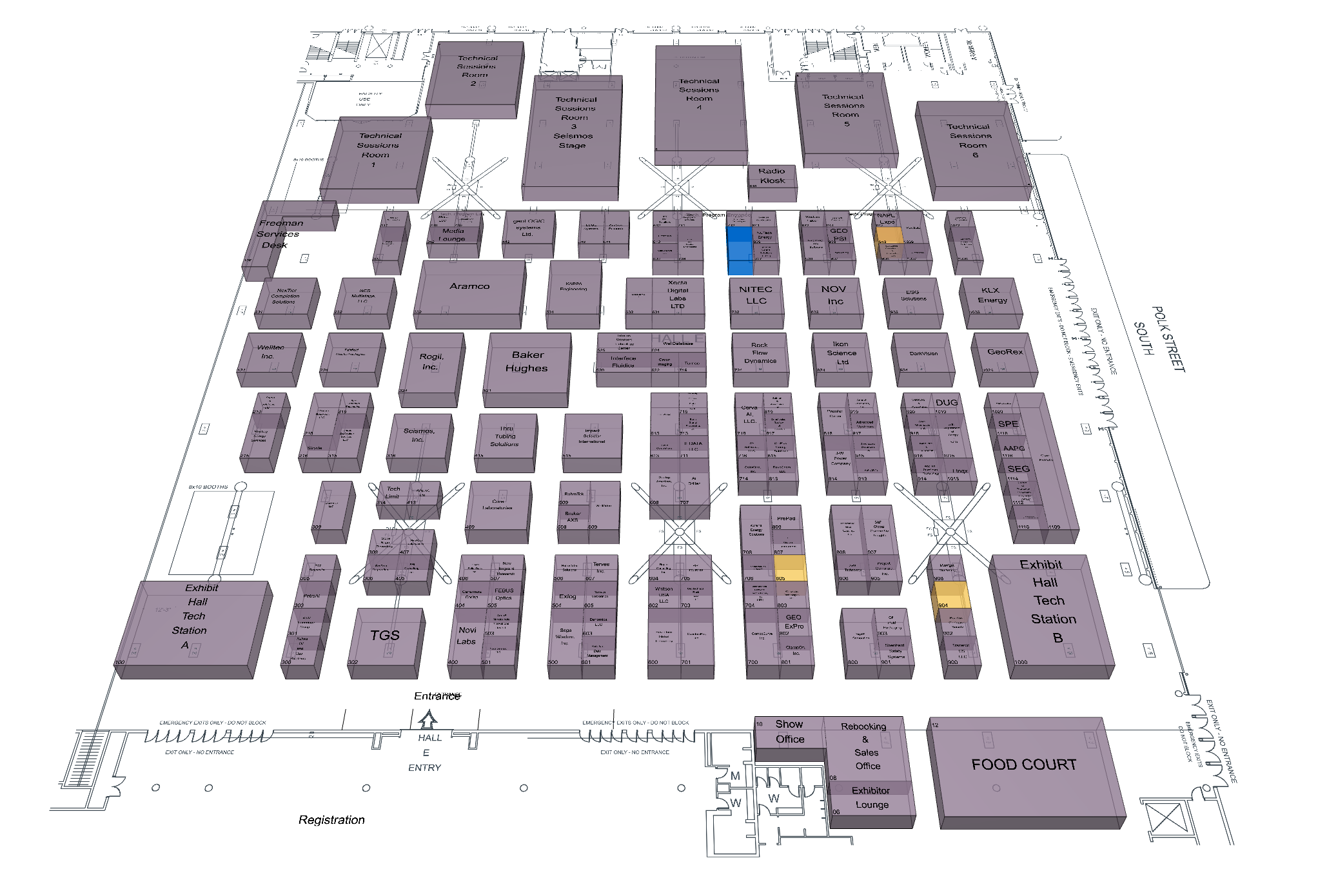
Join us at URTeC

The Unconventional Resources Technology Conference (URTeC) is a premier event focused on the latest science and technology applied to exploration and development of unconventional resources, with special emphasis on integration of the technical/professional disciplines. URTeC offers an ideal opportunity to exchange information, formulate strategic ideas, and solve problems to manage and optimize unconventional resource plays.
Meet Our Experts at URTeC in Houston!

Booth #738
Brochure:
Aspen SKUA™

View Now
Aspen SKUA is a highly customizable, integrated product suite for geological modeling and reservoir characterization, bridging the gap between interpretation and simulation.
Brochure:
Aspen GeoDepth™

View Now
The Aspen GeoDepth velocity determination and modeling system offers a solution for improved seismic imaging in time or depth through the integration of interpretation, velocity analysis, model building, time-to-depth conversion, depth migrations and model verification and updating.
Learn more about AspenTech Solutions for Unconventionals
June 17 – 19, 2024 | Houston, Texas
George R. Brown Convention Center
Watch this brief video to see how our solutions drive operational excellence by connecting subsurface intelligence to surface operations:


View Now
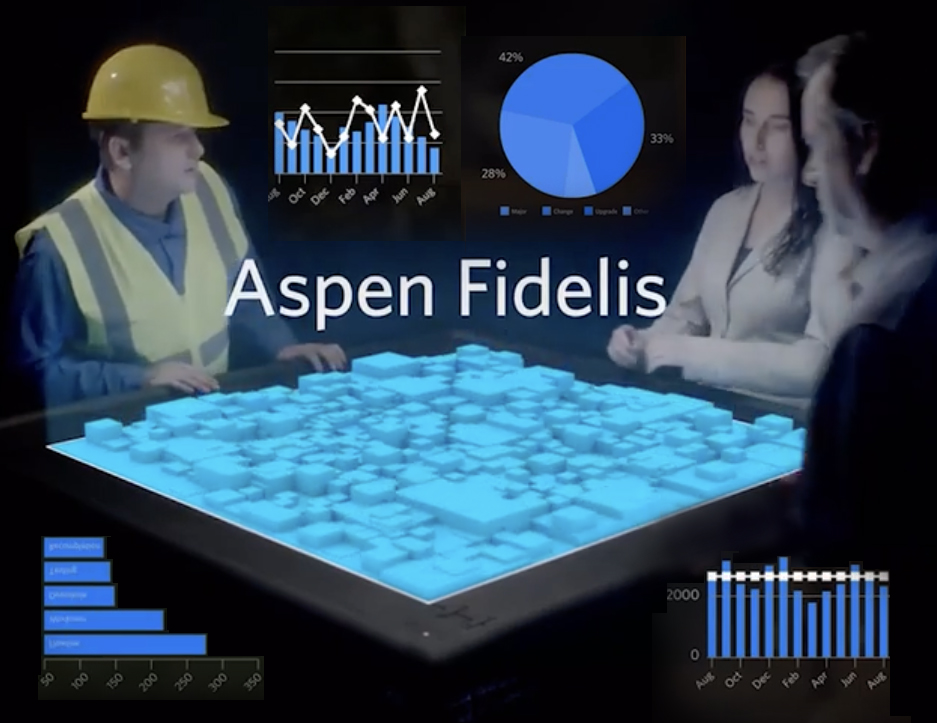
Aspen Fidelis provides detailed analysis to help guide strategic decisions for project prioritization such as spare parts management, tankage, demurrage reduction and debottlenecking efforts.
Aspen Fidelis™

View Now
This case study describes one of the first unconventional hydrocarbon plays undertaken by a major operator in the thick stratigraphic interval of the Montney Formation, Altares area in Northern British Colombia.
Case Study:
Aspen Geolog Facimage™
Reveals High-Productivity Areas in
an Unconventional Reservoir

View Now
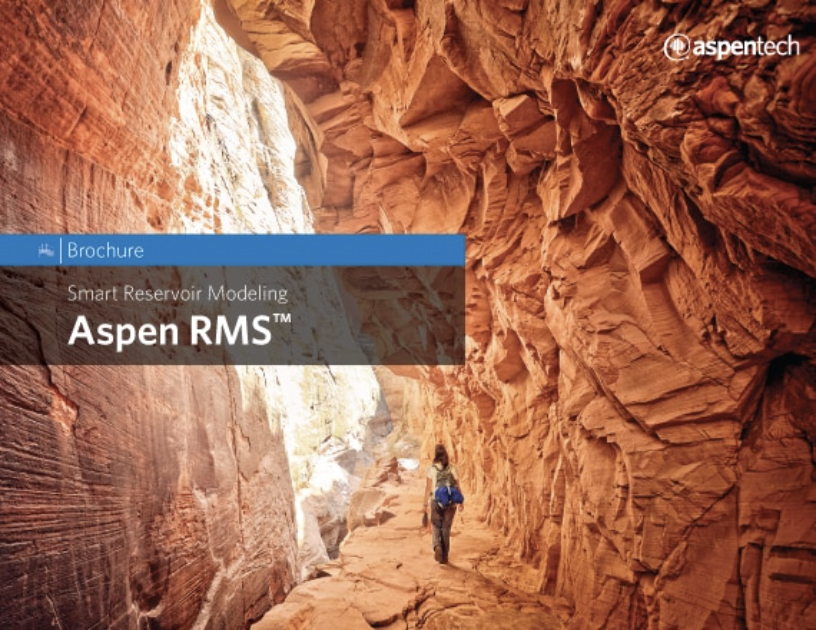
Discover how Aspen RMS 3D modeling software, an industry-leading geoscience and reservoir engineering collaboration platform, enables faster, more robust and reliable production models, improved decision making, more justifiable investments and enhanced field performance, leading to higher recovery rates in even the most complex reservoirs.
Brochure:
Aspen RMS™
Drive Operational Excellence by
Connecting Subsurface Intelligence to Surface Operations

How does AspenTech help you optimize returns from unconventional plays in tight economics?
Optimize system design of assets
Quantify risk in capital planning
Reduce field operation costs
Maximize return on data investment
Achieve production efficiency
Identify sweet spots
Understand shale heterogeneity
Oil & Gas capital projects require investments of billions of dollars. To be successful, it is vital to make the right decisions that are supported by digital solutions incorporating relevant subsurface and surface facilities information. This presentation will demonstrate an Aspen Fidelis™ methodology to calculate financial KPIs, (e. g., Net Present Value (NPV)), based on stochastic simulations with flow optimization. Simulation results include the probability to exceed a certain level of production and NPV, enabling decision makers to test different alternatives and select the one that increases the probability of maximizing their return
on investment.
Featured Technologies: Aspen Fidelis™
Increase Confidence in Upstream Capital Projects with Stochastic Simulation that Incorporates Uncertainty in Market Dynamics and Surface Facilities
Our experts will be on hand to offer scheduled and on-demand presentations.
Scheduled Presentations
Fracture Characterization Through Advanced
Seismic Interpretation in Unconventional Plays
Predicting rock type quality distribution with seismic data enables geoscientists to better understand depositional processes. This understanding is critical for optimizing landing target selection and well design. In this presentation, we will discuss the application of a Machine Learning method to resolve the seismic-scale mapping of reservoir facies heterogeneities in the unconventional shale oil-rich TOC reservoir of the lower section of the Vaca Muerta Formation.
Featured Technologies: Aspen SeisEarth™ Quantitative Seismic Interpretation
Facies and Rock Type Prediction in a Heterogenous Environment: An Argentina Case Study
Drilling engineers endeavor to optimize both the landing of a well
and its contact with the reservoir while in the target formation. Seismic imaging and depthing—often used in the well planning and drilling process—are subject to error in the velocity model building process, beginning at the near surface and extrapolating to the deeper targets. This presentation incorporates two global solutions—near surface joint refraction and reflection tomography and well marker mistie tomography—to ensure a more defensible pre-drill velocity model for imaging and depthing. The method will
be applied to a South Texas dataset.
Featured Technologies: Aspen GeoDepth™
Resolving Shallow Velocity Overburden Problems using Tomography for Precision Depthing and Improved Well Placement | A South Texas Example
Permian operators face many challenges in the exploration and development of the Wolfcamp-Spraberry in the Midland Basin. One significant challenge is encountering carbonate debris flows, which can pose drilling hazards and stress barriers. We will present a study with the objective to provide high-resolution elastic property volumes through the Modified Stochastic Inversion (MSI) workflow with careful consideration of the geologic context and availability of the data.
Featured Technologies: Aspen SeisEarth™ Quantitative Seismic Interpretation
Case Study – Leverage Modified Stochastic Inversion to Understand Drilling and Completion Hazards
Together with well planning, drainage model estimation and sweet spot detection play a significant role in optimizing reservoir development. We will present an integrated workflow based on a high-resolution geological model developed to achieve these objectives. The model is constructed using an automated seismic interpretation process. By combining the 3D structural reservoir model with drainage volume estimation derived from a microseismic analysis workflow, we are able to map both the drained and undrained volume of the reservoir. Based on these outputs, we can define an optimal location for future well placement or refinement. This information serves as a valuable guide for maximizing productivity and profitability in unconventional plays.
Featured Technologies: Aspen SKUA™
Data-driven Reservoir Modeling for Improved Drainage Estimation and Field Development Optimization
Aspen METTE™ can connect subsurface intelligence to surface operations enabling operational excellence. In this presentation, we will show how this integrated production management solution optimizes flow performance calculations for wells and flow lines, integrates field modeling for life of field simulation and optimization, and uses virtual metering for the allocation of production to wells.
Featured Technologies: Aspen METTE™
Production and Flow Assurance Monitoring and Optimization in Real Time
In this presentation we will show how the Aspen Tempest™ MORE full-physics simulator and the Aspen Tempest ENABLE AI/ML-based ensemble modeling technology for uncertainty management can help ease the development plan optimization process and identify key parameters affecting reliable production forecasts in unconventional reservoirs. A step-by-step assisted ensemble-based prediction and optimization workflow will be explained in detail.
Featured Technologies: Aspen Tempest™ MORE and Aspen Tempest ENABLE
Ensemble-based Approach for Optimizing Development Plans
Aspen RMS Wellplan offers comprehensive, user-friendly and efficient well planning tools, leveraging advanced 3D visualization capabilities to streamline the planning process. Catering to the escalating demand for enhanced drilling operations efficiency, this session will focus on planning wells.
With Aspen RMS Wellplan, well targets can be seamlessly digitized in 3D, utilizing various data sources such as seismic and geological models to inform decision-making during the planning phase. Aspen RMS Wellplan enables the integration of all disciplines within the asset team, resulting in faster turnaround times, a more efficient planning process and higher quality results.
Featured Technologies: Aspen RMS™
Efficient Well Planning with Aspen RMS™
On-Demand Presentations
Visit us at Booth #738!


View Now
The ability to accurately characterize, model and predict the distribution of rock facies in the reservoir helps understand reservoir quality and behavior.
Data Sheet:
Aspen Geolog™ Formation Evaluation for Unconventional Shale Plays



View Now
More than just a reservoir simulation tool, Aspen Tempest provides a single, consistent interface specifically designed for reservoir engineers. Aspen Tempest MORE delivers large field flow simulations and EOR support. Aspen Tempest ENABLE is used for accelerated history matching and optimization.
Brochure:
Tempest™ MORE and ENABLE


View Now
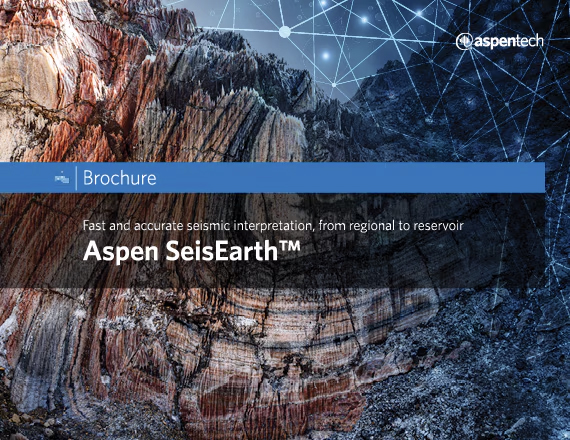
Aspen SeisEarth is a one-stop shop for interpreters. This integrated solution suite provides fast, multi-survey structural and stratigraphic interpretation and visualization from regional to reservoir, enabling multiple users to collaborate in a single shared environment.
Brochure:
Aspen SeisEarth™
Although diffracted energy is recorded during data acquisition, it is suppressed by conventional processing and standard imaging algorithms resulting in the loss of high-resolution structural information. This presentation includes several case studies showing the generation of high-resolution subsurface images containing various types and scales of discontinuous geometrical objects, integrating information relative to diffraction energy. The presentation shows techniques for handling multi-azimuth data and for performing analyses to extract and use information about amplitude (AVAZ) and velocity (VVAZ) variation in respect to that data.
Featured Technologies: Aspen SeisEarth™ Quantitative Seismic Interpretation, Aspen EarthStudy 360™


Monday, June 17 | 4:40 – 5:00 p.m.
Tuesday, June 18 | 4:40 – 5:00 p.m.
Wednesday, June 19 | 10:30 – 11:00 a.m
Monday, June 17 | 10:05 – 10:25 a.m., 5:00 – 5:20 p.m.
Tuesday, June 18 | 2:50 – 3:10 p.m.
Monday, June 17 | 3:10 – 3:30 p.m.
Tuesday, June 18 | 10:05 – 10:25 a.m., 5:00 – 5:20 p.m.
Monday, June 17 | 10:30 – 11:00 a.m.
Tuesday, June 18 | 3:10 – 3:30 p.m.
Monday, June 17 | 5:20 – 5:45 p.m.
Tuesday, June 18 | 5:20 – 5:45 p.m.
Monday, June 17 | 2:50 – 3:10 p.m.
Tuesday, June 18 | 10:30 – 11:00 a.m.
Wednesday, June 19 | 10:05 – 10:25 a.m.