I’m Travis Knight, and I make animated movies.
It’s the sort of sentence that’s often followed by a long, awkward silence before a family member gently places a hand on your shoulder. But it’s what I do, and, more to the point, who I am. I’m an animator.
People often ask what stop-motion animation is. The answer is simple. You build thousands of tiny things, place them under lights, move them a microscopic distance, photograph them, and repeat the process over and over again until either a movie emerges or society collapses. Whichever comes first. It’s a weird thing to devote one’s life to, to be sure. At various points in my career, I’ve dedicated entire afternoons to adjusting the angle of a puppet’s eyebrow by less than the width of a pistachio shell.
Imagine explaining that to a medieval farmer.
Farmer: “Good morrow. What is thy trade?”
Me: “I move a small wolf’s eyebrow.”
Farmer: “Why?”
Me: “So that, in six years’ time, audiences in multiplexes can experience a fleeting sense of emotional authenticity.”
Farmer: “Burn him.”
Honestly? Fair. My life’s work seems particularly unhinged when measured against the labour-saving miracles of modern technology. In an age where entire worlds can be generated at the click of a mouse, where a few words typed into a prompt can conjure moving images in seconds, stop-motion feels like a quiet act of rebellion. It’s also insane. It’s filmmaking at the speed of continental drift. Case in point: Wildwood.
The movie wanders, sometimes gently, sometimes not, through the long corridors of loss and grief; through the strange ways people carry what can’t be set down. The movie is about something that matters to me, and I’ve tried to hold it with care, to give it shape and meaning without flinching from it. Because, unfortunately, I know something of how life shifts after sudden loss. The way the world rearranges itself around an absence, and how that absence, in its way, becomes a presence we carry. It’s a wilderness that all of us must eventually navigate.
But even in the darkest forests, there remains a path forward. This film understands something I’ve come to believe very deeply. That darkness and light are not opposites. They’re companions. One gives meaning to the other. The ache of profound loss sharpens our appreciation for joy. Grief deepens our capacity for wonder. Even after heartbreak, the world remains full of mysteries worth seeking and wonders worth protecting. That matters as much now as it did 16 years ago. More, perhaps.
And after all that time, after all the triumphs and the setbacks, the laughter and the despair, after every impossible challenge and every small miracle, this strange, terrible and beautiful world is finally open to visitors. Welcome to Wildwood, friends. We’re so glad you’re here.
I’ve been working on this movie for 16 years. Sixteen. In the time it’s taken me to make Wildwood, I could have become a medical doctor. Twice. I could’ve trained for the Olympics, spiralled into a period of self-doubt, developed a crippling chemical dependency, gotten clean at an experimental wellness retreat in the Andes, discovered myself backpacking across Ireland, and then trained for the Olympics again.
Sixteen years ago, I said, “Let’s make Wildwood.” And the universe said, “Fine. But first you must suffer beautifully.” And you know what? It’s been worth it. Because the film is magic. Absolute magic. The human kind, made by artists and craftspeople and dreamers who made the impossible feel real and the imagined genuinely alive.
I wholeheartedly believe that the process of making art remains in the art itself. And in Wildwood, embedded in every frame is the humanity of those who made it.
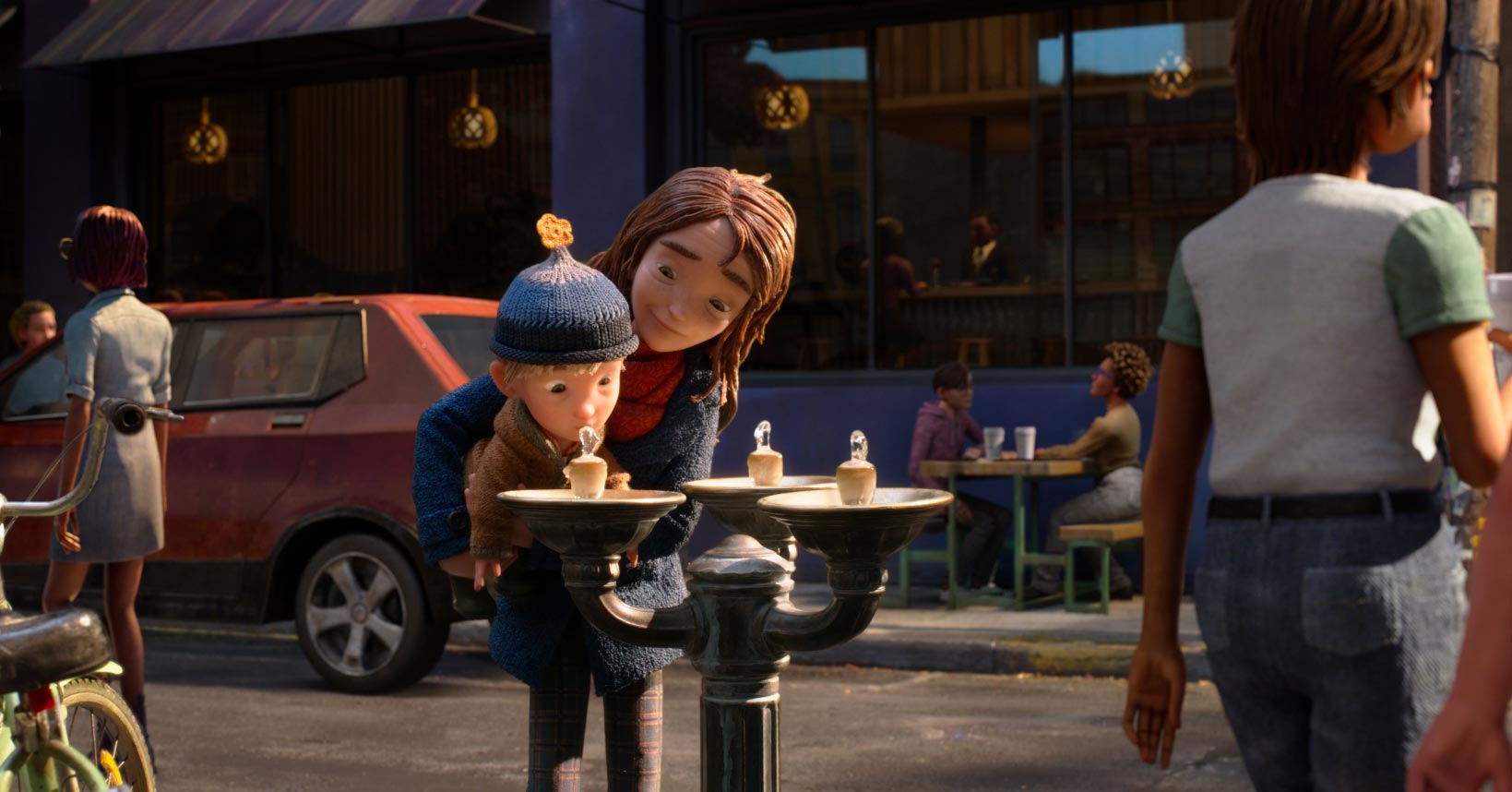
Every puppet bears the fingerprints of the animators who brought it to life, however invisible. Every set contains countless decisions, imperfections, discoveries, and acts of care. Every leaf, every feather, every flicker of light bears the mark of human hands, placed there by someone who cared deeply about what this story can do and why it matters. The work is painstaking, sometimes maddeningly difficult, and almost never efficient. It’s also beautiful.
It’s a triumph of artistry over algorithms. But the thing that moves me most about Wildwood isn’t its scale or its spectacle or its painstaking and perplexing production process.
It’s its beating heart.

< Go Back


This is an online hub by H Bauer Publishing of Media House, Lynch Wood, Peterborough Business Park, Peterborough PE2 6EA, a promotion in partnership with Laika. Registered no. LP003328. Copyright in all material published belongs to H Bauer Publishing or its licensors and copying/reproduction, in any form, whether in whole or in part, is prohibited without our prior permission. We take care to ensure our published material is accurate but we are not responsible for any errors or omissions found in this website, nor are we liable for any loss or damage resulting from reliance on any information contained in this site or from its use. H Bauer Publishing is a member of IPSO (ipso.co.uk). Our Editorial Complaints Policy is at: bauermediacomplaints.co.uk. Mail address for editorial complaints is: complaints@bauermedia.co.uk. All photography and imagery courtesy of Laika. With special thanks to all at Laika.
- Travis Knight
DIRECTOR, WILDWOOD
Travis Knight, Laika CEO and director of Wildwood, in front of the Pittock Mansion set.