Robbing a bank when no one’s looking

Ben Blankenship/Outlaw Ocean Project�
Chanklang Kanthong/Greenpeace�

A deckhand aboard a Chinese squid vessel is silhouetted against the bright lights as the automated jigs pull squid up from the depths.
Ian Urbina, Maya Martin, Susan Ryan, Joe Galvin, and Austin Brush are editors at The Outlaw Ocean Project, a non-profit journalism organization focused on investigative stories about issues on the high seas.
GLOBE OPINION
Editor: Jim Dao; Design: Heather Hopp-Bruce; Digital editor: Rami Abou-Sabe;
Audience engagement editor: Karissa Korman; Copy editor: Karen Schlosberg

‘Humanitarian rescue’ of migrants at sea, or the EU’s dirty work?
PART 1
Where the law of the land ends, the story begins

in
Explore
THREE-PART SERIES / VIDEOS
SIX-PART SERIES WITH PODCASTS
The secretive Libyan prisons swallowing up seafaring migrants; flagrant human rights abuses
in China’s massive off-shore
fleet; the horrors of a
shrimp processing plant
in India; and the wild
story of a modern-day
James Bond — if he were
a ship repo man.

Far away from human rights
Part 3

Vanishing protectors and predators
Part 2

The return of an old scourge reveals a deep sickness in the global fishing industry
ARTICLE
Chinese fishing vessels stay at sea for years at a time, forcing their crews to confront severe malnutrition. Americans who eat seafood are implicated too.
Cambodian fishermen recovered from beriberi at a hospital in Thailand in 2016. The crew met internationally accepted definitions of victims of forced labor.

How a maritime repo man infiltrates hostile pirate territory
PART 2
A whistleblower exposes the living nightmare at an Indian shrimp factory compound
PART 3
The brutal, mysterious death on a Chinese fishing ship was hardly unusual
PART 4
The torture of Uyghers behind the fish you eat
PART 5
The video of illegal North Korean workers made global shockwaves
PART 6
PART 2
PART 3
PART 4
PART 5
PART 6
Robbing a bank when no one's looking
Part 1
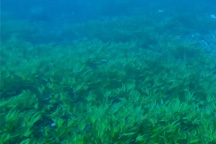
The most important place on earth that virtually no one has ever heard of is called the Saya de Malha Bank, which is among the world’s largest seagrass fields and the planet’s most important carbon sinks,. The bank is mostly located in international waters, where few rules apply, its biodiversity is being systematically decimated by a huge fleet of industrial fishing ships that remain largely unchecked by government oversight.

Fábio Nascimento/The Outlaw Ocean Project�
Reporter Ian Urbina climbed aboard a Chinese fishing vessel off the coast of West Africa in 2019 to inspect the living conditions of deckhands.
By buying access to other countries’ territorial waters, China has extended questionable fishing and labor practices around the world.
Taking over from the inside: How China became the superpower of seafood
ARTICLE