

Storage & Logistics
Gas Suppliers & Services
Chemical Makers
Refineries & Crackers
ExxonMobil
The US oil giant operates a world-scale integrated refining and petrochemical complex and a lubricant plant in Singapore. It intends to hit net zero by 2050 through electrification and lower-carbon power. In Texas, the company is advancing low-carbon hydrogen production using carbon capture. The facility will be the largest low-carbon hydrogen project in the world when it begins operations in 2027 or 2028.


PCS
Stated net zero ambition
Owned by Japan-Singapore Petrochemicals (a Sumitomo Chemical unit), Qatar Petroleum International and Shell Petrochemicals. The company operates the S$5.4 billion Singapore Petrochemical Complex on the island, and has stated ambitions to produce low-carbon essential chemicals through energy efficiency, carbon abatement, carbon capture utilisation and storage, circular economy initiatives, and renewable adoption.

Singapore Refining Company
Stated net zero ambition
A joint venture between Singapore Petroleum Company, a unit of Chinese oil and gas giant PetroChina, and its US counterpart, Chevron. In 2022, there were early efforts among Jurong Island players Air Liquide, Chevron, Keppel Infrastructure and PetroChina to explore large-scale carbon capture, utilisation, and sequestration solutions and integrated infrastructure in Singapore. Last year, PetroChina and BP moved ahead to build a carbon capture cluster in China.

Shell
STATED NET-ZERO AMBITION
The British oil major's Singapore complex sprawls across Jurong Island and Pulau Bukom. It is reportedly selling the assets there following a 2023 strategic review. Last year, it spent over US$5 billion – close to a fourth of its capital spending – on low-carbon energy solutions, including biofuels, renewable power and hydrogen, as part of a plan to dish out US$10-15 billion to boost this business segment by 2025.
Hover over nodes for more information
Photo: SRC
Photo: Kevin Lim, ST
Photo: PCS
Photo: ExxonMobil Asia Pacific
Storage & Logistics
Gas Suppliers & Services
Chemical Makers
Refineries & Crackers

Afton Chemical
Stated net zero ambition
The US lubricant and fuel-additive maker opened its plant on Jurong Island in 2016 and has since expanded it twice to uphold its "Made in Asia for Asia" approach. The company currently offers synthetic fuels created using carbon dioxide, so the carbon balance for that fuel can be considered zero when burned.
Photo: Afton Chemical


Arkema
Stated net-zero ambition
The Paris-headquartered manufacturer opened its only plant outside of France on the island in 2022. It adds flexibility to the supply chain for its flagship polyamide 11 polymer that is produced using castor oil instead of fossil fuels. The company raised its 2030 emissions-reduction target last year, and now seeks to secure more low-carbon steam and electricity through long-term contracts with producers.
Photo: Arkema

Arlanxeo
Stated net-zero ambition
The synthetic rubber unit of gulf oil giant Saudi Aramco, which has set a 2050 net-zero target for its wholly owned operated assets.
Photo: Arlanxeo

Asahi Kasei
Stated net zero ambition
The Japanese plastics and synthetic rubber manufacturer is targeting carbon neutrality by 2050. In 2022, it started producing rubber derived from Shell-supplied "sustainable" butadiene made from plastic waste and biomass on Bukom island. The rubber is mainly used to make fuel-efficient tyres. In 2023, it launched a framework for investment in startups with technologies in hydrogen, energy storage and bio-based chemicals.
Photo: Bloomberg

Baker Hughes
Stated net-zero ambition
The American energy company has moved into offering emissions-abatement solutions. Last month, it announced a breakthrough in flare-emissions monitoring following a collaboration with British oil major BP. Its oilfield services chemicals manufacturing facility on Jurong Island, opened in 2022, builds on its recent strategy to source and produce chemicals in proximity to key demand hubs.
Photo: Baker Hughes

BASF
Stated net-zero ambition
World's largest chemical company. In 2022, it doubled the capacity of its Jurong Island plant, which produces antioxidant additives for plastics. Elsewhere, it is exploring solutions for steam cracker furnaces powered by renewable electricity and also devising ways to make hydrogen without carbon dioxide. Current processes produce nine to 10 tonnes of carbon dioxide per tonne of hydrogen, making its production one of the industry’s largest carbon-oxide emitters.
Photo: BaSF

Cariflex
Stated net zero ambition
The Singapore-headquartered company's US$350 million polyisoprene latex plant on Jurong Island – the world’s largest and Singapore’s first – is expected to be operational by the second half of 2024.
Photo: Cariflex

CCD (Singapore)
Stated net zero ambition
A joint venture between Taiwan’s Chang Chun Group and Dairen Chemical Corporation. The group formed an energy-conservation and carbon-reduction team in 2018, and a carbon-neutrality team in 2021, and started tracking net-zero emissions technologies and transition strategies once a quarter.
Photo: Dairen Chemical

Celanese
Stated net zero ambition
The American speciality materials company, which bought DuPont's mobility and materials business for US$11 billion in 2022, is banking on carbon-capture solutions to support its customers' sustainability goals. In January, it started operating one of the largest active carbon capture and utilisation facilities in Texas. There, recycled carbon dioxide is used to make methanol, which in turn lowers the carbon footprint of its acetyl-chain products.
Photo: Celanese

ChampionX
Stated net-zero ambition
Ecolab unit Nalco Champion's upstream business. The oilfield technology solutions provider has been investing in emissions management and reduction technologies, and digital solutions that help its customers improve their efficiency and meet their sustainability goals. To drive home the importance of this strategic objective, the company has pegged sustainability to annual executive compensation.
Photo: Ecolab

Chemical Specialties
Stated net zero ambition
A Singapore company founded in 2006 that began operations on Jurong Island in 2009. It specialises in complex batch reactions, batch and continuous distillation, and the related finishing and filtration.
Photo: Chemical Specialties

Chevron Oronite
Stated net-zero ambition
A unit of US energy giant Chevron, manufacturing lubricant additives. Its Singapore plant’s latest expansion, completed in 2017, added a carboxylate production unit to manufacture sulphur-free detergents, used to produce "environmentally friendly" fuels and lubricants.
Photo: EDB

COIM
Stated net zero ambition
The Italian speciality chemicals company in 2022 said it was expanding its plant in Singapore to serve South-east Asia, India and China more extensively.
Photo: Coim Group

Croda
Stated net-zero ambition
The British speciality chemicals company, which wants to be a net-zero organisation by 2050, intends to cut emissions by maximising renewable-energy use in its operations, developing products with carbon-saving benefits, and accelerating the transition to bio-based products, moving away from fossil fuel or petrochemical feedstocks. Decarbonisation road maps have been drafted for every Croda location.
Photo: Zachary Tang, BT

Denka
Stated net zero ambition
Manufactures resins and acetylene black – used in high-voltage cables and lithium-ion batteries – on Jurong Island. The Japanese chemical company intends to achieve carbon neutrality by 2050 through renewables, energy savings and innovations, including carbon capture, utilisation and storage. So far, it has developed an agent that can convert carbon dioxide into calcium carbonate, which can in turn be used to green cement manufacturing.
Photo: Denka

Evonik
Stated net-zero ambition
The German speciality chemicals company committed to a multimillion euro investment last year to expand its capacity to produce methionine – a key animal feed component – on the island. As part of the expansion, it signed a long-term green hydrogen purchase agreement with gas supplier Linde to help limit its Singapore emissions. Linde's nine-megawatt alkaline electrolyser plant will host the largest electrolyser installed in Singapore.
Photo: Evonik

ExxonMobil
Stated net-zero ambition
The US oil giant operates a world-scale integrated refining and petrochemical complex and a lubricant plant in Singapore. It intends to hit net zero by 2050 through electrification and lower-carbon power. In Texas, the company is advancing low-carbon hydrogen production using carbon capture. The facility will be the largest low-carbon hydrogen project in the world when it begins operations in 2027 or 2028.
Photo: ExxonMobil Asia Pacific

Stated net zero ambition
The first Italian company to invest on the island. Its Singapore production uses vegetable-based stearic acid, which is available in Malaysia and Indonesia, as its main feedstock.
Photo: I Am Architect

Giiava
Stated net zero ambition
Manufacturer of soya lecithin powder and liquid, with de-oiling plants in Singapore and India. In 2022, it joined hands with Singapore-based cleantech company Seppure to adopt the startup's nanofiltration membrane technology in plant-based oil production, so chemical separation processes can be more energy-efficient.
Photo: Giiava

Huntsman
Stated net zero ambition
The US company manufactures amines on Jurong Island. The compound can be used in wind blades, agrochemicals, oilfield applications, construction materials and speciality plastics. The plant underwent an expansion in 2017.
Photo: Huntsman

Kuraray
Stated net-zero ambition
As demand for sustainable food packaging grows, the Japanese plastics maker on Mar 27 announced that it will build a plant on Jurong Island to ramp up the production of its proprietary recyclable polymer, the Eval. The US$410 million plant begins operations in end-2026. Kuraray currently manufactures polyvinyl alcohol resin on the island.
Photo: Kuraray

Mitsubishi Chemical Methacrylates
Stated net-zero ambition
Largest producer of methacrylates, the building block of all acrylics. By 2030, the Japanese company intends to spend some two trillion yen (S$17.8 billion) on energy-transformation initiatives, including doubling its renewable power capacity and creating supply chains for hydrogen or ammonia, and other next-generation energy sources.
Photo: Mitsubishi Chemical Methacrylates

Mitsui Elastomers
Stated net zero ambition
A unit of Mitsui Chemicals, a Japanese chemicals giant with plans to become carbon-neutral by 2050. To meet its target, the group intends to transition to low-carbon raw materials and fuels, install highly energy-efficient equipment and adopt renewable energy. It also plans on implementing carbon-negative technologies, such as carbon capture, utilisation and storage. The unit produces elastomers, a rubber-like polymer, on Jurong Island.
Photo: Mitsui Chemicals

Ineos Phenol
Stated net zero ambition
Previously Mitsui Chemicals' complex. London-headquartered Ineos Phenol bought the Singapore unit for US$330 million last year. Ineos Group currently targets 33 per cent emissions reduction by 2030, and is investing in the new hydrogen economy, including spending 1.2 billion euros (S$1.7 billion) on a blue hydrogen project that involves carbon capture in Scotland, and two billion euros on a series of green hydrogen plants in Europe.
Photo: Ineos

Nikko Chemicals
Stated net zero ambition
The first overseas manufacturing base of Japan's Nikkol Group. Here, the company makes surfactants using palm and coconut oils that are abundant in the region. Last month, it announced that all of Nikkol Group's factories in Japan and affiliate companies have switched to using "carbon dioxide-free" electricity, a move that will cut the group's emissions from electricity generation in Japan to zero.
Photo: Nikko Chemicals

Nouryon Surface Chemistry
Stated net-zero ambition
The Amsterdam-headquartered speciality chemicals producer, which runs five carbon-neutral sites in Brazil, bought over the surfactant alkoxylation plant on Jurong Island in 2022 to support its emerging-markets growth strategy. To reach net zero by 2050, it plans to raise renewables use through power-purchase agreements, on-site renewable projects and renewable electricity certificates, among others.
Photo: Nouryon

Novacap
Stated net-zero ambition
The French chemicals group's sodium bicarbonate plant started production on the island in 2017 as the first in Singapore to capture carbon emissions from its neighbours on a large scale for use in its manufacturing process.
Photo: Twitter/@FranceinSG

Prime Evolue
Stated net zero ambition
A joint venture between Japan's Prime Polymer and Mitsui Chemicals, producing polyethylene. In 2022, Mitsui Chemicals said it was working with Shell on a supply of ethylene derived from plastic waste. This will allow Prime Polymer to make chemically recycled polyethylene derived from plastic waste via Prime Evolue.
Photo: Mitsui Chemicals

SI Group
Stated net zero ambition
The New York-headquartered performance additives producer expanded its facility on the island last year to ramp up its production of di-alkylphenols, which are used to produce antioxidants that can impede the weathering of plastics. The company is working on improving the carbon footprint of its products by adopting bio-based feedstocks.
Photo: Mitsui Chemicals

SPCI-Helm
Stated net zero ambition
A joint venture between two owner-led family businesses, South Pacific Chemical Industries Group and Helm. It entered the picture in late 2022 with a plant that converts waste molten sulphur from the island's refineries into sulphur pellets for export.
Photo: SPCI-Helm
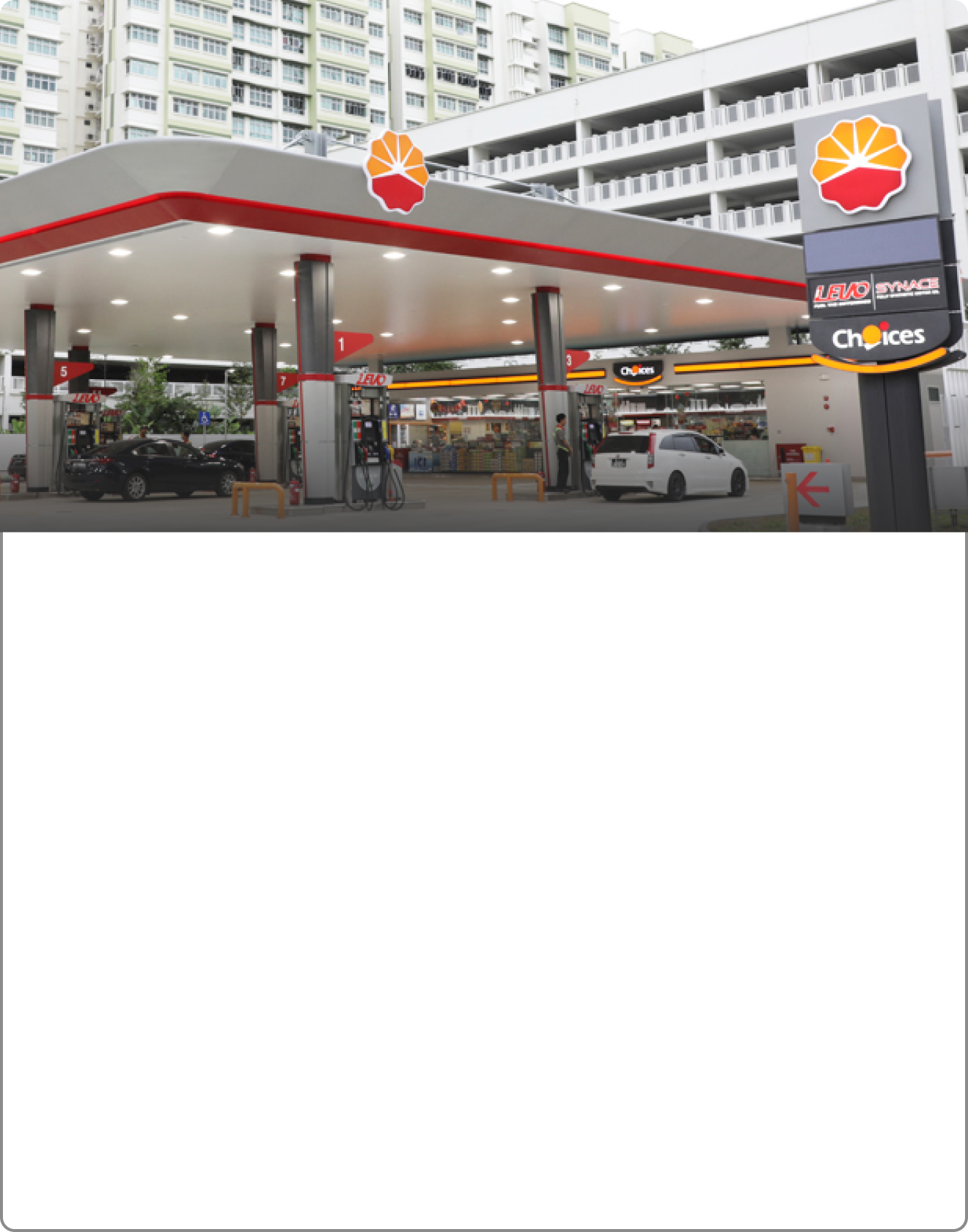
Singapore Petroleum Company
Stated net zero ambition
Acquired by Chinese oil and gas giant PetroChina from Keppel Corporation in 2009. In 2018, the company opened a terminal on the island, which stores and distributes petroleum products to its network of service stations and customers. The facility is located next to its joint-venture refinery, to which it is connected via pipelines.
Photo: Singapore Petroleum Company

Shell
Stated net-zero ambition
The British oil major's Singapore complex sprawls across Jurong Island and Pulau Bukom. It is reportedly selling the assets there following a 2023 strategic review. Last year, it spent over US$5 billion – close to a fourth of its capital spending – on low-carbon energy solutions, including biofuels, renewable power and hydrogen, as part of a plan to dish out US$10-15 billion to boost this business segment by 2025.
Photo: Kevin Lim, ST

Stella Chemifa
Stated net zero ambition
Japanese company manufacturing high-purity chemical agents on the island. These agents are indispensable for manufacturing semiconductors.
Photo: BT FILE

Stepan
Stated net zero ambition
The US speciality chemicals maker's plant on the island is one of its three manufacturing facilities in the Asia-Pacific, with the other two in Batangas, Philippines and Nanjing, China. It produces biodiesel and fractionated coconut methyl esters here. The company has a 2025 goal to reduce its emissions-per-metric-tonne production by 10 per cent.
Photo: Rotary

Sumitomo Chemical
Stated net zero ambition
The major Japanese chemical company's plants here produce methyl methacrylate monomer and polymethyl methacrylate, as well as solution-styrene butadiene rubber. It has installed solar panels on two of these facilities to reduce its carbon footprint.
Photo: Sumitomo Chemical

U&P
Stated net zero ambition
Three years after launching its first house brand in 2014, the home-grown lubricant company acquired new plant facilities on Jurong Island to expand its blending capacity.
Photo: U&P

Unimatec
Stated net zero ambition
Japanese company manufacturing synthetic rubber and fluorinated speciality intermediates. Singapore is its only production location outside of Japan.
Photo: U&P

Zeon Chemicals
Stated net zero ambition
Japanese acrylic-rubber manufacturer with 2050 target of carbon neutrality. It opened its second and only plant outside of Japan in 2008 to meet rising demand for its Noxtite and Cheminox products globally.
Photo: Zeon

Rohm and Haas
Stated net zero ambition
Dow-owned US speciality chemicals producer. Last year, Dow, among the world's three largest chemical producers, became the first major company to trial a nuclear reactor at a chemical complex to reduce greenhouse emissions. Rohm and Haas makes chemicals for PVC-modifier and processing-aid usages on Jurong Island, according to PCS.
Photo: Zeon

Chevron Phillips Singapore Chemical
Stated net zero ambition
A joint venture between a Chevron Phillips Chemical unit, EDB Investments and Sumitomo Chemical, producing high-density polyethylene.
Photo: Chevron Phillips Chemical
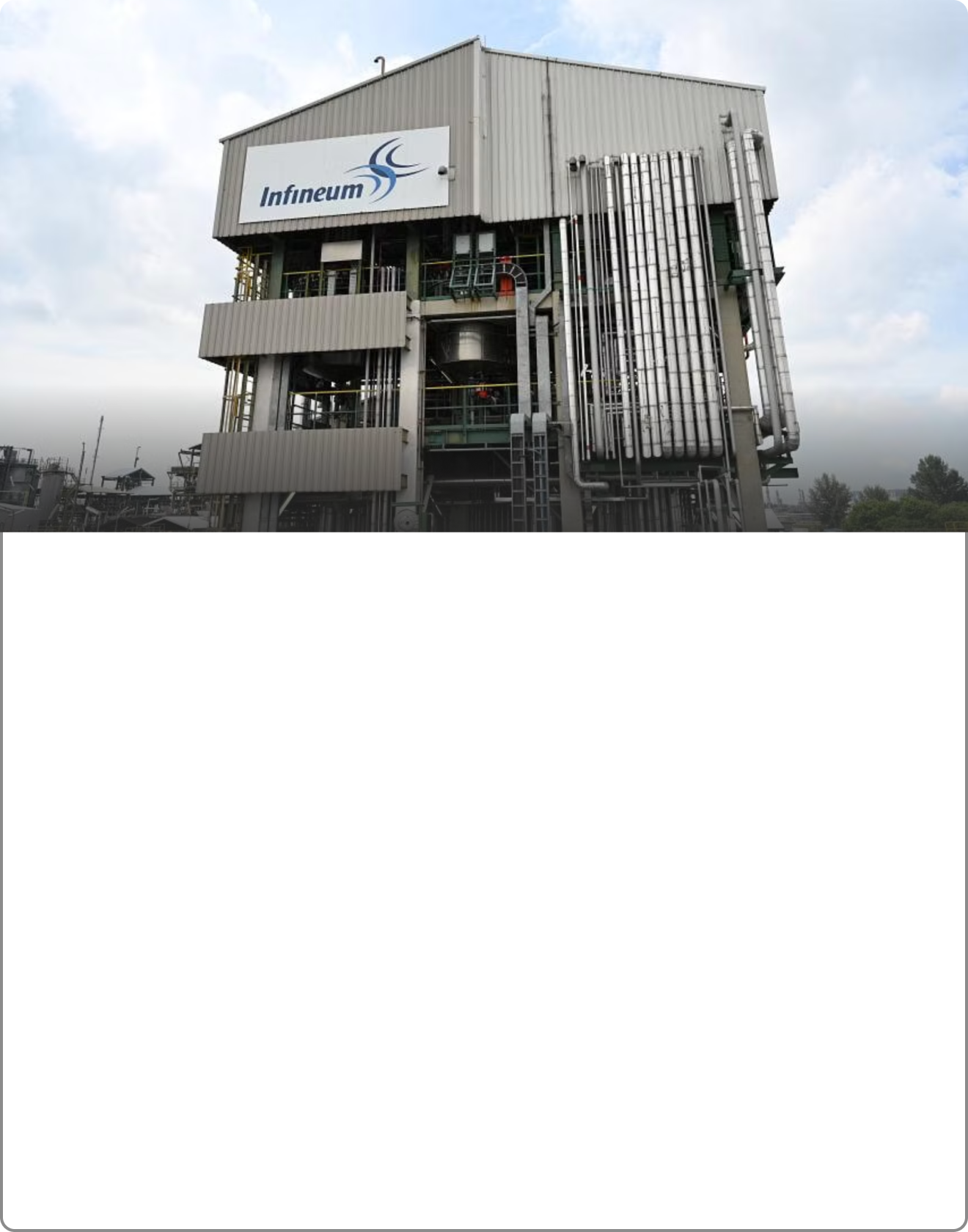
Infineum
Stated net-zero ambition
The British petroleum additives company – established in 1999 as a joint venture by Shell and ExxonMobil – opened its first salicylate plant in the Asia-Pacific region on the island in 2014.
Photo: Infineum

Chemical Industries (Far East)
Stated net zero ambition
SGX-listed company manufacturing chlorine, caustic soda and other chlor-alkali products. Its facility on the island, set up in 1998, is its main chlor-alkali plant. It noted last year that evolving carbon-pricing policies could raise the cost of doing business and impact gross revenue. It has installed solar panels on its facilities to lower its reliance on fossil-powered energy.
Photo: Chemical Industries (Far East)

The Polyolefin Company
Stated net zero ambition
Manufactures polyethylene and polypropylene products, and 70 per cent owned by Nihon Singapore Polyolefin, a joint venture between Sumitomo Chemical and other companies. The rest is owned by Qatar Petroleum International and Shell Petrochemicals.
Photo: The Polyolefin Company

Ecogreen Oleochemicals
Stated net zero ambition
Producer of natural fatty alcohol, which is derived from vegetable oils. Its manufacturing facilities are located in Indonesia, Singapore, Germany and France. Its plant on Batam Island, which was expanded a number of times, is one of the largest natural fatty alcohol production sites in the world. Its plant on Jurong Island started in 1988, and today produces downstream products of fatty alcohol.
Photo: Ecogreen Oleochemicals


Air Products
Stated net-zero ambition
The US gas supplier's journey with Singapore began in 1997 with the start of operations at an air-separation unit in Jurong Island's Sakra area. In 2013, it expanded its pipeline network to the island's Tembusu district. It also supplies liquid nitrogen to the island's Jurong Rock Caverns, which is an underground storage facility for liquid hydrocarbons.
Photo: Air Products
Storage & Logistics
Gas Suppliers & Services
Chemical Makers
Refineries & Crackers

Air Liquide
Stated net zero ambition
French gas supplier targeting carbon neutrality by 2050. To get there, it is sourcing low-carbon and renewable electricity from outside Singapore, providing carbon capture and utilisation for chemicals production, or carbon capture for sequestration in depleted oil fields or acquisition in the region, and converting natural gas to bio-feedstock in its facilities as much as possible. It has partnered terminal operator Vopak to study how they might produce and distribute low-carbon hydrogen on Jurong Island.
Photo: Air Liquide

Linde Gas
Stated net-zero ambition
The UK-headquartered gas company in 2019 announced a US$1.4 billion investment to expand its existing gasification complex on the island. The move would quadruple its production capacity in Singapore to produce and supply hydrogen and synthesis gas to support the multi-billion-dollar expansion of ExxonMobil Asia Pacific’s integrated manufacturing complex. Last year, it announced that it will supply green hydrogen to Evonik by installing a nine-megawatt electrolyser plant on the island.
Photo: Linde

Keppel
Stated net-zero ambition
The Singaporean conglomerate operates a 1,300-megawatt combined-cycle gas turbine power plant under Keppel Merlimau Cogen. Under Keppel Sakra Cogen, it is building the island's first hydrogen-ready power plant. The 600 MW plant will operate on fuels with 30 per cent hydrogen content. Under Keppel Energy Nexus, it is installing solar panels and offering sustainable energy solutions, such as steam from the Keppel Merlimau Cogen plant, to its customers.
Photo: Keppel Infrastructure Trust

PacificLight Power
Stated net zero ambition
Operates an 800-megawatt power plant on the island. In 2021, it signed a turbine-efficiency package to cut its annual emissions by over 40,000 tonnes, and furthered a partnership to import solar power from Batam's Bulan Island to Singapore. The Energy Market Authority has granted conditional approval for a 600 MW solar import related to that partnership. The renewable electricity will be supplied to Singapore via a subsea cable.
Photo: PacificLight

Sembcorp Industries
Stated net-zero ambition
The Singapore energy and environmental solutions provider is developing a S$900 million multi-utilities centre supplying power, steam and demineralised water on the island. The centre, which will include a 600-megawatt hydrogen-ready power plant, will be fully operational by 2026. Currently, its 31-km pipe racks deliver utilities across the island, where it also runs industrial wastewater treatment plants.
Photo: Sembcorp Industries

Singapore LNG Corporation
Stated net zero ambition
Its terminal at the southern-most tip of Jurong Island supplies about half of Singapore's total natural gas demand for power generation, with the remaining supplied by pipeline gas. The company said it is exploring the use of sustainable alternatives such as ammonia or hydrogen.
Photo: SLNG

TP Utilities
Stated net zero ambition
The Tuas Power unit manages businesses related to the Tembusu Multi-Utilities Complex, which is being developed in line with the Economic Development Board's plans to establish the island's Tembusu area as a new petrochemical sector. When completed, the complex, developed in stages aligned with customer demand, will comprise a biomass clean-coal cogeneration plant, desalination plant and other water-treatment facilities.
Photo: Tuas Power

Rotary Engineering
Stated net zero ambition
Home-grown oil-and-gas infrastructure services company involved in the construction of a number of Jurong Island facilities. These include the Jurong Port Universal Terminal, and three manufacturing plants of CCD (Singapore).
Photo: BT File

Nalco Water
Stated net-zero ambition
Ecolab unit Nalco Champion's downstream business. On Mar 26, the water-treatment brand opened a facility at Shell Jurong Island to treat and reuse up to 24,000 cubic metres of variable bio-treated wastewater every month.
Photo: EcoLab


Advario
Stated net-zero ambition
The Dutch-based liquid storage and logistics player targets net zero by 2040. In 2022, it announced commitments to transform its Jurong Island terminal, Advario Helios Singapore, to handle renewable fuels such as green ammonia and green methanol for bunkering services. It is also moving into renewable-energy storage with a pilot looking to turn existing storage-tank infrastructure on the island into vanadium redox flow battery energy storage systems.
Photo: Advario
Storage & Logistics
Gas Suppliers & Services
Chemical Makers
Refineries & Crackers

Horizon Singapore Terminals
Stated net zero ambition
The 59-tank terminal facility is 52 per cent owned by a unit of Enoc Group, a company belonging to the Dubai government. It handles petroleum products.
Photo: Enoc

Jurong Port Universal Terminal
Stated net-zero ambition
One of the largest independent petroleum-storage terminals in the Asia-Pacific, owned by Singapore government-owned port operator Jurong Port, MAIF Investments Singapore and PetroChina International (Singapore). The facility with 78 storage tanks and 15 deep-water berths was conceptualised from a trader’s perspective, with the aim of increasing flexibility and efficiency through providing one-stop services for storage, blending and distribution needs.
Photo: Universal Terminal

PSA Corporation
Stated net-zero ambition
Operates Jurong Island Terminal, which is located on the north-western seafront of the island. It offers twice-daily barge sailings that connect beneficial cargo owners on Jurong Island with PSA’s main hubs at Tuas, Pasir Panjang and Brani. The terminal is being expanded to raise its handling capacity and support the island's transformation into a sustainable energy and chemicals park.
Photo: PSA Corporation

Stolthaven Terminals
Stated net zero ambition
The London-headquartered storage provider runs a highly automated terminal with 81 tanks at the Tembusu area on Jurong Island. Products stored there include chemicals, petroleum products and low-pressure gases. The company is investing in new technologies and processes in preparation for the 2030 and 2050 International Maritime Organization and European Union climate targets.
Photo: Stolt-Nielsen

Vopak Terminals
Stated net-zero ambition
The Dutch tank-storage company, which operates three terminals on Jurong Island, owns the island's only ammonia tank. In 2022, it said it was exploring an expansion of its ammonia infrastructure for low-carbon power generation and bunker fuel. Last month, it signed a memorandum of understanding with Air Liquide to study ammonia-to-hydrogen infrastructure on Jurong Island. Outside of Singapore, it has ammonia storage in China, Saudi Arabia, Malaysia and the US.
Photo: Yen Meng Jiin, BT

Bertschi
Stated net-zero ambition
The Switzerland-headquartered chemical logistics company spent S$35 million on its second Jurong Island facility in 2017, bringing its total investment in Singapore to S$80 million. It is involved in realising the first green supply chains across Europe by linking intermodal rail transport with trucks powered by biofuels.
Photo: Bertschi

Cogent Holdings
Stated net zero ambition
Runs Cogent Jurong Island, a chemical logistics and warehousing facility at Tembusu Crescent. The company became a unit of Cosco Shipping International (Singapore), the SGX mainboard-listed subsidiary of China Cosco Shipping Corporation, in March 2018.
Photo: Cogent Holdings

Katoen Natie
Stated net zero ambition
The Belgian logistics giant in 2014 opened a S$50 million extension to its Jurong Logistics Terminal on the island, taking its total investments in Singapore to S$200 million. The expansion boosted its logistics capacity there by some 45 per cent.
Photo: Katoen Natie Singapore (Jurong)

LTH Logistics
Stated net zero ambition
A unit of SGX-listed Vibrant Group. The chemical logistics services provider that handles chemicals in Singapore and Malaysia operates a facility on the island that features a six-storey ramp-up warehouse and a dangerous goods open yard for bulk storage.
Photo: Vibrant Group

Poh Tiong Choon Logistics
Stated net zero ambition
The Singapore company owns and operates two warehousing facilities in Singapore, one on Jurong Island and the other at Pandan Road.
Photo: Poh Tiong Choon Logistics Group
STATED NET-ZERO AMBITION


Chemical Specialties
Stated net zero ambition
A Singapore company founded in 2006 that began operations on Jurong Island in 2009. It specialises in complex batch reactions, batch and continuous distillation, and the related finishing and filtration.
Photo: Chemical Specialties
Chevron Oronite
Stated net-zero ambition
A unit of US energy giant Chevron, manufacturing lubricant additives. Its Singapore plant’s latest expansion, completed in 2017, added a carboxylate production unit to manufacture sulphur-free detergents, used to produce "environmentally friendly" fuels and lubricants.
Photo: EDB
COIM
Stated net zero ambition
The Italian speciality chemicals company in 2022 said it was expanding its plant in Singapore to serve South-east Asia, India and China more extensively.
Photo: Coim Group
Croda
Stated net-zero ambition
The British speciality chemicals company, which wants to be a net-zero organisation by 2050, intends to cut emissions by maximising renewable-energy use in its operations, developing products with carbon-saving benefits, and accelerating the transition to bio-based products, moving away from fossil fuel or petrochemical feedstocks. Decarbonisation road maps have been drafted for every Croda location.
Photo: Zachary Tang, BT
Denka
Stated net zero ambition
Manufactures resins and acetylene black – used in high-voltage cables and lithium-ion batteries – on Jurong Island. The Japanese chemical company intends to achieve carbon neutrality by 2050 through renewables, energy savings and innovations, including carbon capture, utilisation and storage. So far, it has developed an agent that can convert carbon dioxide into calcium carbonate, which can in turn be used to green cement manufacturing.
Photo: Denka
Evonik
Stated net-zero ambition
The German speciality chemicals company committed to a multimillion euro investment last year to expand its capacity to produce methionine – a key animal feed component – on the island. As part of the expansion, it signed a long-term green hydrogen purchase agreement with gas supplier Linde to help limit its Singapore emissions. Linde's nine-megawatt alkaline electrolyser plant will host the largest electrolyser installed in Singapore.
Photo: Evonik
Faci
Stated net-zero ambition
The US oil giant operates a world-scale integrated refining and petrochemical complex and a lubricant plant in Singapore. It intends to hit net zero by 2050 through electrification and lower-carbon power. In Texas, the company is advancing low-carbon hydrogen production using carbon capture. The facility will be the largest low-carbon hydrogen project in the world when it begins operations in 2027 or 2028.
Photo: ExxonMobil Asia Pacific
Stated net zero ambition
The first Italian company to invest on the island. Its Singapore production uses vegetable-based stearic acid, which is available in Malaysia and Indonesia, as its main feedstock.
Photo: I Am Architect
Giiava
Stated net zero ambition
Manufacturer of soya lecithin powder and liquid, with de-oiling plants in Singapore and India. In 2022, it joined hands with Singapore-based cleantech company Seppure to adopt the startup's nanofiltration membrane technology in plant-based oil production, so chemical separation processes can be more energy-efficient.
Photo: Giiava
Huntsman
Stated net zero ambition
The US company manufactures amines on Jurong Island. The compound can be used in wind blades, agrochemicals, oilfield applications, construction materials and speciality plastics. The plant underwent an expansion in 2017.
Photo: Huntsman
Chemical Industries (Far East)
Stated net zero ambition
SGX-listed company manufacturing chlorine, caustic soda and other chlor-alkali products. Its facility on the island, set up in 1998, is its main chlor-alkali plant. It noted last year that evolving carbon-pricing policies could raise the cost of doing business and impact gross revenue. It has installed solar panels on its facilities to lower its reliance on fossil-powered energy.
Photo: Chemical Industries (Far East)
Kuraray
Stated net-zero ambition
As demand for sustainable food packaging grows, the Japanese plastics maker on Mar 27 announced that it will build a plant on Jurong Island to ramp up the production of its proprietary recyclable polymer, the Eval. The US$410 million plant begins operations in end-2026. Kuraray currently manufactures polyvinyl alcohol resin on the island.
Photo: Kuraray
Mitsubishi Chemical Methacrylates
Stated net-zero ambition
Largest producer of methacrylates, the building block of all acrylics. By 2030, the Japanese company intends to spend some two trillion yen (S$17.8 billion) on energy-transformation initiatives, including doubling its renewable power capacity and creating supply chains for hydrogen or ammonia, and other next-generation energy sources.
Photo: Mitsubishi Chemical Methacrylates
Mitsui Elastomers
Stated net zero ambition
A unit of Mitsui Chemicals, a Japanese chemicals giant with plans to become carbon-neutral by 2050. To meet its target, the group intends to transition to low-carbon raw materials and fuels, install highly energy-efficient equipment and adopt renewable energy. It also plans on implementing carbon-negative technologies, such as carbon capture, utilisation and storage. The unit produces elastomers, a rubber-like polymer, on Jurong Island.
Photo: Mitsui Chemicals
Ineos Phenol
Stated net zero ambition
Previously Mitsui Chemicals' complex. London-headquartered Ineos Phenol bought the Singapore unit for US$330 million last year. Ineos Group currently targets 33 per cent emissions reduction by 2030, and is investing in the new hydrogen economy, including spending 1.2 billion euros (S$1.7 billion) on a blue hydrogen project that involves carbon capture in Scotland, and two billion euros on a series of green hydrogen plants in Europe.
Photo: Ineos
Nikko Chemicals
Stated net zero ambition
The first overseas manufacturing base of Japan's Nikkol Group. Here, the company makes surfactants using palm and coconut oils that are abundant in the region. Last month, it announced that all of Nikkol Group's factories in Japan and affiliate companies have switched to using "carbon dioxide-free" electricity, a move that will cut the group's emissions from electricity generation in Japan to zero.
Photo: Nikko Chemicals
Nouryon Surface Chemistry
Stated net-zero ambition
The Amsterdam-headquartered speciality chemicals producer, which runs five carbon-neutral sites in Brazil, bought over the surfactant alkoxylation plant on Jurong Island in 2022 to support its emerging-markets growth strategy. To reach net zero by 2050, it plans to raise renewables use through power-purchase agreements, on-site renewable projects and renewable electricity certificates, among others.
Photo: Nouryon
Novacap
Stated net-zero ambition
The French chemicals group's sodium bicarbonate plant started production on the island in 2017 as the first in Singapore to capture carbon emissions from its neighbours on a large scale for use in its manufacturing process.
Photo: Twitter/@FranceinSG
Prime Evolue
Stated net zero ambition
A joint venture between Japan's Prime Polymer and Mitsui Chemicals, producing polyethylene. In 2022, Mitsui Chemicals said it was working with Shell on a supply of ethylene derived from plastic waste. This will allow Prime Polymer to make chemically recycled polyethylene derived from plastic waste via Prime Evolue.
Photo: Mitsui Chemicals
SI Group
Stated net zero ambition
The New York-headquartered performance additives producer expanded its facility on the island last year to ramp up its production of di-alkylphenols, which is used to produce antioxidants that can impede the weathering of plastics. The company is working on improving the carbon footprint of its products by adopting bio-based feedstocks.
Photo: Mitsui Chemicals
SPCI-Helm
Stated net zero ambition
A joint venture between two owner-led family businesses, South Pacific Chemical Industries Group and Helm. It entered the picture in late 2022 with a plant that converts waste molten sulphur from the island's refineries into sulphur pellets for export.
Photo: SPCI-Helm
Singapore Petroleum Company
Stated net zero ambition
Acquired by Chinese oil and gas giant PetroChina from Keppel Corporation in 2009. In 2018, the company opened a terminal on the island, which stores and distributes petroleum products to its network of service stations and customers. The facility is located next to its joint-venture refinery, to which it is connected via pipelines.
Photo: Singapore Petroleum Company
Shell
Stated net-zero ambition
The British oil major's Singapore complex sprawls across Jurong Island and Pulau Bukom. It is reportedly selling the assets there following a 2023 strategic review. Last year, it spent over US$5 billion – close to a fourth of its capital spending – on low-carbon energy solutions, including biofuels, renewable power and hydrogen, as part of a plan to dish out US$10-15 billion to boost this business segment by 2025.
Photo: Kevin Lim, ST
Stella Chemifa
Stated net zero ambition
Japanese company manufacturing high-purity chemical agents on the island. These agents are indispensable for manufacturing semiconductors.
Photo: BT FILE
Stepan
Stated net zero ambition
The US speciality chemicals maker's plant on the island is one of its three manufacturing facilities in the Asia-Pacific, with the other two in Batangas, Philippines and Nanjing, China. It produces biodiesel and fractionated coconut methyl esters here. The company has a 2025 goal to reduce its emissions-per-metric-tonne production by 10 per cent.
Photo: Rotary
Sumitomo Chemical
Stated net zero ambition
The major Japanese chemical company's plants here produce methyl methacrylate monomer and polymethyl methacrylate, as well as solution-styrene butadiene rubber. It has installed solar panels on two of these facilities to reduce its carbon footprint.
Photo: Sumitomo Chemical
U&P
Stated net zero ambition
Three years after launching its first house brand in 2014, the home-grown lubricant company acquired new plant facilities on Jurong Island to expand its blending capacity.
Photo: U&P
Unimatec
Stated net zero ambition
Japanese company manufacturing synthetic rubber and fluorinated speciality intermediates. Singapore is its only production location outside of Japan.
Photo: U&P
Zeon Chemicals
Stated net zero ambition
Japanese acrylic-rubber manufacturer with 2050 target of carbon neutrality. It opened its second and only plant outside of Japan in 2008 to meet rising demand for its Noxtite and Cheminox products globally.
Photo: Zeon
Rohm and Haas
Stated net zero ambition
Dow-owned US speciality chemicals producer. Last year, Dow, among the world's three largest chemical producers, became the first major company to trial a nuclear reactor at a chemical complex to reduce greenhouse emissions. Rohm and Haas makes chemicals for PVC-modifier and processing-aid usages on Jurong Island, according to PCS.
Photo: Zeon
Chevron Phillips Singapore Chemical
Stated net zero ambition
A joint venture between a Chevron Phillips Chemical unit, EDB Investments and Sumitomo Chemical, producing high-density polyethylene.
Photo: Chevron Phillips Chemical
Infineum
Stated net-zero ambition
The British petroleum additives company – established in 1999 as a joint venture by Shell and ExxonMobil – opened its first salicylate plant in the Asia-Pacific region on the island in 2014.
Photo: Infineum
Ecogreen Oleochemicals
Stated net zero ambition
Producer of natural fatty alcohol, which is derived from vegetable oils. Its manufacturing facilities are located in Indonesia, Singapore, Germany and France. Its plant on Batam Island, which was expanded a number of times, is one of the largest natural fatty alcohol production sites in the world. Its plant on Jurong Island started in 1988, and today produces downstream products of fatty alcohol.
Photo: Ecogreen Oleochemicals
Faci