
I know Cambridge �Primary Path.
�
I’m new to Cambridge �Primary Path.
© 2025 Cambridge University Press & Assessment


This comprehensive English language and literacy course explores Big Questions and sets Big Challenges for young learners, on their path to becoming articulate speakers and writers of English.
�The foundation of the course is three key, research-based pillars - oracy, a literacy-based approach and creativity. This unique combination of pillars ensures children learn in a fulfilling environment that builds the skills they need to thrive, now and in a future full of opportunities.
Developed with experts at the University of Cambridge, the course’s groundbreaking Oracy Framework instils the cognitive, physical and social-emotional skills needed to become effective communicators. Videos from real classrooms, animations, extension activites, posters and cue �cards help learners observe �and practice oracy skills.
Oracy skills build confident communicators�
Activities are developed around creativity principles that encourage students to experiment, immerse themselves in tasks and find the fun in learning about the world! They learn to solve problems and express themselves freely. A personal Creative Journal nurtures the imagination of every child.
Creativity principles develop strong critical thinkers�
Learners develop a rich vocabulary as they explore fiction and nonfiction texts in every unit. They become well-rounded readers who go beyond learning facts, using reading as a tool for critical thinking and learning about the world around them.
A literacy-based approach channels natural curiosity�


Tell me what’s new
Walk me through a unit







Walk me through a unit
© 2025 Cambridge University Press & Assessment


Cambridge Primary Path has started many young learners on their journey towards a future full of opportunities. For the second edition, we asked teachers what makes it a fantastic course for them and their learners, and how to make it even better. New print and digital features support teaching and learning with more visual material, interactivity, and stimulating challenges.
The groundbreaking Oracy Program has been enhanced in the second edition with printed cue cards, posters, extension activities and a digital Oracy Pack for teachers. Your Oracy Pack will give you a full oracy guide to help you make the most of the oracy resources, along with teacher training videos, assessment grids, and downladable content such as warm-ups and games.
Oracy in Action videos feature real students in real Cambridge Primary Path classrooms, working on oracy activities including groupwork and presentations. By watching their peers, young learners can reflect on their own oracy skills and identify ways to improve.
In Foundation, Level 1 and Level 2, each story is enriched by a Story Time animation. These bring the stories to life for young learners, while supporting their comprehension of the text. In all levels, there are two Grammar Time animations per unit. These support the grammar syllabus across the course.
For Levels 5 and 6, Kahoot! quizzes focus learning and provide consolidation for the stories and nonfiction texts. You’ll find review quizzes after every three units and a “mega-quiz” at the end of each level to wrap up the whole year’s learning.




Tell me about the course components


Walk me through a unit


For Levels 5 and 6, Kahoot! quizzes focus learning and provide consolidation for the stories and nonfiction texts. You’ll find review quizzes after every three units and a “mega-quiz” at the end of each level to wrap up the whole year’s learning.
A selection of Big Challenge projects now include a specific emphasis on STEAM (Science, Teachnology, Engineering, Arts, Math). These projects are aligned to the STEAM methodology and are supported by extension activities and worksheets.


Throughout each unit, young learners explore a Big Question. Extensive reading, real-world videos, animations and Big Challenge projects guide children through the Big Questions. Why do we need to take care of nature? What is a family? How does our planet change?
Scroll through a unit below and experience the course.


Show me the sample unit to download
© 2025 Cambridge University Press & Assessment


A photo collage with exploration questions activates prior knowledge. The items pictured will be revisited in the unit.
A Big Question sets the context for the unit.

A unit opener video introduces the Big Question and prompts students to start thinking about it from different angles.
Key Words 1 are presented in the unit opener video. These words can also be presented using flashcards.

Ready to Read: Nonfiction introduces students to the reading strategy before they read the nonfiction text. Each unit focuses on a different strategy. From comparing and contrasting, to identifying the author's purpose and predicting. Students build up a toolkit to help them become better readers.
Big Question links provide cues for learners to further discuss the Big Question and sharpen their speaking skills.
Oracy stars indicate Oracy Extension activities, which are developed in the Teacher’s Edition.
Tell me about the course components


Key Words 2 help students comprehend the nonfiction text. They are presented with photos and accompanying flashcards and highlighted in the body of the text.
Students learn about the world through nonfiction texts on a wide range of topics. They acquire language with appropriate scaffolding and support.

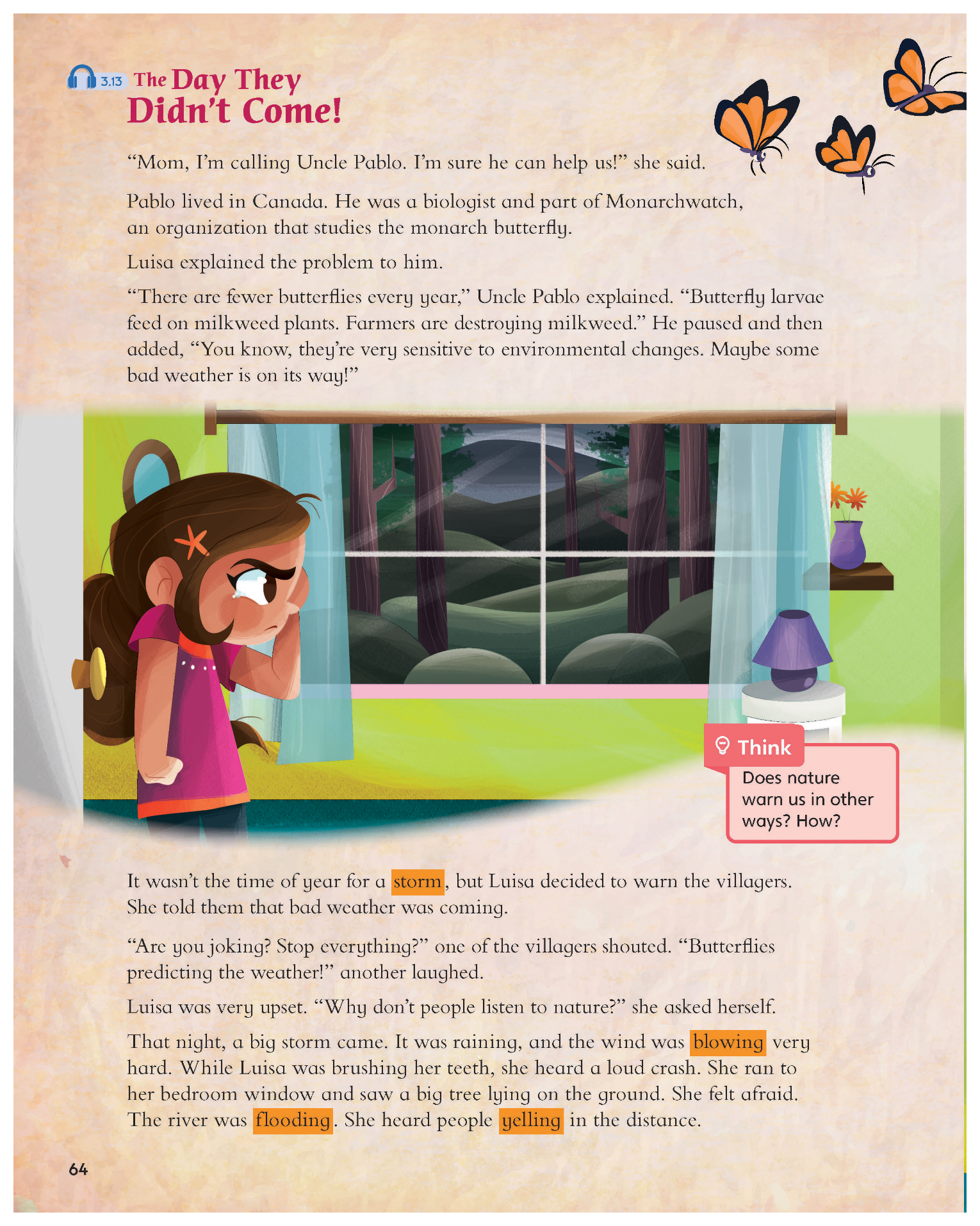
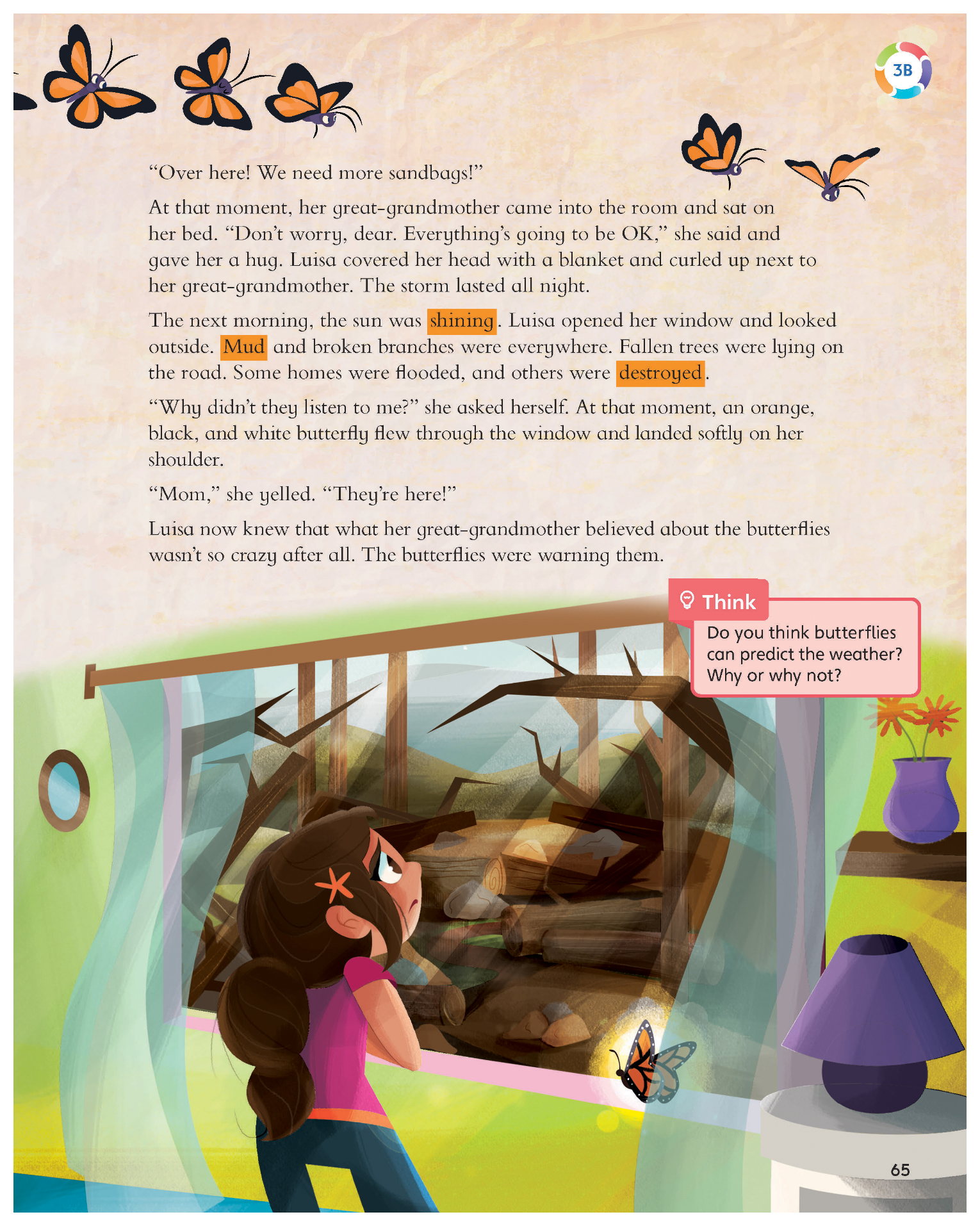
Think boxes encourage critical thinking and creativity.
Dialogic reading strategies create memorable reading classes with lots of opportunity for participation. In the Teacher's Edition, you'll find all the questions and prompts you need to help learners fully engage with the texts.

Key Words 3 (Words in Context) appear in the nonfiction text. Students learn techniques to deduce their meaning from context.
Students practice the reading strategy they learned on the Explore the Text page. They further analyze the text using graphic organizers.

The Grammar and Writing Workbook offers additional pages of grammar practice for each grammar point.
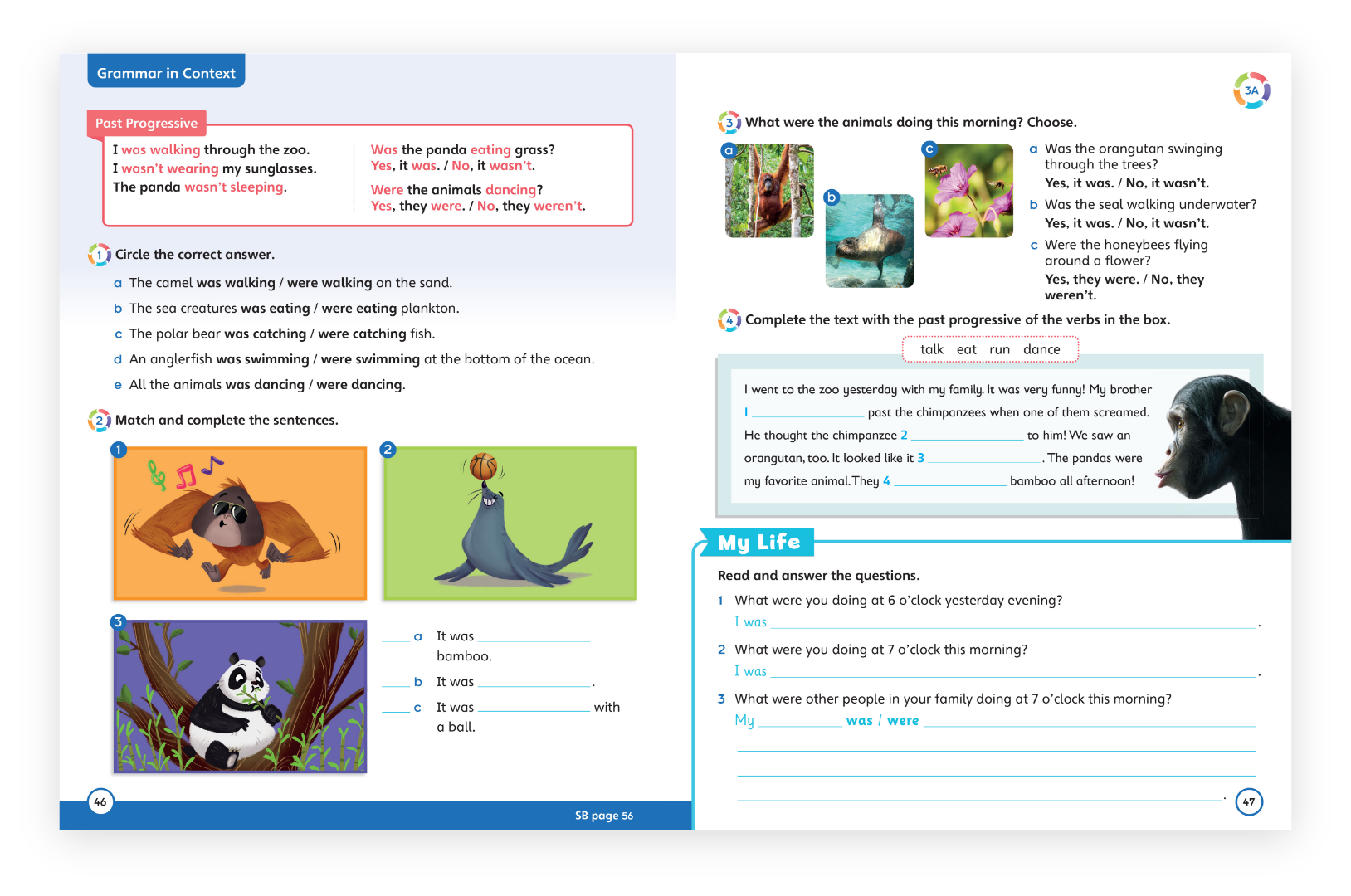
The Grammar in Context page provides clear and systematic presentation and practice of key grammar structures.

In the Activity Book, students practice the target sounds, spelling and word patterns. They have two full pages of additional grammar practice per grammar point.
The Phonics and Spelling pages help young readers understand the relationship between graphemes (letters and letter combinations) and phonemes (individual speech sounds).

Check Your Oracy! invites students to evaluate their oracy skills and recognize their progress.
Each unit focuses on a different oracy skill. The oracy skills are revisited as students advance through the levels, allowing them to consolidate their skills and build confidence.

Each Writing page begins with a model text that familiarizes students with a particular genre. Students alanlyze the genre to discover its key features, then practice writing their own texts.
Improve Your Writing focuses on elements of written language modeled in the writing text, to guide students in the correct usage.�

Time to Talk! helps students practice fluency by discussing kid-friendly topics. Students are encouraged to work in pairs and switch partners.
Ready to Read: Fiction starts with Key Words 4. These words are presented through images (Foundation-Level 4), then practiced in a meaningful activity before students encounter them in the fiction text.

A Big Question link motivates learners to think about the Big Question in the context of the fiction text.
Learners are again presented with a reading strategy, this time linked to a piece of fiction. They are given the opportunity to practice it before applying it to the text.

In Foundation, Level 1 and Level 2, fiction stories are presented through Story Time animations to support comprehension and vocabulary.
In the second half of the unit, a fiction story engages students at an emotional level, while connecting them to authentic, natural language.

By the animal pictures:�A photo collage with exploration questions activates prior knowledge. The items pictured will be revisited in the unit.
A Big Question sets the context for the unit.
By the animal pictures:�A photo collage with exploration questions activates prior knowledge. The items pictured will be revisited in the unit.
A Big Question sets the context for the unit.
By the animal pictures:�A photo collage with exploration questions activates prior knowledge. The items pictured will be revisited in the unit.
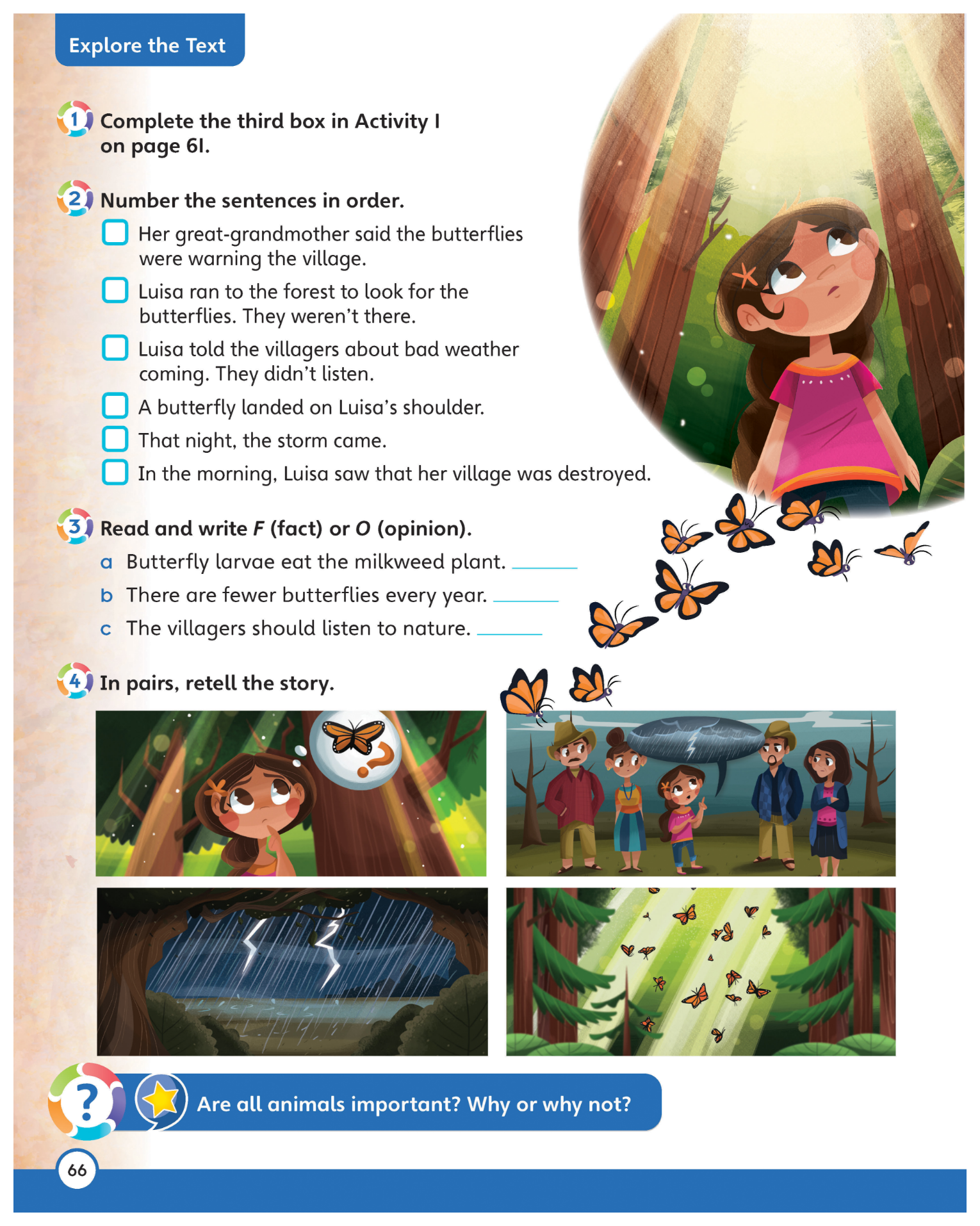
On the Explore the Text page, a variety of comprehension tasks go beyond literal understanding and help children develop skills such as making connections, predicting, organizing information, summarizing and inferring.

On the Grammar in Context page, students see a new grammar structure, or a new aspect of the same structure that was introduced in the first part of the unit. The target grammar structure is introduced in the fiction story. Students have three additional pages of grammar practice in the Grammar at Writing Workbook.
New interactive Grammar Time animations demonstrate the target grammar structure.

The Listening page focuses specifically on developing listening comprehension skills. For example, listening for gist, listening for details, predicting content or inferring meaning.
In the Activity Book, the Values pages explore and reflect on universal values linked to the unit theme. Detailed notes are included in the Teacher's Edition.

Each unit culminates in a Big Challenge project that brings together the language and knowledge students have acquired in a hands-on, creative task.
Three to five projects per level are designed as STEAM (Science, Technology, Engineering, Arts and Math) projects. There are extra support activities in the Teacher's Edition and downloadable worksheets in the Teacher's Resource Bank.

First, students review the oracy skills and language from the previous three units. Then they are presented with the Oracy Task.
Oracy in Action videos feature real students in real classrooms working on oracy activities. They encourage learners to reflect on their own talk and how they can improve.

After the task, students reflect on their talk by completing a Check your Oracy! evaluation.
Explicit vocabulary that can be used for the task is provided. Students agree on ground rules to follow and then put their skills into practice by performing the task together. Results are shared with the whole class.
Oracy reminders encourage students to utilize their oracy skills when they discuss the Big Question link.
A Big Question link connects the nonfiction text to the Big Question.
New interactive Grammar Time animations demonstrate the target grammar structure.
Animated oracy videos present and demonstrate each oracy skill.
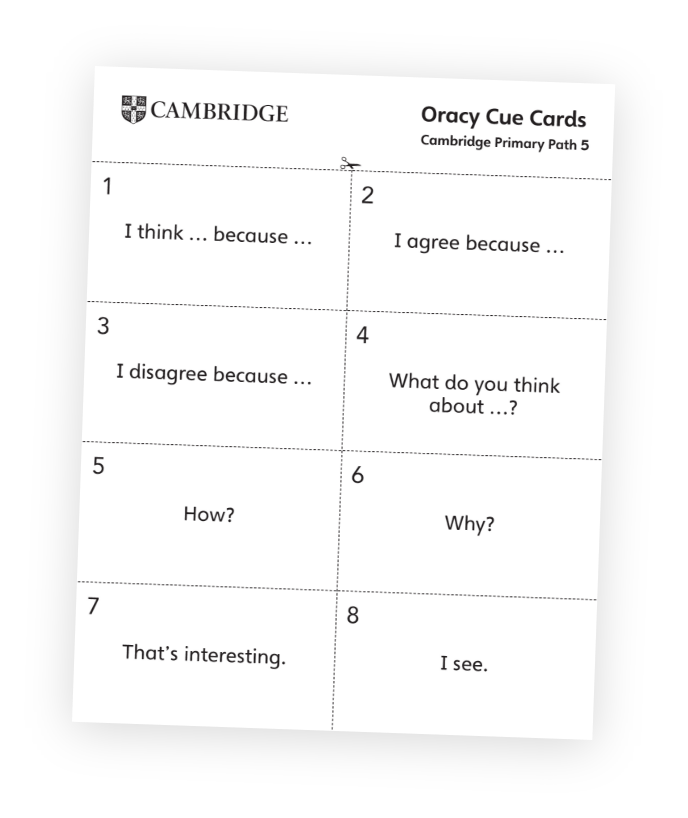
In Let's Practice Oracy! sections, students do exactly that - practice their oracy skills! Cue cards with key phrases provide additional language support.
The Writing page is part of a structured process-writing program that enables students to produce effective writing on their own.
The Grammar and Writing Workbook offers an additional three pages of writing practice per unit.

As students discuss the Big Question link, an oracy reminder prompts them to implement the oracy skills they've been learning.
Students are encouraged to explore the text with critical thinking questions in the Think prompts. Dialogic reading prompts are included in the Teacher's Edition to facilitate discussions about the text.

Five or six Oracy Extension activities are sprinkled throughout every unit. These are explained in the Teacher's Edition.

The Home-School Connection gives parents a window into te classroom.�Practice Extra is online practice that supplements classroom learning.�Study Guides help parents work with their children while they study for unit assessments.�Home-School Activities for Families are fun, creative activities designed for parents and children to do together.
Learners demonstrate their understanding of the Big Question and share their knowledge with their classmates.
Oracy Performance Tasks (after Units 3, 6 and 9) enable students to apply the oracy skills they learned in the previous three units. These tasks can be used to review their ongoing progress in oracy.

Activity Book with Digital Pack
Student's Book with My Creative Journal, Cue Cards and eBook


Teacher's Edition with Digital Pack
Grammar and Writing Workbook
Flashcards
Oracy Posters
Supplementary Reading

The Student’s Book is built around 18 fiction and nonfiction reading texts linked to Big Questions, explored throughout each unit. The robust oracy program is supported by functional language Cue Cards, and a new STEAM program is woven into the Big Challenge projects. Each student has their own Creative Journal to nurture their creativity and self expression.
Student's Book with My Creative Journal, Cue Cards and eBook
Activity Book with Digital Pack
Teacher's Edition with Digital Pack
Grammar and Writing Workbook
Flashcards
Oracy Posters
Supplementary Reading
The Activity Book provides a variety of material and activities to be used alongside the Student’s Book. In every unit there are two further reading texts, four pages of grammar practice, a structured writing program and lessons in values. The Activity Book provides access to the Learner’s Digital Pack, including Practice Extra.
The Teacher’s Edition provides comprehensive teaching notes for every unit, with explicit guidance on teaching oracy, literacy and creativity. The second edition includes a range of new Oracy Extension activities and support for STEAM Big Challenge projects. The unique access code unlocks the Digital Pack on Cambridge One, giving access to Presentation Plus, the Oracy Pack, Teacher’s Resources, plus full audio, animation and video content.
The Grammar and Writing Workbook provides additional practice of target grammar and more opportunities to work on process writing skills. A free digital version including answer keys is available for teachers.
The digital and print Flashcards present the key vocabulary for each unit, to help learners make visual and oral connections with new words. They facilitate engaging revision activities and games.
The Poster Packs include 6–8 interactive posters to enrich your oracy lessons. You can find tips on how to make the most of the posters in your teacher’s Digital Pack.
Cambridge Primary Reading Anthologies are the ideal reading supplement for Cambridge Primary Path Second Edition. The beautifully illustrated stories and nonfiction texts align with the unit structure and center around the same Big Questions.
Find out more about Cambridge Primary Reading Anthologies here.


Cambridge Primary Path Second Edition is the perfect next step from Cambridge Little Steps Second Edition. The unique combination of oracy, literacy and creativity pillars in both courses builds the skills children need to thrive, now and in the future.�
Cambridge Little Steps Second Edition


© 2025 Cambridge University Press & Assessment
Show me all the components for all the levels


