Surgical gowns �AAMI Levels 3 and 4
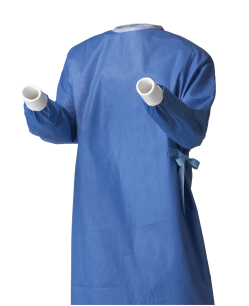
Front chest
Sleeve seam
Sleeve
Front belt
There are typically four different areas that must pass the test within the critical zones: front chest, sleeve seam, sleeve and front belt attachment point.
Level 4
Level 1
Level 2
Level 3
• Simple excision biopsies
• Excision of “lumps and bumps”
• Ophthalmological procedures
• Simple ear, nose and throat � (ENT) procedures
Minimal
• Tonsillectomies and � adenoidectomies
• Endoscopic gastrointestinal � procedures
• Open hernia repair
• Minimally invasive surgery (MIS)
• Interventional radiology or � catheter laboratory procedures
Low
• Mastectomies
• Arthroscopic orthopedic � procedures
• Endoscopic urological � procedures (such as transurethral � prostate resections [TURP])
Moderate
• Any procedure in which the surgeon’s hands � and arms are in a body cavity
• Orthopedic procedures during � which tourniquets are not used
• Open cardiovascular or thoracic procedures
• Trauma procedures
• Cesarean sections
High
Examples of procedures with �anticipated exposure risks
ANSI/AAMI �PB70 barrier
Risk of exposure: Fluid amount, fluid spray �or splash and pressure on gown
Click numbers 1 through 4 to view AAMI level details
4
1
2
3
Minimal�protection
Low�protection
Moderate�protection
High�protection
Protective apparel, including surgical gowns, are governed by a set of standards and test methods that all manufacturers must meet. These standards are established by AAMI (The Association for the Advancement of Medical
Instrumentation).��Specifically, ANSI (American National Standards Institute)/AAMI PB70:2012 is the standard that establishes a classification system (Levels 1-4) for protective apparel �used in healthcare facilities, including surgical gowns, based on liquid barrier performance using standardized test methods.��The U.S. Food and Drug Administration (FDA) has adopted ANSI/AAMI PB70:2022 as the standard by which all surgical gown manufacturers must abide.
Relationships between barrier performance and anticipated �risks of exposure*