1
Waste-to-energy model
How we turn non-recyclable material into energy

Collection
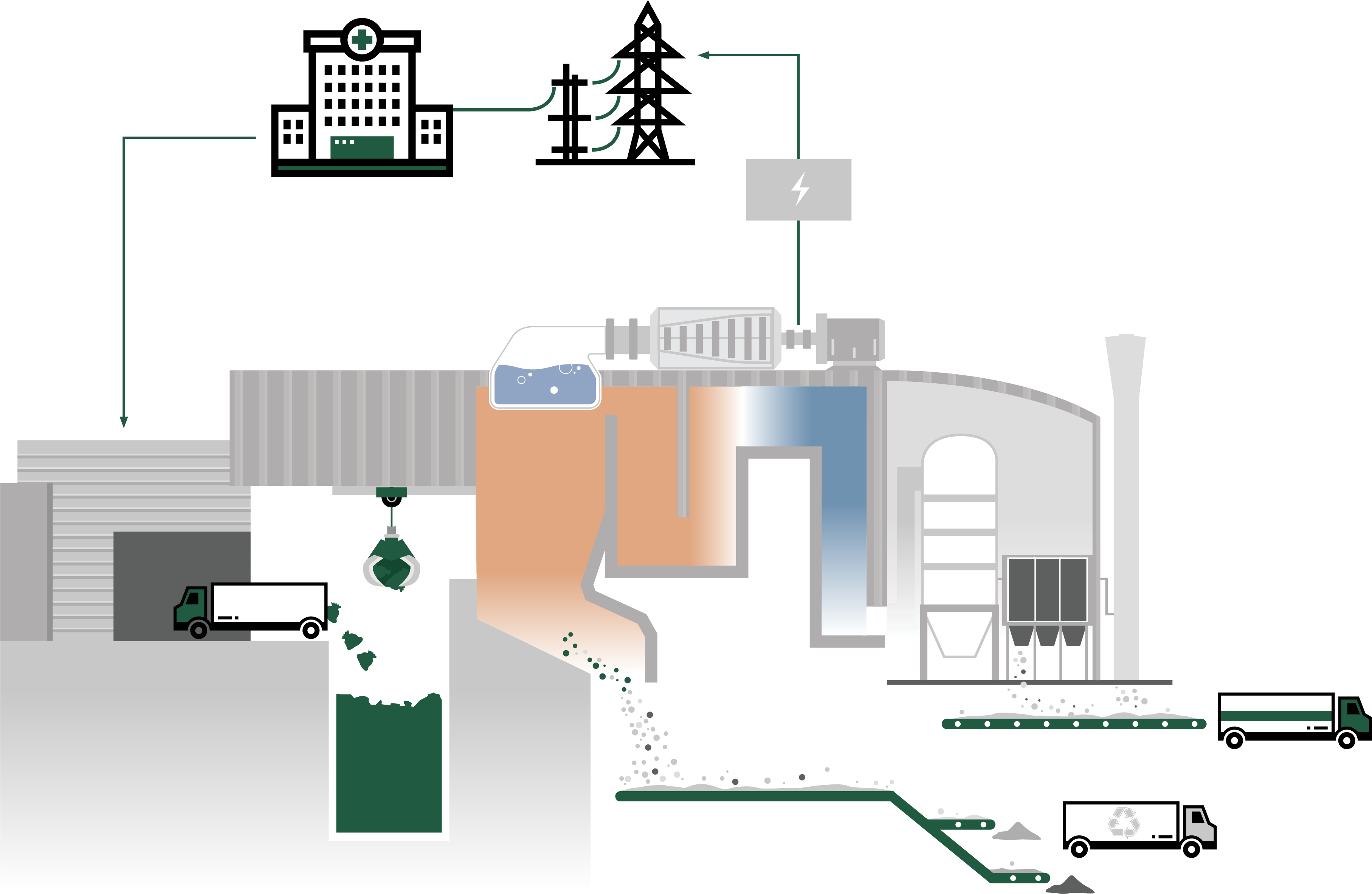
Collection bins are removed from hospital
1
2. Waste storage
Waste storage
2
Waste is stored in a bunker under negative pressure
3. Incineration
1. Collection
Incineration
3
Waste is incinerated at extremely high temperatures in a self-sustaining process
4. Boiling
2. Waste storage
Boiling
4
Heat from combustion boils water that turns into steam
5. Generator
3. Incineration
Generator
5
Steam turns a turbine-driven generator and creates electricity
6. Distribution
4. Boiling
Distribution
6
Electricity is distributed to a grid and used to power homes and businesses
7. Pollution control
5. Generator
Pollution control
7
Air pollution control equipment is used to cool, collect and clean combustion gases
8. Fabric filter
6. Distribution
Fabric filter
8
Emissions of particulate matter are controlled primarily through a fabric filter
9. Monitoring
7. Pollution control
Monitoring
9
Emissions and operations are continuously monitored to ensure compliance with environmental regulations
10. Residual collection
8. Fabric filter
Residual collection
10
Residual material from combustion process is collected for processing and metals extraction
11. Metal recycling
9. Monitoring
Metal recycling
11
Ferrous and non-ferrous metals are extracted for recycling
1. Collection
10. Residual collection
Start
11. Metal recycling

2
3
4
5
6
7
8
9
10
11