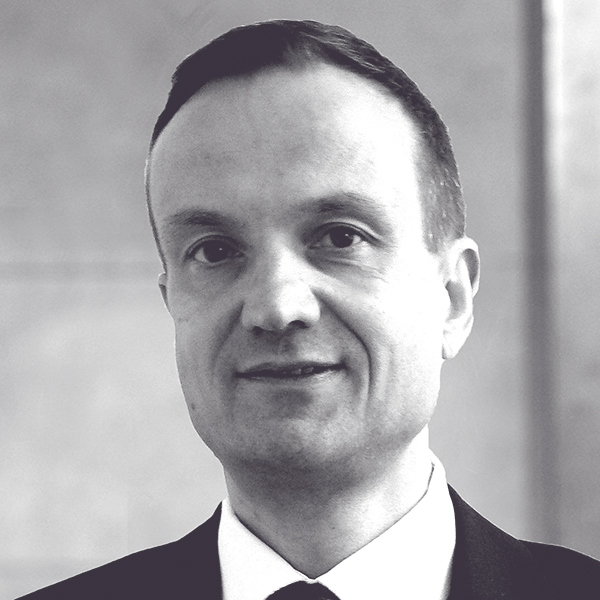
UBS’s Jansen Phee is a student of the art of humility
also in this issue:
digital issue ∙ nov-dec 2020
Fund buyers’ 2021 wish list The industry post-Covid Red flags and lessons learnt
MAIN SPONSOR:
As we wrap up a rollercoaster of a year, in the world and in the industry, we reflect on the major changes – and ponder what’s next. In this issue, we speak to leading fund buyers in Singapore and Hong Kong about adapting to the pandemic-induced ‘new normal’ and the changes they made to their product shelves. We also learn about the funds they’re after in 2021. ESG, tech, healthcare and water strategies are highly sought after, and an innovative edge is key. Thai investors are increasingly looking for foreign investments. In India, smart beta, thematic, international equities and debt exchange-traded funds are gaining a foothold. With the rise of ETFs and zero-fee funds, the debate over fund and management fees have come under scrutiny. Private banks have also introduced solutions and are building trust to tackle Covid-19’s lingering effects. Our cover star this issue is UBS’s Jansen Phee. He tells us how Muay Thai has helped to shape his work and how the fund selection team dealt with this year’s volatility. We also highlight a Citywire roundtable discussion with top fund buyers about the level of service selectors get from fund providers. Enjoy the read, have a happy New Year, and see you in 2021!
audrey raj, editor, citywire asia
welcome note
fund selector special
Advisory Content from: Aberdeen India Alternatives Content from: BNP Paribas Innovation Passives Fund Selector Profile Thailand Content from: NNIP Fees Content from: Candriam Equity Outside Asia Content from: AXA Fixed Income Content from: Pictet Malaysia Content from: M&G Independents’ Corner Content from: Janus Henderson Roundtable Ex-Bankers Pet Peeves
welcome
aDVISORY
Advisers reflect on guiding panicked investors through this year’s volatility and what comes next in the industry. March will be remembered for its selloffs, when even safe havens such as gold and US Treasuries were not spared. Wealthy clients needed more hand-holding and their advisers rushed to step up to the plate. However, private banks have since moved past engagement. They have introduced solutions and are building trust to tackle Covid-19’s lingering effects. Morgan Stanley interacted with clients more frequently and provided them with regular market commentaries and analysis. Advisers also reviewed clients’ positions with an eye on the future. But the firm’s response centred around solutions, said Ernest Chan, head of investment management services at Morgan Stanley Private Wealth Management Asia. It offered cash-plus solutions to boost yield in a low-interest-rate environment, and thematic funds in sectors such as healthcare and technology were major beneficiaries of the pandemic. Funds that backed beneficiaries of the ‘new economy’ boom were recommended to clients who could tolerate more risk. Morgan Stanley also launched the Average Buying Account service. This helps clients ‘enter the market in times of volatility, replacing emotional barriers with disciplined investing,’ Chan said. ‘On the client interaction side, virtual meetings and video conference calls have become the new normal with clients moving away from face-to-face interactions.’ In March, advisers had little historical precedence to turn to, CIMB Private Banking said. The 2020 market crisis was caused by an external health crisis turning into a liquidity crisis. Previous crashes were usually caused by a financial implosion or extreme stress in the financial system due to leverage. ‘We advised to stay calm and not enter into a panicky, sell mode. The fear had driven many to almost divest everything and hold cash, but we worked extremely hard to manage those divestments,’ said a private banking fund selector at CIMB Singapore. ‘Funds and discretionary portfolio mandates are our preferred routes to market as they provide diversification benefits and are professionally managed by seasoned managers,’ they said.
by Annabelle Liang, Senior reporter
BACK TO TOP
Meeting needs As the storm tapers, there is a need to accept the changing nature of advice, the CIMB selector said. Clients expect more bespoke advice, and their needs are becoming increasingly diverse. They are also exposed to social media and news sites, which offer an abundance of free advice. On top of that, there is input from other banks, investment platforms and fellow investors. In this environment, relationship managers (RMs) should be trusted enough to position themselves as ‘financial doctors’, the selector said. ‘When you are sick and consulting a doctor, you are very likely to take the doctor’s advice and swallow the bitter pill – you do not say you loathe this pill and not take the medicine. ‘On the other hand, industry research has shown that there is a lack of trust by clients in the financial industry. A lot more work has to be done to rebuild the trust,’ they added. The selector said that CIMB engages with these clients by offering them relevant data and historical facts, alongside an investment strategy. It also puts an emphasis on service when delivering advice. Client preferences Both banks saw inflows into thematic funds and environmental, social and governance strategies. Morgan Stanley also noted demand for China A-share funds. These could serve the purpose of diversification, as China’s domestic market has a low correlation to other widely-held asset classes, Chan said, adding that hedge funds have gained traction among high-net-worth investors (HNWIs). ‘Hedge funds are an increasingly critical component of Asian client portfolios,’ he said. ‘As HNWIs in Asia become more sophisticated and have higher demands on their portfolios in terms of risk management as well as return, hedge funds serve as tools for managing volatility, reducing correlation to broader capital markets, and as alpha generators during down markets,’ he added. However, clients are moving away from hard currency funds in emerging markets, except for China. This is a result of deteriorating market conditions, delayed or ineffective responses to the pandemic and fluctuating currency movements relative to developed markets, Chan said. CIMB clients have similarly adjusted their investments during the pandemic. Regulators have intervened in some sectors, by asking banks to stop paying dividends, for instance. Traditional high yielders, such as real estate investment trusts, have also cut distributions during the crisis. ‘If these traditional dividend yielders are not able to give the retirees their regular income, investors have to search elsewhere to make up for the drop. ‘We believe funds that seek alternate sources of income (while achieving lower volatility) should likely see increased demand from Asian clients. ‘For instance, the continued liberalisation of the Chinese bond markets and their recent inclusions into global indices probably should see more demand for funds investing in these markets,’ the CIMB selector said.
Important: Dividend may be paid out of capital. Any dividends paid and distributed out of the fund’s capital will result in an immediate reduction of the fund’s Net Asset Value per share. Please refer to www.aberdeenstandard.com.sg for disclosure on the income statistics of the fund. Investments in the fund are subject to investment risks, including the possible loss of the principal amount invested. Share values and income therefrom may fall or rise. Past performance is not necessarily indicative of future performance. Investors should read the Singapore prospectus and the product highlights sheet before deciding whether to invest in shares of the fund. The Singapore prospectus is available and can be obtained from Aberdeen Standard Investments (Asia) Limited or its website or any of its appointed distributors in Singapore. Advice should be sought from a financial adviser regarding the suitability of the fund before purchasing shares in the fund. In the event that you choose not to seek advice from a financial adviser, you should consider whether the fund is suitable for you. Bloomberg data are for illustrative purposes only. No assumptions regarding future performance should be made. This advertisement has not been reviewed by the Monetary Authority of Singapore. Aberdeen Standard Investments (Asia) Limited, Registration Number 199105448E SG-051120-133338-1
With bonds at historic lows, where can investors look for sustainable yield? Traditionally investors have turned to bonds as a source of income. But with interest rates at historic lows, this has become challenged. Some USD16 trillion worth of bonds offer negative yields [2]. Moreover, interest rates are expected to remain at zero or near zero until 2023. It’s why we believe investors should pivot towards equities to achieve sustainable yield. In addition, the gap between the dividend yields of the S&P500 Index and 10-year US government bonds has reached a historic high, and we believe that gap is going to get wider as earnings recover, dividends grow and while yields remain close to or below zero. Dividend income from equities appears far more attractive and sustainable.
What’s your view on the health of the dividend opportunity in global equities? The impact of the coronavirus pandemic has negatively affected some companies’ ability to pay dividends. However, globally businesses still paid approximately USD280 billion worth of dividends in the second quarter of 2020 [1] despite a global economic shutdown. During this period we have seen a major difference between sectors and regions in terms of the number of companies cutting dividends and the sustainability of dividends. So as an investor, it’s extremely important to be diversified across sectors and have the ability to invest across regions.
Josh Duitz Senior Vice President, Global Equities
The Global Dividend Opportunity
Martin Connaghan Investment Director, Global Equities
Should investors only look at high-dividend-paying companies? We think it is important for investors to diversify by also looking at companies that reinvest their profits in their own growth and don’t use it to pay dividends. By using a global equities strategy, investors can invest across the full spectrum. So while income is important, investors might also look to invest in capital growth opportunities while receiving income.
What is Aberdeen Standard Investments’ approach to using equities to capture dividends? We use various screens to alert us to when companies are about to pay a regular or special dividend. We examine thousands of dividend announcements throughout the year to understand the full breadth of opportunities available. An example of our dividend capture strategy in action was NortonLifeLock, formerly known as Symantec. In August 2019, Broadcom announced that it was buying the Symantec Enterprise business for USD10.7 billion. At that point Symantec announced it would pay a special dividend with the proceeds. The deal closed in November 2019 and in January 2020, NortonLifeLock paid a dividend of USD12 a share. Investors were able to buy NortonLifeLock from August 2019 through January 2020 at a yield of 45% to 55%, depending at which point you bought. [3] Aberdeen Standard Investments offers a unique proposition to fulfil investors’ income needs. The Aberdeen Standard SICAV I – Global Dynamic Dividend Fund aims to provide a premium [4] monthly dividend income and benefit from capital appreciation through a highly diversified global equities portfolio. Speak to your local Aberdeen Standard Investments’ representative or scan the QR code below for more information.
[1] Source: Bloomberg, September 2020. Past performance is not a guide to future performance
[2] Source: Société Générale Cross Asset Research/Equity Quant, Bloomberg, October 2020. Past performance is not a guide to future results
Source: NortonLifeLock, as of 31 January 2020. Company selected for illustrative purposes only, to demonstrate the investment management style, not as an indication of performance and not as a solicitation or recommendation of any securities. Past performance is not representative of future results
Dividend rate is not guaranteed, dividend may be paid out of capital. Any dividends paid and distributed out of the fund's capital will result in an immediate reduction of the fund's Net Asset Value per share. The fund is actively managed. It aims to outperform the MSCI AC World Total Return Index with a dividend yield greater than that of the benchmark before charges
advertisement feature
Advertisement Feature
INDIA
Sanctum Wealth Management investment boss Roopali Prabhu gives us an overview of the fund market in India. Tell us about your firm and role. Sanctum Wealth Management was founded as a result of a management buyout of private banking business Royal Bank of Scotland (RBS) India in 2015. Sanctum has grown to a mid-sized private wealth management firm catering to end-to-end private wealth management solutions for high-net-worth individuals (HNIs). The solutions offered by Sanctum include third-party investment products, in-house discretionary and non-discretionary portfolio strategies, equity broking, stock advice, strategic solutions, wealth planning and real estate advice, among others. I am the chief investment officer at Sanctum and am responsible for our investment platform including formulating our investment outlook and managing our model asset allocation portfolios. I work with a team to develop our core discretionary strategies, investment products, broking platform and strategic solutions.
by Audrey Raj, Editor
We have been advocates of international diversification for a long time. India represents only 3% of the global market cap so local investors miss out on investing in some world-class companies and at times entire sectors by maintaining a domestic portfolio. Lower correlation with domestic equities also helps balancing risk. Initially, there was not much interest in offshore investments, but it has been gathering momentum in the past months. Assets under management of international feeder funds in India have doubled since the meltdown in March, albeit on a small scale. What investment themes are you watching? Even with a Covid-19 vaccine, we think economic recovery will remain uneven. Some sectors such as IT, pharmaceuticals and specialty chemicals are experiencing tailwinds, whereas others such as entertainment and offline retail have been hit disproportionately hard and would have a longer recovery period. This resonates with trends internationally as well. We are most interested in industry leaders of these sectors that are benefitting from structural and tactical tailwinds. Our preferred themes continue to be the same since the onset of the pandemic: resilience and the strong getting stronger. Recently, the buzzword has been ‘quality’ – for us, ‘quality’ means hygiene rather than a theme. We continue to be constructive on gold and overweight in all our model portfolios, despite gold being sideways recently. We have been exploring the alternative investment range extensively and we like the warehousing development space for its superior risk-adjusted return potential.
What product gaps do you see in the fund market in India? Indian capital markets are still evolving, so the industry is working with a limited set of instruments. We are yet to achieve market depth in instruments such as single-stock options, real estate investment trusts, infrastructure investment trusts and structured products. This imposes limitations on product innovation. However, managers are reasonably quick to integrate new instruments in their fund construct as constraints around regulations, liquidity and price discovery ease. Passive investing is gaining a foothold, and there are new products available in this space, such as smart beta, thematic, international equities and debt exchange-traded funds. There is tremendous scope to grow as investors understand and experience the relevance of these products in their portfolios. Similarly, there is a new emergence of alternative products with varied investment objectives and strategies. There is scope for innovation in this space as markets develop further.
Are the US-China trade tensions a concern among clients? Not really. Investors know the trade tensions can cause market volatility, but it also creates structural opportunity in some sectors and industries in India, and our positions in gold should smooth out volatility. In fact, we often get queries around such opportunities. Which asset classes are the most challenging? In 2019, it was fixed income. But this year, tactical asset allocation adjustments are proving more challenging than researching a single asset class. We had never navigated so many uncharted waters simultaneously – economies at a standstill, record quantum of negative yielding debt, massive global and local liquidity infusion, and other local factors. How big is your product shelf and how many products are in your recommended list? We have almost all the products required by our clients, including global assets both in INR and foreign currency. Our open-architecture philosophy and team size allows us to offer a wide range of managers and products. We also curate some of the products in-house through our asset management team. While we constantly explore and perform due diligence on a lot of products, we are very selective about what comes to the recommendation list. We do not operate like a supermarket – we bring well-researched, high-conviction ideas to our clients.
The Shri Vaishno Devi Katra Vande Bharat Express train travelling through Ludhiana, India
India
ALTERNATIVES
To this end, JP Morgan Private Bank continues to favour investments related to technology and healthcare innovation, noting that client interest in impact investing has also grown. ‘As most media attention and investors were focusing on Covid-19 vaccine-related ideas, our healthcare managers have been able to find other therapeutic investments at much lower valuations,’ Yang said. On impact investing, the bank is working with several private equity managers to explore high growth and positive impact areas, such as education technology, digital health, sustainable food sources, electric vehicles and sustainable cities, among others. This opportunistic approach has been spurred by the pandemic. In March, the bank worked with a well-known technology hedge fund to create a short-term long-only vehicle to acquire high-quality technology stocks that were trading at depressed prices – a strategy that has since returned more than 50%. The bank also worked with a distressed corporate credit specialist in deploying capital opportunistically between March and July, primarily on the investment-grade corporate debt side. These positions have since increased in value of more than 35% year-to-date.
‘Not seeing the people or companies you are going to invest in is, at least at the beginning, a little difficult for us. ‘However, as with most investors, we have adapted to this new norm. Now, we have enhanced our decision-making process by including more measures to evaluate the investment opportunities being brought to us.’ This onus on due diligence in private equity investing is entirely reasonable given the opportunities in distressed equity being presented by economic volatility and uncertainty around the pandemic. ‘At the end of last year, the global level of lower-rated corporate debt was already almost six times higher than that of 2002 at approximately $10tn. So, pre-Covid-19, the amount of debt and the leverage built up in the whole system was already very high,’ de Boer said. And while the default rate is currently still low – estimated at about 5-8% – this is just the beginning. Indosuez has been reviewing thousands of portfolio companies since the beginning of the year and is in constant dialogue with private markets managers. By doing so, it has found that more fortunate companies have enough cash on their balance sheets to survive for six-to-nine months, sometimes even 12 months. However, many others are struggling. ‘Many businesses are still shut, but wait until they re-open,’ de Boer said. ‘We’ll see more defaults coming at the end of this year and next year. We think the sectors with the highest impact are travel, hospitality, leisure, shipping, retail and energy. We see potentially very high default rates in these areas.’ ‘Private equity, sitting on more than $2.5tn of dry powder, could step in and help with these businesses. It could be a good buying opportunity.’ Down with CTA Highlighting a reasonably niche area of alternative investing, Shreemati Varadarajan, head of investments at AAM Advisory, part of Quilter, witnessed managed commodity trading advisers (CTAs) do well during the market’s sharp corrections earlier in the year. ‘However, once volatility tapered off in the market as stability resumed, these alternative CTAs failed to perform as well as conventional equity CTAs. That said, alternative CTAs do still act as a good diversifier for portfolios, particularly during volatile times when the markets are vulnerable to sharp corrections.’ Varadarajan offered as an example the Man AHL Diversified Futures fund, which performed very well in March and April during the sharp correction. However, performance then tapered off as markets became more stable.
by Neil Johnson, Reporter
It’s a private matter Indosuez Wealth Management has also enjoyed very positive returns from alternative investments, particularly private equity, with investors hunting yield in a low-interest-for-longer environment and needing to diversify portfolios and hedge risks. ‘Private equity has consistently outperformed the public benchmarks over different horizons (for example, five years, 10 years and 20 years),’ said Arjan de Boer, head of markets, investments and structuring in Asia at Indosuez. ‘The key to investing in this asset class is to maintain a diversified portfolio, pace commitments in a consistent manner and be able to pick the right investment partners,’ he continued. Indosuez diversifies across different strategies (for example, buyout, venture capital, private credit, real assets, co-investments and secondaries), markets (the US, Western Europe and rest of the world) and themes (healthcare, education, food, technology and more). Although de Boer also sought to highlight how Covid-19, while not necessarily changing the wealth manager’s private equity strategy, had affected the way due diligence is performed. ‘In the past, when we invested with a manager or in a project, we usually had face-to-face meetings and site visits, but now everyone meets online. In private markets, due diligence is both art and science; it requires quantitative as well as qualitative skills,’ he said.
Tech, healthcare, online gaming and ESG funds have boomed during the pandemic. While many of us are having a year to remember – or forget – the coronavirus pandemic has created fertile ground for alternative investing. As Albert Yang, JP Morgan Private Bank’s head of alternative investments in Asia, explained: ‘Wide dispersion in individual stock and industry sectors have contributed to large positive returns for equity-focused hedge funds. Certain macro hedge funds were also able to take advantage of the increased market volatility this year on the equity and interest rates side, particularly in March 2020 during the market selloff.’ ‘On the other hand, our growth equity managers were able to capitalise on the booming IPO market, with several key new listings in the technology space, specifically electric vehicle, cloud-based data warehousing, gaming software platform, and so on,’ he added. Indeed, the Covid-19 crisis has provided a long-term boon for key themes relating to technology, healthcare, consumer habits, and environmental, social and governance (ESG).
Alternatives
Economic, political and environmental factors are converging on an unprecedented scale, creating a great deal of uncertainty. It’s a phenomenon we are calling ‘The Great Instability’. Looking at the current global pandemic, there could be no truer example of this volatility and instability. COVID-19 has been front-of-mind for most governments and societies, but another arguably more important issue persists: climate change. Potential solutions exist in the form of renewable energy and, fortunately, there is growing awareness of the need for advances in this area. In the era of The Great Instability, how can energy transition power a better future? Energy transition - not so easy From pushing the renewables sector, encouraging adopters and innovators, and punishing carbon offenders: many governments are putting green policies on the agenda. Governments and individuals will therefore play a crucial role in the energy transition, as will technology and science. In particular, our ability to produce, transport and consume renewable energy. The energy sector itself will also play a crucial role, as a source of both emissions and solutions. Energy companies have a focus on reducing their carbon footprint and innovating in renewables, and many offer interesting business models. How long this transformation will take and how much it will cost is something to consider when looking at the full picture. Reshaping energy production Energy is literally everywhere, we possess global sources of sustainable energy, with no hegemonic states or powers to control their access and prices. Moreover, unlike coal and oil, renewable energy does not require significant transformation. Despite this, it is still quite expensive to provide sufficient generation capacity and speed to meet today’s huge energy demands, and new infrastructures are needed. To date, high subsidies and low interest rates have facilitated significant investment and easy borrowing, helping firms to invest in research and development, bringing down the aforementioned costs. However, monetary and fiscal policy are susceptible to change. An increase in interest rates or decrease in subsidies could hinder energy companies’ access to the loans and investments needed to make energy production more cost-efficient and, in turn, jeopardize the growth of renewables.
words by Patricia Holburn
In The Great Instability, how can energy transition power a better future?
Reshaping energy transportation Renewable energy is harder to transport than fossil fuels, and the existing grid networks of most countries would need to be updated and connected to new production facilities, most likely at great cost. Storage is another factor. The sun does not necessarily always shine, nor the wind blow. Yet, power is always needed. Storage is the solution and our ability to store renewable energy is improving, but remains expensive currently. Solving these issues will require, along with innovation and scientific breakthrough, significant investment. Reshaping energy consumption On average, an electric car still costs more than a diesel or petrol car. For most, a like-for-like comparison will only be possible once batteries become cheaper and more efficient. Indeed, aside from their price, there are significant concerns around electric cars’ range and the ability to charge them. On the other side, more and more cities are pushing for electrifying transport, adopting more-stringent regulations and even becoming car-free. Companies and consumers are increasingly evaluating the costs and benefits of changing habits and embracing digitisation and a zero-carbon lifestyle. The more the sector progresses and becomes more competitive, the quicker and easier it will gain consensus from the public. The full picture At BNP Paribas Asset Management, we’re exploring investment opportunities in a world more uncertain than ever, and we consider renewable energy, despite certain challenges, a once-in-a-generation chance to shape a better future while targeting attractive returns. The COVID-19 pandemic has only served to reinforce this view. It has shown that despite globalisation and technological advance, the world is still a fragile place and susceptible to disruptive shocks. Resiliency needs to be improved and sustainable investing has a key role to play in this. To this end, all of our funds integrate environmental, social and governance (ESG) considerations. And for those who wish to invest with an even more explicit sustainability angle, we offer thematic investment solutions focused on environmental markets and energy transition, which are leading the transition to a more sustainable global economy.
Opinions included in this material constitute the judgement of the Company and may be subject to change without notice. The value of investments and the income they generate may go down as well as up and it is possible that investors will not recover their initial investment. Investments involve risks. Past performance and any economic and market trends/forecasts are not a guide to future performance. Note to Hong Kong Investors: This material is issued by BNP PARIBAS ASSET MANAGEMENT Asia Limited and has not been reviewed by the Securities and Futures Commission in Hong Kong. Note to Malaysia Investors: This material is issued by BNP PARIBAS ASSET MANAGEMENT Malaysia Sdn Bhd in Malaysia and has not been reviewed by Securities Commission Malaysia. Note to Singapore Investors: This material is issued by BNP PARIBAS ASSET MANAGEMENT Singapore Limited (Company Registration No. 199308471D) in Singapore and has not been reviewed by the Monetary Authority of Singapore.
advertisement Feature
Innovation
Funds with an innovative edge are highly sought after. What makes a good fund? Selectors are standing by age-old measures of track records and experience, even as the pandemic packs a punch. They are also looking for innovations in the fund management space, which includes environmental, social and governance (ESG) strategies. L-Bridge Capital, for one, is keen on innovations in the areas of advanced portfolio data and risk analytics. Financial intelligence tools help professionals make good decisions faster, and the Singapore multi-family office has invested in at least four of them this year. Senior portfolio strategist Kevin Wong at the firm is also excited about managers who extend their research capabilities to their proprietary databases of risk and return sources for all asset classes. ‘This in turn allows clients to better optimise portfolios, make better asset allocation decisions, and reduce tail risks,’ he said. Both DBS Private Bank and Julius Baer have their eye on ESG. The Singapore lender is also integrating ESG criteria in its assessment of fund managers, said John Ng, head of funds selection and advisory at DBS. ‘ESG is deeply rooted in our agenda, and we continually keep a lookout for suitable ESG-themed ideas. These are on top of the traditional asset classes and sectors that alternate in their investment opportunities,’ he said. Meanwhile, Julius Baer plans to emphasise ESG investing and continue favouring thematic plays in 2021. Alternatives will be an area of focus, especially in the areas of Ucits, hedge funds, private credit and real estate, said Rishabh Saksena, Asia Pacific head of investment specialists. Saksena also sees opportunity in fixed maturity products. ‘Fixed maturity funds offer yield pick-up with the benefits of diversification and active risk management when compared to exposure through individual bonds. ‘We expect that these products will continue to find favour in the prevailing benign interest-rate environment and the resultant hunt for yield.’
Red flags Chiam, who last spent a decade in investment consulting at Credit Suisse, worries about a narrowing market. ‘Outperforming stocks have stretched valuations; underperforming ones are either facing economic or structural challenges. Stock-picking has become a lot more challenging,’ he said. Besides the pandemic, other risks he considers include geopolitical tension, high debt levels and a shaky transfer of power in the US. Chiam’s firm recently turned more positive on Asian credit and life settlements. The former is supported by China’s recovery and USD weakness, which is expected to continue when President-elect Joe Biden is sworn in on 20 January. The latter has low volatility and little correlation to financial markets. ‘These characteristics make it very useful in portfolio construction by giving stability to the overall portfolio,’ Chiam said. Julius Baer has a big risk in view – liquidity in fixed income markets. Market volatility earlier this year put these constraints in the spotlight, Saksena said. ‘While most funds weathered the storm relatively well, the liquidity aspect does have implications in portfolio construction that need to be kept in mind,’ he added.
Fundamentals stick The fundamentals for assessing a fund have not changed, despite volatile markets. DBS evaluates a fund’s performance over as many as five years, and on a discrete calendar year basis, as compared to its benchmark. The bank has 37 focus funds on a list that is updated every quarter. Some of them, such as the Ninety One Global Multi-Asset Income fund, have had a rocky few months. The fund returned 1.7% over the three months to 30 September, underperforming the balanced USD sector benchmark by 2.6%, according to Citywire data. But the gap narrows to 1.4% and 0.1%, taking a one- and three-year view. ‘Other aspects we appreciate include access to sales support from the fund managers. ‘Interestingly, this is an area that has improved amid Covid-19, since more conversations are now taking place online and are easier to coordinate and conduct,’ Ng said. The devil is in the details for DBS, which religiously tracks changes in a fund’s management processes and personnel. It looks for spikes or drops in performance, relative to other funds of a similar classification. ‘The inability to explain said performance would warrant our attention. We also pay attention when a fund grows too large within its sector or asset class for the fund manager to handle, for this suggests there could be fewer opportunities,’ Ng said. L-Bridge Capital’s Wong typically considers performance over five to 10 years. His firm is becoming increasingly bullish on managers with expertise in Asia equities and Asia or emerging market fixed income. Their expertise can be used to customise a segregated portfolio fund for families. ‘We are most curious to know more about situations where the manager experienced a sharp drawdown. There are usually important takeaways especially related to the fund manager’s positioning and risk management process in those down years,’ Wong said. Meanwhile, Luther Chiam of Pinnacle Capital Asia goes as far as he can into history. Just as important, according to the multi-family office’s chief investment officer, is a grasp of how managers tick. ‘To have some confidence that good performance can continue requires us to understand the manager’s investment philosophy, their thought process, risk management. Eventually, these will be represented in the performance numbers,’ he said.
Passives
Going passive A key argument between active and passive funds is the ability to outperform. Active managers have made their name through generating alpha, while passive funds provide consistent betas. ‘I will pick a passive fund where no good active managers that can generate consistent outperformance exist,’ JP Morgan’s Lai said. One key factor could be the stage of evolution in a particular sector. Simply put, the investment universe could be at a point where it is not rich enough for active managers to be successful. These sectors will have one or two stocks that outperform and do well, Lai pointed out. Behind them, however, lies a long trail of underperforming stocks. In cases like this, she would prefer passive solutions. For EFG’s Godfrey, passive funds can come into play when there is an efficient, underlying market. This means that ETFs can provide good value as a core exposure to that particular market. To that end, efficient markets will still have pockets of inefficiency and styles that are best exploited by active managers. ‘Even for larger components like China, the local benchmark indices may not represent the optimal exposure to that index component and there are deep veins of alpha to exploit,’ Godfrey said. This means that active managers can still regularly outperform, he added. Both selectors do not see any obvious product gaps in the passive investment space from a broad regional or sector perspective. In fact, the market might even be a little saturated as it remains very well supplied to the extent that some ETFs fail to reach sufficient scale and others pose systemic risks by their sheer size. ‘We’ve seen just about everything,’ said Godfrey, listing sectors, styles, themes, factors, hedge fund replicas, and inverse and levered funds. ‘Some consolidation would be welcome,’ he said.
by Andrew Wong, Reporter
Passive funds finally beat their active rivals in US equity. Is 2021 going to be the year when selectors swarm to ETFs? Passive funds hit a milestone last year when it surpassed its active counterparts in assets under management in the US equity sector. The passive US funds gathered $4.27tn in total net assets by the end of August, edging past the $4.25tn managed by active US equity funds, Morningstar data showed. Despite this, fund selectors are not jumping on exchange-traded funds (ETFs) just yet. The upsides ‘In areas where there exist huge dispersions, I believe active managers will still be preferred,’ said Cynthia Lai, JP Morgan’s executive director of managed solutions and portfolio management group. Traditionally niche sectors will also see a pick-up in interest for the passive funds – particularly in Chinese technology, where there is a growing global interest but still a lack of active managers, she pointed out. ETFs can also act to implement short-term thematic views or achieve market exposure effectively in an overall portfolio, Lai said. The sentiment is shared by Simon Godfrey, head of products at EFG Bank. If there is significant rotation between equity market regions, sectors and styles, ETFs with exposure to those regions, sectors and styles can be used as tactical allocations in a portfolio. There are some drawbacks, however. ‘Some investors may be frustrated by having exposure to market cap weights in some market scenarios and the inability to reduce that exposure easily or efficiently,’ Godfrey said. Active in volatility With 2020 plagued by volatility, especially during the US-China trade tensions, the onset of the pandemic and the US presidential election, investors may have felt pressed to look for safe havens rather than to invest actively. On the contrary, a surge in volatility will create dispersions and, therefore, opportunities. For active managers, this is a time to create alpha. ‘However, not every market will have opportunities for alpha creation, so again, it depends,’ Lai said. For Zurich-headquartered EFG, the view is not to recommend short-term trades to investors. Some investors still favour directional bets through either derivatives or ETFs, however, making them a useful tool to execute those views. ‘There is a place for them in a diversified portfolio,’ Godfrey added.
passives
fund selector profile
Jansen Phee on how the ‘art of eight limbs’ has helped shape his work at UBS and how the firm has dealt with pandemic-induced volatility. Muay Thai, also called ‘Thai boxing’, puts your whole body into action with different clinching techniques. The close-combat sport is also considered to be immensely beautiful within the physicality of it. For one fund selector, the ancient sport, which has been around for more than 200 years, is more than just a hobby. ‘Muay Thai has a big influence on my working life,’ says Jansen Phee, UBS Global Wealth Management’s (UBS GWM) Asia Pacific head of fund investment solutions and head of global mandates and investment content for China. Since he was young, Phee has always had an interest in combat sports and tried various disciplines, but none quite captured his interest as much as Muay Thai. There are numerous benefits of practicing this martial art, but what he found most appealing was the humility it brings out in people, despite the aggressive actions.
by audrey raj, editor photos by Wesley Loh, Memphis West
‘Muay Thai is also a great stress reliever to the pressures I face at work. But, more importantly, it has guided how I deal with work issues,’ Phee says. ‘For example, perseverance against challenges and taking a humble approach in dealing with challenges while still being firm on my agenda. Moreover, it helps me to be flexible in dealing with issues that do not go according to plan.’ Phee already envisioned a career in banking while in university because of his interest in investments. Since then, he has held different roles within wealth management. Before joining UBS, he spent more than six years in BNP Paribas Wealth Management in various positions – namely head of equities, senior equities portfolio manager and senior investment counsellor. The fund selector has been with UBS for about seven years and has held other roles previously, including head of Asia Pacific content management and investment specialist head for Singapore team. ‘I was leading an investment advisory team when the opportunity to take on my current role materialised. Now I am responsible for our funds offerings in Asia Pacific and help to define our funds business strategy together with our sales force. ‘Furthermore, there was a restructuring of UBS Global Wealth Management at the beginning of this year and the role has evolved to more than a pure due diligence role. The position now must also drive fund agendas in the region.’ Phee’s responsibilities further expanded in July to take on the additional role of head of global mandates and investment content for China. ‘In this role, I am responsible for UBS’s traditional funds, alternative funds and wealth planning businesses across our various distribution entities in China,’ he says.
Product shelf UBS GWM is Asia Pacific’s largest wealth manager, with $449bn in invested assets and about 1,000 client advisers in the region. This year, the Swiss banking giant announced plans to push sustainable investments as the ‘preferred solution’ for private wealth clients globally, starting September. It is the first major financial institution to make this recommendation. While traditional investments will remain the most suitable in some circumstances, UBS believes a 100% sustainable portfolio can deliver similar or potentially higher returns. Amid the pandemic, the bank removed funds that showed performance inconsistency and replaced managers in Asia fixed income, emerging markets and Japanese equities. Instead, UBS added sustainable investment funds across equities and fixed income as building blocks for innovative sustainable investment portfolio solutions, in the range of Asian equities, global investment grade credit, and global impact. In the thematic space, funds focused on long-term themes such as digital transformation, health technology and consumer brands. ‘We actively manage our product shelf to offer differentiated and innovative solutions,’ Phee says, adding that he also introduced some income solutions this year. ‘As the hunt for yield has become even harder this year in a low-rate environment, we added an Asian-biased, global, multi-sector credit fund and Asian fixed maturity bond funds. ‘Clients are also liking money market and short-term yield enhancement bond funds for stability and multi-sector bond and credit bond funds for income. There is a preference for China equity funds for long-term growth and gold ETFs to manage volatility,’ he says.
Next year, Phee is hoping to include more sustainable funds investing in Asia and China, especially in the fixed income space. He is also on the lookout for outcome-oriented solutions to meet Asia Pacific investor risk-return and income needs. ‘Our clients are keen to diversify their technology exposure and prepare for the next leg of recovery. Solutions to take advantage of and manage market volatility is similarly of interest to them.’ In China, UBS primarily offers domestic products because the country is mostly a closed market. However, through approved schemes, such as Qualified Domestic Institutional Investor, Qualified Domestic Limited Partner, and Mutual Recognition of Funds, the bank also has a limited offering of foreign funds on its product shelf. ‘The idea is to selectively increase such offerings. Domestic Chinese investors have a strong appetite for global investment strategies to diversify away from their home biases.’ Due diligence Identifying the best funds requires critical thinking and rigorous assessment, but what is more crucial is matching products with specific client needs. Understanding the portfolio holdings, trading capabilities and liquidity profiles of each fund is an important part of UBS’s monitoring process. Niche and newer asset classes such as thematic funds and credit strategies and sustainable investments take up most of Phee’s time. He says the newer strategies require greater understanding of the breadth and depth of the investment universe, as well as the scope for generating alpha. Credit strategies, on the other hand, are harder to pinpoint liquidity risks due to over-the-counter trading, large inflows to bond funds over the past decade and the lower capacity of market makers after the Global Financial Crisis. With sustainable investments, the challenging part is the application of ESG integration by fund managers, which is quite diverse.
‘We have to carefully understand how well their investment approach fits our rigorous ESG framework to maintain the integrity and quality of our sustainable investment offerings,’ he adds. UBS mitigates liquidity risk using a rigorous concentration risk framework that combines the analysis of quantitative data and understanding of the asset class. Fund liquidity is formed through market experience and close monitoring of different funds over time. While every recommended fund on its shelf is put through this risk framework, the provision of relevant information by fund managers is equally important, Phee points out. Information like fund liquidity, investor breakdown, development of assets and market structure, market trading conditions and costs are studied carefully as part of initial due diligence and tracked on an ongoing basis as part of the monitoring process, he says. ‘Where we have concerns about liquidity or capacity of a fund, we will take the appropriate action to protect investors. For example, we may not add a fund to the shelf or stop active marketing of a fund on the shelf.’ UBS only partners with fund managers who are clear about their funds – constant performance, transparency and quality sales support is part of its selection criteria. Phee believes that there might be many fund managers who tend to focus more on returns than risks. ‘It is a sales pitch, ultimately, but that is short-sighted in my view,’ he says. ‘In our view, a key aspect of adding value to clients is identifying risks beyond looking at performance numbers and “standard” disclaimers. ‘We have encountered often enough moments where key questions were not adequately addressed and our response has always been the same – we decline partnering with such managers.’
Succession In China, Phee is responsible for UBS’s traditional and alternative funds, along with its wealth planning business across the country. The majority of UBS’s clients in China are entrepreneurs who accumulated their wealth in a relatively short period of time, during their first or second generation. In recent years, Phee has witnessed the emerging trend of generational wealth transfer, and the conversation around succession and wealth planning has grown since the pandemic. ‘We see more and more Chinese clients setting up family offices to ensure smooth transition of the business from one generation to another. ‘They set up family offices in hubs such as Hong Kong and Singapore, which offer a broad spectrum of global investment opportunities to accommodate the diversified investment needs of family offices. ‘However, as most of the assets of Chinese investors are in China, we are also seeing an increasing trend in Chinese families setting up family offices domestically.’
Fund selector profile
thailand
A look around Thailand’s investment landscape with Kasikorn Bank’s managing director and head of financial advisory, Siriporn Suwannagarn. Tell us about your firm and role. As a financial advisory head running a team of 10 financial advisers, we have the opportunity to serve private banking clients. Our clients have at least THB 50m ($1.6m) of assets with us and this is by invitation only. Our team mainly focuses on three functions. First, with the strong support from global partners, we formulate asset allocation strategies based on the economic outlook and clients’ unique risk-return preferences. We also regularly introduce new investment and product ideas. Thanks to the continued developments on the regulatory side, we can always offer differentiated products and provide personalised advice. Lastly, we accompany the bankers to communicate and relay our viewpoints on recent market environments, active strategies and appropriate products to meet the clients’ objectives.
What is unique about the Thai market and do your end clients have specific demands? Although Thailand has been praised by other countries and the UN for its handling of the pandemic, the local stock market has not benifited the way other markets have in booming healthcare and technology stocks. For the local bond market, it is well known for issuing short to medium-term bonds with relatively high coupons for high-net-worth individuals. However, Covid-19 has decreased the risk appetite in this space as well. Many Thai investors are now increasingly looking for foreign investments. The majority of Thai investors are less sophisticated, especially with complicated strategies. They are impatient when the markets temporarily go against certain strategies and are reluctant to invest in the products with lock-up periods.
What portion of your product shelf is foreign investment funds? Excluding the money market and fixed-dated instruments, more than 90% of our products are invested globally. This is in line with our asset allocation strategies, of which international assets make up a large portion. Since most of our clients’ total wealth – mainly business and real assets – are already located and linked to the domestic economy, we strongly emphasize diversifying risks for their financial assets. We also recommend seeking investment opportunities in different asset classes, strategies, sectors and economies outside Thailand. At the moment, we work with more than 20 global banks and asset managers on foreign investment products. Which strategies have you removed and added in 2020? We removed the market-neutral strategy in Americas equity and added a number of products mainly in equity and alternative investments. For equity, we launched the Climate Transition fund to emphasize our calls in megatrend-related sectors with sustainable models, namely technology innovation, environment and healthcare. Also, to follow our success of the China A-shares controlled volatility fund last year, we introduced the Asia Equity Controlled Volatility fund under the fund of funds structure. For both, we rely on the top-tier fund managers to actively pick the stocks within the sectors that will potentially grow and/or disrupt the traditional industries and have proved to be resilient to unexpected shocks with strong financial positions. For alternatives, we have launched our second private equity fund, which invests in global technology companies. In addition, we added to gold before the Covid-19 outbreak. What do you hope to see in terms of product innovation in 2021? Given the all-time-low interest rates and high equity valuations worldwide, tech-related sectors achieving attractive returns through traditional investments could be challenging. In 2021, we look forward to seeing and working on non-traditional assets and/or strategies to enhance our clients’ risk-adjusted returns. We are open to macro and hedge fund strategies, and also hope to see more liquid real-estate or other non-traditional investments with both long and medium duration as they allow our clients to have more freedom in their investments and worry less about the long lock-up periods. In short, we would like to see a good balance on strategy complications and liquidity.
What is your preferred fund fee structure? We prefer low entry, no-exit and lower total fees as assets under management grow. With this, we suggest a high carry with a performance-sharing fee. This structure will provide an incentive for fund managers to generate higher returns than the benchmark and align interests with investors. Furthermore, this fee scenario allows both fund managers and investors to do better when their investments perform, and it is fair to investors when the investments do not. What are the new initiatives for client advisory services this year? We have always been prioritising timely and direct communication with our clients, and the initiative we have taken this year is to enhance our advisory services through digital channels. Prior to the pandemic, we were already providing investment updates and products and services through Line and Facebook. Earlier this year, our clients were able to follow us easily on our KBank Private Banking YouTube channel. On our channel, we have several new videos, such as The Next Chapter, InsightTALKS, Navigating the Market for Capital Market Investment and Wealth Solutions for Family Wealth Planning and Land Loans for Investment Services. We also post recorded live streams and seminar highlights for clients to watch at a time of their convenience. What is your investment philosophy? Our investment philosophy is to deliver perfect wealth and worry-free wealth to our private banking clients.
A greener future is a top priority for the world and 2030 is a target date for achieving the environmental goals set out in the Paris Agreement and the UN’s Sustainable Development Goals (SDGs). The public sector cannot bear the entire burden of the huge investment required to meet these objectives. Companies and financial institutions need to pull together with governments, and the EU is leading the way with an extensive framework of legislation and regulations. For NNIP, a key piece of legislation is the SFDR. The SFDR seeks to increase transparency on how financial market participants like asset managers and financial advisers integrate sustainability risks and opportunities into their investment decisions and recommendations. It will require them to classify all their investment funds into three categories of sustainability level – grey, light green and dark green – and to adjust their documentation, marketing material and reporting to reflect this. This standardised product labelling will give investors a better insight into how sustainable their investments are. An action plan to finance sustainable growth The SFDR takes effect in March 2021 and is an offshoot of the EU Action Plan for financing sustainable growth and a greener Europe. The plan aims to redirect capital flows towards sustainable investments, incorporate sustainability into risk management, and foster transparency and long-term vision in financial and economic activity [1]. Part of the EU Action Plan is to establish a single language when it comes to sustainability, so that all participants use the same criteria to define, measure and report on the sustainability attributes of economic activities. The SFDR is closely linked to two other pieces of legislation. The first is the EU Taxonomy Regulation, which establishes the criteria for determining whether specific economic activities contribute to environmental objectives. Asset managers and other professional investors will need to disclose the proportion of investments financing taxonomy-eligible activities for each relevant financial product, including investment funds. The taxonomy currently focuses on environmental issues. In the future, it will also include social and governance factors. The second legislation, the Non-Financial Reporting Directive (NFRD), includes more stringent and standardised requirements for how companies report non-financial information and how they disclose environmental, social and governance (ESG) data. Companies have been required to include non-financial statements in their annual reports since 2018. The EU will revise the NFRD to support implementation of the EU Taxonomy and the SFDR.
European asset managers and financial market advisors have a daunting task ahead of them. New legislation from the EU Action Plan for a greener economy requires asset managers to classify all their investment products based on sustainability by March 2021. NN Investment Partners (NN IP) examines the EU Sustainable Finance Disclosure Regulation (SFDR) and the EU Taxonomy Regulation and the impact they will have throughout the investment chain – from financial institutions, banks and asset managers to pension funds, retail investors and the companies they invest in not only in Europe but globally and in Asia.
Adrie Heinsbroek Principal, Responsible Investment, NN Investment Partners
Unravelling the EU sustainable regulation and how this impacts Asia
What does the SFDR mean for the financial industry and asset managers like NN IP? Asset managers and financial advisors play a central role in implementing the EU Action Plan. They will analyse what companies report under the NFRD and incorporate this analysis in their investment documentation, disclosure and SFDR reporting. The products they offer must be in line with the SFDR and classified into one of the three categories. This means that asset managers can no longer just say they have sustainable funds. They must prove it and be able to demonstrate that their investment decision-making process, risk management and product disclosure are all fully aligned. The three categories for investments: • • •
Article 9, or dark green, applies to products that have sustainable objectives; Article 8, or light green, are financial products that promote environmental or social characteristics as part of the broad investment strategy; Article 6, or grey, are products that either consider ESG risks as part of the investment process or are explicitly declared as non-sustainable.
Information-sharing and transparency NN IP is in a good position to advise clients who are facing the same issues. Some clients are also in scope for the SFDR and others still need to see whether they will be required to provide information. NN IP will have to be transparent about how we are implementing these changes. We are in the process of updating prospectuses to get them approved before the 10 March 2021 deadline. This is important as asset managers can only communicate final product classifications with clients only after the prospectuses are approved. Some clients – fund distributors, for example – are also in scope for the SFDR and face the same disclosure requirements. Therefore, pending approval, NN IP is prepared to openly discuss our direction and ambition for our product classifications with these clients in the coming months. The changing face of responsible investing Implementation of the SFDR is changing how we discuss ESG with our clients. Going forward, such communication will deepen and become even more transparent under the new rules. SFDR developments will change the investment landscape and cause capital to move to different places. The increased transparency regarding the sustainability of investment products will also encourage asset owners to think more about the importance of sustainability in their investments. If these asset owners have to report to their end-clients – pension fund participants, for instance – they too will need to include ESG and sustainability in their investment decisions and reporting. The concept of sustainability is constantly evolving and so too will the EU Taxonomy and the SFDR. The current strong environmental focus may shift to include more social elements, such as inclusion, diversity and health. As the different layers of legislation come into force over the next few years, market practice will also develop. It is a major step towards a stronger, future-oriented and greener Europe and potentially a blueprint for the rest of the world. What does this all mean for Asia Asian investors investing in NN IP funds will get more transparency about the sustainability of their products. Products are required to disclose additional information in both their prospectus and reports as well as on the website about sustainability risks and sustainability characteristics. NN IP will eventually have to report on mitigating negative impact by applying ESG information and RI criteria. This increases the credibility of the sustainability credentials and the profile of the fund. Asian companies that NN IP invests in will need to disclose additional information on their business activities and how it is aligned with sustainable activities. This is to enable the asset manager to assess the percentage of compliance with taxonomy at a portfolio level. Likewise, companies will have to report when issuing green bonds on the green bond standard. There is increasing interest and commitment from Asian governments and government-related bodies to take steps towards sustainability and counter climate change and they can look to the EU Sustainable Action Plan for guidance. Asian governments and pension funds also place increasing emphasis on applying good governance, enabling market incentives for the transition to lower carbon emissions, become more sustainable and hence more competitive. They are also developing incentive schemes for the funneling of large amounts of capital into the areas of electrification, infrastructure and information technology within their economies.
Regulations to improve transparency and strengthen protection for end-investors
[1] European Commission – Action Plan: Financing Sustainable Growth See the PDF
Disclaimer This advertisement or publication has not been reviewed by the Monetary Authority of Singapore. This document is for informational purposes only and is not the basis for any contract to deal in any security or instrument, or for NN Investment Partners (Singapore) Ltd (“NNIP SG”) or its affiliates to enter into or arrange any type of transaction as a consequence of any information contained here. It shall not be construed as or used for the making of any offer or invitation to anyone in any jurisdiction in which such offer is not authorized, or in which the person making such offer is not qualified to do so, or to anyone to whom it is unlawful to make such an offer. Although the information in this document was compiled from sources believed to be reliable, no liability for any error or omission is accepted by NNIP SG or its affiliates or any of their directors or employees. The information and opinion contained here may also change. Use of the information contained in this communication is solely at your risk. Investment sustains risk. Please note that the value of your investment may rise or fall and also that past performance is not indicative of future results and shall in no event be deemed as such. Any claims arising out of or in connection with the terms and conditions of this disclaimer are governed by Singapore law. NN Investment Partners (Singapore) Ltd | Company registration number: 199602506R
Fees
As zero-fee funds continue to cement themselves into the investment space, the spotlight is well and truly on fund management fees. With the rise of exchange-traded funds (ETFs) and zero-fee funds, fund and fund management fees have increasingly come under scrutiny. Actively managed funds struggled to generate consistent alpha even before the pandemic struck, according to Vincent Ng, head of investment products and solutions for Nomura’s international wealth management business. Meanwhile, funds that have performed well are confined to a highly-skewed group of sectors, thematic strategies and countries, Ng added. However, while fees can play a part in the fund selection process, it is not a factor that should be prioritised. ‘Fund managers should be selected based on the strength of their investment processes, consistency of performances and investment discipline,’ said Jaye Chiu, head of investment products and advisory at the Bank of East Asia. This is not to understate the importance of fees in the process but rather to judge the funds over an array of quantitative and qualitative factors. In fact, investors should not be bothered by fees so long as they are properly justified by the value proposition of the manager, Chiu added. For Envysion Wealth Management, a multi-family office, the fund selection process runs in a similar vein to the bank’s one. ‘We look at the experience of the fund manager, the overall strategy and whether he or she is able to consistently perform over the next one to two years,’ said Veronica Shim, founder and CEO of the Singapore-based firm. After which, Shim considers the manager’s ability to adapt to market changes, sector focus, and risk-reward ratio before looking at the fee structure. For VP Bank, there is a general preference for lower-priced funds – especially if fee charging is not deemed excessive in contrast to peers. However, the bank also acknowledges that fund selection is an ongoing process, and selectors will need to deliver value aligned with client interest and portfolio performance. Ideal structures The existence of an ideal fee structure is also subjective and unclear, as the numbers could be misleading – for example, comparing a fund that generates 20% returns with a 3% fee against a fund that only charges 1% but returns 4%. ‘Looking at numbers in an absolute sense may lead to a less than ideal decision,’ Shim said. Bank of East Asia’s Chiu agrees that there are no clear winners in the ideal fee structure argument. Despite that, he observed a small trend. ‘Asset managers that do well among the more competitive and demanding private and professional investor segments tend to offer more flexible fee structures,’ he said. On a regional basis, Chiu believes that Asia needs to catch up in the adoption of more flexible and diverse fee classes approach. Additionally, the region’s local product distributors should also improve product offerings with a more tailored approach to match the needs of fund distributors. To that end, Chiu prefers funds with a more flexible fee structure to cope with the diverse needs of investors. The selector also admits to shying away from traditional long-only mutual funds that charge performance fees. ‘After all, there is hardly any empirical evidence supporting a positive relationship between inclusion of performance fee and product performance,’ he said. Transparency in fees also needs to be looked at regardless of where it is located, Shim said. While strategies being offered may be similar across the world, the fees in Asia do tend to be lower than their Western counterparts. ‘This is perhaps due to the costs of running the fund in a different location,’ she said. ‘There is also a tendency for Western fund managers to devise different fee schemes compared to that in Asia,’ she pointed out, which may not necessarily be in the investor’s favour. In any case, Envysion does not have any preferred fee structure in its fund selection process. Although, fees should not be high, and structures need to be aligned with investor interests. VP Bank, however, picks two asset managers that stand out. ‘T. Rowe Price and JP Morgan may be seen as offering ideal fee and value structures,’ said Donat Wild, head of manager selection, although investors still need to understand what each firm offers specifically before jumping in. Zero fee Zero-fee funds came into the scene as an attractive proposition, but it comes with problems that investors may not be aware of. With the proliferation of the funds, investors are being charged elsewhere. These charges could even be higher to the unsuspecting investors. Reduced fees could also come at the expense of poor service. Investors need to be educated on the trade-offs when investing in reduced or zero-fee funds. ‘Our bank believes that costs charged by product providers should be commensurate with their professional service and skills,’ Chiu said. Shim agreed. While zero-fee funds are good initially, it will become difficult for the fund to sustain itself in the long term. Unless the manager can perform well consistently, earning sufficient fees to retain its resources, it is unlikely that the fund can be sustainable. The managers will not be able to maintain the same quality of research, analysis and strategy, Shim added. The zero-fee fund’s rebate arrangement with market makers and trading partners, steps taken to ensure best interests of clients, and level of transparency, will all be critical to the success and appeal of these funds, Nomura’s Ng said. ‘The bottom line is that the work of the portfolio manager has to be paid from a source,’ VP Bank’s Wild said, adding that ‘there may be potential downsides that investors need to be aware of’.
fees
Originally known as the “Pleasant island”, Nauru used to be a German colony before the first world war and later was administered by Australia, the UK and New Zealand until its independence in 1968. The three powers have mined, intensively, the rich phosphate deposits on the island, making islanders rich in the process. Nauru’s phosphate reserves, also known as “guano”, were the result of an accumulation, over long periods of time, of excrement, carcasses and egg shells of seabirds, which transform under certain climatic conditions into the homonymous fertiliser. This natural resource has long been highly valued by mankind, and is even mentioned in the Holy Bible. For some time, Nauru was doing really well indeed, happy and prosperous… until one day it was all gone. The guano, the profits and the birds, whose natural habitat was destroyed. As most of the island’s environment had become uninhabitable for humans too, the Australian government even considered relocating the whole population of Nauru to another island, off the coast of Queensland. The nation remained heavily in debt, and relies on handouts from Australia. By becoming what can be termed as “the first disposable country”, Nauru is a good example of two key problems with the linear economy. First, we now know that an economic model that relies on natural resources is unsustainable in the long term – they will run out sooner or later. Second, the process of extraction of these resources ruins the land and poisons the atmosphere. There are also important questions further down the supply chain, such as whether the type of agriculture that requires phosphates magnifies sustainability risks for our future generations. According to the Global Footprint Network, this year humanity has been living on credit since 22 August 2020 as we have already consumed all the resources the planet can regenerate in a year. In other words, it now takes 1.6 planets to meet the needs of humanity. And if we do nothing by 2050, it will take three! As scientists and international organisations rang the warning bell more urgently than ever before, the alternative model, circular economy, has become an important focus of governments in their post-COVID economic recovery plans. The term “circular economy” relates to the concept of the circle of life and energy, which assumes that nothing comes from nothing and nothing is ever wasted. In 1979, Ad Lansink, biochemist and Dutch MP, argued that the best way forward was to construct a hierarchy of options in the production of goods and services. The best option, at the top of the ladder, is to Reduce the use of physical resources or even Avoid using them altogether. The next option is Reuse, followed by Recycle and then Recover. The least preferable option, among those in a well-regulated economy, is Disposal in landfill. There is a whole new industry in the field of recycling and it is set to expand as regulations tighten. There are also companies that work to effect a shift away from disposable goods - making products with longer lifespan, built to last from better quality materials, that can be repaired rather than simply replaced, and even those that can repair themselves. Another approach to extending product life is modularity, which involves creating products with a limited number of standardised and easily separable components that can be replaced, or recombined, to make new products. To take advantage of circular economy opportunities, investors will need expert help to identify financially viable projects worth investing in for the long term.
Once upon a time, in the 1970s, the tiny Pacific island of Nauru had the highest income per head in the world after Saudi Arabia. David Czupryna, Head of ESG Development at Candriam, writes that stripped of its natural resources in less than a century, the island had become a microcosm example of what a linear economy model can do to human civilisation. So what is the alternative to today’s consumerist society that investors can support?
DAVID CZUPRYNA Head of ESG Development at Candriam
Paradise Restored?
Important Disclosure This document is provided for information purposes only, it does not constitute an offer to buy or sell financial instruments, nor does it represent an investment recommendation or confirm any kind of transaction, except where expressly agreed. Although Candriam selects carefully the data and sources within this document, errors or omissions cannot be excluded a priori. Candriam cannot be held liable for any direct or indirect losses as a result of the use of this document. The intellectual property rights of Candriam must be respected at all times, contents of this document may not be reproduced without prior written approval. Candriam consistently recommends investors to consult via our website www.candriam.com the key information document, prospectus, and all other relevant information prior to investing in one of our funds, including the net asset value (“NAV) of the funds. This information is available either in English or in local languages for each country where the fund’s marketing is approved.
Equity
The fund landscape is vast, so how do fund managers discover which funds are the fairest of them all? Fund selectors, like the name suggests, pick out the strategies that are eventually offered to investors. But what makes the funds attractive enough to be given a place on the manager’s shelf? Stability of key investment personnel, the positioning of fund management teams and past performance metrics are all factors to consider, according to Union Bancaire Privee’s Aman Dhingra, head of advisory in Singapore. For example, a deep dive into the fund’s past performances can help to ensure that performance drivers are core and sustainable, Dhingra added. A large extent of the fund selection decision process also lies with the fund manager and the investment team behind the funds. ‘Often with very successful strategies, we have seen that daily decision-making sometimes moves to next-in-command, especially as senior portfolio managers take on more managerial roles,’ Dhingra said. Spotlight on managers Instead, UBP leans toward a team-based approach where there is limited or no key man risk at all. The same holds true for Credit Suisse, with fund performance being the first consideration. ‘We look at returns, volatilities, upside and downside capture, and compare them to the market and attribution of the performance,’ said YT Kum and Anson Che, fund solutions specialists for Asian fixed income and equity fund selection, respectively. Even then, past performances should only be used as an indicator to observe if the prior outperformances can be repeated or if it is sustainable. Style consistency and the stability of the investment team are the two biggest factors that Credit Suisse looks for when making its selection. Instead, fund managers are often the final decision-makers in the investment process, which is key to the portfolio’s performance. To that end, looking at the managers has remained a staple for both UBP and Credit Suisse in their onboarding phase. Decline of value As China continues its rise as both a global power and economic player, investors have shifted their focus to Chinese A-shares and all-China equity strategies, which simply means the flexibility to invest in both A- and H-shares. This means that there is now a preference for selectors to narrow the view to the mainland, instead of looking at Greater China as a whole. When looking at investment styles, however, all three selectors have seen a meaningful decline in demand for value strategies. ‘Benchmark plus strategies for equity and traditional value strategies can be difficult to position,’ said Dhingra, adding that these are easily replaceable with passive funds today. Che and Kum have also seen a significant drop in value or deep-value strategies in the current climate. ‘In terms of investment style, high-conviction portfolios and growth-tilted strategies have been more popular given the recent outperformance over value,’ the pair added. Top strategies On the flipside, high-quality, thematic equities, including 5G connectivity and environmental impact themes, have been well received. Although these are relatively new, the themes offer long-term growth potential for investors. For Credit Suisse, flexibility in the Chinese market has been key to its success this year, after adding an all-China equity fund that invests in onshore and offshore mainland market, together with a high conviction Asia equity strategy. Similarly, UBP’s Dhingra found that global thematic funds, onshore and offshore China strategies that focus on consumption have proven to perform well this year. Additionally, the selector highlighted US growth-biased strategies and certain equity long/short managers as some of his top fund selections so far. Dhingra uses a combination of quantitative and qualitative filters to screen the fund universe in his process. Selection process To provide a well-rounded representation of strategies that complement each other, UBP has also focused on the investment size and style of the funds. ‘More recently, we have also started to look for target alpha drivers, which can give managers the edge,’ Dhingra said, pointing to the technology sector as an example. On the other hand, Credit Suisse maintains a detailed categorisation system of asset classes, country exposures and investment styles against a proprietary quantitative scoring system. This system considers factors such as downside capture ratios and convexity and uses this framework regularly to identify outperforming funds that are not currently on the firm’s product shelf. ‘This ongoing comparison and analysis is critical to evaluating new high-quality ideas,’ Kum and Che said. ‘It is an all-rounded assessment for funds’ fundamentals on both the quantitative and qualitative fronts,’ they added. Another key factor is to look at the risk management of the funds, an area that cannot be compromised, Credit Suisse said. This is done through due diligence meetings, where the team investigates how managers implement risk management processes and their buy/sell criteria. ‘It is always important to learn how they deal with bad stock picks and extreme market volatility. After all, downside protection is as important as achieving good returns,’ the duo added.
equity
Outside Asia
Outside of Asia, investors have been trying to catch up to themes that have been accelerated by the coronavirus. The Covid-19 pandemic is more a tale of acceleration than a cautionary one, for fund selectors at least. Speaking to UK- and US-based selectors, there is a consensus around positioning to capitalise on accelerated themes, as opposed to significant changes at the fund selection level. ‘Fund changes that have been made are predominantly related to new opportunities based on our CIO’s thematic and ESG research,’ said Greg Trinks, head of Americas fund investment solutions at UBS Global Wealth Management. Trinks noted specific themes around technology and disruption and innovation proving popular as consumer habits have shifted. The popularity of ESG investing in 2020 and its likely resilience beyond the pandemic has been more widely publicised. ‘You have to be careful of “green washing” and realise that there is some short-term money chasing the performance of these stocks in some areas, but we see ESG strategies as long-term winners of a post-Covid-19 world,’ said Mark Piper, investment director of portfolio management at Canaccord Genuity Wealth Management in the UK. Looking at Canaccord Genuity’s ESG additions, the Impax Environmental Markets fund and L&G Battery Value Chain Ucits ETF have done particularly well, alongside Ninety One’s Global Environment fund and Baillie Gifford’s Positive Change fund. Furthermore, in a fertile environment for growth investing, Piper also highlights strong contributions – on a year-to-date absolute basis – from Brown Advisory’s US Sustainable Growth fund (+28%) and the Polar Capital Global Technology fund (+47%).
However, Morgan noted that while the structural growth story behind technology investments remains robust, the extra concentration among a handful of stocks adds to the risk of portfolios in aggregate. As of 28 September, the top five S&P 500 companies (Apple 6.8%, Amazon 4.8%, Alphabet 3.1%, Microsoft 5.7% and Facebook 2.2%) were worth $6.52tn combined (around 23% of the S&P 500), equivalent to the bottom 367 companies combined. ‘Given the increasingly top-heavy nature of the US (and world) equity markets, we have decided to diversify by switching some of our passive US exposure into the Baillie Gifford Positive Change fund,’ said Morgan, in yet another show of faith in ESG. The fund aims to contribute towards a more sustainable and inclusive world, while generating strong returns by investing in four ‘impact themes’: social inclusion and education, environment and resources, healthcare and quality of life, and ‘base of the pyramid’ (companies addressing the basic needs of the world’s poorest). ‘There is a focus on what the managers consider to be exceptional growth businesses,’ Morgan said. ‘These tend to be expensive, but some are likely to drive the next generation of change across the globe and could therefore grow into their valuations over time.’ Constrained by Covid-19 A notable laggard this year has been the UK, partly due to the market’s make-up (more companies directly impacted by Covid-19) but also because of ongoing Brexit concerns. ‘It is our largest underweight, but it has had an impact on absolute returns,’ Piper said. ‘From a fund selection angle, when allocating to UK stocks in multi-manager portfolios, we build our exposure via a blend of UK managers with different investment styles – the aim being to achieve a consistent level of outperformance of the market that is not wholly reliant on one specific investment factor,’ he said. ‘As a result, we do have exposure to a UK value manager/fund; the Fidelity Special Situations fund, managed by Alex Wright. While we view him as one of the “best in breed” in the value space, his investment style has faced considerable headwinds this year and it has been a performance drag.’
Geographic diversity UK-based wealth manager Charles Stanley entered 2020 with a relatively cautious stance, which gave it some protection from the rapid market falls as the coronavirus spread. ‘In the subsequent recovery, the funds benefitted from our preference for overseas markets, notably the US, versus the UK,’ said Rob Morgan, an investment analyst at the firm. ‘We also reaped the rewards for maintaining exposure to government bonds, notably US Treasuries, where prices have continued to grind higher.’ Having been largelyt rewarded for holding its nerve rather than taking profits through the rally, Charles Stanley did make some changes in October. This led to selling out of BlackRock’s Asia Special Situations fund following the announcement of lead manager Andrew Swan’s departure. In another nod to ESG’s popularity, Charles Stanley switched to Stewart Asia Pacific Sustainability fund. ‘Compared to the BlackRock fund, there is a regional overweight to India rather than China. Given the strength of Chinese stock markets over the past year, particularly among some of the dominant tech stocks, this would have been a substantial detractor from performance, but to the manager’s credit, the effect of stock selection has largely offset this,’ Morgan said. ‘Pairing this fund with the Schroders Asian Total Return investment trust gives us attractive and well-rounded exposure to the region.’ All that glitters While there had been little evidence of investors seeking more cautious strategies, niche areas such as gold equities were favoured by some investors. Canaccord Genuity came into the year heavily overweight gold bullion and remains so, Piper said, held via the iShares Physical Gold ETF. ‘Portfolio construction and diversification remain vitally important and our gold position has been a big contributor to absolute and relative returns this year.’ Meanwhile, Morgan noted that exposure to US equities via low-cost tracker funds had been a sound strategy for Charles Stanley. ‘Within the broader US indices, the mega-cap technology stocks have driven the outperformance of the US over other world markets and we have successfully tapped into this with passive investments primarily following the S&P 500 and Nasdaq 100.’ This is largely a technology story, with people seeking safety in companies with flexible digital business models less likely to be impacted by the Covid-19 pandemic and restrictions placed on populations.
outside asia
The unprecedented crisis conditions of 2020 have rattled high yield investors, but have also created opportunities for those with the right fundamental analysis capabilities. Many issuers have been able to weather the storm relatively well. This is largely thanks to the fact that in a sector used to stressful conditions there is a degree of wiggle room built into the system. High yield companies tend to ‘term out’ debt by habitually moving shorter-term arrangements to longer term. At the same time, firms typically have flexibility from revolving credit facilities, which allow them to access cash up to a predetermined limit at any time. In short, there is no widespread and sudden refinancing requirement on the horizon. But with major parts of the US economy coming to a hard stop, there has inevitably been damage. The energy sector – especially oil – has been among the worst hit within credit markets, due to the coronavirus-related destruction of demand coupled with a supply glut. It is also clear that defaults will rise in the global high yield space: we expect an overall default rate of 5% to 8% in US high yield this year. [1] We see a first wave continuing over the next few months, with a second possible as we move through 2021 and the effect of stimulus and intervention wanes. This does not rob the high yield sector of its appeal, but it does mean that security selection is more vital than ever for navigating these market conditions.
Security selection is also vital for considering the influx of fallen angels from the investment grade segment into high yield: the dollar volume of fallen angels hit a record US$91.5bn in March. [2] This ongoing effect of the crisis is having a material effect on the size and structure of the high yield market and will bring buying opportunities as the market adapts. We believe there should be no blind rush to snap up fallen angels, especially in weaker market sectors. Value is possible because there may be forced sellers and the companies concerned may be larger and more resilient. However, fundamental analysis and valuation remain the starting point for any individual trade. Looking at the market prospects, there are reasons for optimism. One factor that bolsters our current confidence on the outlook of US high yield is the shape of the maturity profile for the market. Unlike the credit crisis of 2008, there is no ‘wall of maturities’. This means high yield companies should not have significant refinancing needs during this difficult liquidity window. We believe that even if spreads have tightened considerably since earlier in the year, there is scope for further good returns over the next 12 months. We have long believed that high yield can be used as a substitute for equities, particularly in the late stage of a cycle. We are witnessing that in today’s market, where the drawdown in high yield during March was much lower than in equities. High yield outperformed equities in the recovery phase post-2008 and we expect it could do so again this time. The key point for investors to remember is that high yield does not need earnings growth and multiple expansion to perform, it simply needs a stable economic environment.
The new credit environment created by government stimulus due to the pandemic has fundamentally changed the outlook of high yield assets.
This advertisement is issued by AXA Investment Managers Asia (Singapore) Ltd. (Registration No. 199001714W) for general circulation and informational purposes only. This advertisement has been prepared without taking into account the specific personal circumstances, investment objectives, financial situation or particular needs of any particular person and may be subject to change without notice. It does not constitute an offer to buy or sell any investments, products of services and should not be considered as a solicitation or as investment advice. Please consult your financial or other professional advisers if you are unsure about the information contained herein. Investment involves risks. Be aware that investments may increase or decrease in value and that past performance is no guarantee of future returns, you may not get back the amount originally invested. You should not make any investment decision based on this advertisement alone. This advertisement and the above-mentioned website have not been reviewed by the Monetary Authority of Singapore. © 2020 AXA Investment Managers. All rights reserved.
US High yield is looking up
Source: AXA Investment Managers, as of Sept 2020
Visit our website for more insights on Fixed Income Investing
[1] [2] Source: AXA Investment Managers, as of Sept 2020
Fixed Income
by andrew wong, Reporter
Passive equities have received acclaim from some of the best in the business, but fixed income still lags behind. Passive funds in the equity space have been advocated for by billionaire investors such as Warren Buffett and magnified by the growth of Vanguard. Passive fixed income funds, on the other hand, have not been as widely distributed. Vanguard, the $6.2tn Pennsylvania-headquartered investment manager, is the second-largest provider of exchange-traded funds (ETFs) in the world. To put things in perspective, the firm offers just four international bond ETFs and 16 US bond ETFs. When looking at stock or equity ETFs, the firm offers 12 international ETFs and 33 US equity ETFs. A case for active fixed income ‘In the active fixed income space, managers running flexible bond strategies actively adjust duration, credit risk, allocation to different countries and industries based on their view of the market environment,’ said Virginia Devereux Wong, regional head of funds and ETFs for Asia at HSBC Private Banking. This adjustment process helps the fund to navigate the evolving climate to generate strong risk-adjusted returns over the long term, Wong added. The manager alpha in this case is still meaningful as an addition to investment returns. For benchmark-aware strategies, however, security selection is crucial to avoid defaults given the asymmetrical nature of fixed income. Wells Fargo Investment Institute’s Todd Noel, senior research director, believes that while both passive and active fixed income funds have their places, there are now more causes for consideration. Particularly with bond yields dropping lower than before, fund expenses have taken on more importance to the overall investor returns. ‘With that in mind, passively-managed funds typically have cheaper expense ratios, making them relatively attractive from that standpoint,’ Noel said. In times of market volatility and uncertainty, however, Wells Fargo prefers to pick active management for portfolios that utilise spread product. ‘While interest rates are expected to remain lower for longer, and valuations where they are today, the hunt for income remains persistent,’ HSBC’s Wong said. In this climate, investors look for strategies that are flexible and have the widest toolkit available to weather the volatility, she added. For HSBC, global unconstrained fixed income and Asia high yield have had strong demand in 2020. Meanwhile, in the first half of the year, investment-grade bonds saw strong interest as investors fled to safety. Picking funds For fixed income funds, HSBC considers multiple aspects, including the strength of the investment team, process, risk management, complexity and track record, before picking a strategy to add. One newer criterion to help screen funds is the environmental, social and governance (ESG) elements of a fund. ‘ESG elements are becoming more critical as it becomes mainstream in our selection process,’ Wong said. For Wells Fargo, fund selection is done to fulfil a specific mandate. At a higher level, the firm is focused more on the qualitative aspects of a fund, with the performance serving to confirm the selector’s conclusions. Beyond the specific mandate, however, the firm also keeps an eye out for several factors, Noel said. These include funds with an identifiable edge over the competition, strong teams and key decision-makers, a consistent philosophy, reasonable expenses, risk management and performance patterns. To that end, the manager is still looking for a compelling, established offering in the emerging market debt space for the year ahead. ‘We don’t tend to make short-term picks. Rather, we construct a list of high-conviction, long-term investment options,’ he added. Key decision-makers Most importantly, both Wells Fargo and HSBC study the fund managers before making their fund selections. ‘We reference managers and investment process track record in decision-making,’ Wong said. While past performance is not an indication of future results, it can reveal how the manager navigated different market scenarios. This can serve as a testimony to their investment approach, which will help to build a view on the resiliency and sustainability of the fund on offer. The sentiment is shared by Wells Fargo’s Noel, who added that managers play a ‘big role’ in the firm’s fund selection. ‘We believe the most valuable resource at investment firms is their people,’ he said. This means that the selectors study and understand the experience, depth and tenure of key decision-makers, the continuity of the team, as well as the consistency in applying their investment philosophies, he said. Fixed income strategies can shuffle in and out of fashion at times, Wong said. However, market sentiment and conditions also move and turn very quickly today. For that reason, HSBC’s Wong is keeping her eyes peeled for the next opportunity without discarding or looking past any particular type of fund. ‘Instead, we actively look for new strategies that fit the market environment we are in,’ she said.
fixed income
What differentiates Global Environmental Opportunities (GEO) from other sustainability-focused strategies? If you look at the assets in the ESG space, a lot of them are focusing on some type of ESG screening approach. GEO, in contrast, is a thematic strategy. It is a sustainability-themed portfolio where we ensure we’re selecting companies that are providing environmental solutions. It’s a broad space that includes the energy complex, the water complex, the sustainable agriculture and food value chain, wet waste management and recycling. That’s something that is a pretty distinct difference because, ultimately, it’s a much more tangible approach to sustainability. We’ve worked very hard to incorporate scientific methodologies into the design of the universe. This is a strategy that was launched in 2014. At that point, we’d already had experience in a number of these environmentally-themed portfolios that were single themes. So, water, timber and clean energy. But we duly wanted to take it a step further.
Stephen Freedman, Pictet Asset Management’s head of research and sustainability for thematic equities, explains why quantifying the planet’s boundaries underpins the investment process of the group’s Global Environmental Opportunities fund.
Stephen Freedman Head of research and sustainability for thematic equities
Science-based limits on the human footprint take investors one step ahead in sustainability stakes
Sustainability is about more than tackling the effects of climate change. Which other dimensions do you seek to address with GEO? We’ve incorporated a framework from academia called the ‘Planetary Boundaries Framework’. This is a framework that goes back to 2009 and emerged from a collective of scientists coordinated out of the Stockholm Resilience Centre. This was not conceived for investing. This was really for environmental policymaking to determine the nine most critical dimensions of environmental sustainability and to determine a science-based limit on the human footprint. Within it, you have obvious dimensions such as climate change, but it is much broader than that. There are eight other dimensions covering areas such as ocean acidification, which is what happens when CO2 is absorbed by the oceans and, ultimately, leads to a loss of biodiversity in the oceans – coral reefs disappearing is one consequence, for example. Resource scarcities such as fresh water use or land system change, which is a euphemism for deforestation, is another area. Then you have some categories that are more focused on different types of pollution. For us, understanding these boundaries has been a key element of how we build the portfolios. We’ve operationalised this academic framework into the investment process to enable us to screen the global universe of equities for companies that have an environmental footprint that is compatible with the safe operating space determined by these planetary boundaries. So it’s an approach that is very much based on environmental science. That’s important for us because the idea really is to look for companies that are helping without making things worse elsewhere. Take as an example modern agriculture, which has been very focused on one goal – to increase agricultural yield, but it’s been done in a narrow way, which has come at the expense of a lot more energy inputs, a lot more water inputs and issues such as fertiliser overuse and putrefaction of the oceans. Therefore, at Pictet, by combining this ‘do no harm’ approach with the search for environmental solutions, we feel that we have a very intellectually consistent approach to environmental-solutions investing.
What type of companies does GEO focus on? Technology we see companies building on is the so-called digital twin technology, whereby you have a real-life system that is connected to the cloud or a mainframe where a virtual copy is being run in parallel. This is a good example of optimising operations, as by modelling the real-life object in parallel, you have a way to also forecast how things may be evolving as you’ve captured all the relevant variables or metrics that matter for that system. In industry, you could have a lot of applications for this technology. Within GEO, we place this theme in our ‘dematerialised economy’ bucket, where we hold US-based company Ansys in our top 10.
What impact does the growing demand for sustainable solutions have on the investment landscape? It is true that there is more interest on these environmental solutions, and this is contributing to the growth of the area. It also makes it easier for smaller companies or private companies to go public, which is contributing to creating liquidity in the secondary market. So that’s one of the channels where you can see a link between the investments, the assets coming into this particular space and real economic consequences. It is ultimately helping this environmental solutions market to develop and grow.
What are some recent performance highlights? In terms of the investment performance, this has been a very successful area to invest. We now have a six-year track record, and if you compare it to the MSCI All Countries World index, the portfolio has outperformed by mid-single digits at an annualised rate. That is composed of a number of different success stories, but in terms of the fundamental picture, you would expect this to continue, because the coronavirus pandemic, and the policy response to it, has accelerated some trends that were already happening in this particular space.
Why is GEO the right product in 2021? There is significant fiscal stimulus, particularly in Europe with the Green Deal and the Next Generation Europe plan, of which 30% is going to go to climate action, and this is supportive of a number of the areas that we invest in. On top of this, another narrative that has emerged because of the pandemic is the impact of deforestation and how this is ultimately making animal to human transmission of viruses more likely. Humans are stressing animal populations, making them weaker and more likely to contract the virus. And because we have a closer proximity to animals today, the transmission to humans becomes more likely as well. So that is something that could be capitalised on paper policies to try to preserve forests elsewhere. I think this is all feeding into the megatrends that support this area of the investment landscape.
DISCLAIMER This material has been issued by Pictet Asset Management (Hong Kong) Limited and Pictet Asset Management (Singapore) Pte Ltd. All Pictet entities are collectively referred to as Pictet in this material. This material is for distribution to professional investors (or the equivalent thereof) only. It is not intended for distribution to any person or entity who is a citizen or resident of any locality, state, country or other jurisdiction where such distribution, publication, or use would be contrary to law or regulation, or would subject Pictet to any prospectus or registration requirements. The information contained herein may not be wholly or partially reproduced, distributed, circulated, disseminated or published without the prior authorization of Pictet. This material is produced solely for information purposes and does not constitute investment advice, nor does it constitute an offer, an invitation to offer, a recommendation or solicitation to buy, sell, dispose of or subscribe to any financial instruments, investment strategy and/or shares in any Pictet managed fund(s), or as any form of commitment by Pictet to enter into any transaction in relation to the financial instruments, investment strategy and/or Pictet managed fund(s) discussed herein. Information used in the preparation of this material is based upon sources believed to be reliable, but no representation or warranty is given as to the accuracy or completeness of those sources. Any opinion, estimate or forecast may be changed at any time without prior warning. The commentaries made in this material were not prepared for any particular investment objectives, financial situation or requirements of any specific investor and should not be regarded by you as a substitute for the exercise of your own judgment. Pictet (including the directors, agents and employees of all Pictet entities) does not assume any fiduciary duty to you, nor does it accept any liability for any loss or damage arising out of the use of all or any part of this material. Investment involves risk. Past performance is not a guarantee or a reliable indicator of future performance. The value and income of any of the securities or financial instruments mentioned in this document may fall as well as rise and, as a consequence, investors may receive back less than originally invested. Tax treatment depends on the individual circumstances of each investor and may be subject to change in the future. Risk factors applicable to Pictet managed funds are listed in their offering documents and are not intended to be reproduced in full in this material. Only the latest versions of the offering documents of any Pictet managed fund(s) discussed herein, may be relied upon. Such offering documents are available on www.assetmanagement. pictet (subject to terms and conditions) or on request at Pictet Asset Management (Europe) S.A., 15, Avenue, J.F. Kennedy, L-1855 Luxembourg. Pictet has not acquired the rights or licenses to reproduce any of the trademarks, logos or images set out in this material, except that it holds the rights to use any entity of the Pictet group trademarks. The trademarks, logos and images set out in this material are used only for the purpose of this presentation. For Hong Kong investors: This material has not been approved by the Securities and Futures Commission (“the SFC”). Any Pictet managed fund(s) mentioned herein may not be authorised by the SFC in Hong Kong and therefore, may not be available to the Hong Kong retail public. For Singapore investors: This material is exclusively intended for institutional investors and accredited investors (as defined in Section 4A of the Securities and Futures Act of Singapore, which is contained in Chapter 289 thereof), for them to explore, on a preliminary basis, the feasibility of the investments described herein and is solely for discussion purposes. It should not be made available to any other persons. Any Pictet managed fund(s) mentioned herein is/are not recognised by the Monetary Authority of Singapore, and therefore is/are not available to the retail public. This material is not a prospectus (as defined in the Securities and Futures Act), and accordingly, the statutory liability under that Act in relation to the contents of prospectuses does not apply to this material.
Malaysia
CIMB Group’s CEO of group consumer banking, Samir Gupta, gives us his take on what lies in the future for Malaysia’s markets. What is unique about the Malaysian market and do your end clients have demands? What is unique about the market is a relatively higher interest-rate environment compared with some other markets such as Singapore. Resident investors with domestic borrowings are subject to Malaysia’s foreign exchange rules, such as limiting the ringgit conversion of up to RM 1m ($240,000) equivalent into investing in foreign currency assets per year. For Malaysians with Bumiputera status, they are able to invest up to RM 200,000 ($49,000) into the fixed price Amanah Saham Bumiputera, a form of collective investment scheme that provides fixed dividend payments that are usually higher than the conventional fixed deposit rate. Having said that, retail investor funds generally reside more towards ringgit-denominated investment products such as unit trusts (UT) or structured products (SP). Within SPs, retail investors, especially deposit-centric clients, tend to prefer principal-protected SPs, which usually aim to offer better returns compared to fixed deposit (FD) rates. For UTs, investors tend to prefer funds with investment exposure to regional or global markets, which are more diversified in terms of sectors or industries. This year, Bank Negara Malaysia (BNM) has reduced the overnight policy rate (OPR) by 125 basis points to 1.75% so far. This has subsequently reduced the savings and FD rate, as well as borrowing costs in ringgit. With a lower interest-rate environment compared to a year ago, this could drive retail investors, including deposit-centric clients, to seek more investment alternatives to enhance their returns. Within UT funds, we expect to see more demand in global or regional equity funds, especially funds with a sectoral or thematic focus. In addition, we see room in the private equity and private debt segments. These investments could potentially offer higher returns, though with additional risks that investors need to consider as compared to the conventional diversified UT funds. For SPs, we expect to see more demand into these investment products that are linked to underlying assets such as foreign equities and credit-related issuers. In addition, foreign currency denominated retail bonds would also see higher demand, especially towards higher yield segments amid the low-interest-rate environment. Other investment tools that have seen less penetration – leverage investments via overdraft investment products or reverse-repo – could potentially offer investors another alternative method to enhance their investment returns. In addition, legacy insurance financing is also one of the product gaps that may have room for growth.
What changes did you make to your product shelf amid the pandemic? Taking advantage of ultra-accommodative monetary policies adopted by global central banks and sizeable fiscal stimulus packages by various governments, we have witnessed that the new normal arising from the coronavirus outbreaks possesses long-term opportunities in technology sectors, in view of the accelerated pace of adoption of 5G technology and developments in global healthcare. In addition, we’ve also favoured investment with strategies towards domestic China-listed stocks. This is especially in view of its government’s drive towards new infrastructure investment, such as 5G, artificial intelligence, data centers and renewable energy. Where are you finding income in a world of policy intervention and negative interest rates? With capital markets that are flushed with ample liquidity, within the fixed income or bond asset class, we find that the higher yield segments still offer investors reasonable yield pick-up as credit spreads remain relatively attractive after the Covid-19-induced financial market turmoil in March.
Within the equity market, though US stocks have performed relatively well, especially in the technology sector, relatively speaking, we prefer regional equities as they should benefit from continued monetary stimulus and fiscal policies that are oriented more towards ‘future’ infrastructure. Therefore, this would lead to more self-reliant technologies and a service-driven economy. In addition, valuations in this region remain relatively undemanding. What are your expectations of foreign fund managers? Our expectation is that they will continue bringing in more innovative investment ideas in the increasingly competitive market. Are ETFs strategies of interest to clients? Local investors can access exchange-traded funds (ETFs) listed on Bursa Malaysia or foreign markets, so long as they have opened the relevant trading accounts with brokers. ETF strategies could be of interest as these tools offer a variety of investment exposure in terms of geographical, sectoral and thematic strategies at a relatively low cost. Nonetheless, ETFs employ a passive investment style as they involve a collection of securities, including stocks that track an underlying benchmark index, such as the FBM KLCI. Therefore, an ETF’s performance usually tracks its benchmark index closely. This is unlike unit trusts or mutual funds, which are investment tools actively managed by fund managers and usually come with the objective of outperforming the benchmarks by allowing for funds invested into securities that could deviate from the benchmarks in terms of allocation or invested securities. In addition to that, certain ETFs could have low trading liquidity, which could be an obstacle to investors when it comes to buying or selling the ETFs.
Are ESG strategies of interest to clients? Today, investors are cognisant of how ESG factors can reflect the ability of a company to provide sustainable returns. Investors are increasingly aware of the negative impacts or risks that may arise from non-ESG-compliant activities, which could result in the erosion of companies’ value and potentially financial losses to investors who have exposure in them. This highlights the need for investors to seriously consider increasing their investment exposure to ESG-compliant assets or listed companies, in order to achieve their longer-term and sustainable investment goal. In line with this, we are actively engaging with our partners to explore ESG-related investment products, and we hope to be able to introduce more of these thematic funds to our clients in 2021. What Shariah-compliant solutions do you offer? We have one of the most comprehensive Shariah-compliant product platforms, which is able to cater to investors with different risk profiles. We are currently partnered with no less than nine fund management companies, and we are working closely with them to continuously offer more innovative Shariah-compliant investment products to our clients. We offer more than 50 Shariah-compliant wealth investment products spanning UTs, Sukuk and structured products, with exposure to major asset classes such local, regional and global equities and fixed income. Which investment themes are in your watch list? Other than technology and healthcare, the next themes could be more Shariah-compliant investment products or ESG investment themes, given their growing importance, along with increasing interest from investors looking to achieve their long-term financial goals more sustainably.
malaysia
When people ask M&G Investments’ Greg Smith the question ‘Why should I invest in emerging market bonds?’ he replies with another question. ‘Why wouldn’t you?’ ‘Why you would ignore 90 countries in the emerging market space. That’s about 85 percent of the global population providing a lot of opportunity,’ says Smith, an emerging markets strategist at the group. ‘It’s a vast universe of investable assets, including sovereign and corporate bonds from different countries in both hard currency and local currency.’ Of course, just because so many people live there doesn’t guarantee investment success. But it’s the economic outlook for the emerging markets that Smith believes cements his case for investing there. ‘Some EM economies are growing at about 7 percent per year – that’s an exciting growth rate, where the size of the economy doubles in around a decade,’ he says. On top of that, many EM countries have done better than their developed counterparts in coping with the coronavirus pandemic. ‘It has been a tough year with the pandemic, and the outlook is uncertain,’ he says. But as he points out, the IMF has forecast that emerging markets and developing economies will have suffered less of an impact in 2020, and he also sees the potential for a faster recovery. ‘There are pockets of resilience, including in Asia, where economies are doing well and also set to rebound faster in 2021,’ he adds. Time trials Smith’s colleague, M&G’s head of emerging markets debt Claudia Calich, shares his enthusiasm and suggests a long-term approach is likely to reward investors, as it has in the recent past. ‘If you look historically at the asset class over the last two decades, it has produced solid returns, usually high single-digits on an annualised basis,’ she says. For Calich, “the long term” is the key phrase here. Trying to jump in and out by timing the market is far less rewarding and often damaging to a portfolio. ‘If you try to pick short term, you risk either buying at the top or selling at the bottom,’ she says. She points to the example from earlier this year when the market panic over the emerging Covid-19 pandemic led to a massive sell off, not only in emerging market debt but in every risk asset class. ‘If you were trying to trade in the short term and you didn’t exit within a couple of days, it was way too late. ‘Basically, just like in 2008 with the collapse of Lehman Brothers, you would have been better off doing nothing,’ she says. ‘The message is to stay away from the extreme volatility and just ride the long-term trends.’ Neither Smith nor Calich deny that EM bond investors need to have an even temperament to cope with volatility in the asset class. But they argue that sometimes the lurid headlines about a country default can unjustly deter investors. ‘There’s a diverse set there. In some areas, the risks are extreme, and there are some countries in default or who are likely to default over the next year,’ Smith says. ‘For most countries, that just isn’t the case, and the fundamentals for many issuing nations are strong.’ For many investors, perceptions remain clouded by emerging market crises of 20 years ago and longer.
Drawing on lessons from the 2008 recession and national responses to the climate crisis, M&G Investment advisers see potential in emerging market debt.
For Investment Professionals, Institutional Investors and Professional Investors only. Not for onward distribution. No other persons should rely on any information contained within. This information is not an offer or solicitation of an offer for the purchase of shares in any of M&G’s funds. Distribution of this document in or from Switzerland is not permissible with the exception of the distribution to Qualified Investors according to the Swiss Collective Investment Schemes Act, the Swiss Collective Investment Schemes Ordinance and the respective Circular issued by the Swiss supervisory authority ("Qualified Investors"). Supplied for the use by the initial recipient (provided it is a Qualified Investor) only. In Hong Kong, this financial promotion is issued by M&G Investments (Hong Kong) Limited, Office: Unit 1002, LHT Tower, 31 Queen’s Road Central, Hong Kong; in Singapore, by M&G Investments (Singapore) Pte. Ltd. (Co. Reg. No. 201131425R), regulated by the Monetary Authority of Singapore; in Switzerland, by M&G International Investments Switzerland AG, Talstrasse 66, 8001 Zurich, authorised and regulated by the Swiss Federal Financial Market Supervisory Authority; elsewhere by M&G International Investments S.A. Registered Office: 16, boulevard Royal, L 2449, Luxembourg. For Hong Kong only: If you have any questions about this financial promotion please contact M&G Investments (Hong Kong) Limited. For Singapore only: All forms of investments carry risks. Such investments may not be suitable for everyone. The information contained herein is provided for information purposes only and does not constitute an offer of, or solicitation for, a purchase or sale of any investment product or class of investment products, and should not be relied upon as financial advice. The Portuguese Securities Market Commission (Comissão do Mercado de Valores Mobiliários, the “CMVM”) has received a passporting notification under Directive 2009/65/EC of the European Parliament and of the Council and the Commission Regulation (EU) 584/2010 enabling the fund to be distributed to the public in Portugal. M&G International Investments S.A. is duly passported into Portugal to provide certain investment services in such jurisdiction on a cross-border basis and is registered for such purposes with the CMVM and is therefore authorised to conduct the marketing (comercialização) of funds in Portugal. For Taiwan only: The information contained herein has not been reviewed or approved by the competent authorities and is not subject to any filing or reporting requirement. The information offered herein is only permitted to be provided to customers of an offshore banking unit of a bank (“OBU”)/offshore securities unit of a securities firm (“OSU”) which customers reside outside the R.O.C. Customers of an OBU/OSU are not eligible to use the financial consumer dispute resolution mechanism under the Financial Consumer Protection Law. Products offered by M&G International Investments S.A. may be made available for purchase by Taiwan OBUs/OSUs acting on behalf of non-Taiwan customers of such units but may not otherwise be offered or sold in Taiwan.
For Investment professionals only
Emerging market bonds look to outlast volatility
Emerging markets have worked hard over the last 20 years to be more resilient
‘To insulate themselves from these extreme ups and downs, emerging markets have worked hard over the last 20 years to be more resilient. They have taken steps, including borrowing more in local currency than hard currency and building up liquid buffers in foreign exchange reserves,’ Smith says. ‘These steps, particularly in the case of the Asian economies since the late 1990s crisis, have been important for restoring and insulating emerging markets from some of this volatility. This is a real example of a change for the better.’ In essence, argues Calich, successful investing in EM bonds requires the same discipline that fixed income investors should apply anywhere: accept that things can and will go wrong with the countries and companies you are lending money to, and plan accordingly.
She says investors have to recognise that even if they do avoid the big blow-ups, there is still a good chance that they are going to get caught in some unforeseen situations. ‘Investors aren’t perfect. If you get defaults in your portfolio, the next best thing is to size the positions properly. In other words, don’t have a massively concentrated portfolio. Think always about what can go wrong, as opposed to what can go right in the portfolio,’ she argues. But that doesn’t mean being too safe to the point of avoiding reward. ‘You do have to take some risk. So, employing a thorough fundamental approach and making sure to monitor the credits and the assets you’re investing in are important. At the end of the day, if you’re too defensive, that’s not going to work well in a rallying market. I think it’s a combination of carrying on and learning from your mistakes.’ Growing green Calich and Smith both see exciting developments in the EM bond markets over the next five years, particularly with the growing importance of environmental, social and governance (ESG) factors. More emerging countries are setting objectives for both climate and social objectives that need to be financed. Issues are already coming to market aimed at fulfilling the UN’s Sustainable Development Goals, which provide a target for the growing pool of money looking for ESG impacts as well as financial returns. Given its geography, Smith believes that China could be pivotal in the growth of EM bond markets. ‘It’s obviously already one of the world’s biggest economies. The question now is how quickly China is going to grow. Will the economy double over the next decade? Domestic investment trends, government regulations and the state of geopolitics will create a fascinating set of events over the next five years, I expect,’ he says. Looking elsewhere in the world, Smith also sees potential growth from countries located in the Gulf region, which has been joining the main EM bond market indices over the last few years. ‘Many of those countries have struggled with lower oil prices, but they’ve decided to come to the markets instead of using their large stocks of financial assets,’ he says. ‘We see more issuance from those issuers and hopefully some more green efforts as they need to finance solar power plans to develop the non-oil economy.’
The value of the fund's assets will go down as well as up. This will cause the value of your investment to fall as well as rise and you may get back less than you originally invested. Wherever past performance is shown, please note this not a guide to future performance. The views expressed in this document should not be taken as a recommendation, advice or forecast.
Claudia Calich, Head of Emerging Markets Debt
Gregory Smith, Emerging Markets Strategist
Independents' Corner
by Nicholas Nghai, Researcher
Four independents reveal what changes they made this year and what they hope to see in 2021.
In late 2019, our portfolios were positioned for a recession. We were overweight sovereign bonds and underweight global equities. We reversed those positions by April as the recession unfolded. A key area of our focus has been getting the equity sleeve right. We are adding a concentrated global equity manager – removing the tail of lower conviction positions and focusing on the handful of positions that can generate the highest alpha contribution. We have also added index funds and ETFs to capture the positive market beta. Finally, we have added a value tilt to the portfolio as we expect the value premium to return in the medium term. In 2021, I would like to see fewer funds focus on thematics and more funds focus on process and durable alpha generation. I also hope to see more funds show how their ESG views are clearly incorporated into their investment process and how that links to their investment outcomes. This is obviously a longer-term trend, and, pleasingly, many funds are heading that way.
Isaac Poole Global chief investment officer, portfolio manager Oreana Financial Services Hong Kong
BMP Wealth’s investment committee runs a range of risk-adjusted discretionary portfolios, using a core/satellite strategy. The portfolios’ core has several multi-asset managers employing both active and passive strategies, while the satellites seek alpha through capital preservation and non-correlated or opportunistic strategies. Gold has been a cornerstone satellite to address anxiety over long-term monetary debasement. Pre-Covid-19, the portfolios were tactically overweight cash on valuation concerns. Following the unprecedented support from central banks in March, a convertible bond fund was added across the portfolios. The convexity offered by the bond-like floor and equity optionality has worked very well, with further equity-like participation expected if the markets continue to move up and downside protection if confidence wanes. Turning to new products, 2021 must herald a clear collective framework on ESG investing. The industry has gone straight to providing solutions without listening to customers and advisers. Confused terminology, lack of clarity around weightings and ‘greenwashing’ must be addressed to provide improved understanding on a practical level, allowing advisers to recommend products with confidence that ESG issues are actually being addressed, not just labelled to capture an ESG dollar.
Ian Marsh CIO & founding director BMP Wealth Hong Kong
This year was a reminder of the importance of traditional asset allocation, of the need for alternative investment strategies and the importance of identifying investors’ behavioural pitfalls, especially in whipsawing market conditions. Covenant Capital partnered with Ned Davis Research to launch its Systematic Asset Allocation Portfolio earlier this year. The mandate is run in segregated accounts on the Interactive Brokers platform and combines both fundamental and technical analysis in its asset allocation decisions. Given where we are in the market cycle, the firm also increased its allocation to alternatives. Hedge fund strategies such as equity long/short and tail-risk management strategies have been added to its total return mandates along with trade finance strategies in the income mandates. On the illiquid asset front, the team invested in a blockchain venture capital fund with a view that the technology would indeed be a disruptor for many businesses in the years ahead. ESG strategies have also come onto the radar for the team, and as we dig deeper into the space, we hope to see greater clarity and product differentiation both in terms of performance and impacts on society.
Edwin Lee (pictured) Chief executive officer Edward Lim Chief investment officer Covenant Capital Singapore
We had exited a number of equity sectors as well as entire asset classes by early March as the pandemic spread outside of Asia. The rapid recovery in equity markets was quite a surprise. Given the magnitude and commitment of central banks and governments to prop up their economies, the major stock indices broke through every resistance level and we returned to several investments, such as subordinated debt. We remain totally out or very light on sub-investment-grade issuers and frontier markets. Given where hard currency yield curves are, I think moving forward, the market would certainly welcome more innovation that could provide greater access and liquidity for private equity and debt, including infrastructure distressed debt.
Noli de Pala Chief investment officer TriLake Partners Singapore
independents' corner
Asset markets have staged a remarkable recovery considering the global economy has faced one of the most disruptive economic events in history. Within the high yield corporate bond market, expectation is that default rates will rise but will be less severe than what was experienced after the 2008 Global Financial Crisis (GFC). Monetary and fiscal stimulus and supportive technicals, frame this outlook, but are markets right to be sanguine about defaults? Bridging the divide The distressed ratio measures the level of bonds with elevated spreads. It provides a useful barometer of stress within the high yield market. If the distressed ratio is high, it suggests an increased likelihood of defaults. Although the spike in the distressed ratio back in March heralded a rise in defaults, it was significantly below the levels during the GFC and the fallout from the dot-com bubble. Despite economic slowdown, defaults have not rocketed. Many companies have been able to refinance at increasingly attractive levels thanks to the quick fiscal and monetary response that followed the March sell-off. Investors should, therefore, not be overly alarmed by a near term deterioration in credit metrics. They, however, need to be discriminatory. Amid the high levels of issuance, good money will be thrown after bad and it is important to identify those issuers for whom structural changes have permanently impaired the business model.
Seth Meyer, CFA Multi-Sector Income Portfolio Manager
Will the hump in defaults be a hill or a mountain?
DISTRESSED RATIOS HAVE DECLINED TO ALMOST PRE-COVID-19 LEVELS Distressed ratio = % of bonds trading with spreads above 1,000 basis points
Sector distinction Unlike a credit cycle, companies with strong business models and those more fundamentally challenged are having to adapt to the Covid-19 environment. The nature of this crisis means areas like retail, travel and leisure are suffering alongside energy. Healthcare and technology are among the beneficiaries within high yield year-to-date [1], but investors may be surprised to learn that media, consumer goods, and autos are also performing, highlighting idiosyncrasies specific to credit and the composition of the high yield market. Covid-19 has boosted the subscriber base of media group Netflix, which is also a significant high yield borrower. In autos, Ford became a so-called “fallen angel” after it was downgraded from investment grade to high yield. Yet the high yield market was able to comfortably absorb the $36bn of debt and the spread on Ford’s bonds subsequently tightened, illustrating that fallen angels can offer potential return opportunities for high yield investors. Top view Continued high levels of new issuance, fallen angels, identifying potential rising stars and “avoiding the losers” are all areas where an active manager can add value. Alongside defaults, “zombie companies” are another area of concern for investors. While we recognise the long-term impact of a misallocation of capital on productivity and growth, at the right price these too can be a source of returns for high yield investors while they remain creditworthy. Though the investment landscape remains uncertain, we believe a goals-based income strategy can help investors stay on track. Overcome uncertainty with Janus Henderson’s income solutions designed to help you gain stability. For more information, please contact our Asian Distribution team. www.janushenderson.com/income
Source: Deutsche Bank, ICE Indices, Markit, 31 January 2000 to 8 September 2020. Spreads reflect the additional yield of a corporate bond over an equivalent government bond. In general, widening spreads indicate deteriorating creditworthiness of corporate borrowers, tightening spreads are a sign of improving creditworthiness. Basis point (bp) equals 1/100 of a percentage point. 1 bp = 0.01%, 100 bps = 1%.
Source: Bloomberg, ICE BofA Global High Yield Index, total return in US dollars, 31 December 2019 to 31 August 2020. ICE BofA Global High Yield Index (HW00) tracks the performance of USD, CAD, GBP and EUR denominated below investment grade corporate debt publicly issued in the major domestic or eurobond markets.
The content herein is produced for information, illustration or discussion purposes only and does not constitute an advertisement or investment advice or an offer to sell, buy or a recommendation for securities in any jurisdiction and do not purport to represent or warrant the outcome of any investment strategy, program or product, other than pursuant to an agreement in compliance with applicable laws, rules and regulations. Not all products or services are available in all jurisdictions. Investment involves risk. Past performance cannot guarantee future results. Janus Henderson Investors is not responsible for any unlawful distribution of this document to any third parties, in whole or in part, or for information reconstructed from this document and do not make any warranties with regards to the results obtained from its use. It is not intended to indicate or imply that current or past results are indicative of future profitability or expectations. In preparing this document, Janus Henderson Investors has reasonable belief to rely upon the accuracy and completeness of all information available from public sources. Unless otherwise indicated, the source for all data is Janus Henderson Investors. This material may not be reproduced in whole or in part in any form, or referred to in any other publication, without express written permission. Anything non-factual in nature is an opinion of the author(s), and opinions are meant as an illustration of broader themes, are not an indication of trading intent, and are subject to change at any time due to changes in market or economic conditions. It is not intended to indicate or imply that any illustration/example mentioned is now or was ever held in any portfolio. No forecasts can be guaranteed and there is no guarantee that the information supplied is complete or timely, nor are there any warranties with regard to the results obtained from its use. Janus Henderson Investors makes no representation as to whether any illustration/example mentioned in this document is now or was ever held in any portfolio. Illustrations shown are for the limited purpose of highlighting specific elements of the research process. The examples are not intended to be a recommendation to buy or sell a security, or an indication of the holdings of any portfolio or an indication of performance for the subject company. Note to Hong Kong Readers: Issued in Hong Kong by Janus Henderson Investors Hong Kong Limited, licensed and regulated by the Securities and Futures Commission (“SFC”). This document has not been reviewed by the SFC. Note to Singapore Readers: Issued in Singapore by Janus Henderson Investors (Singapore) Limited, licensed and regulated by the Monetary Authority of Singapore. Company Registration No. 199700782N. This advertisement has not been reviewed by the Monetary Authority of Singapore. Janus Henderson is a trademark of Janus Henderson Group plc or one of its subsidiary entities. ©Janus Henderson Group plc.
rOUNDTABLE
by Angus Foote, Citywire Europe director
In a series of sessions spanning three continents, Citywire brought together leading fund buyers and a senior asset management executive to discuss the level of service that selectors get from fund providers. Fundamental changes in the way asset managers service their fund selector clients were already underway, but the events of 2020 have rapidly accelerated those changes. That was the underlying premise of our discussions with leading selectors and gatekeepers from Asia, Europe and the Americas. While most felt that fund groups had really stepped up to the plate in the crisis, they saw major changes in the way that asset managers and selectors interact. In key areas of service, the bar has been raised – probably permanently. Tech & transparency Technology is clearly central to the evolution of service, not just in the interaction between asset managers and selectors but also between distributing banks and their end clients. In Asia, John Ng, head of funds selection and advisory at DBS in Singapore, said: ‘From our side – banks to clients – tools and technology are important, be it in terms of empowering clients to take a do-it-yourself approach, offering a wider array of funds through various channels, or tools that enable relationship managers to better explain portfolios or funds.’ DBS recently launched a new portfolio advisory enablement tool, Ng said. ‘We are able to consolidate a whole bunch of client holdings and perform in-depth assessments to show the client’s investments against his or her risk appetite and aims, provide portfolio and market performance, and show full risk exposures and asset allocation.’ From the fund provider side, Jonathan Willcocks, head of distribution at M&G, sees technology as an enabler of transparency. ‘From our perspective, the transparency is absolutely key in this environment and we’ve always found that in particular, Asian investors have been very quick to phone us up if there’s a macro shock or something going on in the world, to understand exactly what percentage exposure that we have in our portfolios to that particular risk.’ Sebastien Gentizon, senior fund analyst at Pictet Wealth Management, recently returned to Switzerland after a long spell in Singapore, and he agreed that Asian investors often demand quicker response times than their European counterparts. ‘We are impatient and want that information really quickly, but that being said, sometimes it’s better to wait for a better quality answer than to have to come back three or four times after because the answer we had was not appropriate,’ he said. Sai Tampi, global head of funds & ETFs at HSBC Private Banking, believes the depth of experience in fund selection units has helped them get to grips with a rapidly changing situation. ‘Managers have done well adapting to the pandemic and the new ways of working, and I think, equally, most of us in the selection world have also adapted really quickly, but that’s been backed by strong experience, a strong understanding of the managers we work with and a good background in the asset classes.’ Out with the old In the UK, AJ Bell’s head of active portfolios, Ryan Hughes, reflected on how much has changed since the days when factsheets arrived by post. ‘Frighteningly, with some groups, I would have probably gotten them quicker 20 years ago than I do now with email,’ he said. ‘I do think a lot of asset managers have got a long way to go to really get to where we need to, but has technology made our ability to gather information easier? Absolutely. On the whole, has it made us get information faster? Definitely and I think all the more recent experience has done over the last six or seven months is accelerate that trend.’ Sébastien Berthon, managing director at JP Morgan, pointed out that, for his firm, full transparency was already essential before the crisis arrived. ‘The challenge is more on the fund houses to be able to provide that transparency in an effective way. Everyone’s asking for their own set of information and I’m happy not to be on the asset management side because it must be a challenge to meet all their requirements.’ In the Americas, Javier Rivero, chief operating office at Insigneo, also saw the old practices of emailing factsheets and quarterly market reviews as a thing of the past. ‘That was something that, in my opinion, was already being exhausted, and this just accelerated it. So I always say to the asset managers, you have to start with the relationship with the FA and centres of influence so that you can really have targeted groups of people that are going to listen, and it’s information that is valuable. But the delivery, I think, is crucial. It has to be done in a way that it’s tactical, specific, short and interactive.’ ‘If you look at the amount of data that is now consumed online, 60-70% of all webpages are now served to a mobile, not to a desktop,’ M&G’s Willcocks said. ‘So we have to shape our content, which we’ve been rapidly doing now, so it’s easily digestible and legible on a mobile device, not for a complicated desktop function.’
The need for speed For Evan Ratnow, director and third-party fixed income strategy head at Citi Private Bank in the US, the market crisis of 2020 meant a significant increase in the demand for timely information. ‘In March, when the markets are going crazy, you can’t tell the client the yield of the portfolio on the December 31 factsheet is X because that’s meaningless. The week before yield’s number is meaningless. So, in order for us to stay in front of our clients, we need that information, however it gets communicated, because we have our stakeholders asking us, “what the heck is going on with these funds?” So the increased transparency has been super helpful. The transparency level has definitely gone up, I would say, since the crisis began.’ DBS’s Ng believes the pandemic has shown that fund groups that are able to respond in an agile manner will stand out above the rest. ‘I wouldn’t put a blanket across everything, but in general, I think a window of 24 hours or 48 hours is reasonable,’ he said. ‘But if it’s a fund we already have or if something critical happens – if the market drops 10% or 20% in a day, for example – then I would expect much more urgency in updates.’ Pictet’s Gentizon pointed out that, in times of stress, 24 hours can feel like a long time. ‘On the other hand, when you do due diligence on a fund, that is a three- to six-month process. If you receive the information within 72 hours, it’s fine. It’s even better to receive good-quality information that really fits the question that has been asked, rather than to receive a standard due diligence answer within 12 hours that is sometimes not very useful.’ For JP Morgan’s Berthon, it all depends on the question you’re asking. ‘When you want to have a very specific datapoint, yes, the response times are very short, and we’ve seen that certainly in February, March and April during the crisis. You will expect the response time to be fast. I don’t think it has changed that much over time.’ ‘One area where we wish we had faster responses is more the reporting side. When we’d like to get a monthly commentary or quarterly commentary, some firms are doing a great job, and some are not doing as good a job in getting their commentary out in the required time.’ Ryan Hughes likes to hold asset managers to the same standards that he sets for himself, which means a response to urgent queries within 24 hours and more general questions in 48 hours. ‘What’s been good over the last few months is that people have been more accessible. They have been at their desk or not out on the road, and response times have improved over the last few months.’ No going back? M&G’s Willcocks believes effectively mining data is key to maintaining a new, higher standard. ‘If we can access the data better internally, then we will get quicker at responding to ad-hoc queries or standardised reporting because then we can compare and contrast and cross-reference the data to make sure it’s accurate and reliable,’ he said. ‘We find it a lot easier to get the ad-hoc queries. Where you do need a fund manager, he’ll be accessible, rather than stuck on a 12-hour flight to somewhere. As a consequence of that, I think we’ll be able to keep up this response time in the future.’ Citi’s Ratnow makes a clear distinction between the urgent and non-urgent. ‘I may be asking a manager to send me the historical duration yield versus credit-quality breakdown monthly for the past five years in your fund. You’re not going to give that to me in one day, and I get that, but if I say: “Your fund underperformed its benchmark by 7% last week. Give me three bullet points.” I want that and that should be quick. There’s no excuse to not get those types of things turned around quickly.’ At Insigneo, Rivero said he’s never had to chase down asset managers for information. ‘But I do agree – lately, there’s a lot more focus and attention, just because they can’t be out there in front of you. So, they’re much more attentive to emails and phone calls and text messages and so forth,’ he said. ‘I think there is a new bar set,’ Ratnow said. ‘Fortunately for me, and unfortunately for the asset management side, there is a new bar. There is heightened expectation. And the fact that you delivered during the crisis means, to me, you can deliver all the time. It’s tough. Asset managers are in a tough situation, and I feel bad about that, but the internal stakeholder demands that we’re dealing with mean that’s going to be our demand for you going forward.’
roundtable
Ex-Bankers
As the pandemic continues to transform the world, private banks need to embrace change, former fund selectors say. Private banks have strict criteria for product approvals, convictions and what goes on their recommendation list. Few know this better than those involved in the process. But Covid-19 and its unprecedented effects – including the charge toward ESG investing – may call for tweaks to the rulebook, former fund selectors believe. ‘In this current market environment, traditional asset classes like bonds or real estate investment trusts aren’t able to give you the same level of income as before. Those asset classes that have worked in the past 10 years might not work in the next 10 years,’ said Ninety One’s John Cappetta. ‘So, investors, including private banks, need to embrace change and look at not just the strategies by mainstream asset managers but other strategies or asset classes for clients,’ the head of private banking and Asia adviser said. Cappetta was previously Julius Baer’s head of funds advisory until his exit last November. He has held senior roles at Merrill Lynch, George Van & Company and Safra Asset Management in the US, Singapore and Australia. Branching out The pandemic has also fuelled ESG investing. Kenneth Ho, managing partner at Carret Private, observed a ‘strong conscious deployment’ by banks and clients to the philosophy. ‘However, where the banks are getting it wrong – and I am generalising here – is that they are trying to teach internal guys (usually junior ones) how to look at this space. ‘They should be tying up with the top third-party thinktanks on the ESG topic,’ Ho said. The inclination to keep things on the home turf is not new. In the five years since going independent, Ho has had to drop the mindset. ‘I had to unlearn the big bank practices of trying to keep all revenues within the firm, thereby compromising the integrity of our offering and the quality of product, pricing and services,’ he said. ‘Where we differ today from the big banks is that I don’t have the handcuffs that I would normally have with the banks – like the inability to work with the best custodians and product providers in the marketplace.’ Ho was one of the founders of Julius Baer’s Asian franchise. Joining the bank in 2006, he took positions including Asia Pacific head of investment solutions group and deputy global head of investment solutions group. He was also treasurer for Hong Kong and Singapore before moving to Carret in 2015. The multi-family office merged with counterpart Lumen Capital Investors in September 2019. It acquired CSOP Asset Management’s family office business more than a year later at an undisclosed amount. The deal is aimed at building a $1bn assets under management business. Carret has begun marketing institutional mandates on the Chinese offshore asset manager’s qualified foreign institutional investor platform and its exchange-traded funds.
Looking ahead In the face of volatility, Ho is staying positive on the healthcare and technology sectors, including new technology-driven plays. ‘In particular, the Greater Bay Area will be a long-term theme that we are keeping a very close eye on. Down in Southeast Asia, we continue to believe that the long-term initiatives for the Asean region are of strategic benefit for the markets and investors alike,’ he said. Meanwhile, Ninety One’s Cappetta backs quality equities that could come from ‘old economy’ sectors. Valuations of ‘new economy’ stocks are high, and Cappetta sees a sector rotation once a Covid-19 vaccine brings the pandemic under control. Over in fixed income, he likes China sovereign bonds and emerging market investment-grade corporate bonds. Cappetta said: ‘These investments have relatively low leverages, meaning lower volatility and risks compared to high yield bonds. If there are liquidity issues within the bond universe, usually high yield suffers first. ‘If a conservative retail investor looks for yield, capital growth and limited credit risk, a China sovereign bond fund may be an option.’ When assessing ESG-branded funds, Cappetta recommends taking a closer look at how ESG is integrated in the portfolio. Ninety One, for instance, focuses on decarbonisation. Governments around the world have put decarbonisation on their agenda, Cappetta said. The European Parliament supports climate neutrality by 2050, and Japan and South Korea have pledged to be carbon-neutral by then. China aims to be carbon-neutral by 2060. ‘We believe the transition will provide access to an area of structural growth,’ Cappetta said. Ninety One’s Global Environment fund invests 7.4% in Xinyi Solar Holdings, 7.3% in Vestas and 6.4% in Nextera Energy, according to its September factsheet. The $264.7m fund is managed by Deirdre Cooper and Graeme Baker. It returned 29.3% in USD terms in the year to 30 September, outstripping the global themes sector average by 13%, Citywire data shows. The Luxembourg-domiciled fund, which was launched last February, was extended to Hong Kong investors earlier this year.
ex-bankers
Pet Peeves
We asked some key figures in the industry what their biggest grievances with fund managers were.
When they assume that just because the other banks around town take a particular view on the fund, then we will also share that view. We reserve the right to be contrarian if warranted. The industry has changed a lot over the 20 years that I have been associated with it – and for the better. However, ‘too good to be true’ generally is. Plus, always check the dates, currencies and indices used on performance charts! Coming across people you used to work with on the other side of the table is usually a pleasant surprise.
Simon Godfrey Head of products, Hong Kong EFG Bank
We have very good relationships with our fund managers, and pet peeves are rare. However, two examples of red flags are a lack of expertise in fields the managers claim to be good at, such as stock pickers who don’t know the stocks they invest in, and overconfidence. A manager once stressed his confidence in certain country bonds in the morning, but by the afternoon, the country had defaulted. In another example, an emerging markets equity manager praised his investments in banks, knowing about the country’s risk, while they contributed to a substantial underperformance that year.
Paul Schulz Head of fund selection Bank J. Safra Sarasin
Within Pictet, we build long-term partnerships with the asset managers we work with. Trust is a key ingredient of the success of those partnerships. Therefore, intentionally not disclosing key information during one-on-one meetings would be a red flag. Honesty and trust are key values for us, so the absence of these could jeopardise the longevity of these relationships. Being humble and acknowledging mistakes are qualities that I have always appreciated.
Sebastien Gentizon Senior fund analyst Pictet Wealth Management
We appreciate fund managers who clearly articulate their investment philosophy and back their claims with examples. Red flags include them trying to impress us with jargon, overconfidence or showing other signs of style over substance. In addition to being well-prepared with a clear understanding of our needs, fund managers should be upfront about their capabilities rather than simply say what they believe we want to hear.
Jaye Chiu Head of investment products and advisory Bank of East Asia
Virginia Devereux Wong Regional head of funds and ETFs, Asia HSBC Private Banking
My biggest pet peeves are lack of structure at the meeting and not enough prioritisation of key topics. Some red flags are overpromising and being short in delivery, especially when it comes to after-sales services. Overconfidence is also a sign that the manager may not be risk-aware enough. There was one manager who met us for the first time and spent the entire meeting boasting about personal relationships and successes. We didn’t connect with this fund manager again.
pet peeves
With only weeks to go until we enter 2021, investors can be forgiven if they eye the next 12 months with a small portion of optimism. We do realise that a simple date change won’t erase the current environment; however, after the difficulties and uncertainties we have experienced there may be some cleaner light at the end of the proverbial tunnel. For example, the VIX Volatility Index, which hit a high of 82.7 in March has been trading pretty steadily in the 20s since August. And the capital markets have even taken the US election in their stride. What’s more, there is now some clarity about where the bond markets are headed. Sovereign issuance remains robust, with investors snapping up higher-rated and longer-tenor debt, in particular. Sustainable investments and environmental, social, and governance (ESG) bond issuance has not only been the standout star of the year, but demand from investors is only likely to grow. Meanwhile, emerging-market debt in Asia remains a steady bedrock. Against this backdrop, I want to look at three investment themes that balance any risk aversion that may linger but still show returns. A reliable hedge Government debt has been the cornerstone of most portfolios for much of the year. Safe-haven bonds are also likely to remain a reliable hedge for the rest of 2020 and into the first quarter of next year, as the markets navigate several risks. Indeed, the scale of the demand can be seen from the reception to recent issues in Asia. At the end of September, the Australian Office of Financial Management, which sells debt securities on behalf of the Australian government, received bids two and a half times the A$25 billion (US$17.7 billion) that were on offer for its new 0.5% 2026 bonds. [1] This dynamic was even more apparent in mid-October, with a blockbuster US$6 billion four-tranche bond deal from China, acting through the Ministry of Finance. [2] Books were four and a half times oversubscribed for the three, five, 10- and 30-year bonds. More to the point as the first China sovereign bond to print in a 144a format for 16 years, investors flooded in from around the globe. They have been attracted by the high ratings (Australia is rated Aaa/AAA/AAA while China is A1/A+/A+) and the ability to hedge against riskier assets, as well as the attractive liquidity of government paper. The shift towards ESG It’s no secret that bond markets are perfectly happy to ignore trends and themes when it suits, but there has undoubtedly been a shift towards ESG-related debt, particularly that which is investment grade, since March. It remains structurally the most innovative part of the fixed-income space. Across the region there have been, for example, university bonds which address accessibility issues for students during the coronavirus pandemic, financing for geothermal projects, as well as blue bonds where the proceeds are used to fund new and existing marine-related projects. Alternative investments like this are going to remain popular for the foreseeable future for three reasons. Firstly, they bolster the ESG credentials of investors; secondly, the issuers are often highly rated themselves; and finally, because ESG investments are generally positively regarded or supported by central banks they are perceived as having an additional layer of safety. Not only do they generally provide a yield pick-up over government bonds, but ESG investments have also consistently outperformed traditional investments during Covid-19 by 3 to 4 per cent across the globe. [3] Emerging-market debt remains attractive Emerging-market local-currency debt was one of the standout winners earlier this year returning 7.7% in the second quarter, and it is likely to remain attractive for the foreseeable future. [4] Even though the yield on Asian local currency bonds has tightened dramatically over the past six months, it still provides a clear yield pick-up over US Treasuries. [5] Ten-year paper from Vietnam, Malaysia, and Indonesia for example, might have come in 67.8 basis points (bps), 67.7bps and 110.3bps respectively since April. However, they still offer a healthy return over equivalent US Treasuries. This is also true in the Asian local-currency corporate-debt domain. The markets have remained open for companies across the ratings spectrum: even the unrated have been able to raise capital from the third-quarter onwards. The low interest-rate environment is expected to continue into next year, regardless of who wins the election on 3 November. On top of this, a decline in the US dollar which is currently overvalued by more than 8% and which some economists believe could plunge as much at 35% next year is likely to support local currency bond valuations in Asia even further. [6] Covid sensitive Risks do remain and the global economy will remain covid-sensitive for some time yet. On balance, though, positives forces are holding their ground. The return to growth in many Asian economies will support the expansion of capital markets, which, in turn, provides a solid foundation for the region’s bond markets.
With a cautious sigh of relief, we are now moving into the final stages of 2020. Yet, despite the challenges faced this year, the outlook for bond investors in Asia remains positive.
Kheng-Siang Ng Asia Pacific Head of Fixed Income, State Street Global Advisors
Local heroes – Asian debt offers a positive 2021 vision
Read: REFILE-UPDATE 2-Confidence underpins record A$25bn AOFM sale
Read: China sets guidance for US$6bn four-tranche sovereign bond
Tracy Wong Harris, deputy secretary-general of The Hong Kong Green Finance Association quoted in the Alternative Credit Council’s (ACC) report on private credit in Asia
State Street figures
Source: www.worldgovernmentbonds.com as of 14 October 2020
Why the US dollar is only going to fall faster and harder
FOR USE WITH THE PUBLIC All forms of investments carry risks, including the risk of losing all of the invested amount. Such activities may not be suitable for everyone. Past performance is not a guarantee of future results.The information provided does not constitute investment advice and it should not be relied on as such. It should not be considered a solicitation to buy or an offer to sell a security. It does not take into account any investor's particular investment objectives, strategies, tax status or investment horizon. You should consult your tax and financial advisor. All material has been obtained from sources believed to be reliable. There is no representation or warranty as to the accuracy of the information and State Street shall have no liability for decisions based on such information.The views expressed in this advertisement are the views of State Street Global Advisors Fixed Income team through the period ended 19 October 2020 and are subject to change based on market and other conditions. This document contains certain statements that may be deemed forward-looking statements. Please note that any such statements are not guarantees of any future performance and actual results or developments may differ materially from those projected.Bonds generally present less short-term risk and volatility than stocks, but contain interest rate risk (as interest rates raise, bond prices usually fall); issuer default risk; issuer credit risk; liquidity risk; and inflation risk. These effects are usually pronounced for longer-term securities. Any fixed income security sold or redeemed prior to maturity may be subject to a substantial gain or loss.The whole or any part of this work may not be reproduced, copied or transmitted or any of its contents disclosed to third parties without SSGA's express written consent. State Street Global Advisors Singapore Limited Singapore address: 168 Robinson Road, #33-01 Capital Tower, Singapore 068912 (Company Reg. No: 200002719D, regulated by the Monetary Authority of Singapore) • Telephone: +65 6826-7555 • Facsimile: +65 6826-7501 • Web: www.SSGA.com* This advertisement or publication has not been reviewed by the Monetary Authority of Singapore. Hong Kong address: 68/F, Two International Finance Centre, 8 Finance Street, Central, Hong Kong • Telephone: +852 2103-0288 • Facsimile: +852 2103-0200 • www.SSGA.com*This advertisement has not been reviewed by the Securities and Futures Commission of Hong Kong (the "SFC"). © 2020 State Street Corporation - All Rights Reserved. 3289518.1.1.APAC.RTL. Exp. Date: 10/31/2021 *This website has not been reviewed by the SFC.
next
previous