

Six months into 2021 and equity and credit markets have continued their upward trajectory. However, a closer look under the bonnet shows that performance drivers are no longer the same. Equity markets remain on the tear they began 15 months ago, but market leadership has now definitively tilted from growth stocks, which have defined the last decade, into value (see chart below).
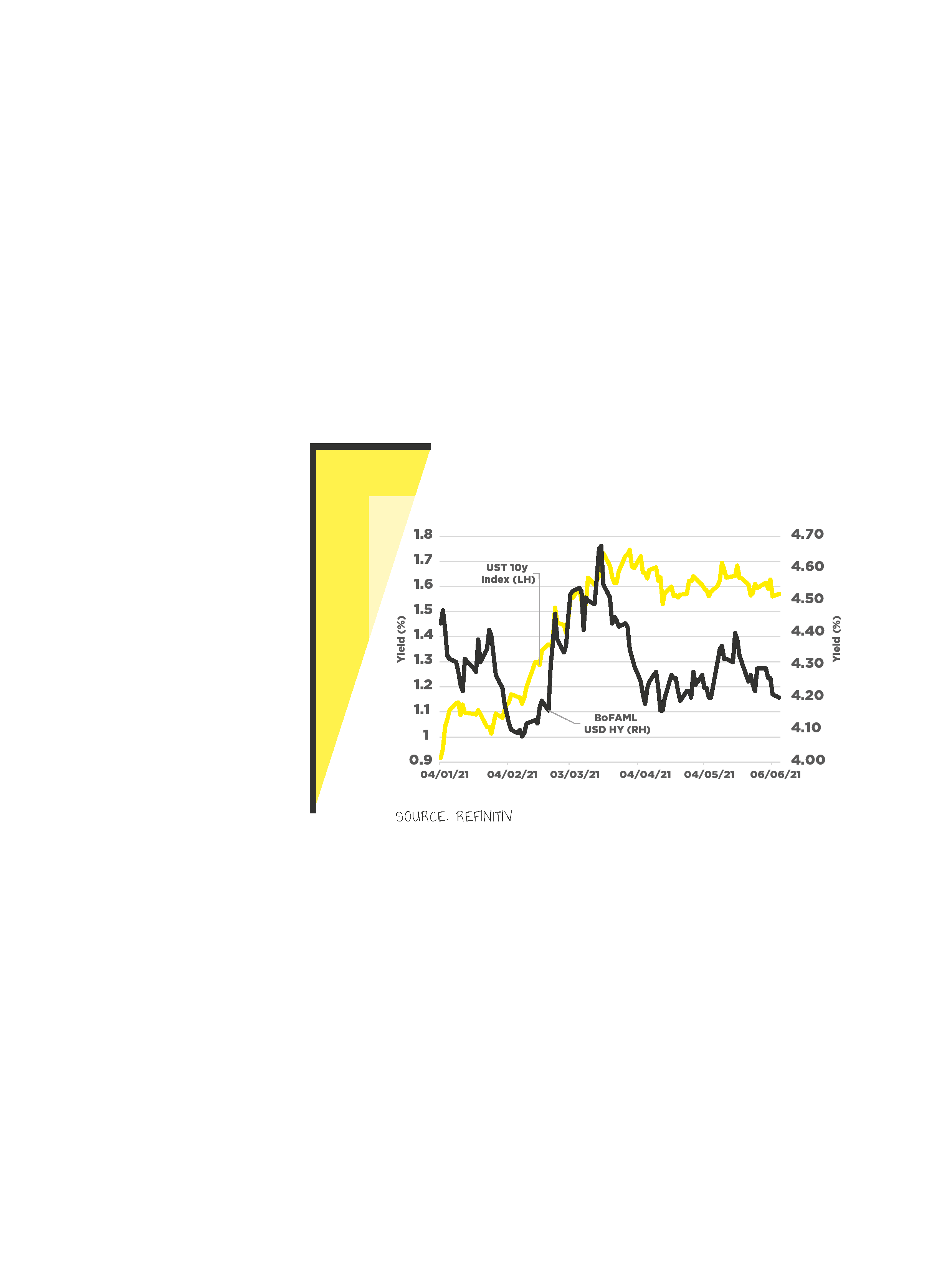
Similarly, credit has continued its long, steady rerating after junk bonds shot to double figures in the crash of March 2020, albeit after a short detour higher during the US Treasury sell-off in the first quarter (see chart opposite).
Underlying all of these factors have been questions about the strength and duration of the economic recovery and how a $4tn wave of US stimulus will wash through the world economy. Global growth forecasts have been rapidly pegged high erfrom last year’s peak pessimism (see chart opposite).
Exactly when the US central bank will be forced to show its hand on its expected pace of tightening remains the one question to rule them all. Monetarists, fretting about the unstoppable force of a wall of cash hitting the immovable object of a constrained global economy, are betting sooner rather than later.
Others, reassessing their expectations to a decade of deflation, US policy inertia in a deadlocked Senate and the mathematical quirk of rebasing, are more equanimous and ready to discount US inflation ― which rocketed to a 2008-high this month.
Neither side are likely to decisively win the argument in the short term, setting up a fractious backdrop to what would, on the face of it, create accommodative conditions for investors. How should all of this impact your asset allocation? Read on to find out.