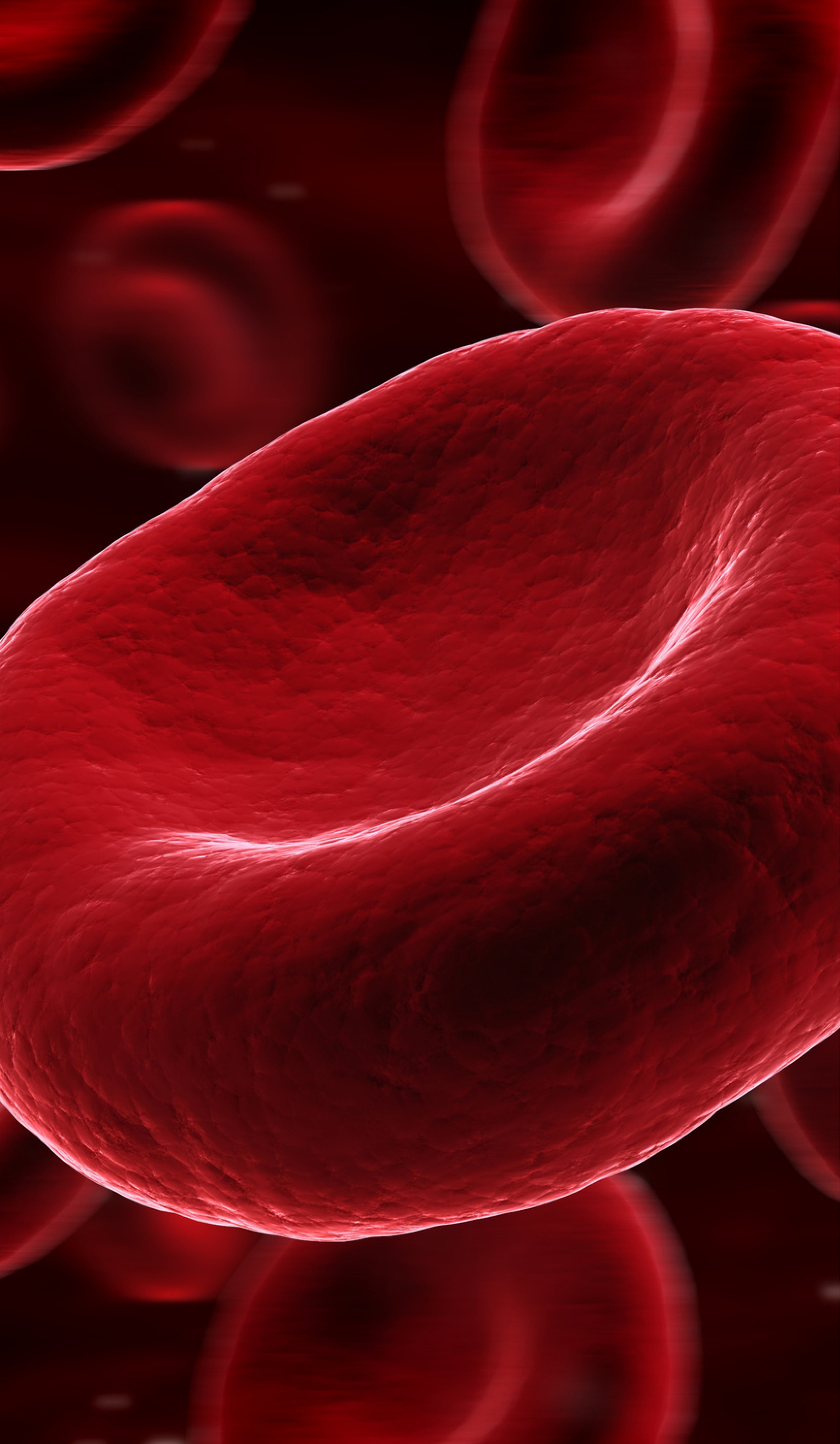
RED BLOOD CELLS
Carry oxygen from your lungs to the rest of your body
What’s normal
Men:
5-6 million cells/mcL
Women:
4-5 million cells/mcL
What abnormal
results can mean:
• Anemia
• Dehydration
• Bleeding
Cells/mcL = cells per microliter; gm/dL = grams per deciliter

WHITE BLOOD CELLS
Fight infection
and disease
What’s normal
4,500-10,000
cells/mcL
What abnormal
results can mean:
• Infection
• Blood cancer
• Immune system
problem
Cells/mcL = cells per microliter; gm/dL = grams per deciliter

PLATELETS
Help your blood clot
and stop wounds
from bleeding
What’s normal
140,000-450,000
cells/mcL
What abnormal
results can mean:
• Bleeding
• Clotting disorder
Cells/mcL = cells per microliter; gm/dL = grams per deciliter

HEMOGLOBIN
An iron-rich protein in red blood cells
What’s normal
Men: 14-17 gm/dL
Women: 12-15 gm/dL
What abnormal
results can mean:
• Anemia
• Blood disorders
Cells/mcL = cells per microliter; gm/dL = grams per deciliter

HEMATOCRIT
Shows how much space
red blood cells take up
in your blood
What’s normal
Men: 41-50%
Women: 36-44%
What abnormal
results can mean:
• Dehydration (if too much)
• Anemia (if too little)
• Blood/bone marrow
disorder
Cells/mcL = cells per microliter; gm/dL = grams per deciliter

MEAN CORPUSCULAR VOLUME (MCV)
Shows the average size of your red blood cells 80-95 femtoliters
What’s normal
80-95 femtoliters
What abnormal
results can mean:
• Anemia
• Thalassemia
Cells/mcL = cells per microliter; gm/dL = grams per deciliter


What
your
CBC
measures