Media companies, agencies and marketers have all played critical roles in the growth of programmatic ad placements, but marketers have become one of the primary driving forces behind the growth of self-serve programmatic placements. Users are increasingly taking programmatic in-house, developing their programmatic capabilities and investing in data and technology.
The evolving programmatic landscape
present
As marketers continue to strive for more transparency and control over their programmatic campaigns, the growth of self-serve programmatic technology and tools continues to rise dramatically.

Let’s look at the findings of a new study by StackAdapt and Ad Age Studio 30, and the latest trends in programmatic ad placements. StackAdapt studied agencies, media companies and marketers, detailing trends and revealing how respondents view the growing adoption of digital advertising and the growing phenomenon of self-serve platforms. (See the Ad Age-StackAdapt white paper “The Evolving Programmatic Landscape: Self-Serve Is on the Rise” for more insights on the dramatic growth of digital ad placements.)
Why programmatic ad placements are surging
It’s important to understand not only the what but also the why behind this surge in programmatic ad placements. In fact, there are a number of factors that study respondents cite as most important to them. As indicated in the chart, reaching relevant audiences via programmatically placed ads is a clear No. 1, followed by the ability to measure campaigns, the cost versus ROI of the campaigns and brand safety, all rated on a scale of 1 to 10.
“Programmatic advertising can be complex. It’s important that marketers have the resources to manage this complexity, partner with the right vendor and optimize their campaigns effectively.”
Kailyn Pyatt, director of sales, StackAdapt


The U.S. digital ad market is predicted to surpass $278 billion in 2023.


Anyone who places ads using programmatic platforms does so because of the qualities that stand out. Chief among them is the ability to garner a great set of analytics and reporting, followed by the ability to have targeting options, build audiences, as well as enjoying campaign management and access to quality inventory.
What marketers
really value about programmatic programs

Agencies, media companies and marketers measure the effectiveness of digital advertising campaigns in many different ways. This year, brand engagement was listed as the most significant metric, followed by online sales, social engagement, brand recall/lift and offline sales in that order. The jump in online sales in order of importance is significant and reflects advertisers’ continued shift in focus toward measurable contribution to revenue.
The most significant metrics
40% say they will use self-serve platforms in their programmatic placements, up from 36% last year.
While marketers have a notion of the most significant metrics of programmatic, they have a slightly different view of the metrics that perform best.
Once again we see a surge in online sales metrics, now outperforming brand engagement in measuring the success of a programmatic campaign. An inevitable conclusion is that, while marketers appreciate all of the “softer” metrics that are important, ultimately the metrical gold standard is how the top- and mid-funnel metrics convert into bottom-line results—revenue and ROI.
But what are the most successful metrics?
“Vendor support, reporting functionality and available data can make or break a self-serve programmatic effort. The level of customer service provided can make all the difference in retaining clients”
Meg Keevill, director of media and strategy, Colour

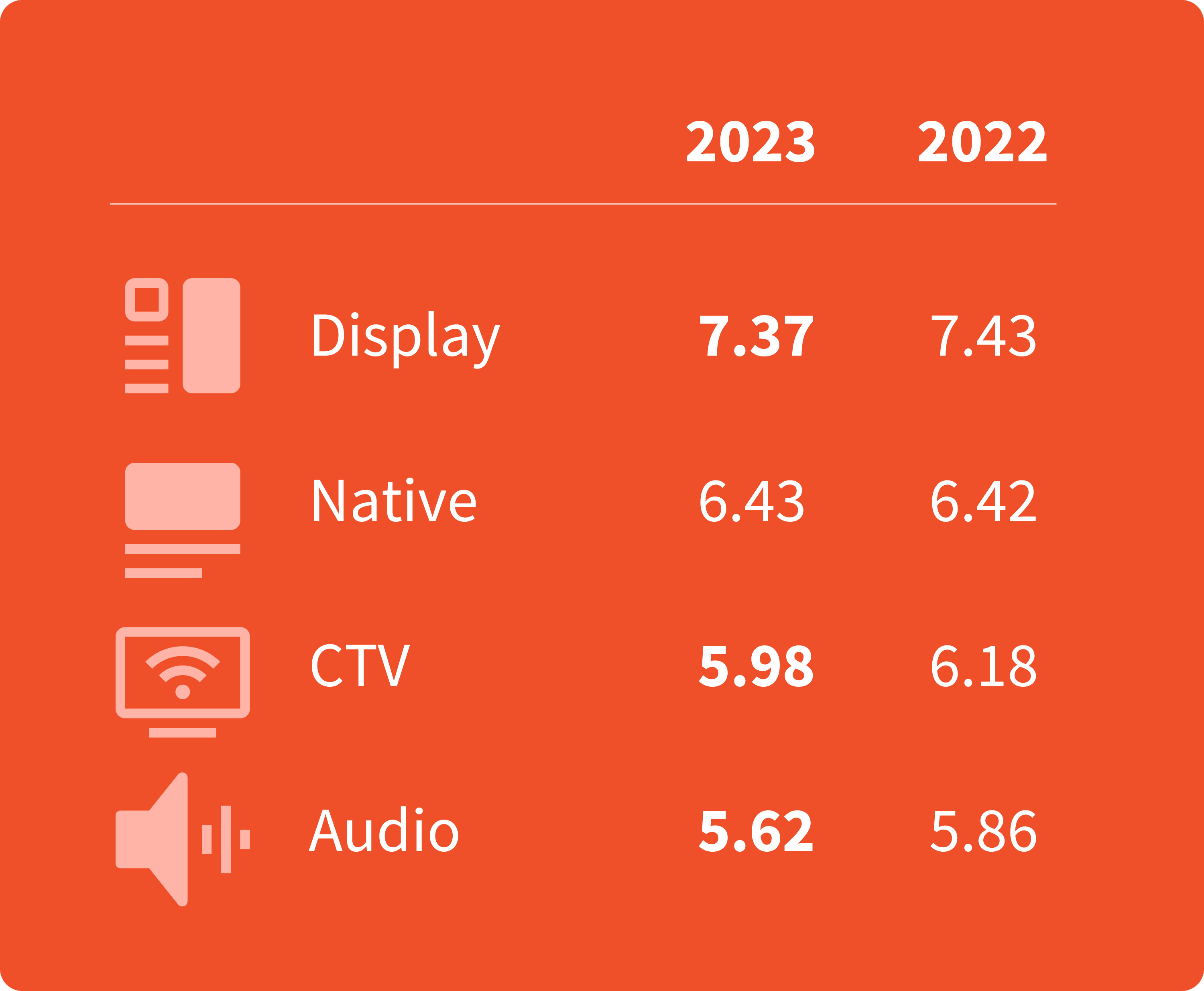
On the topic of channel importance, video and display came out on top, just as in 2022, followed by native ads, connected TV and audio. While video leads the pack here, it’s clear that programmatic advertising can benefit a complete and coordinated multichannel campaign, and connected TV (CTV) shows every sign of increasing in rankings of this sort, given its explosive growth and its current place as a central pillar of digital campaigns.
Programmatic and channel importance


All advertisers want their ads to be seen, but working to ensure that can be a challenge. StackAdapt respondents this year feel that viewability percentage of certain inventory is now a bit more important than last year’s No. 1, buying premium inventory. Other solutions include selecting inventory that is “above the fold,” working with pre-bid partners and buying larger-sized inventory.
How to solve viewability challenges
Programmatic platforms are increasingly preferred by those who insist on transparency and control over their own ad placements
To download the white paper for a fuller analysis of the StackAdapt findings
Click here
About

StackAdapt is a self-serve programmatic advertising platform used by the most exceptional digital marketers. This state-of-the-art platform is where some of the most progressive work in machine learning meets cutting-edge user experience. Ad buyers plan, execute and manage data-driven digital advertising campaigns across all devices, inventory and publisher partners.
About

Ad Age Studio 30 is the creative content arm of Ad Age. Built on the same bedrock of journalistic integrity, Ad Age Studio 30 specializes in multichannel membership content for Ad Age subscribers, as well as custom and sponsored content that resonates with our audience. To partner with Ad Age Studio 30, email James Palma at jpalma@adage.com.
Advertisers say 38% of digital placements will be via programmatic, up from 34% last year.
Who’s using
programmatic ad platforms?


51%
of media companies
of agencies
42%
of marketers
37%