Eduard Bernhart: This year marks the third year of the Europe for the Senses campaign. Presenting the wines from Alto Adige alongside those of Etna, we have found many synergies between the two regions. Both Alto Adige and Etna are very small regions and work at high altitudes – up to 1000masl. The two regions also boast interesting geologies: Alto Adige is very complex, with all work in the vineyard done by hand. But of course we have different varieties in our very unique regions, so this collaboration is a great opportunity to see wines from both the north and south of the country.
Why is this collaboration between two key Italian wine regions (Alto Adige and Etna) important?
In partnership with the Europe for the Senses promotional campaign
Discover more at europeforthesenses.eu
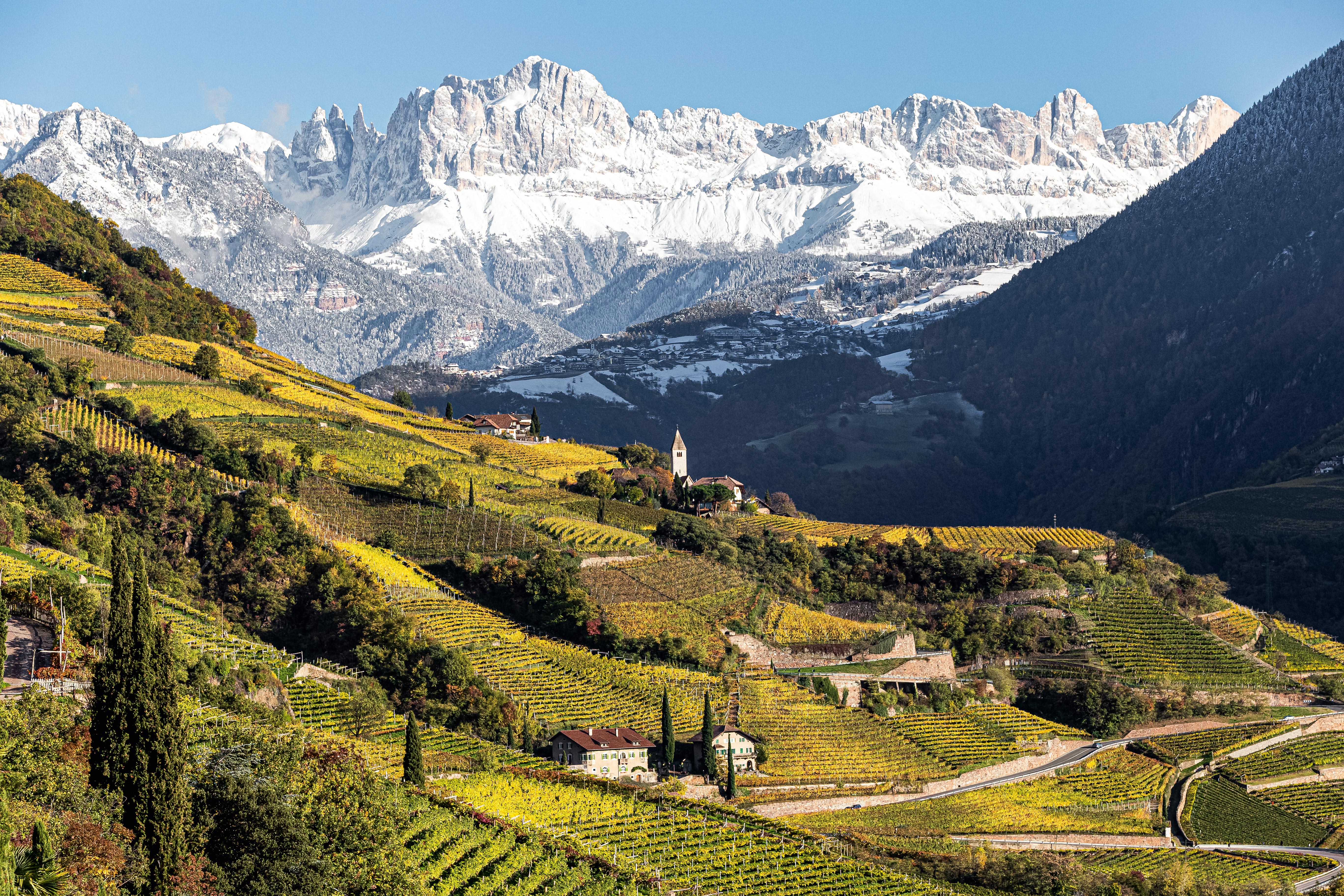
Alto Adige boasts an impressive winemaking history spanning over 2000 years. Given the steep slopes that characterise the region, all work in the vineyards is done by hand
“
”
Director of the Consorzio Alto Adige DOC since 2018, what have you introduced during your time in the role?
EB: Ours is a very young consorzio: it was founded in 2007, and I’ve been in the role for the last seven years. When I started, it was a very small team, since then we have grown and the consorzio has launched promotional activities in 12 different countries, in addition to publishing a book on wine production in the region entitled Vino in Alto Adige (due to be released in English soon), in addition to introducing the new UGA designations.
With a vineyard area spanning only 5,850ha, the Alto Adige DOC is one of Italy’s smallest winegrowing regions and boasts more than 20 different grape varieties: from Pinot Grigio to Gewürztraminer, Schiava to Lagrein.
Cooperatives account for 70% of production here, whilst private estates constitute 25% of production and the region’s 109 independent winegrowers account for 5%.
The wines continue to be praised for
their depth, complexity and authentic expression of Napa Valley terroir
“
”
The wines of Alto Adige DOC and Etna DOC unite with the PDO for Pecorino Romano cheese as part of the Europe for the Senses promotional campaign, further celebrated at a trade masterclass and lunch in London earlier this year.
Where north meets south:
– Eduart Bernhart
– Ralf Holdenried
Alto Adige DOC
Italy’s northernmost wine region
Joining forces for a three-year promotional activity in the UK, three Italian consortia have come together in an exciting promotional project exploring the wines of Alto Adige DOC and Etna DOC together with the PDO for Pecorino Romano cheese.
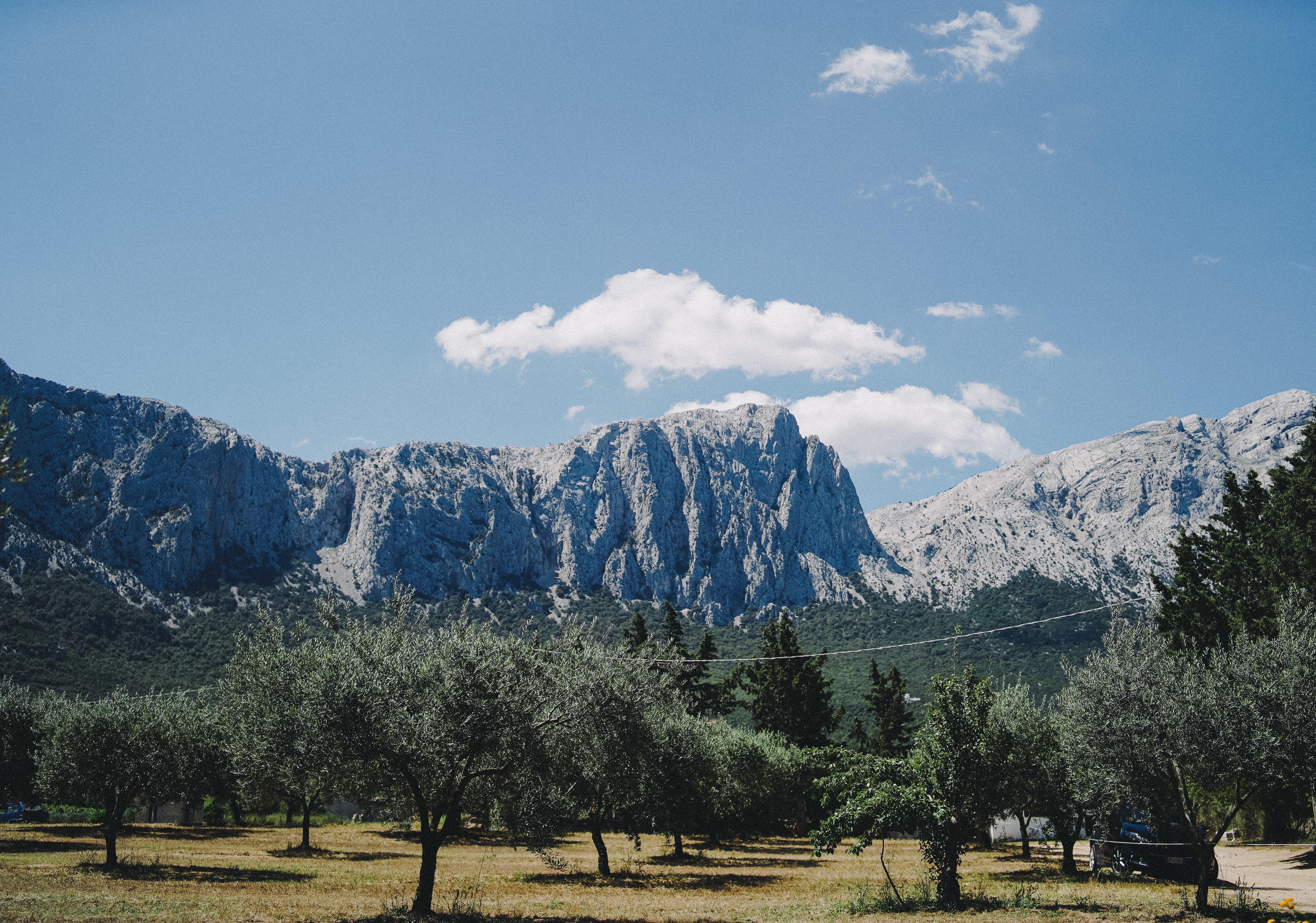
The geographical distances are considerable: Alto Adige is northernmost winegrowing region in Italy, whilst Etna is located in the southern Italian island of Sicily, and Pecorino Romano hails from Sardinia.
Photo credits: copyright © Richard Heald
An Italian feast for the senses
EB: The region has worked for nearly ten years to introduce additional geographical subdivisions known as Unità Geografiche Aggiuntive (UGAs). There are 86 UGAs in total and from the 2024 harvest onwards, producers are able to use these designations, accompanied by pictograms on their labels. This marks an important step for the wine industry: enabling wine lovers to know the precise origin of the wines, and is also a market of quality and tightly-controlled, reduced yields.
What are UGAs and why are they important in Alto Adige?
EB: Alto Adige is an amazing region – you really need to visit to discover the landscape, wines and great passion of its winemakers. Wine tourism projects are very important for the region: it’s possible to fly directly to Bolzano, Verona, Venice and Bergamo. Whether winter or summer, Alto Adige has many activities to offer, from skiing to biking and hiking. Alto Adige boasts an impressive winemaking history spanning over 2000 years. Given the steep slopes that characterise the region, all work in the vineyards is done by hand. It is a region of outstanding quality, surrounded by mountains, giving rise to fresh and vibrant white and red wines, with great minerality and huge ageing potential.
What would you like Decanter readers to know about the region?
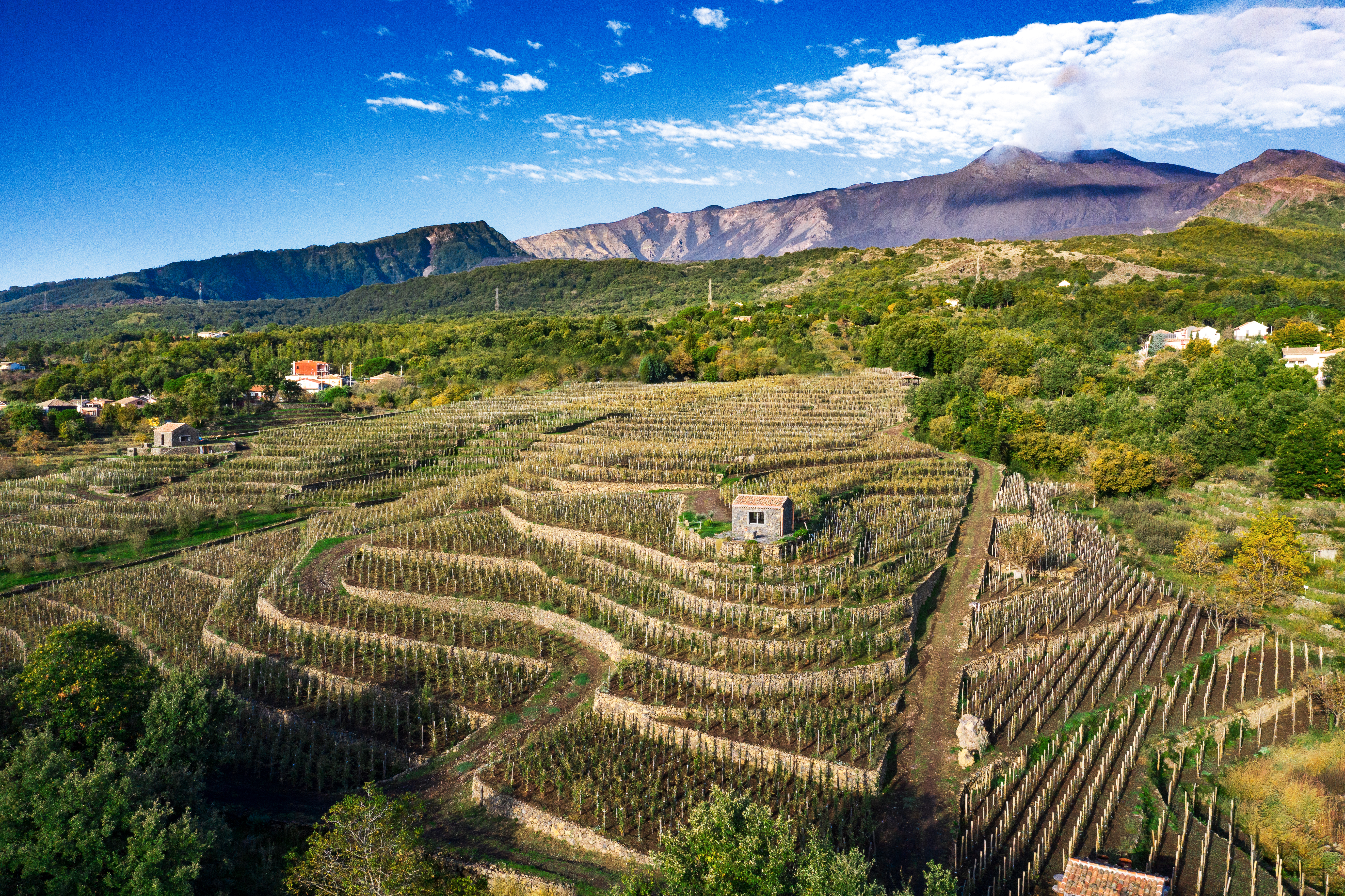
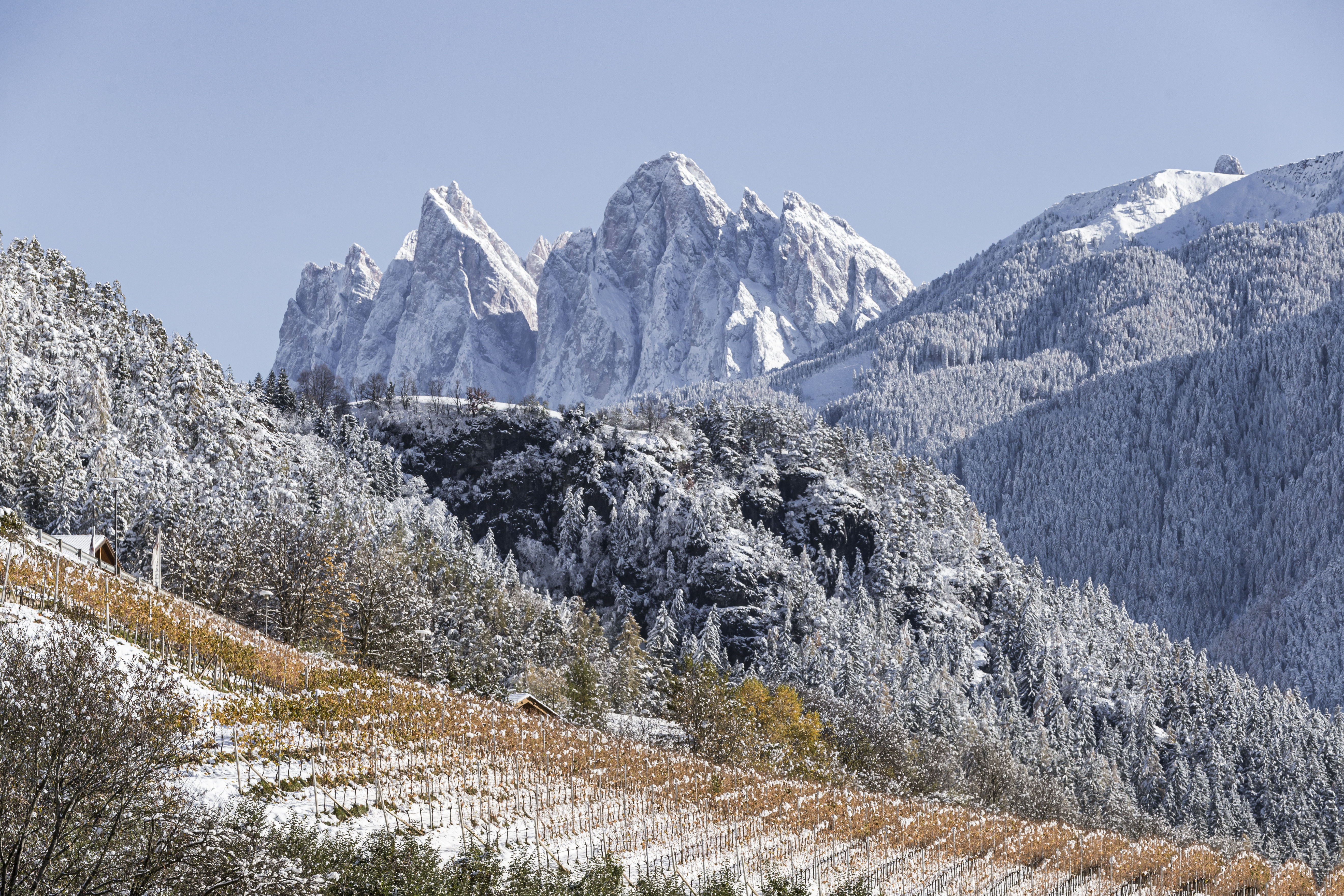
The definition of heroic viticulture
Etna DOC
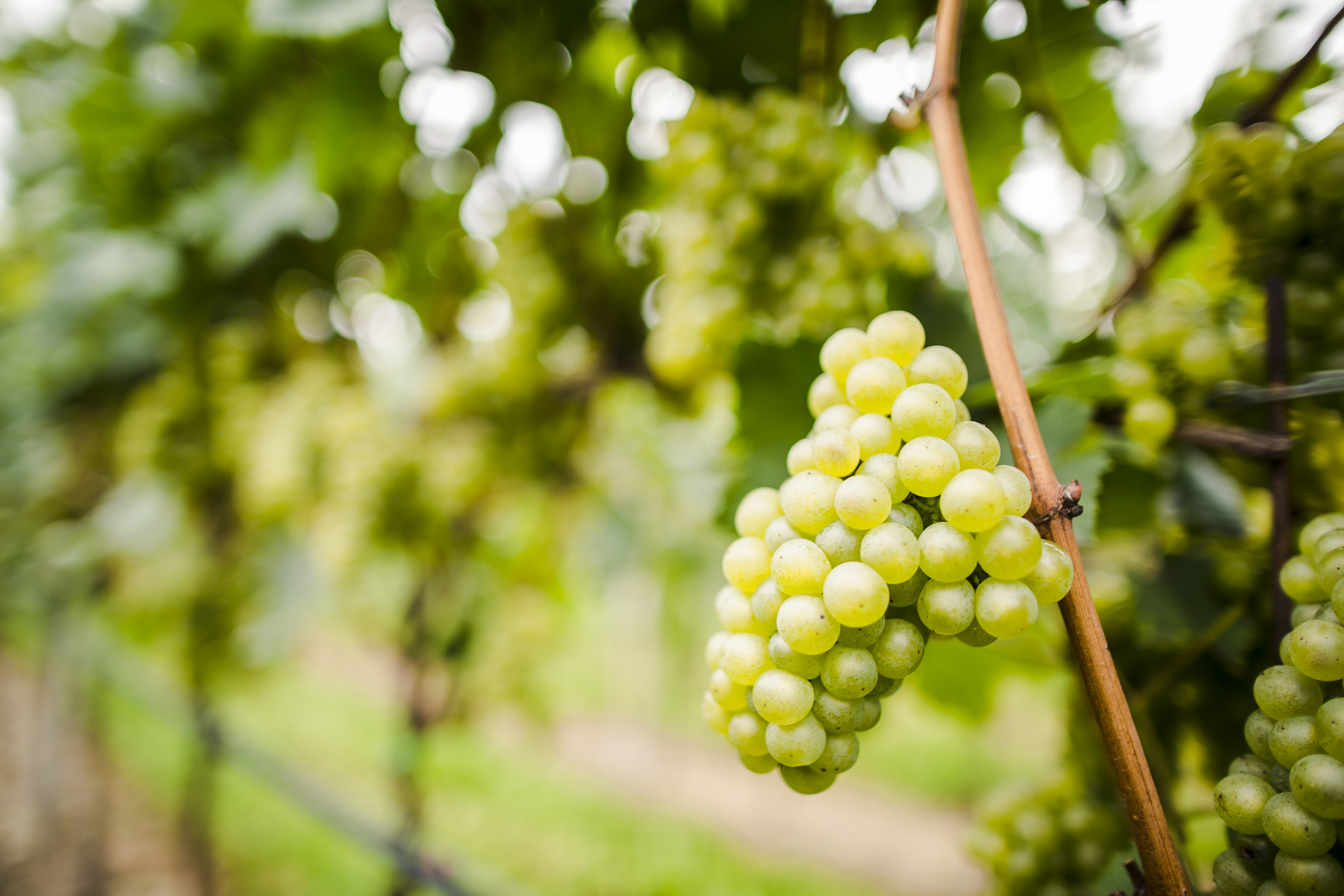
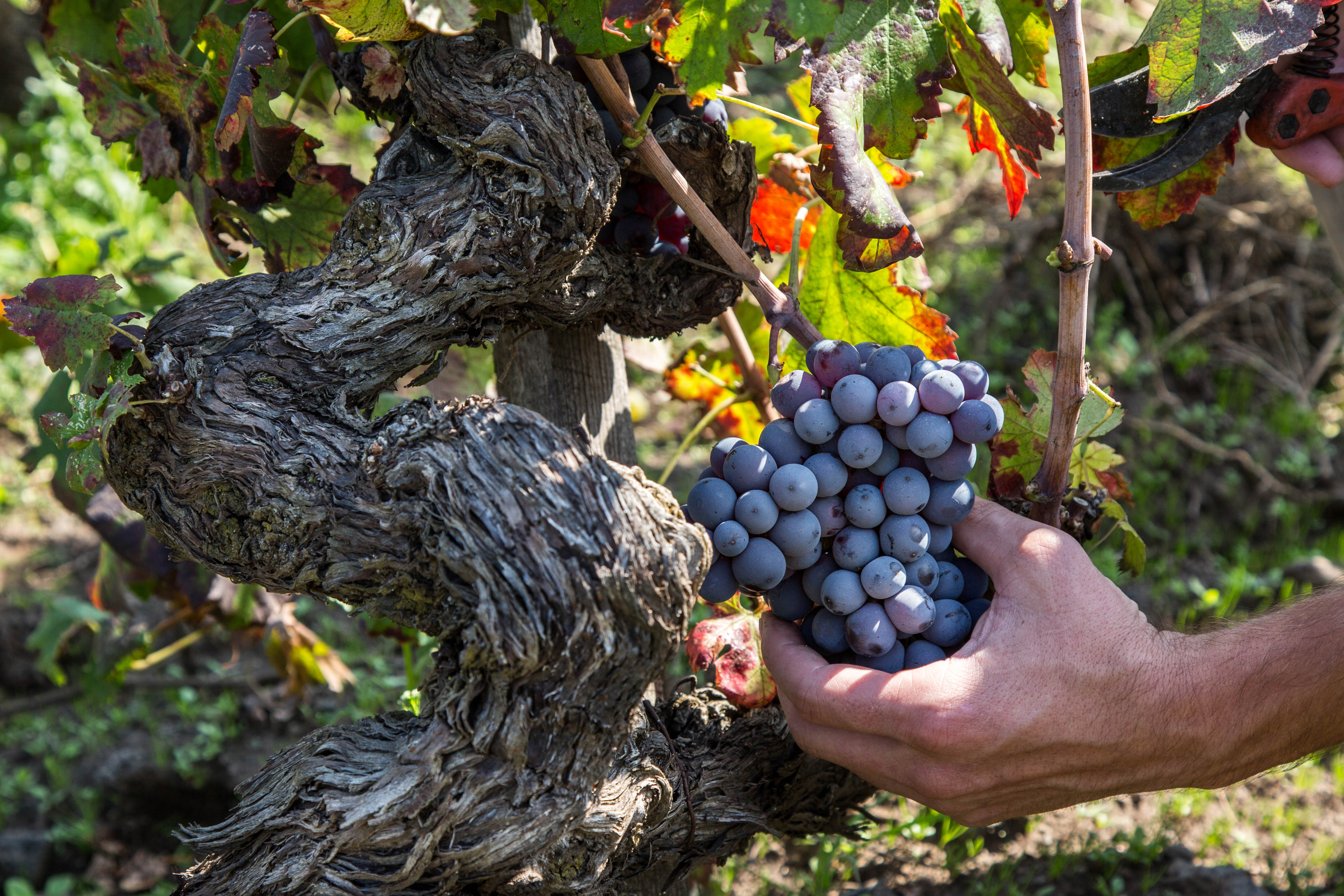
Situated on the east coast of Sicily, to the north of the city of Catania, the Mount Etna volcano (a UNESCO world heritage site) is home to some of the oldest vineyards in Italy. The Etna DOC was established in 1968, the first DOC in Sicily. Here, key grape varieties include Nerello Mascalese and Nerello Cappuccio for reds, whilst Carricante dominates for whites.
Decanter speaks to Maurizio Lunetta, Director of the Consorzio Etna DOC about what makes Etna such an interesting place to make wine:
Maurizio Lunetta: Etna is a young volcano: even today it is erupting. Each eruption produces ash and creates a new layer which fertilises the land. Every eruption is different depending on the magma depth and the chemical composition, resulting in different volcanic soils. We tend to talk about Etna in terms of four specific slopes: the northern, eastern, southeastern and southwestern slopes – which are all very different. On the northern slope of the volcano, Nerello Mascalese is the key indigenous red grape planted. Wines are aromatically intense, with lower alcohol and higher acid.
On the eastern slope, the native white grape variety, Carricante, is planted. This is an area which sees abundant rainfall, where the humidity of the Ionian sea meets the volcano. The southeastern and southwestern slopes are the warmer ones, with older soils, where it is possible to cultivate both Carricante and Nerello Mascalese. The reds produced on these slopes are more ‘Sicilian’, more ‘Mediterranean’, with vines exposed to lots of sunlight and producing structured, powerful wines with lower acidity and higher alcohol.
Can you tell us about the different soils and resulting styles of wine to be found on Etna?
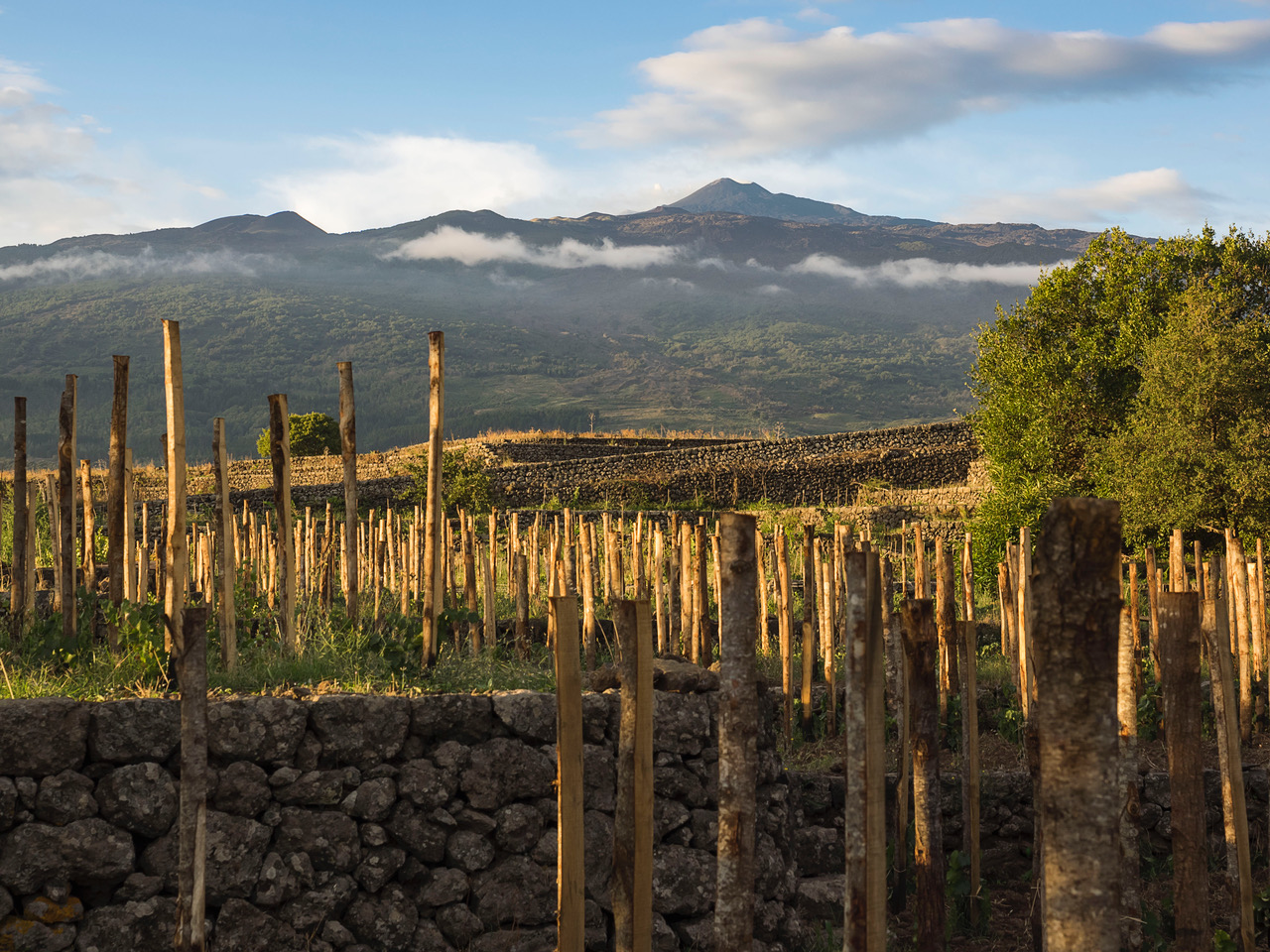
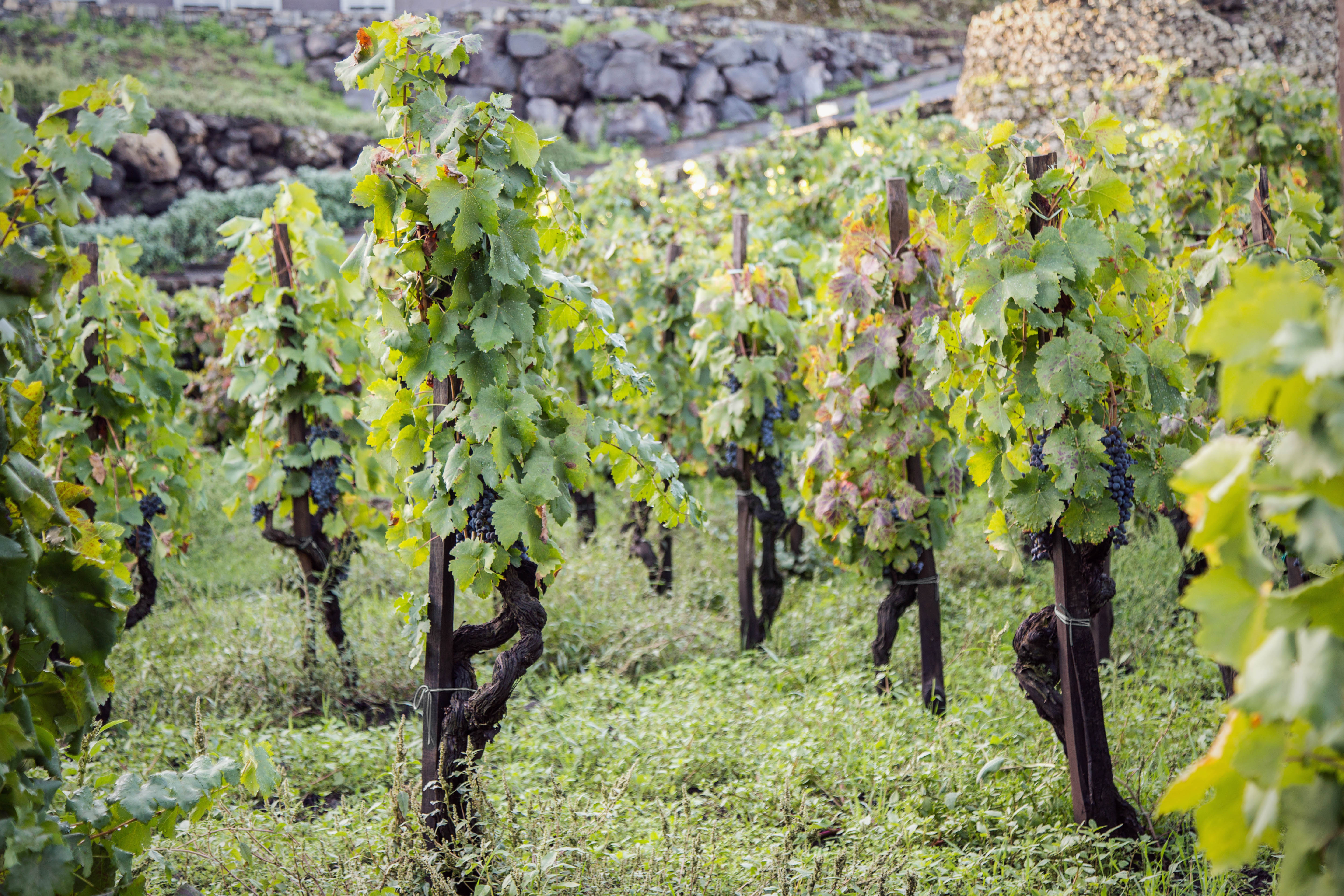
The wines produced on each of the four slopes can age well. Whites are showing good ageing potential: after 10 years in bottle Carricante continues to evolve from its younger character of citrus and saline, displaying a petrol Riesling-like, hydrocarbon quality after five to six years.
What is the ageing potential of Etna wines?
ML: In 2011 we introduced 133 contrade, small areas or ‘crus’ distinguished by their distinctive climate or soil. Winemakers can only mention a contrada on the label if 100% of the grapes are from this specific contrada. The contradas enable us to better communicate ‘Etna’, to break down the overly generic concept of ‘volcanic soil’ into specific grape varieties, slopes and microzones.
What is a contrada, and why are these important?
ML: The Europe for the Senses initiative links two quite different Italian wine regions, but with interesting points in common: both are regions of heroic viticulture, mountainous, that promote indigenous varieties and produce wines with good acidity. Collaborating with the PDO of Pecorino Romano, hailing from Sicily’s sister island of Sardinia has provided further interesting links and opportunities for exciting food and wine pairings.
Why is this collaboration between three Italian denominations (Alto Adige, Etna and Pecorino Romano) important?
Pecorino Romano PDO
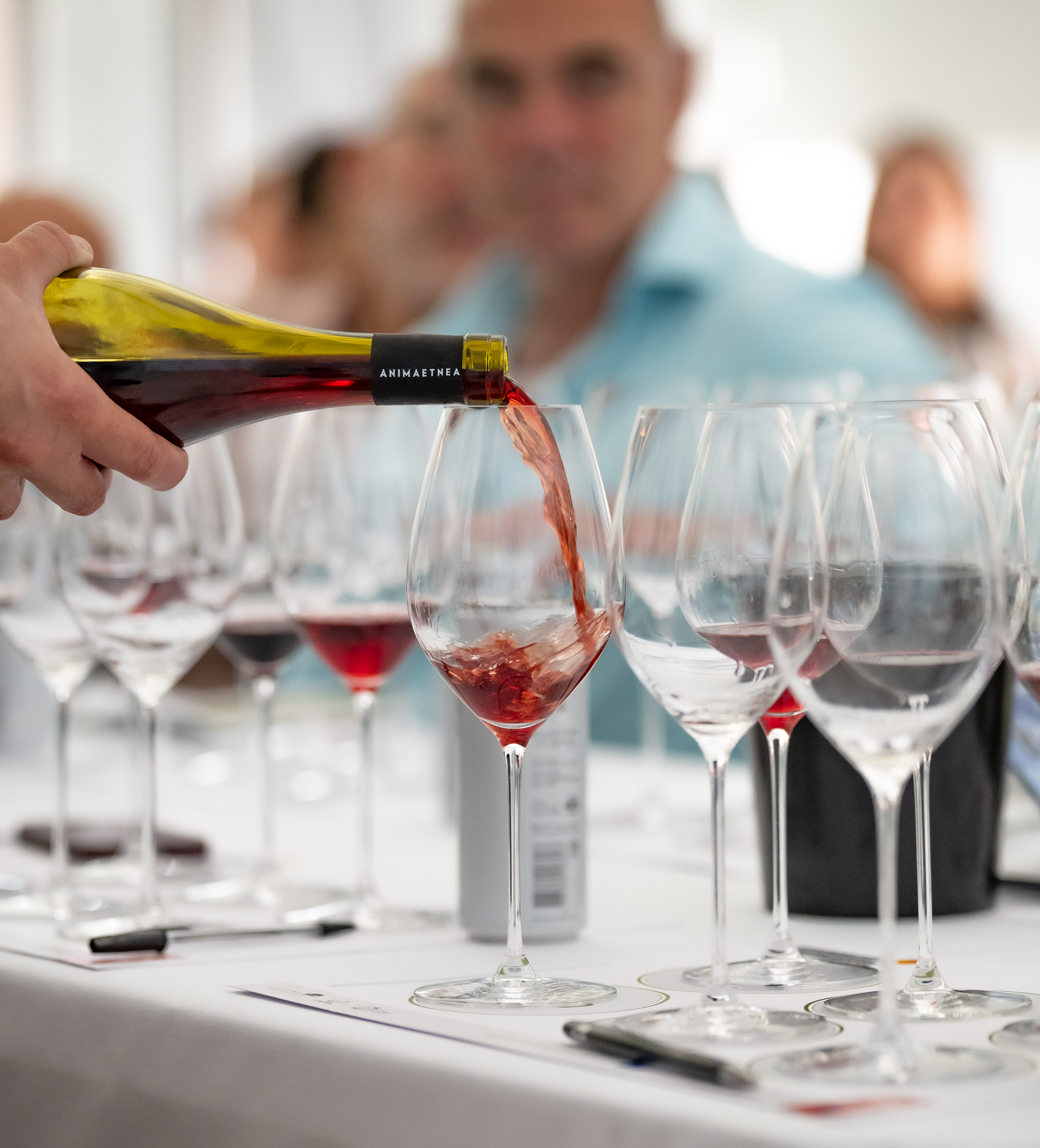
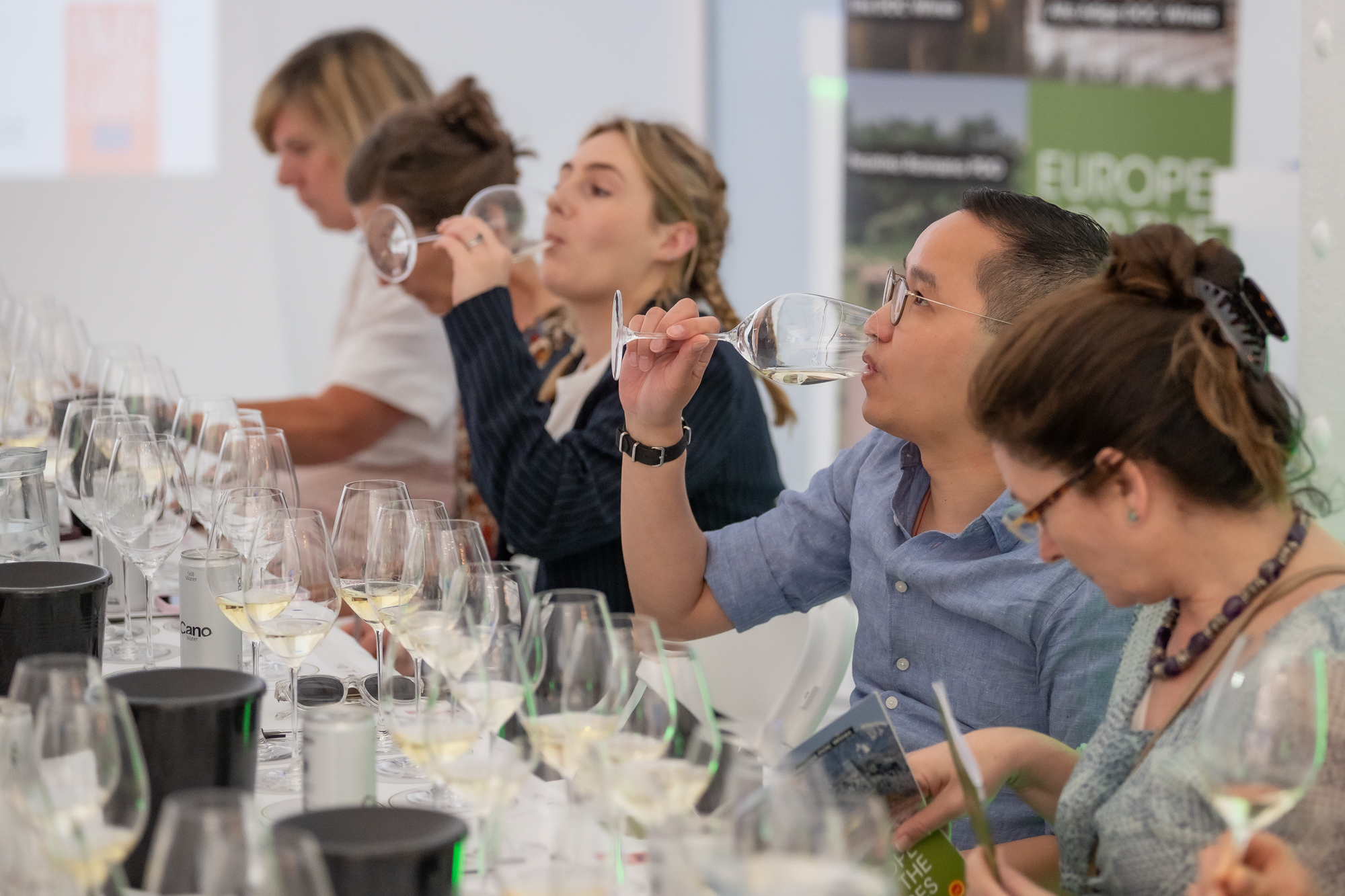
As showcased at the May 2025 trade masterclass and lunch in London, the unique Italian sheep’s milk cheese, Pecorino Romano, makes for fascinating pairings with the wines of Alto Adige and Etna.
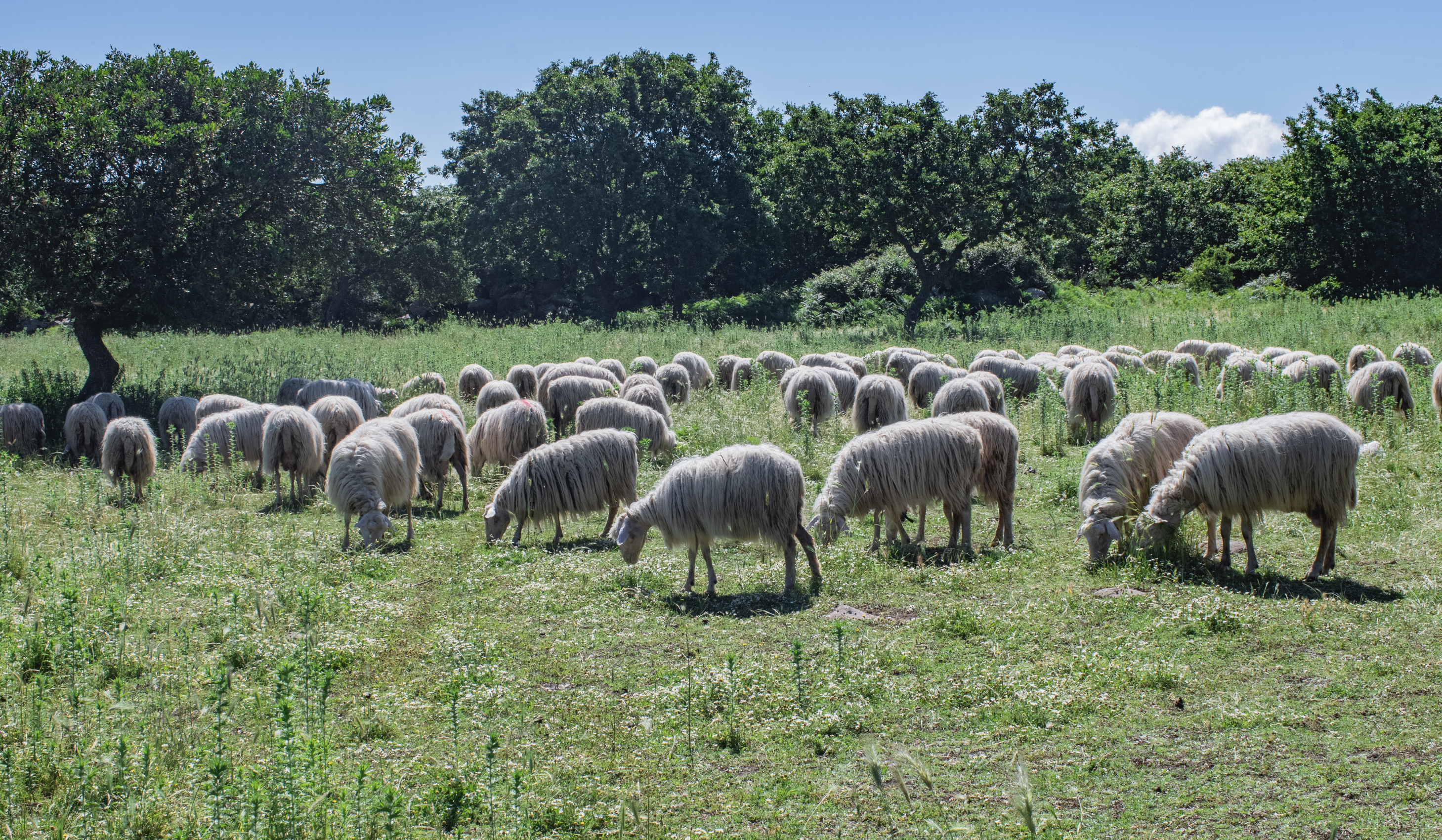
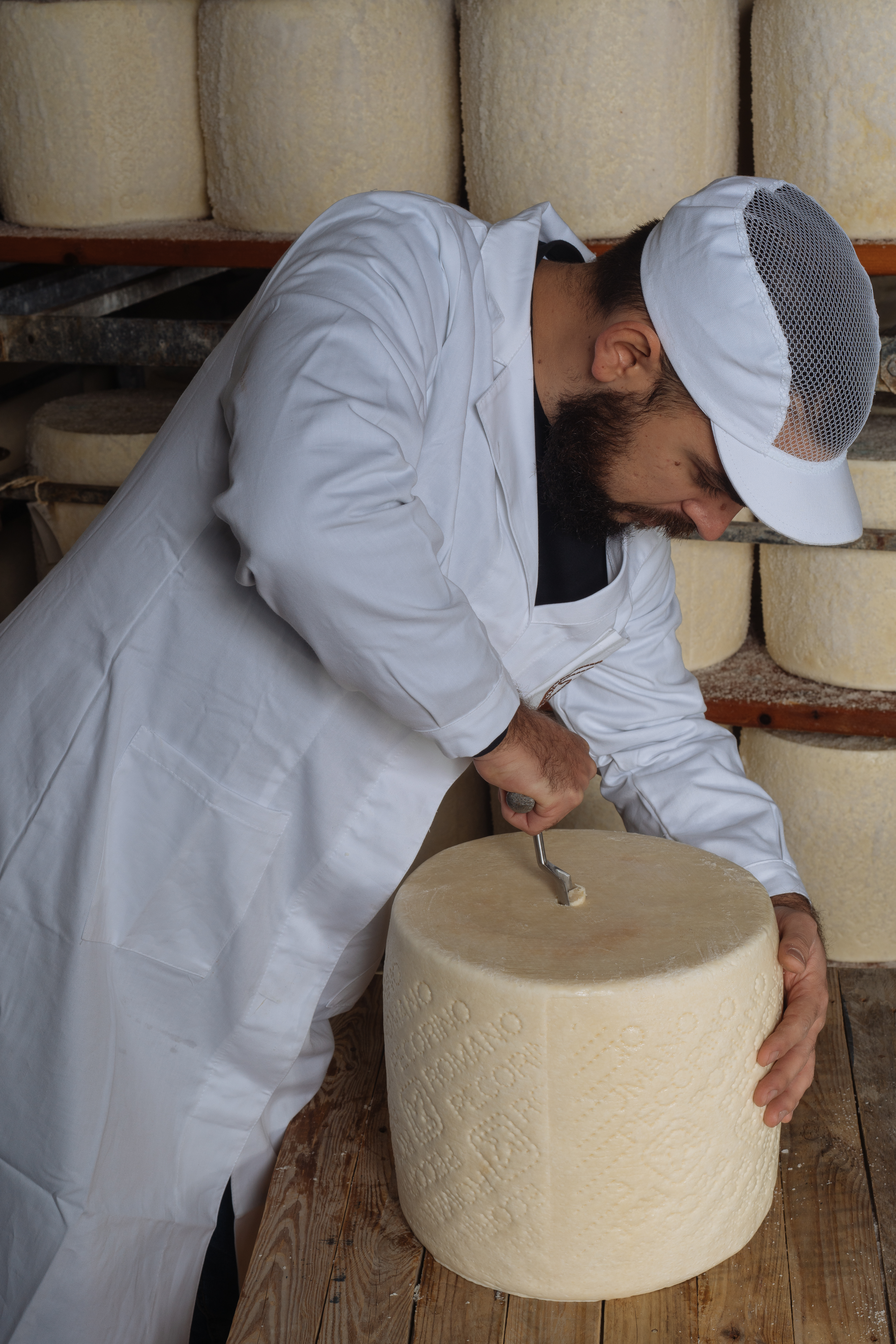
A hard, naturally lactose-free cheese, 95% of Pecorino Romano is produced on the island of Sardinia, with the remainder made in the region of Lazio and the province of Grosseto in Tuscany. To this day, PDO Pecorino Romano is expertly crafted by hand by cheesemakers and salters.
Article created following the Alto Adige DOC, Etna DOC and Pecorino Romano PDO Masterclass and lunch hosted by Beatrice Bessi, Head Sommelier at the Chiltern Firehouse which took place at Icetank, London on 13th May 2025.
Funded by the European Union. Views and opinions expressed are however those of the author(s) only and do not necessarily reflect those of the European Union or the European Research Executive Agency (REA). Neither the European Union nor the granting authority can be held responsible for them.
Yet this exciting campaign explores the synergies to be found and the common thread uniting these three protected denominations: namely the assurance of exceptional quality products crafted from distinct Italian landscapes.
European Union quality labels offer a guarantee of the origin, quality and safety of the products made under these protected designations.




Decanter catches up with Eduard Bernhart, Director of the Consorzio Alto Adige DOC to hear his take on the Europe for the Senses collaboration: