In partnership with Marchesi Di Barolo
Discover more: marchesibarolo.com/en
We know we can work well with the local varieties of Dolcetto, Nebbiolo, Barbera, Arneis… this has been shown over the course of the past 200 years. Now we are experimenting...
Pioneers of precision
Celebrating the science of singular vineyards
As a founding name in the creation of Barolo, this celebrated northern Italian winery is understandably known for its red wines. Yet as the Abbona family’s sixth generation Valentina and Davide take the lead, tradition is shown to walk hand in hand with a very contemporary vision.
For the Marchesi di Barolo winery, 2026 sees a double unveiling: the launch of a new white cru-styled Sauvignon, and a nod to the past, with the unveiling of a statue that pays tribute to a key figure in Piedmont’s vinous and cultural history.
�
�
�

In his early 30s, sixth-generation Davide Abbona humbly admits to ‘still feeling new here’ when asked about his winemaking role in the family business. And yet Davide and Valentina’s launch of the latest wine in the family’s cru line, La Volta Langhe Sauvignon, speaks of a vision that builds on years of experience and family winemaking know-how.
This new release, according to Davide, stems from Marchesi di Barolo’s key approach of individual parcel-based vinifications, and is made in extremely limited production of around 1,500 bottles in 2024, rising to 3,000 bottles in 2025. Located in the shadow of the eye-catching Barolo castle, the La Volta vineyards displayed a clear vocation for quality white grapes, which could be used to produce an ageworthy white that would speak of the exciting quality potential to be found in this area.
�A terrain known more famously as a Menzione Geografica Aggiuntiva (MGA) for Barolo’s reds, it was a pioneering decision to turn from Nebbiolo to an international variety. For Davide, this was about thinking outside the box: ‘we know we can work well with the local varieties of Dolcetto, Nebbiolo, Barbera, Arneis… this has been shown over the course of the past 200 years. Now we are experimenting’.
Curiosity is also at play in the winemaking decisions: two barriques sourced from the Saint Martin cooperage beloved by winemakers in Sancerre were used in the first vintage (2024) of the La Volta Langhe Sauvignon. Produced from vineyards with alternating sandy loose soils and with compact layers of chalk, La Volta Langhe Sauvignon 2024 combines a moreish sapidity with vibrant acidity, delicate floral notes, aromatic white-fleshed fruit, flinty mineral character and a welcome softness from the oak.
Photos supplied by Marchesi di Barolo. Published Wednesday 8th April
”
“
A fresh interpretation of a much-loved variety: La Volta Langhe Sauvignon


Davide Abbona, Marchesi di Barolo

The newly-inaugurated statue dedicated to Marchesa Giulia di Barolo, Turin

A new take on Sauvignon Blanc and a celebration of a Marchesa’s legacy in the Langhe
�

For fifth generation Ernesto Abbona, ‘History is to be prized, not merely treated as a storytale’ [sic]. The value of heritage and history is clearly evidenced in the inauguration on January 17th 2026 of a statue dedicated to Giulia, Marchesa di Barolo. The first statue to be dedicated to a female figure from Piedmontese history, Giulia was the original founder of the winery that today is known as Cantina Marchesi di Barolo.
�
Located in central Turin, outside the historic residence of the Marchesa (Palazzo Falletti di Barolo, Via delle Orfane 7/A), the statue designed by local artist Garbolino Rù pays tribute to a woman that was hugely influential in creating the wine known as Barolo. Yet she left a legacy that went far beyond her extraordinary enological influence.
�
Paying homage to a noble past: The story of Marchesa Giulia di Barolo


A key protagonist in the social history of Turin, ‘Giulia’, or Juliette Colbert, wife of the last Marchese Carlo Tancredi Falletti, escaped from Paris aged just seven years old from the wrath of the sans-culottes. From such beginnings, the Marchesa's arrival in Barolo saw her make fundamental changes that shaped the course of Nebbiolo wines in this part of Piedmont. Wines that had been famously described by Thomas Jefferson as ‘sweet, astringent and fizzy’ transformed into the still, structured reds we recognise today.
�
By way of example, the Marchesa introduced semi-underground cellars to ensure complete fermentations and also transformed the transport and trade of the wines produced with innovative special barrels or carrà, designed to withstand the treacherous roads of the time.
�This forward-looking determination and approach went well beyond the wine world: the Marchesa was instrumental in harnessing the economic power of Barolo wines to channel money into charitable works. She played a key role in shaping the social fabric of the city of Turin, from helping the poor, to prison reform, and establishing nurseries for the children of workers. It is fitting that her statue sits outside the building that to this day remains home to her charitable foundation.

At Marchesi di Barolo, the family opens its cellars to the public for visits, with a well-established restaurant serving delicious local dishes. A visit to the estate offers the chance to truly experience the land and place that has shaped the story of their winery to the present day.
An invitation to visit

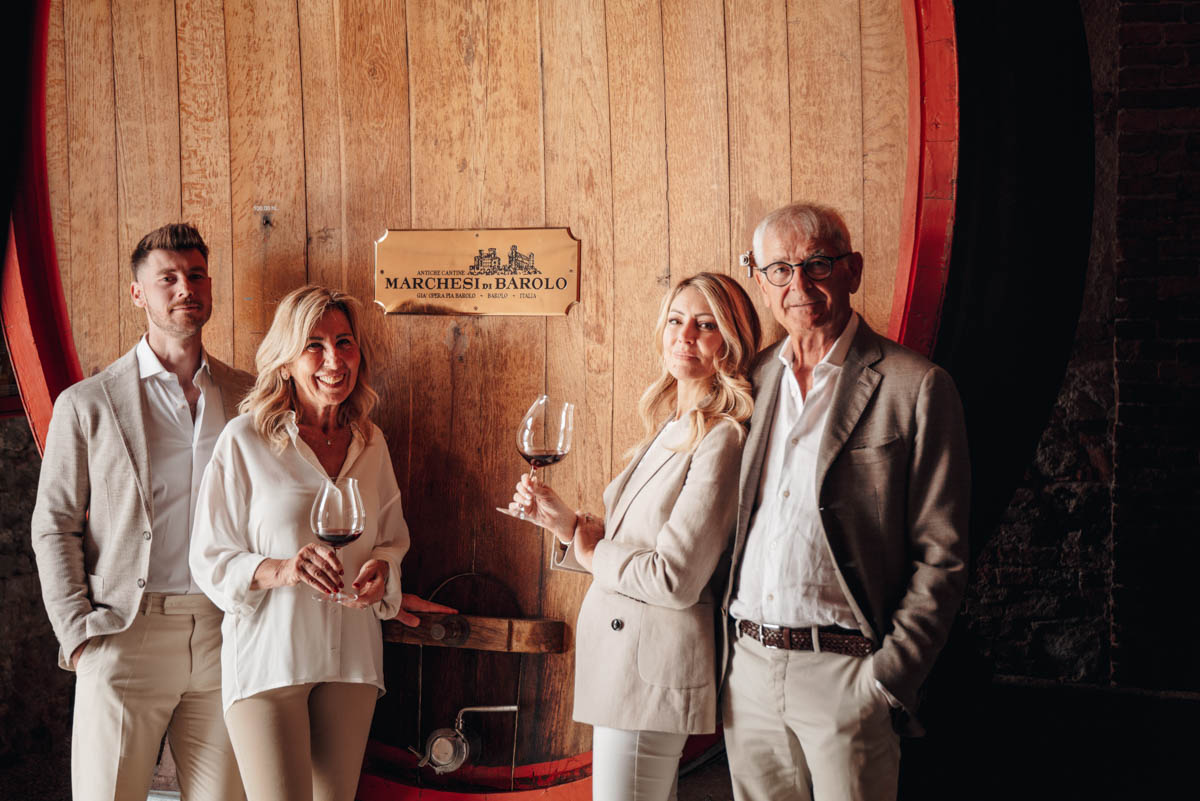
Davide, Anna, Valentina and Ernesto Abbona