hen Debbie Lavery first brought home her cavapoochon, Pippin, she had no idea just how profound an impact the little dog would have. A gift from her late father shortly before he passed away from dementia in 2024, Pippin provided immeasurable comfort in his final days. “After seeing how Pippin helped my father, I thought, if she can do it for dad, maybe she can do it for other people,” explains Debbie.
Now, Debbie and Pippin volunteer at Great Western Hospital in Swindon, visiting patients across the wards, from toddlers in the children’s unit to elderly individuals in critical care. Their visits offer more than just distraction; they bring a sense of calm, connection, and joy to people in difficult circumstances and alien environments.
Volunteers like Debbie have long played a vital (and sometimes unseen) role in our healthcare system. At a time when pressures on NHS staff and patient care are at a worrying level, their support has never been more essential. Whether through emotional support, practical help, or simply a friendly presence, volunteers help ensure that everyone can get the healthcare they deserve.
“Patients react in different ways,” she explains. “Some will hug Pippin and start to cry. Sometimes it’s because they’re missing a pet at home, or they’ve been in hospital for a while. There are so many emotions, but it’s always positive.”
And it’s not just the patients who benefit. Pippin has become something of a celebrity among the hospital staff, who often need a lift just as much as the patients. “They’ve got a hard, stressful job,” says Debbie. “Giving them a few minutes to have a stroke and a chat can make such a difference to their day.”
Pippin’s intuitive nature adds something extra to each visit - she’ll often be the one leading Debbie around the hospital, rather than the other way around.
“Everybody thinks their dog is wonderful, but I genuinely think Pippin is special,” Debbie shares. “She has this magical way of sensing when someone needs her. We’ll be finishing our shift and about to leave, and she’ll start pawing at me. Then she’ll lead me into a room, and I’ll have to explain that she wanted to visit. And more often than not, it turns out to be the most meaningful visit of the day.”
NHS Charities Together believe there should never be a barrier to volunteering. Everyone should have the opportunity to get involved and make a difference. Stories like Debbie’s remind us how powerful even small acts of kindness can be, and why volunteers are such an essential part of helping the NHS thrive.
Watch the video above and follow Debbie and Pippin on their hospital rounds, as they offer comfort, companionship, and a reminder that even the smallest gestures of kindness can make a lasting impact.
Woman&Home is celebrating the vital role NHS Charities Together play within our health system – investing in NHS workforce wellbeing
Supporting those
w
Sponsor Content Created with NHS Charities Together

who care for us
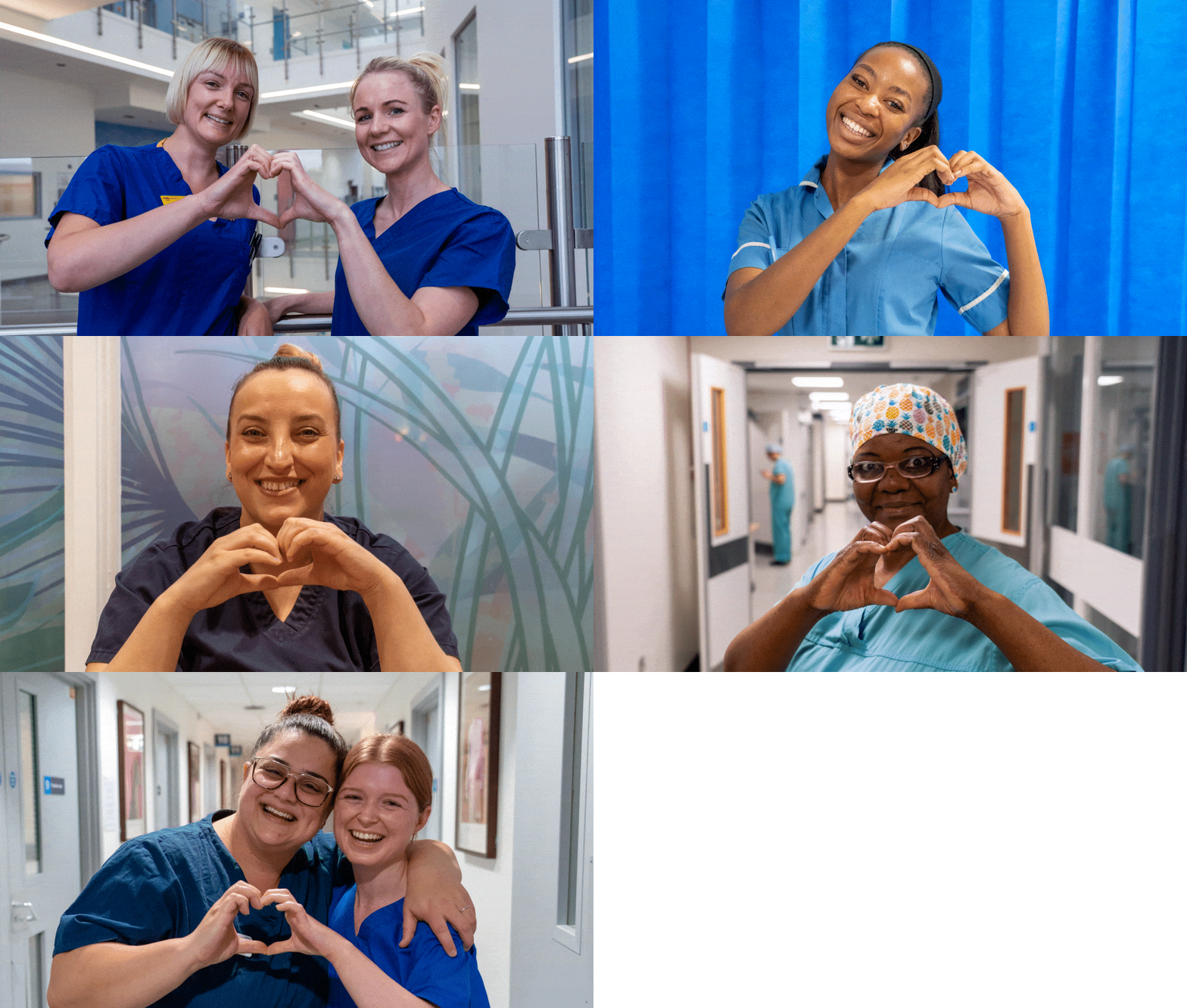
In partnership with NHS Charities Together, we’ll show how NHS charities support the wellbeing of nurses, doctors, and many more people working in health and care across the UK - especially during the cold winter months.
The cold winter season brings some of the greatest pressures on the NHS. An ageing population, growing health inequities, coupled with rising demand for urgent care due to seasonal illnesses such as flu and Covid-19 puts a significant strain on healthcare systems. For most NHS staff, it’s the best job in the world. But working with the responsibility of providing life-saving care in some of the toughest conditions inevitably takes its toll.
That’s why programmes such as NHS Charities Together’s Workforce Wellbeing Programme in partnership with NHS England are so important. Together, they fund a huge range of projects, including wellbeing hubs, which help staff find vital moments of rest throughout their busy days as well as much-needed emotional support.

“Volunteering as a pet therapist has made me realise that a little empathy goes a long way”
VOLUNTEERING


To find out more about how NHS Charities Together is helping make healthcare better for everyone, visit nhscharitiestogether.co.uk
Winter Pressures
“The survival rate for what happened to me is less than 10% if it’s outside a hospital - so to be here is beyond miracles”
w
“I’ll start by saying you’re looking at a miracle,” says Mark. “I was gone. My eyes were open, and I wasn’t there. “My mate Steve started CPR while Dave called 999. Pete Bishop, the Community First Responder, arrived about nine minutes later and shocked me twice. Somehow, I came back. The survival rate for what happened to me is less than 10% if it’s outside a hospital - so to be here is beyond miracles.”
Before his cardiac arrest, Mark admits he had no idea what a Community First Responder was. “They’re not paramedics,” he explains. “They’re everyday people who volunteer their time to be on call and help when emergencies happen. To be the first responder, and in this case to save a life, is just outstanding.”
For Community First Responder, Pete Bishop, the experience was deeply personal. “Mark has a 7-year-old son,” he says. “I lost my dad when I was nine, so knowing I’ve helped prevent another young boy from going through that is incredibly moving.
“We don’t just deal with cardiac arrests - we attend strokes, heart attacks, and all sorts of emergencies. Every Community First Responder is driven by the same thing: to care for others.”
Watch the video above to see why stories like Mark and Pete’s highlight the vital role community volunteers play in saving lives. They are living proof that courage, compassion and quick action can make the difference between tragedy and survival. Working with UK ambulance charities, including South Western Ambulance Charity, NHS Charities Together is investing in Community First Responders – providing training, enhanced equipment and response cars, to help people in need quickly.
Ana Campbell, Community First Responder, adds how rewarding it is to help her local community. “When that emergency call comes in, you obviously get quite a little shot of adrenaline, and a little nervous about getting ready to go out - especially if it’s a category one, which is the most senior level.
“But you know you can do it because you’ve had good training and you’re going to give back to the community.”
hen Mark Moran set out for a bike ride in the Cotswolds with his friends Steve and Dave, he never imagined how close he would come to losing his life - or how the swift actions of a stranger would save it. Midway through the ride, Mark began to feel dizzy and collapsed, and his heart stopped beating for 15 minutes. Thanks to Community First Responder Pete Bishop, who performed CPR and used a defibrillator, Mark has made an extraordinary recovery.
Y
“It’s become normal to find a colleague, overwhelmed by the sheer weight of responsibility I’ve been that person too. You take a deep breath and head back out because you’ve got ten patients depending on you.
“The workforce wellbeing programme is all about caring for the people that care for us,” says Kelly Drewry, lead for NHS Charities Together’s Workforce Wellbeing programme, which supports the health and wellbeing of NHS staff across the UK.
“It’s a jointly funded programme between NHS Charities Together and NHS England, and we are both deeply committed to that long-lasting positive change that we can create for workforce wellbeing.
“Since the programme launched earlier this year, we've funded an exciting new group of projects that are going to have a huge impact on the health and wellbeing of NHS staff.
“Some of them focus on particular staffing groups that really need support, like the ambulance sector and night shift workers, and others have got solutions like psychological support and health and wellbeing rest spaces.
“When staff are struggling, it doesn't just affect them. It can affect team morale, patient care, and even their loved ones.
“That’s why investing in staff wellbeing isn’t just a nice-to-have - it’s essential for a functioning and working NHS.”
Watch the video above to understand how vital the NHS Charities Together’s Workforce Wellbeing Programme, in partnership with NHS England is.
“You start to feel like a robot, but you keep going because you care, because patients need you,” says a nurse, who wishes to remain anonymous. “I’m dreading the winter surge because I feel like the last winter surge never ended.
“I try to take one shift at a time, but the cycle becomes brutal - work, home, repeat. It started to affect my personal relationships too. I vent to my partner, but it wears on him as well.
“You wipe your tears, you take a deep breath and head back out”
Community First Responders