Description: XXX
Description: XXX
Description: XXX
By Rachael Taylor
“The success of women-led enterprises
not only contributes to the economy but
also serves as a testament to the
potential of women in business”
Botswana’s Trailblazing
WOMEN
DIAMOND
Shaping the Future with Strength and Purpose
T
example of what can be achieved when female equality is prioritised in business.
Indeed, Kenewendo is a political icon overseeing what is still a typically male-dominated industry in Africa. Her confidence is captivating and, off stage, she exudes a strong sense of style that makes her the perfect fit for one of the more glamorous sides of the job: the diamond industry.
Diamonds are big business in Botswana. Home to some of the most productive mines in the world, diamonds account for 80 per cent of the country’s exports and about a quarter of its GDP. Since the discovery of diamonds in Botswana in 1967, the per capita income spiked from about £60 to £5,345 in 2021.
The arrival of diamonds has been transformative for Botswana, but it is not a country without its struggles. “We do see quite a gap, from a financial perspective, between the rich and the poor in this country,” says Mmakeng Leepile, who works for UN Women in Botswana. She speaks of high unemployment rates (27.6 per cent in 2024, according to the World Bank Group), which disproportionately impact women; men generally earning more than women in employment; and a high number of single-headed households, which tend to be led by women who consequently need flexible working arrangements.
A new generation of women in Botswana backed by the Government of Botswana, De Beers, Debswana and UN Women are transforming the future of luxury jewellery putting female empowerment at the forefront
rue empowerment, says Bogolo Kenewendo, Botswana’s Minister of Minerals and Energy, can only come “when women have the freedom, support and opportunity to reach their fullest potential”. Flying the flag for a new era of women in her country, she is a shining
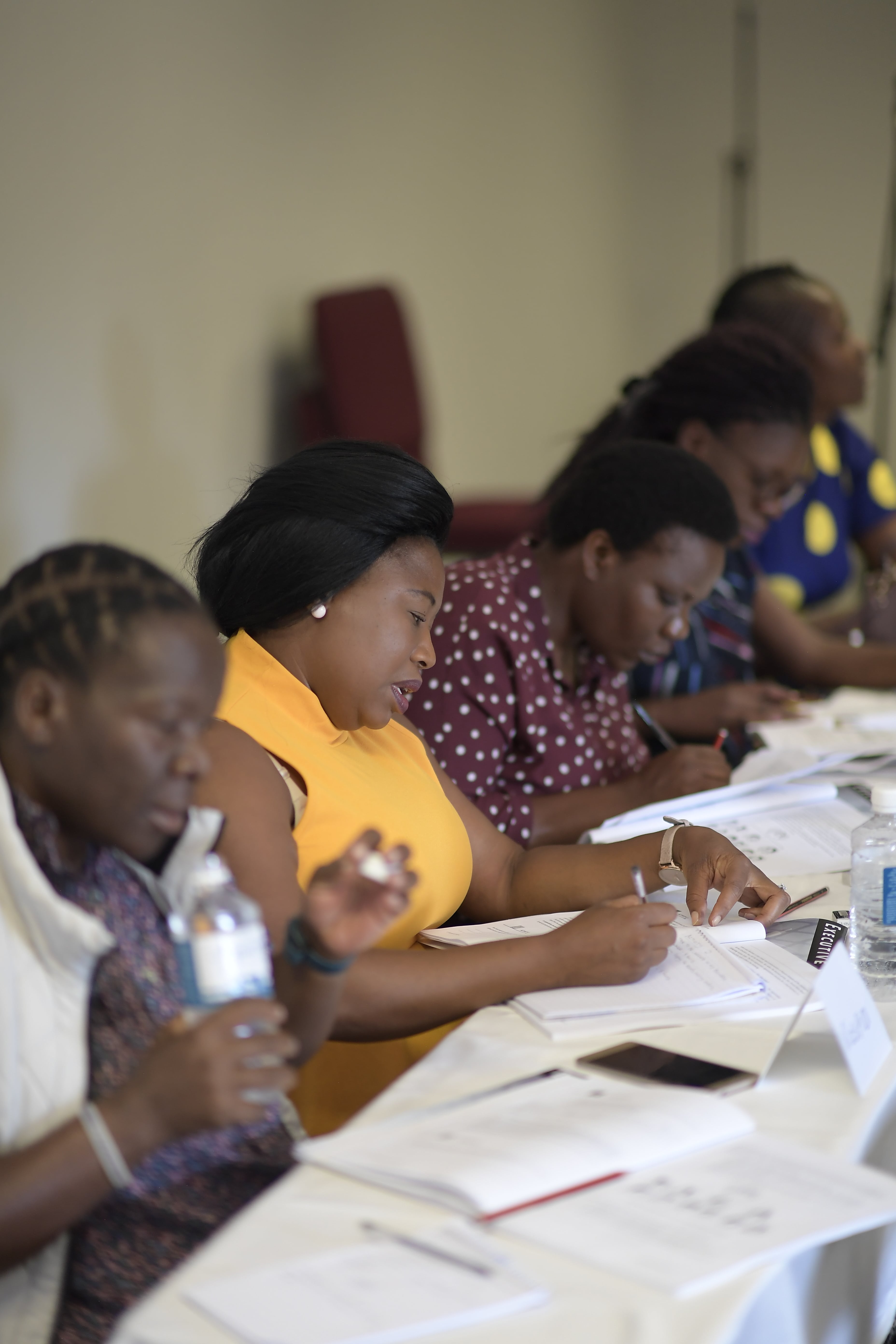
Now, Leepile is working with other inspiring women in Botswana to change this – through the power of diamonds. Their collective organisation, EntreprenHER, has been designed to empower women running small- to medium-sized businesses. It provides mentoring, skills-training and networking opportunities, with a view to helping female entrepreneurs thrive and expand, and hopefully employ other women in the future. Its work is funded by De Beers Group, one of the biggest diamond-mining companies operating in the country, and is implemented by the Botswana government.
“True empowerment,can only come “when women have the freedom, support, and opportunity to reach their fullest potential”

“The EntreprenHER training helped me to open an agri-shop. Before that I was clueless when it came to [keeping] records and marketing”
One business owner who has taken advantage of EntreprenHER is Keolatetse Molly Segwape, who runs a cattle farm and agriculture shop. Until 2023 she had been working at a diamond mine, but when her contract was not renewed she knew she had to diversify – and fast. Segwape looked around and discovered that she was eligible for youth funding, so she used the grant she received to buy 13 heifers and a bull.
This is a key part of the Botswana success story for women. Because, while diamonds are forever, as the song goes, diamond mines are not. As such, there is a big push to encourage Botswana to develop alternative industries. This is even more relevant now as a global diamond crisis (prices have slumped as cheaper lab-grown diamonds flood the market) has led to lower production at mines and job cuts. Trump’s tariffs are yet another blow for the export market.
Reflecting on her own pivot away from diamonds, Segwape says: “The EntreprenHER training helped me to open an agri-shop [selling agricultural goods and fertilisers to other farmers]. Before that I was clueless when it came to [keeping] records and marketing.” After the training (she has completed multiple courses) it all clicked into place, and Segwape felt confident enough to embark on opening the store, which now employs two other women. She also picked up tips on how to operate more sustainably, and has been implementing responsible waste management into her business.
“People are surprised that this girl from
the village can do all these jobs. I’m from a place where most women are not working – and it’s tough. I just want to do it differently”
Segwape is ambitious. As well as her farming and retail businesses, which she hopes to expand, she also has another that bids for government service or procurement contracts – it could be food, stationery, toilets. Last year she won a bid to clear vegetation straying on to the Trans-Kalahari Corridor, a highway that runs between Namibia and Botswana. “I employed 10 men [to clear a 30km stretch], and they were camping on the road for the whole month,” she says. “People are surprised that this girl from the village can do all these jobs. I’m from a place where most women are not working – and it’s tough. I just want to do it differently.”
She also wants to encourage other women to take control of their own destinies: “I’m always telling them, this is not hard – well, it is hard, but we can make it! Let’s turn up, and do it for ourselves.”
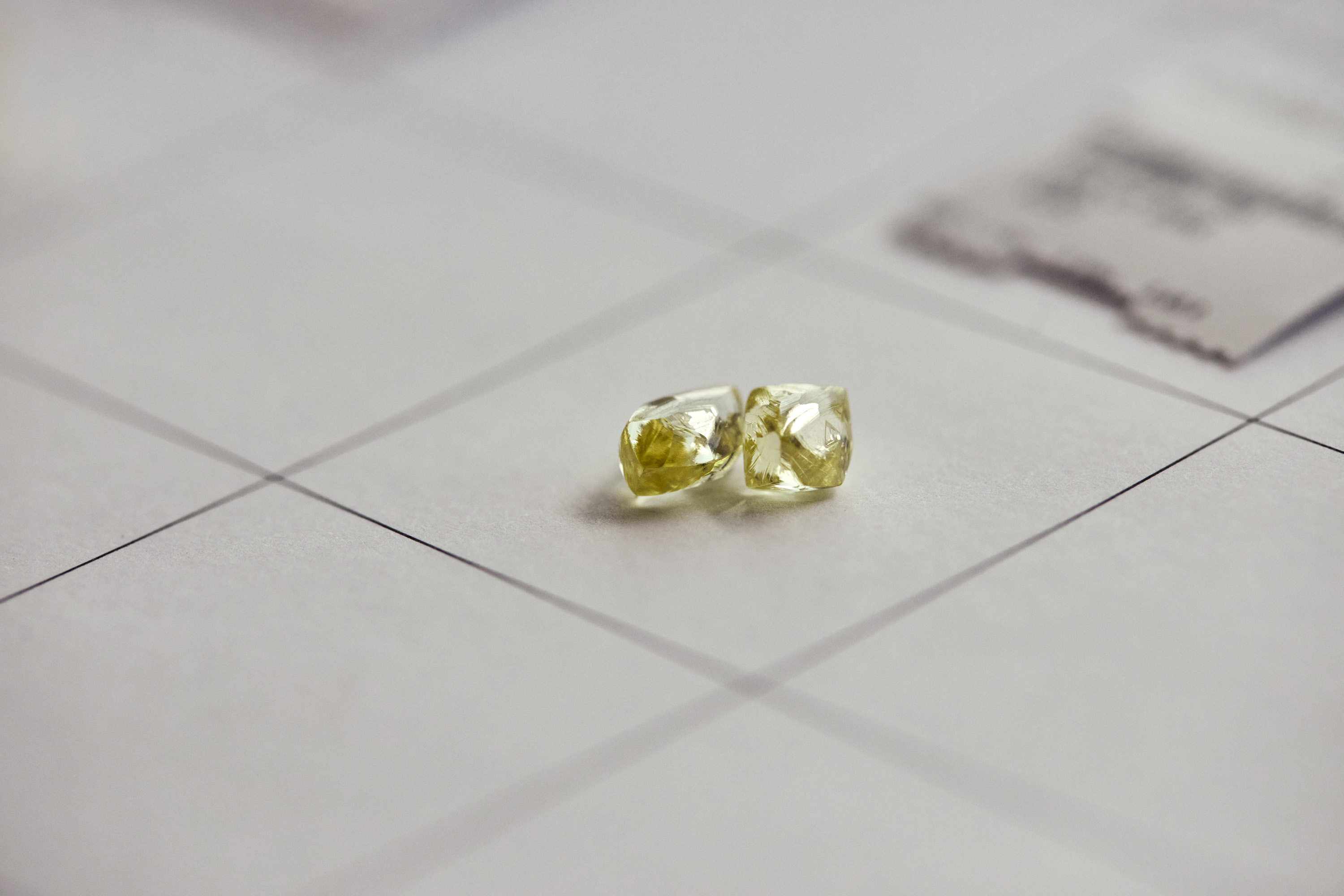
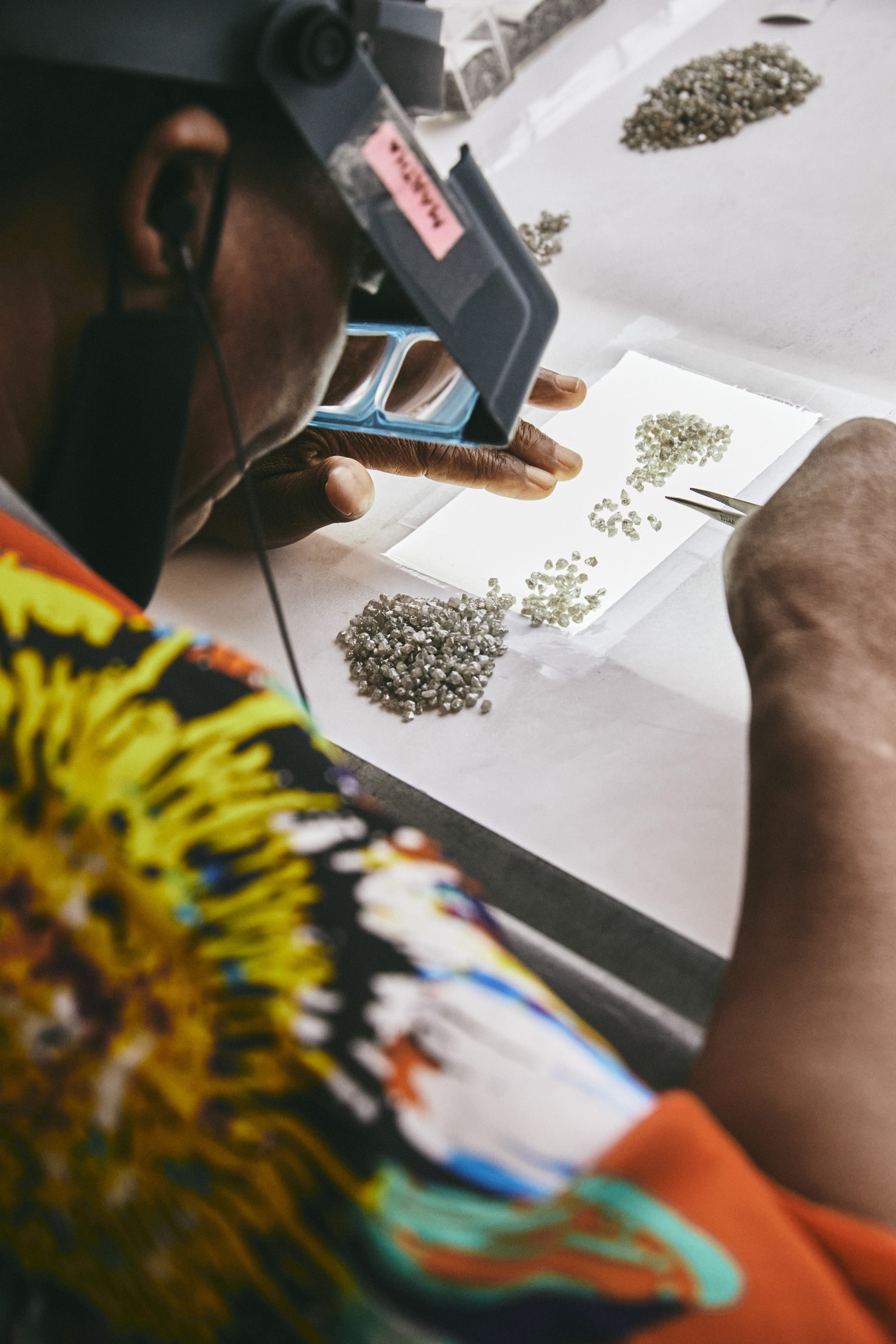
Ada Thela has a similar set of values. At 32, she is tackling one of Botswana’s biggest problems head on: how to get more value out of its diamonds. Botswana exports billions of pounds worth of diamonds each year, but the majority are rough diamonds, which sell for a lower price than cut and polished diamonds. Thela is part of a growing industry of cutters looking to keep more of the processes (and therefore more of the revenue from diamond production and sales) within the stones’ country of origin.
Thela started her journey in diamonds as an apprentice at a local diamond manufacturer, WDM Botswana, but after three years she decided to strike out on her own and founded Zoe Diamonds, in Gaborone, in 2023. “I didn’t see enough Botswana business owners or entrepreneurs in the diamond industry and I thought something needed to be done,” she says. “We’re a diamond-rich country and diamonds make up 80 per cent of our exports. I felt it was important for Botswana to not only be employed within the sector but also be business owners, as a way of owning the narrative around our country.”
As the cutting industry is so new in Botswana, one of the biggest challenges Thela faced was finding the right talent to shape her stones. “I overcame that challenge by hiring young Botswana workers who were unemployed,” she says. The industry’s downturn enabled Thela to employ cutters and polishers who had been let go from other businesses and her team now numbers seven.
Thela’s narrative of Botswana pride is finding receptive ears in the UK, Europe, India, and the US, too, after her profile was given a boost by the Natural Diamond Council – a marketing body for diamonds which, in 2022, flew actress Lily James out to Botswana to see how diamonds were benefitting the local economy. (“To be in Botswana and see the effect the stones have on the community, the value of them has only grown in my eyes,” James said at the time.) Now, clients actively choose Zoe Diamonds because the stones are not just mined in Botswana but cut there too, Thela says. “We are 100 per cent homegrown, local talent. By purchasing from us, they are not only contributing to the economy of the country but the livelihoods of Botswana.”
A keen area of focus for the funding, and programmes developed to empower women in Botswana, has been STEM (Science, Technology, Engineering, Mathematics), which can boost women’s chances of working within mining. More than 2,000 girls have participated in the STEM Girls Programme run by Debswana (a joint venture mining company operated by De Beers and the Botswana government), which aims to encourage them to study related subjects.
It has been huge success, according to Rachel Lungile Mothibatsela, Executive Head of Corporate Affairs at Debswana. “Our target was 850 [girls to have engaged with the programme] by the end of 2024, but we’ve surpassed that,” she says.
However, there’s still more work to be done and the main barrier is a universal one: “It’s not sexy enough,” Mothibatsela says. The programme tries to get around this by connecting young girls with inspiring female role models, such as engineers in prominent mining positions. “They even job-shadow them,” she adds.
There is also the lure of free education. While primary and secondary school is free in Botswana (largely funded by diamond-mining revenues), university must be paid for unless you are a woman in STEM. “The government pays tuition, accommodation, everything,” says Mothibatsela. “Success [for the initiative] would be where we see more and more uptake of STEM.”
Minister Kenewendo echoes Mothibatsela’s insights on STEM initiatives, adding: “As of January 2025, women represented a significant 66 per cent of the workforce in the midstream segment [of the Botswana diamond industry], marking a substantial shift toward inclusivity in a historically male-dominated sector. This progress is a promising sign for the future of gender equality in Botswana.”
But, like many pushing the agenda forward for women in Botswana, Kenewendo is not yet satisfied; there is more to be done. And, as long as revenues from diamonds keep flowing in, she – and others – will find a way to use them to champion Botswana’s growing number of entrepreneurial women.
SHARE THIS STORY
WORDS: RACHAEL TAYLOR
design: ana ospina
images & VIDEOS: GETTY IMAGES
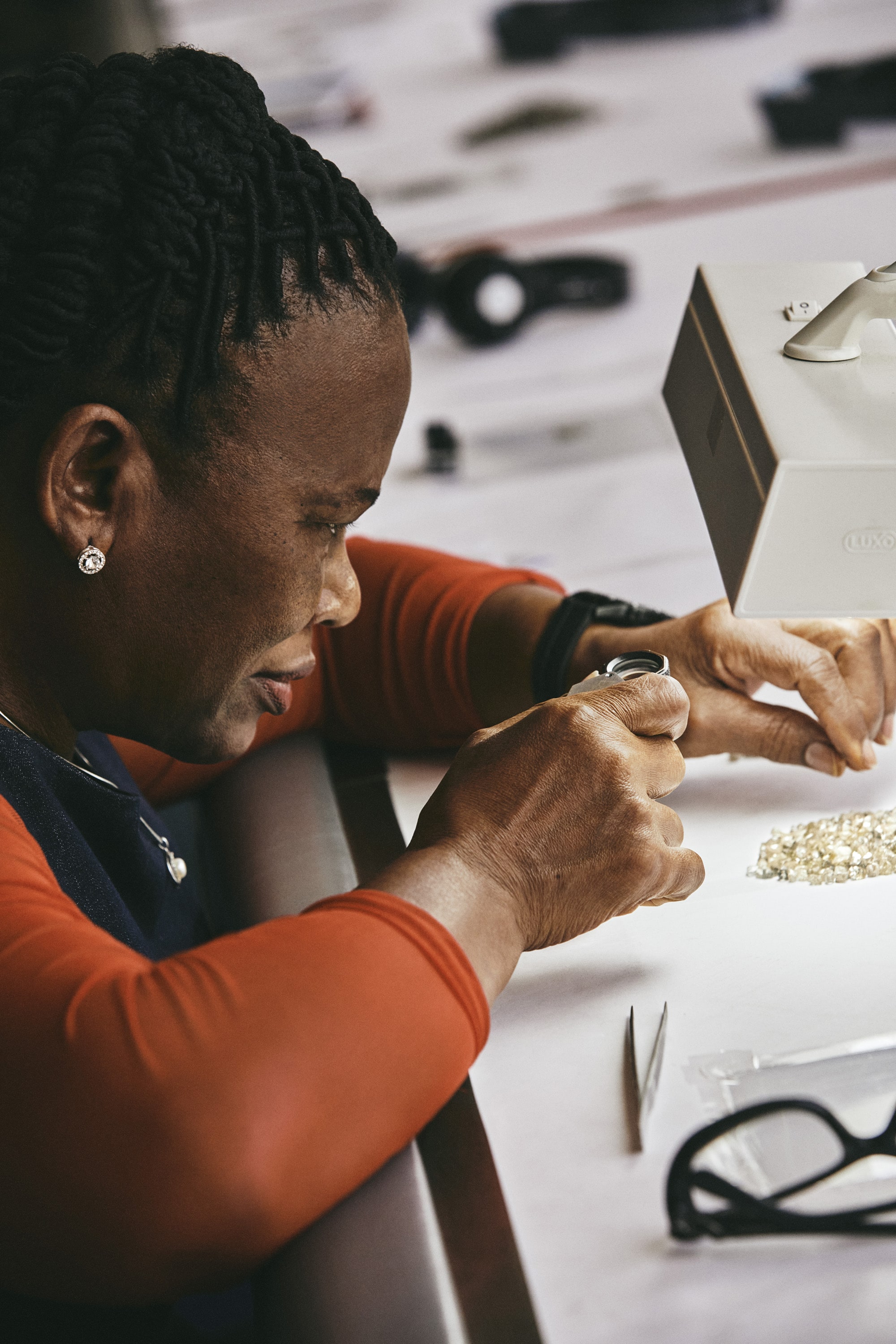
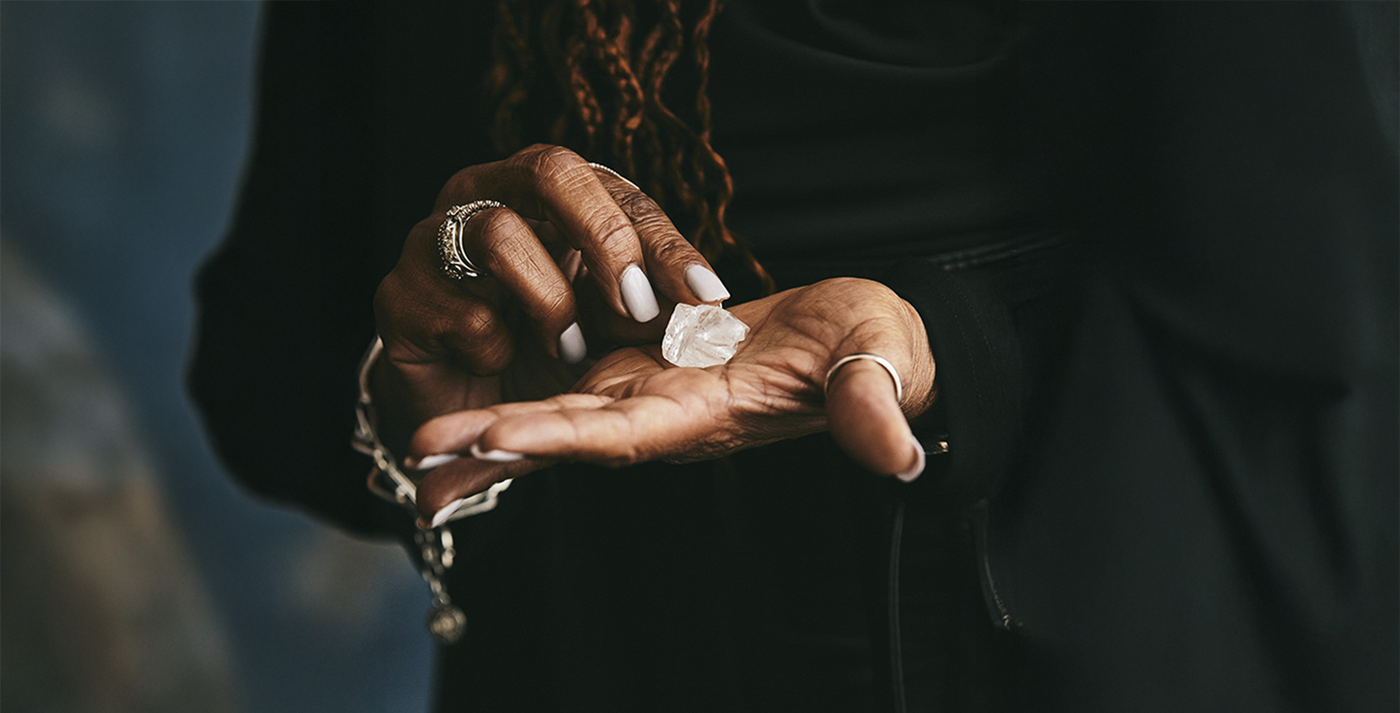
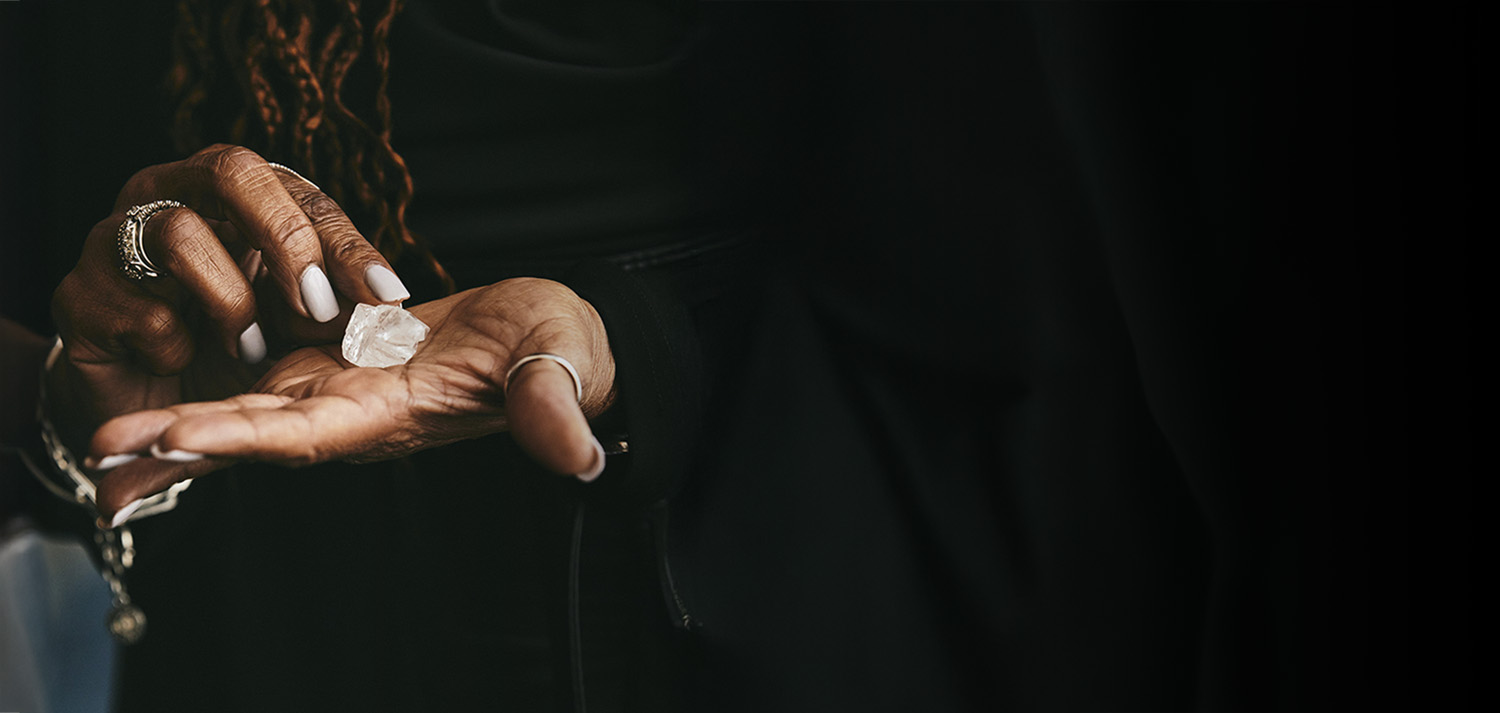
De Beers Global Sightholder Sales in Botswana (Courtesy of The Natural Diamond Council)
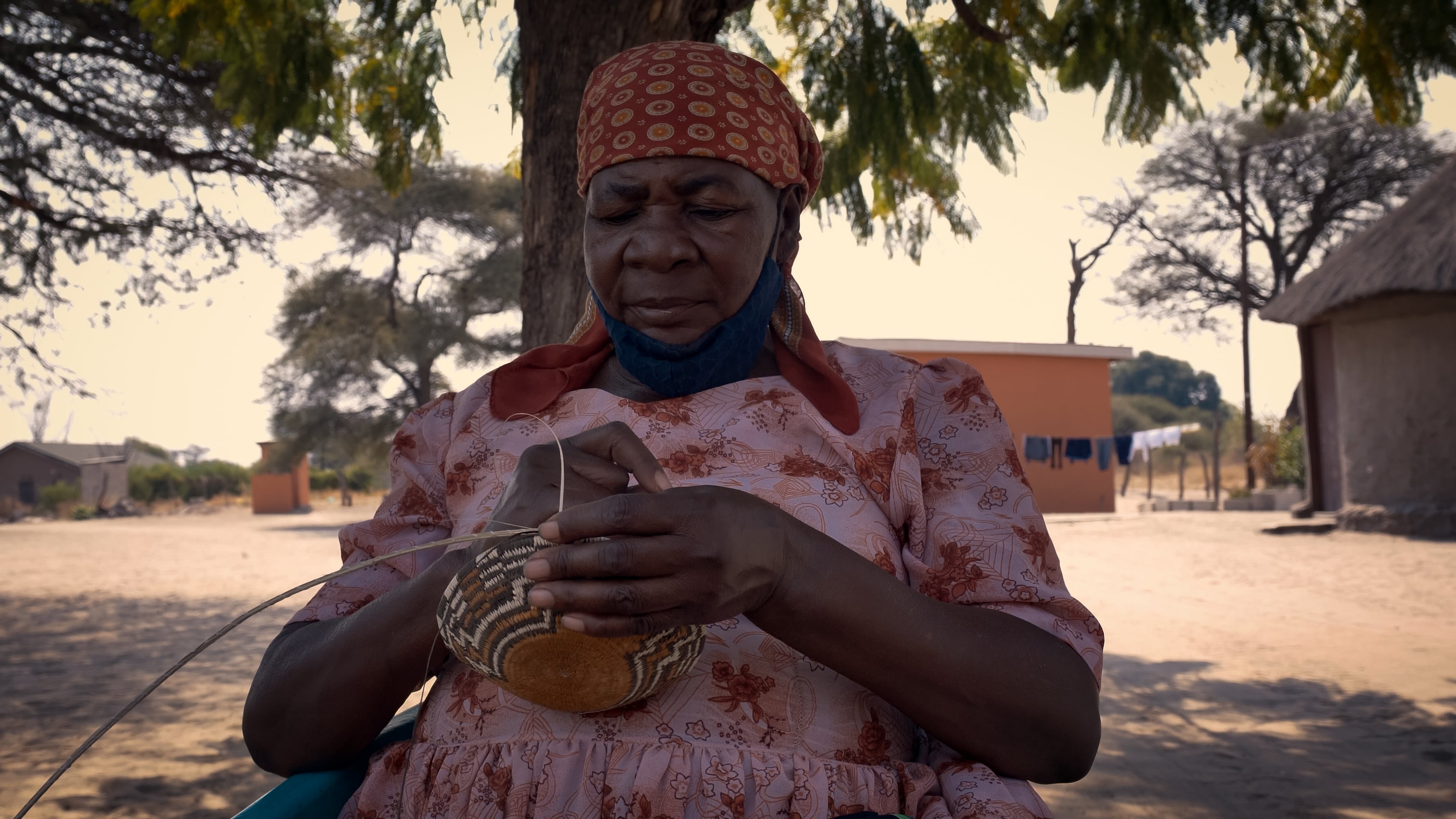
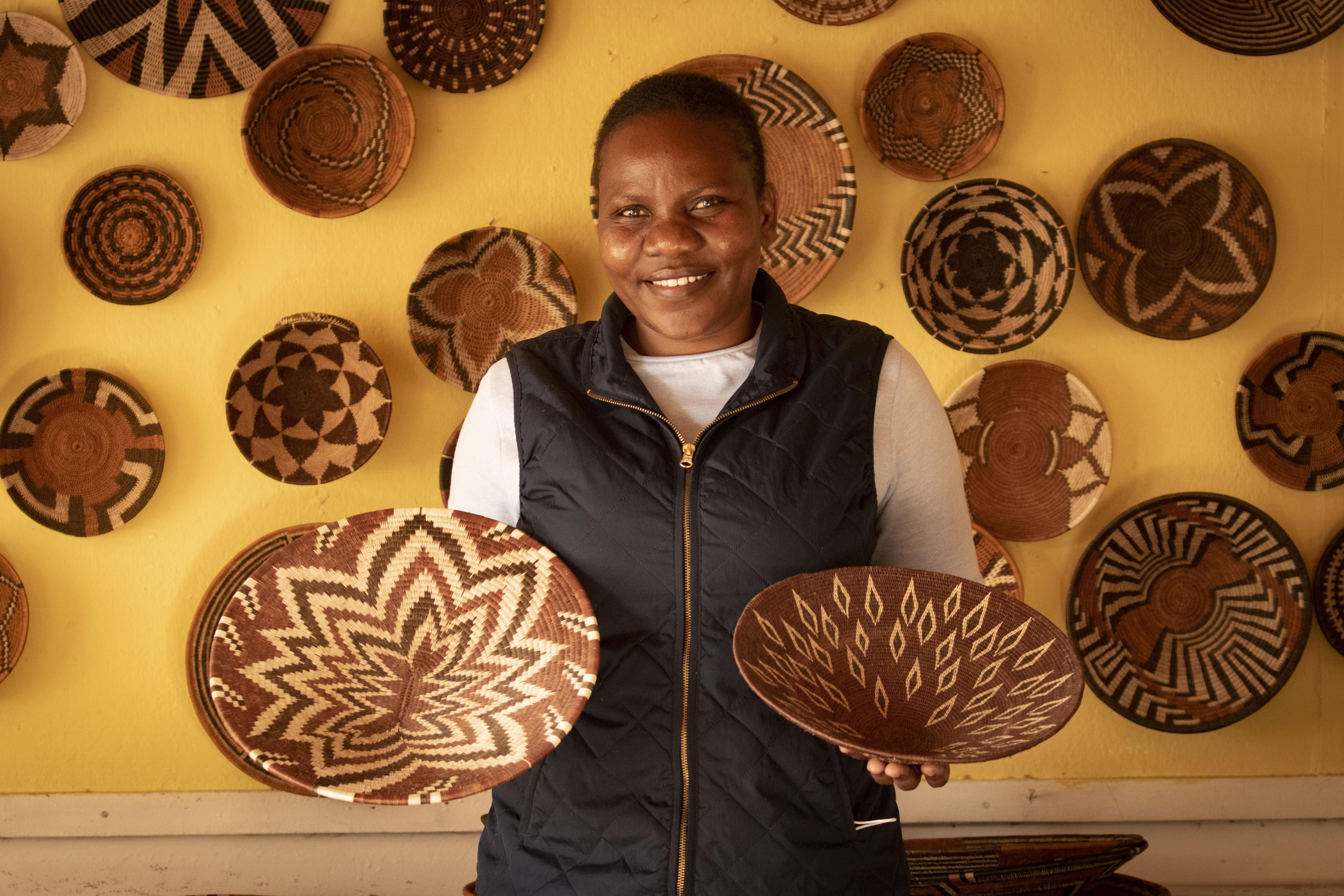
A basket weaver and entrepreneur supported by De Beers and UN Women
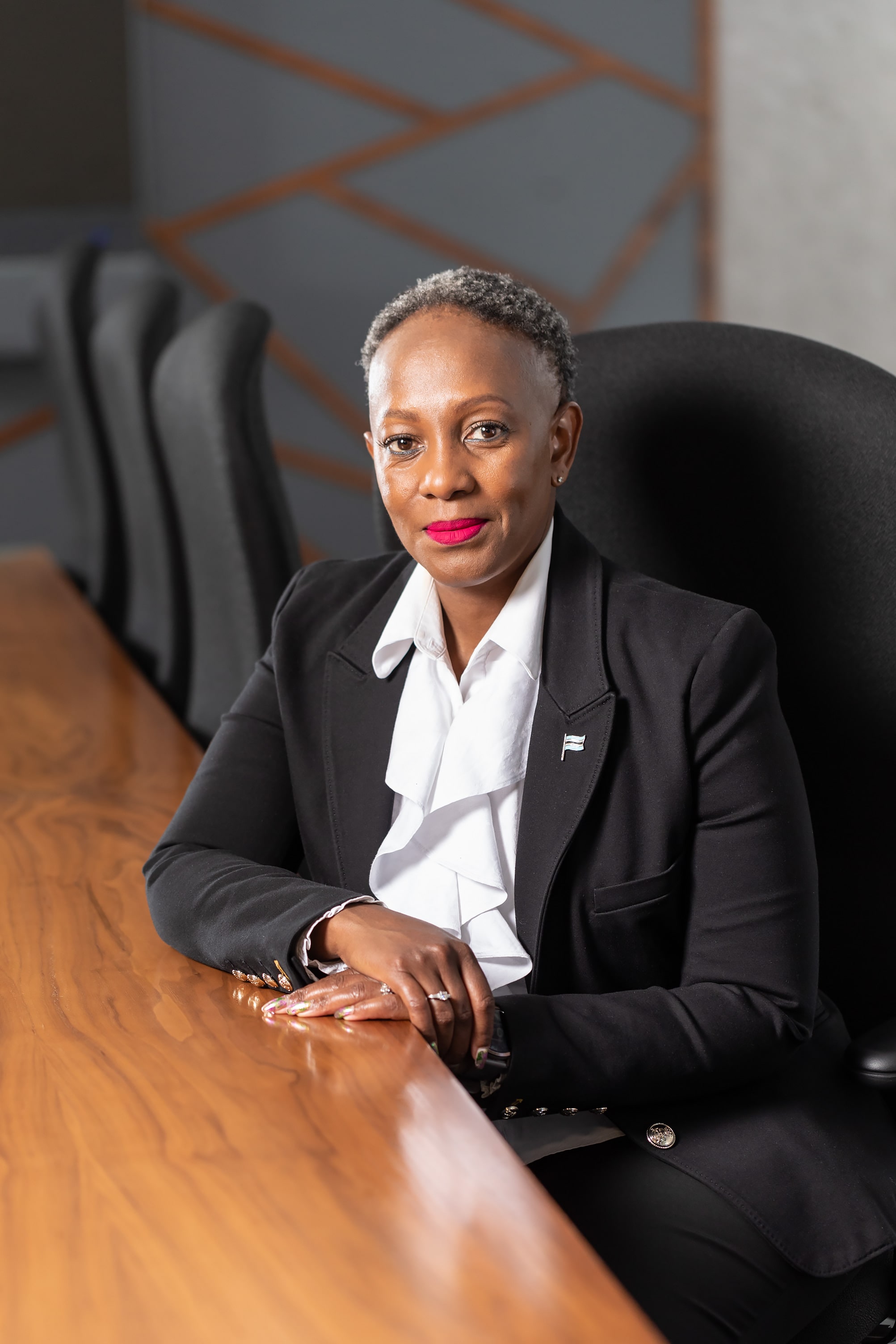
Rachel Lungile Mothibatsela, Executive Head of Corporate Affairs at Debswana Diamond Company
rue empowerment, says Bogolo Kenewendo, can only come “when women have the freedom, support, and opportunity to reach their fullest potential”. The Botswana minister of minerals and energy is a shining
and energy is a shining example of someone who has done just that, and is flying the flag for a new era of empowered women in her country.
Kenewendo is a star. Watch her deliver a speech to a room full of men – she has been given a post overseeing what is still a typically male-dominated industry in Africa and beyond – and you will see that potential come out in full. Her confident cadence is captivating, and off stage she exudes a strong sense of style that makes her a perfect fit for one of the more glamorous of her beats: the diamond industry.
Diamonds are big business in Botswana. The land is home to some of the most productive mines in the world, and accounts for 80% of the country’s exports and about a quarter of its GDP. Since the discovery of diamonds in Botswana in 1967, the per capita income has risen from $80 to $7,238 in 2021.
The arrival of diamonds has been transformative for Botswana, but it is not a country without its struggles. “We do see quite a gap, from a financial perspective, between the rich and the poor in this country,” says Mmakeng Leepile, who works for UN Women in Botswana. She speaks of high unemployment rates (unemployment hit 27.6% in 2024, according to the
World Bank Group), which disproportionately impact women. And when women are employed, they generally earn less than men. There is also a high number of single-headed households, which tend to be led by women who, as a result, need flexible work arrangements.
“I’m always in awe of women who say they have it all seamlessly under control. My favourite phrase is: ‘Something’s gotta give’ and every day I
ask myself what it’ll be”
Leepile is one of a group of inspiring women working in Botswana to change this, through the power of diamonds. She works specifically on a programme called EntreprenHER, designed to empower women running small to medium-sized businesses. It provides mentoring, skills training, and networking opportunities, with a view to helping female entrepreneurs thrive and expand – and, hopefully, employ other women. Its work is funded by De Beers Group, one of the biggest diamond mining companies operating in the country, and is implemented by the Botswana government.
Take up has been huge, and Leepile sees all sorts of businesses pass through its programmes, from nail technicians to jam makers. The aim of the programme is to help each one of the women driving these businesses push further, and help to break down any barriers holding them back. “If you're a baker or a farmer, are we seeing your produce on the shelves in mainstream large supermarkets?” says Leepile by way of example. “If you're in a male-dominated industry, such as construction or mining, are we seeing you having access to procurement opportunities?”
Minister Kenewendo says the initiative, which launched at the beginning of 2024 (although a similar scheme had been in existence under a different name since 2017), is already
delivering dividends. “By 2024, the programme had already trained 159 women in Botswana, surpassing its annual target and demonstrating its effectiveness in nurturing resilient, women-led enterprises,” she says. “The success of these women-led enterprises not only contributes to the economy but also serves as a testament to the potential of women in business.”
CAPTION TO GO HERE
FOR BOTH IMAGES
Locchum adducorunt. Tum, C. Ahacchil ublisum audactus custici onferbi tantestra, nihinatium tes Cat, furs inam peri seris ia L. Vividem egeret? ad medem diendum tem
“I’m always in awe of women who say they have it all seamlessly under control. My favourite phrase is: ‘Something’s gotta give’ and every day I
ask myself what it’ll be”
One business owner who has taken advantage of the EntreprenHER programme is Keolatetse Molly Segwape, who runs a cattle farm and agriculture shop. Until 2023, she had been working at a diamond mine, but when her contract was not renewed, she knew she had to diversify – and fast. Segwape looked around and discovered that she was eligible for youth funding, and used the grant she received to buy 13 heifers and a bull.
This is a key element to the Botswana story. While diamonds are forever, as the song goes, diamond mines are not. As such, there is a big push to encourage Batswana to develop alternative industries. This is even more relevant now as a global diamond crisis (prices have slumped as cheaper lab-grown diamonds have flooded the market) has led to lower production at mines and job cuts. And now Trump’s potential tariffs are putting more pressure on Botswana’s diamond mining sector.
Reflecting on her own pivot away from diamonds, Segapwe says: “The [EntreprenHER] training helped me to open an agri-shop [a store selling agricultural goods such as feeds and fertilisers to other farmers]. I was clueless when it came to [keeping] records and marketing.” After the training – she has completed multiple courses – it all clicked into place, and she felt confident enough to embark on opening the store, which now employs two other women. She also picked up tips on how to operate more sustainably, and has been implementing elements such as responsible waste management into her business.
Segwape is ambitious. As well as her farming and retail businesses, which she hopes to expand, she also has another that bids for government service or procurement contracts – it could be food, stationery, toilets. If they need it, she’ll find it. Last year she won a bid to clear vegetation straying on to the Trans-Kalahari Corridor, a highway that runs between Namibia and Botswana. “I employed 10 men [to clear a 30km stretch], and they were camping on the road for the whole month,” she says. “People are surprised that this girl from the village can do all these jobs. I’m from a village where most women are not working, and it’s tough. I just want to do it differently.”
She also wants to encourage other women to take hold of their own destinies: “I’m always telling them, this is not hard – well, it is hard, but we can make it. Let’s turn up, and do it for ourselves.”
Ada Thela has a similar set of values. At 32 years old, she is tackling one of Botswana’s biggest problems head on: how to get more value out of its diamonds. Botswana exports billions of pounds-worth of diamonds each year, but the majority are rough diamonds, which sell for a lower price than cut and polished diamonds. Thela is part of a growing industry of cutters looking to keep more of the processes – and therefore more of the revenue from diamond production and sales – within the stones’ country of origin.
Thela started her journey in diamonds as an apprentice at another local diamond manufacturer, WDM Botswana, but after three years she decided to strike out on her own and founded Zoe Diamonds in Gaborone in 2023. “I didn't see enough Botswana as business owners or entrepreneurs in the diamond industry, and I thought something needed to be done,” she says. “We're a diamond-rich country and diamonds make up 80% of our country's exports. I felt it was important for Botswana to not only be employed within the sector, but also be business owners, as a way of owning the narrative around our country.”
CAPTION TO GO HERE
FOR BOTH IMAGES
Locchum adducorunt. Tum, C. Ahacchil ublisum audactus custici onferbi tantestra, nihinatium tes Cat, furs inam peri seris ia L. Vividem egeret? ad medem diendum tem
“I’m always in awe of women who say they have it all seamlessly under control. My favourite phrase is: ‘Something’s gotta give’ and every day I
ask myself what it’ll be”
As the cutting industry is so new in Botswana, one of the biggest challenges Thela faced – other than setting up just as diamond prices took a nosedive – was finding the right talent to shape her stones. “I overcame that challenge by hiring young Botswana who were out of work at that time,” she says. In a way, the industry downturn brought with it a silver lining, as she managed to pick up cutters and polishers that had been let go from other businesses. She didn’t have to try and compete with established employers, which would have been impossible as a young start up. Her team now numbers seven.
Thela’s narrative of Botswana pride is finding receptive ears in the UK, Europe, India, and the US, after her profile was given a boost by the Natural Diamond Council, a marketing body for diamonds that in 2022 flew actress Lily James out to Botswana to see how diamonds were benefitting the local economy (“To be in Botswana and see the effect the stones have on the community, the value of them has only grown in my eyes,” said James). Clients are actively choosing Zoe Diamonds, Thela says, because the stones are not just mined in Botswana but cut there too. “We are 100% homegrown, local talent,” says Thela. “By purchasing from us, they are not only contributing to the economy of the country but the livelihoods of Botswana.”
A keen area of focus for the funding and programmes developed to empower women in Botswana has been STEM (Science, Technology, Engineering, Mathematics), which can boost women’s chances of working within mining. More than 2,000 girls have participated in the STEM Girls Programme run by Debswana (a joint venture mining company operated between De Beers and the Botswana government), which aims to encourage them to study related subjects.
Take-up has been huge, and Leepile sees all sorts of businesses pass through its programmes, from nail technicians to jam-makers. The aim is to help each one of the women driving these businesses push further, and break down the barriers holding them back, such as access to the best opportunities for their businesses.
“If you’re a baker or a farmer, is your produce on the shelves in mainstream large supermarkets?” says Leepile by way of example. “If you're in a male-dominated industry, such as construction or mining, do you have access to procurement opportunities?”
Minister Kenewendo says the initiative, which launched at the beginning of 2024 (although a similar scheme had been in existence under a different name since 2017), is already delivering dividends. “By 2024, the programme had already trained 159 women in Botswana, surpassing its annual target and demonstrating its effectiveness in nurturing resilient, women-led enterprises,” she says. “The success of these women-led enterprises not only contributes to the economy but also serves as a testament to the potential of women in business.”
“We are 100 per cent homegrown, local talent. By purchasing from us, they are not only contributing to the economy of the country but the livelihoods of Botswana”
Leepile is one of a group of inspiring women working in Botswana to change this, through the power of diamonds. She works specifically on a programme called EntreprenHER, designed to empower women running small to medium-sized businesses. It provides mentoring, skills training, and networking opportunities, with a view to helping female entrepreneurs thrive and expand – and, hopefully, employ other women. Its work is funded by De Beers Group, one of the biggest diamond mining companies operating in the country, and is implemented by the Botswana government.
Take up has been huge, and Leepile sees all sorts of businesses pass through its programmes, from nail technicians to jam makers. The aim of the programme is to help each one of the women driving these businesses push further, and help to break down any barriers holding them back. “If you're a baker or a farmer, are we seeing your produce on the shelves in mainstream large supermarkets?” says Leepile by way of example. “If you're in a male-dominated industry, such as construction or mining, are we seeing you having access to procurement opportunities?”
Minister Kenewendo says the initiative, which launched at the beginning of 2024 (although a similar scheme had been in existence under a different name since 2017), is already
delivering dividends. “By 2024, the programme had already trained 159 women in Botswana, surpassing its annual target and demonstrating its effectiveness in nurturing resilient, women-led enterprises,” she says. “The success of these women-led enterprises not only contributes to the economy but also serves as a testament to the potential of women in business.”
Leepile is one of a group of inspiring women working in Botswana to change this, through the power of diamonds. She works specifically on a programme called EntreprenHER, designed to empower women running small to medium-sized businesses. It provides mentoring, skills training, and networking opportunities, with a view to helping female entrepreneurs thrive and expand – and, hopefully, employ other women. Its work is funded by De Beers Group, one of the biggest diamond mining companies operating in the country, and is implemented by the Botswana government.
Take up has been huge, and Leepile sees all sorts of businesses pass through its programmes, from nail technicians to jam makers. The aim of the programme is to help each one of the women driving these businesses push further, and help to break down any barriers holding them back. “If you're a baker or a farmer, are we seeing your produce on the shelves in mainstream large supermarkets?” says Leepile by way of example. “If you're in a male-dominated industry, such as construction or mining, are we seeing you having access to procurement opportunities?”
Minister Kenewendo says the initiative, which launched at the beginning of 2024 (although a similar scheme had been in existence under a different name since 2017), is already
delivering dividends. “By 2024, the programme had already trained 159 women in Botswana, surpassing its annual target and demonstrating its effectiveness in nurturing resilient, women-led enterprises,” she says. “The success of these women-led enterprises not only contributes to the economy but also serves as a testament to the potential of women in business.”
A basket weaver and entrepreneur supported by De Beers and UN Women
EntreprenHer training course in Botswana
WORDS: RACHAEL TAYLOR
design: ana ospina
images & VIDEOS: GETTY IMAGES
A basket weaver and entrepreneur supported by De Beers and UN Women
De Beers Global Sightholder Sales in Botswana (Courtesy of
The Natural Diamond Council)