Photographer: Lulu Mcardle
Description: XXX
“I’ve always been particular about my brows—even on shoots with incredible make-up artists, I’d insist on doing my own.”
Description: XXX
Description: XXX

On Designing With Intention, Staying Grounded, and Why Sustainability
is the Future of Fashion


SHARE THIS STORY
“Of course, I’m very grateful for the successes we have achieved, and yes, we can celebrate these milestones. But I’m always cautious – I never believe I have ‘arrived’. To me, one day you’re in and the next you could be out. You can’t rest on your laurels.”
“I say ‘work in progress’ a lot or ‘this too shall pass’. Also: ‘don’t forget to have fun’.”
What is your mantra?

“In the beginning, the biggest challenge was
doing everything with a small team, but I truly believe it’s important to be hands-on to understand what your business really needs”
“When we got our first negative TikTok review, I panicked. I thought we’d ruined everything. But it turned into one of my biggest lessons.”
“A very old Hermès trench, which I got when I worked at the [brand’s] sample sale in the ’90s, plus a McQueen embroidered cape.”
What is your most treasured fashion item?
£950
SHOP NOW

£1,521
SHOP NOW

£765
SHOP NOW

£850
SHOP NOW

£900
SKYLER IN BEIGE SUEDE
SHOP NOW

£1,122
SHOP NOW
Ever since I can remember, I’ve been drawn to accessories, especially handbags. I’ve always felt they’re more than practical objects; they’re architectural, expressive pieces that can completely change the way someone carries themselves. Back in 2018, while I was at university, I realised I could never find a bag that felt like “me”: structured yet practical, minimal yet distinctive, modern but crafted with real heritage technique. That’s what sparked everything.
My curiosity turned serious quickly. I began travelling to Florence, meeting artisans who understood structure, precision, and detail in a way that aligned with my vision. Those relationships were pivotal; they helped transform my sketches into pieces that honoured tradition while embracing innovation.
Building the brand was intense. I learned every step first-hand: sourcing materials, developing hardware, refining prototypes and pushing until each design met the standard I imagined. I wanted to create bags that achieved a balance between timelessness and modernity. I wanted something that felt elevated and distinctive but not loud. Incorporating crystal-inspired elements in a subtle, architectural way felt like a natural extension of my background. I was interpreting my heritage through my lens, and that still feels very special to me.
One thing I would never compromise on is quality and craftsmanship. Every piece that carries my name has to embody precision, quality, and intention. No matter how fast the industry moves or how tempting it can be to scale quickly, the integrity of the materials, the artisanship, and the design process come first. If I can’t stand behind a product with complete confidence, from the sourcing to the stitching, it simply doesn’t go out into the world. Even now, every collection still starts the same way: a desire to blend craftsmanship, innovation, and understated luxury.

We try to be sincere and authentic in everything we do. We sometimes say that we are creating objects that are right in every sense of the word—the right proportions, the right level of practicality, and the right balance between the quality and the price. You have to have respect for the customer, and we’ve kept our prices quite consistent all these years. I don’t agree with the mentality of selling super expensive products just for the sake of it, and you don’t care because you know that someone will be ready to pay for it. When you do that, they probably won’t come back. You need to keep that link with the customer; that’s what builds a future.
The one thing I would never compromise on in business? Passion. It’s so important to have passion, and to transmit that to all the people around us. I think that only when you really do things with passion, that you can do them well.
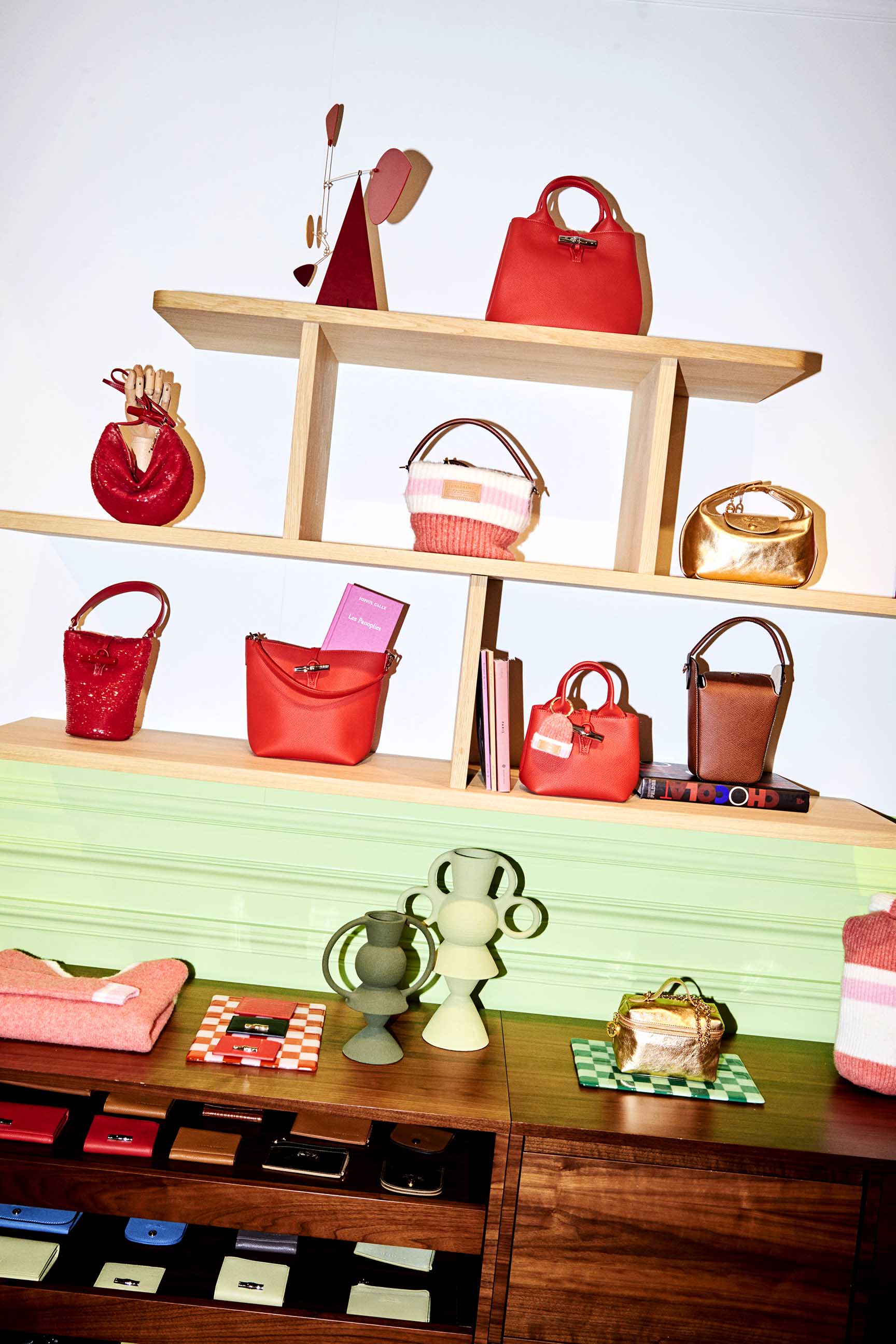
What I’m proudest of is the fact that we have been able to evolve. In nearly 80 years, we have gone from being a tobacco store to a lifestyle brand with a presence all around the world. We didn’t do it in one dramatic revolutionary way—we did it with consistency. We have always evolved, we have always innovated, created, re-imagined. But we have also maintained strong roots and strong pillars, like our Le Pliage and Le Roseau designs. Those two bags are more than 30 years old, and to see women today still wanting them and wearing them is something I’m very proud of. We’ve managed to succeed in keeping them desirable all this time, which is not something that many brands have been able to do.
Success isn’t really what I’m looking for—it’s to feel that I have done my best. To know that I have achieved something in a good way, in the best way I could. And sometimes, of course, it doesn’t work, but I can still feel proud of it, and how I overcame difficulties or tried something different and innovative. We must always learn from our mistakes.
A special moment I will always remember was our collaboration collection with Tracey Emin. It was the first one I ever did, and it was to celebrate the 10th anniversary of Le Pliage in 2004. Collaborations were not so common then, few people were doing them—especially one that was so purely artistic. To meet her, to work with her, was incredible, and I think the result perfectly captured Tracey’s spirit, and Longchamp’s spirit too. It was really the beginning of a new page for the brand.
“Fashion should uplift women, not pressure them, and I hope to play a part in that shift”
In a fashion landscape that sees constant reinvention, accessories designer Marina Raphael is prioritising quality, intention and responsibility to every aspect of her business. A sixth-generation member of the Swarovski family, craftsmanship is ingrained in her lineage. Her eponymous brand showcases her own carefully created design language – a kind of visual DNA that is loved by fashion insiders and celebrities alike.
Here, as part of our Women Who Win series, she speaks to Sofia Piza about the art of storytelling and building a brand with sustainability
and conscious consumption at the heart.


“Our Le Pliage and
Le Roseau bags are more than 30 years old, so to see women today still wanting them and wearing them is something I’m very proud of.”


baby Riviera square-handle tote bag
LUNA IN GUNMETAL STUDS
CAMILA IN SILVER CRYSTAL
Riviera square-handle tote bag
SAILOR IN RAFFIA
Marina
“I’ve come to see sustainability as an investment rather than a cost. Durable materials age beautifully, responsible production builds trust, and thoughtful design inherently reduces waste”
The Riviera will always be the design that reminds me why I started and how much passion and purpose can be woven into a single handbag. It was one of those designs that felt “right” from the very beginning. Its clean structure, strong architectural lines, and the interplay between elegance and modernity captured exactly what I wanted my brand to stand for. It’s the bag that taught me the power of creating a signature. A recognisable emblem that can stand on its own and communicate our brand philosophy without a single word – seeing it come to life and then have such a positive response was one of the defining moments of my creative journey. It remains one of our best sellers and every time I see someone carrying the Riviera I feel that quiet mix of pride and gratitude; the feeling that a sketch that once lived only in my mind has found its way into someone else’s world.
Seeing women I admire carry my bags has been one of the most rewarding parts of the journey. That said, my proudest moment was never just one milestone. It was the accumulation of many small, meaningful ones that slowly made me realise my vision was becoming real. I’ll never forget the feeling of launching my first collection. Seeing everything come together – the craftsmanship, the materials, the narrative behind each piece – it felt almost surreal. And every time I see my team gathered around a new sample, offering thoughtful feedback with the same passion I feel, I’m reminded of how far we’ve come together.
Back in 2018, luxury was still driven by heritage logos, traditional silhouettes, and a more formal idea of exclusivity. Today, customers want meaning, not just aesthetics. There’s a strong move toward conscious consumption; people care about sustainability, transparency, and how responsibly a piece is made. They want longevity, not trend-driven novelty. Functionality has also become essential; luxury can no longer rely on beauty alone. Bags need to be versatile, practical, and suited to modern lifestyles. Aesthetics have shifted, too. Sculptural, architectural silhouettes, craftsmanship-driven details, and clean, timeless lines have become far more important than bold branding. And of course, the rise of digital culture transformed how clients connect with brands – storytelling, authenticity and behind-the-scenes access now matter as much as the product itself.
From the very beginning of building my brand, sustainability felt like a natural foundation rather than an added layer. Working with exceptional materials, partnering with skilled artisans and ensuring transparency across the supply chain have always been part of my approach. These choices do require commitment, but I’ve come to see sustainability as an investment rather than a cost. Durable materials age beautifully, responsible production builds trust, and thoughtful design inherently reduces waste. For me, it isn’t a trend or a marketing angle. It influences every choice from sourcing to craftsmanship to the lifespan of each piece. Above all, it keeps me rooted in why I started the Marina Raphael brand: to create designs that feel meaningful, intentional and are built to accompany someone for years to come. The entire fashion landscape is shifting toward greater awareness, making sustainability not only achievable but often more creative and efficient than before.
When it comes to celebrating success, I’ve learned to do it in a way that keeps me grounded. I don’t need a big event or dramatic announcement. My celebrations are quiet, intentional moments, letting me absorb what we’ve achieved and appreciate the journey. Sometimes it’s a simple dinner with family, or opening a bottle of champagne with the team after a long day at the office. Those moments recharge me and give me the energy and clarity for whatever comes next.
I’ve learned that work-life balance isn’t about strict separation, it’s about integration. My team is spread across different countries and time zones, and I travel often for production, design development and events. That means my days can stretch into late evenings or start far earlier than I’d like. That level of involvement is incredibly rewarding, but it also means I have to be very intentional about carving out space for my personal life. But the truth is, I’m so passionate about what I do that I get energised by it, even when it’s demanding. When you love what you do, the lines between work and life naturally blur, and that can actually be beautiful when you learn to manage it well. Creating, building, problem-solving – those things fuel me. I celebrate the flexibility my work gives me, and I’ve become better at recognising when I need to slow down or make space outside my brand.
“I stopped chasing the idea that work-life balance has to be perfectly split”
Raphael


“My proudest moment was never just one milestone. It was the accumulation of many small, meaningful ones that slowly made me realise my vision was becoming real”

My biggest challenge has been building a brand that feels truly mine while navigating an industry that moves fast and is dominated by established voices. As a new designer, there’s constant pressure to prove yourself, to stand out, make the right decisions, and stay true to your vision even when everything around you feels bigger or more experienced. Earning trust has been one of the hardest parts – from suppliers, artisans, customers, and even from myself. When you’re still growing, people don’t automatically take you seriously, so you work twice as hard to be heard and understood. My advice to designers starting out is to begin with intention, even if it’s on a small scale. Build strong relationships with your suppliers, design with longevity in mind, grow at a pace that protects your values, and allow those values to guide your creativity. Constraints often lead to the most imaginative solutions.
Setbacks aren’t failures, they shape you. Every prototype that didn’t work, every delay, every material that wasn’t quite right pushed me to refine my ideas and clarify what I want the Marina Raphael brand to stand for. I’ve learned to trust the process, my team and my instincts, because those instincts often become your strongest differentiator. And ultimately, real growth comes from the challenges that stretch you beyond what you thought you could handle, the moments I’m now most grateful for.
Fashion should uplift women, not pressure them, and I hope to play a part in that shift. Fashion can be empowering, but it can also create unrealistic expectations that women are expected to meet at all times, whether it’s to look perfect, to present flawlessly, or to monitor every detail of how we appear. As a designer, I want women to feel empowered by who they are, not by how well they fit a mould. I want the industry to embrace authenticity, intelligence, individuality and the confidence that comes from passion and skill, not appearance. If I could change something, I would replace perfectionism with honesty, diversity, and a genuine celebration of women’s strength.
I truly believe that if we all support each other, we can achieve far more than we do alone. This industry can be competitive, but it’s also incredibly creative and collaboration always elevates the work. When we uplift one another, ideas flow more freely, innovation grows, and people feel confident taking risks. So many great concepts never happen because someone feels intimidated or unsure. Genuine support removes those barriers. For me, support means sharing knowledge, celebrating each other’s wins, respecting different journeys, and making space for diverse voices. Fashion thrives on a variety of perspectives, backgrounds, and ideas, and when we empower instead of compare, the whole industry becomes richer.


“When you love what you do, the lines between work and life naturally blur, and that can actually be beautiful when you learn to manage it well”