Photographer: MONICA KRYSTEL ROSE
Description: XXX
“I’ve always been particular about my brows—even on shoots with incredible make-up artists, I’d insist on doing my own.”
Description: XXX
Description: XXX

On Individuality, Her Lifelong Love of Learning and Why She’s Embracing AI


SHARE THIS STORY
“Of course, I’m very grateful for the successes we have achieved, and yes, we can celebrate these milestones. But I’m always cautious – I never believe I have ‘arrived’. To me, one day you’re in and the next you could be out. You can’t rest on your laurels.”
“I say ‘work in progress’ a lot or ‘this too shall pass’. Also: ‘don’t forget to have fun’.”
What is your mantra?

“In the beginning, the biggest challenge was
doing everything with a small team, but I truly believe it’s important to be hands-on to understand what your business really needs”
“When we got our first negative TikTok review, I panicked. I thought we’d ruined everything. But it turned into one of my biggest lessons.”
“A very old Hermès trench, which I got when I worked at the [brand’s] sample sale in the ’90s, plus a McQueen embroidered cape.”
What is your most treasured fashion item?
£485
SHOP NOW

£335
SHOP NOW

£225
SHOP NOW

£415
SHOP NOW

£395
Obie crochet cotton and linen dress
SHOP NOW

£250
SHOP NOW
When I was growing up in New York, I wanted to be a painter. My mom wasn’t a fan of that idea, but I got a scholarship to go to the Fashion Institute of Technology (FIT) to study fashion illustration. I didn’t want to do design because at the time, it was all about the Jackie Kennedy look, and that’s just not where my head was at, at all; that wasn’t how I dressed. I ended up getting a job in a garment centre, but that was so unpleasant. My interview was very condescending and sexist, so I literally ran out of that office, feeling humiliated. But then I got a job working for an airline office, selling reservations and tours, and that was the best thing that could have happened. At the time, in the 1960s, airlines were the pinnacle – like the equivalent of working in tech or at Google now. I learned so much, like understanding what computers could do and how to run an office – things I would never have studied or even cared about because to me, it was just about being creative.
I really have London to thank for inspiring me to live the life I have been living for the last 59 years. I was able to travel very inexpensively because of my job at the airline, and I decided to go to London for my first trip. I stayed at a boarding house just off Sloane Square, and I remember asking this man on the street if there were any shops nearby, and he pointed me to the King’s Road. That’s where I discovered [iconic 1960s store] Dandie Fashions. London at the time was all grey, so to see this store with a big bright colourful front, music blaring out, was just unbelievable. It was so exciting that it made the hair on my arms stand up; it just drew me in. The energy of the music, the amazing people – that really marked the most memorable evolution in my life. I was in the right place at the right time, and I was there every weekend for four years. I was so much a part of the huge change in fashion that happened in that decade, when women started wearing miniskirts for the first time in history. I was part of the generation that fed into it and helped build it.
My career in fashion started when I decided to bring clothes back from London to New York. I was bringing all these amazing things from Antiquarius, from Biba, from Bus Stop, back for friends in New York, so then I decided to open up a little shop in the basement of a building and sell them. Then, I got to a point where I thought: I have some ideas of my own. I didn’t know anything about fashion design or making patterns, so I had to just learn on the job and eventually hire some people to help. It was very exciting: I knew that I had found what my purpose was.

We try to be sincere and authentic in everything we do. We sometimes say that we are creating objects that are right in every sense of the word—the right proportions, the right level of practicality, and the right balance between the quality and the price. You have to have respect for the customer, and we’ve kept our prices quite consistent all these years. I don’t agree with the mentality of selling super expensive products just for the sake of it, and you don’t care because you know that someone will be ready to pay for it. When you do that, they probably won’t come back. You need to keep that link with the customer; that’s what builds a future.
The one thing I would never compromise on in business? Passion. It’s so important to have passion, and to transmit that to all the people around us. I think that only when you really do things with passion, that you can do them well.
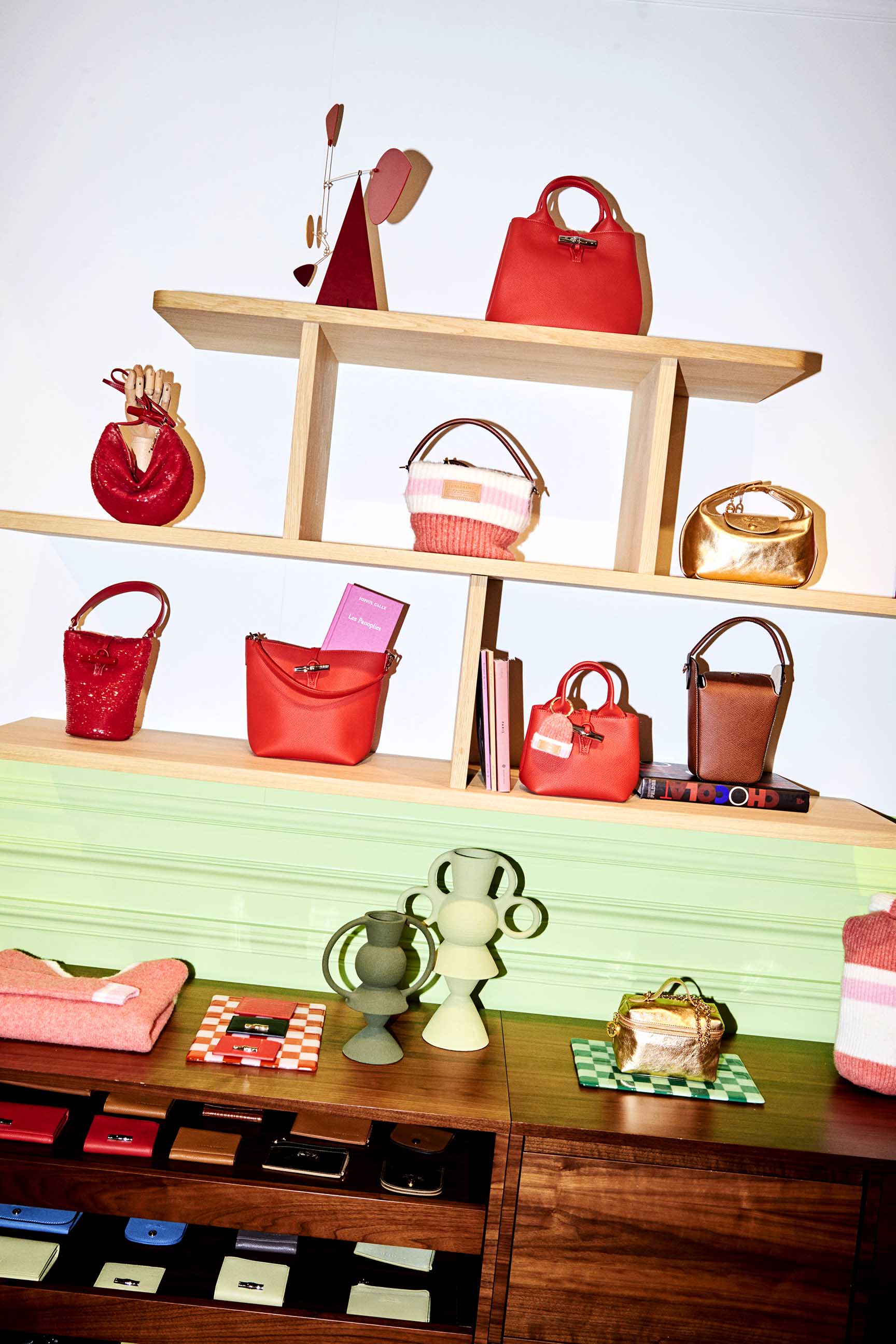
What I’m proudest of is the fact that we have been able to evolve. In nearly 80 years, we have gone from being a tobacco store to a lifestyle brand with a presence all around the world. We didn’t do it in one dramatic revolutionary way—we did it with consistency. We have always evolved, we have always innovated, created, re-imagined. But we have also maintained strong roots and strong pillars, like our Le Pliage and Le Roseau designs. Those two bags are more than 30 years old, and to see women today still wanting them and wearing them is something I’m very proud of. We’ve managed to succeed in keeping them desirable all this time, which is not something that many brands have been able to do.
Success isn’t really what I’m looking for—it’s to feel that I have done my best. To know that I have achieved something in a good way, in the best way I could. And sometimes, of course, it doesn’t work, but I can still feel proud of it, and how I overcame difficulties or tried something different and innovative. We must always learn from our mistakes.
A special moment I will always remember was our collaboration collection with Tracey Emin. It was the first one I ever did, and it was to celebrate the 10th anniversary of Le Pliage in 2004. Collaborations were not so common then, few people were doing them—especially one that was so purely artistic. To meet her, to work with her, was incredible, and I think the result perfectly captured Tracey’s spirit, and Longchamp’s spirit too. It was really the beginning of a new page for the brand.
“I have London to thank for inspiring me to live the life I’ve been living for the last 59 years”
At 80, fashion designer Norma Kamali remains as original, curious and forward-looking as ever. Inspired by a formative first trip to London in the 1970s – where the energy of the King’s Road helped shape her creative vision – she has spent nearly six decades building one of fashion’s most enduring independent brands, known for its innovation, longevity and an unwavering point of view. From dressing icons in the 1970s to embracing technology today, Kamali has never stopped learning or looking ahead. Here, she tells Clementina Jackson about the lessons of a lifetime in business, the importance of making mistakes, and why she sees AI as a tool, not a threat.
“Our Le Pliage and
Le Roseau bags are more than 30 years old, so to see women today still wanting them and wearing them is something I’m very proud of.”


Printed bikini
Strapless satin gown
Obie draped satin gown
Belted shirt dress
Halterneck ruched minidress
Compromise is important in relationships, but I won’t compromise on anything when it comes to product. That might make me sound very difficult, but someone is going to be paying for what I’m making. They’re going to be wearing it, and that experience has to be great. I don’t want to disappoint people, or feel embarrassed that something they bought was wrong or damaged. My name is in the garment, so I feel responsible for it. I’m constantly trying to make sure that every step along the way, we’re thinking about what is the ultimate and working towards that, even if it’s hard.
I’ve made many mistakes over the years, and I still make them, even though I’m much smarter than I’ve ever been. That’s part of the beauty of ageing. But if you’re going to explore new things, and try different things, it’s not always going to work out. It’s very likely that there are going to be lessons to be learned, and that’s how you get to the next step. So it’s important to make mistakes, but it’s also important that we’re resilient, and that we have a Plan B. Half my day is spent preventing problems, and the other half is solving problems, so the idea of the mistake is just part of the process. The younger and the less experienced tend to have a crisis when something goes wrong, because they haven’t had enough problems to solve yet. What is a crisis to one person is just a typical day to another, and you just have to solve it fast.
I don’t celebrate successes. I don’t have a big picture of what that looks like, per se. To me, it’s all the little things that go right – whether that’s a productive meeting, a great design, or someone I’m glad I’ve met who is really inspiring or who might be a great part of the team. When something good happens, I think, “Oh great, that worked,” and then I move on. It almost feels like a jinx to celebrate too much, because the truth is, one success just means you’ve got to here, to a specific place, but I always say what goes up must come down. The joy you feel is very momentary, and then you have to be ready for the next step. That’s the fashion industry. And that’s what learning and growing is about.
I’m not scared of AI, I’m embracing it. AI agents and the technology we have now can certainly help with some of the more mundane, uncreative things that I don’t love doing. I will absolutely use AI agents as part of the company, because there are jobs that are hard to fill, often the ones with a repetitive nature, that quality people just don’t want to do – but those jobs are still important and needed, so why not get the best AI agent to do them? There’s a lot of fear around AI somehow taking over the creative jobs, but they are really not going to be tampered with. I remember asking ChatGPT if it could create an original design, and it wouldn’t answer me, no matter how many different prompts I gave it. I finally boxed it in a corner and said: “you have no passion, you have no feelings, so how can you create an original design?” It agreed with me, and answered: “If you give me an idea, I can then create something from it.” So ultimately, it can’t be original or come up with its own ideas. Only humans can do that.
nORMA kAMALI

Everything happened very quickly when I started my brand. An editor from Harper’s Bazaar magazine coincidentally walked by my shop one day, and somehow saw it even though it was in a basement. She gave me a full page in the magazine. Then a Vogue editor found me and gave me a full page too. It was so great but at the same time it was so intimidating. I remember thinking that sooner or later, they were going to find out that I had no idea what I was doing, that I was faking it. It was a long road of trudging along, wondering if I was going to stay in business, how I was going to pay my rent, constantly figuring out how to make it work. Then these big department stores started copying my clothes, which was very challenging. I had to start figuring out how to be strategic and protect myself too, even though I didn’t want to do any of that – I just wanted to make clothes.
I had a lot of fun working with celebrities who wanted to wear my clothes. They didn’t have stylists back then – it was all about creating your own individual style. You would never want to dress like somebody else, ever. There was a different energy about clothing, and people would really go out of their way to have their own identity, which was great. I never gave free clothes: people came to me because they wanted what I was doing. I made a lot of pieces for Sly Stone [of funk-rock band Sly and the Family Stone], especially these enormous feather jackets, that he’d buy in every colour and wear for his shows. For a period of time, he helped me pay the rent. Cher was also a really great customer for many, many years and essentially kept me in business.
There isn’t one specific design that is closest to my heart. Whatever I’m working on now is the most important, the key piece. That’s what happens when you’re designing: that passion, that frustration of it not being quite right yet, and then all of a sudden you get it, you make the outfit, you see it on a human, and then you get that high. It’s that moment that overwhelms any other moment that came before.

“I was in the right place at the right time, and I was there every weekend for four years”
“Ultimately, AI can’t be original or come up with its own ideas – only humans can do that”


From Left to Right: American fashion designer Norma Kamali, Group of models wearing leather looks from
Norma Kamali Fall/Winter 1983, Helena Christensen during Norma Kamali Fashion Show in 1994


The best piece of advice I’ve ever received is: know thyself. My teacher wrote it in my school book when I graduated sixth grade, and it’s stayed with me ever since. It is the best advice in the whole world. If you know yourself, you have your roadmap. You know where you’re going, who you are, what you stand for, what your beliefs are; you’re not going to try and be anybody else, or live your life like anybody else. It’s simple, but it’s been super helpful to me, and so valuable, even all these years later.
Balance is a hard thing for me to talk about because I’m 100% doing what I do every day, whether I’m at work or not. There are parts of my work that are very fulfilling, and a lot of it has to do with new ideas. So even in my personal time, I will think about new ideas and develop them in that space. Luckily, my husband is the same, so we tolerate each other without effort. My life is pretty simple: I exercise, I think about what I eat, I like saunas, I like to play basketball and I have a great little dachshund that I love to death, who brings me a lot of peace and joy.


American singer and actor Cher holds a cigarette while posing in crisscrossed sequined halter top and a fur-trimmed quilted coat.


Lady Gaga performing at the
The Forum in Los Angeles, CA
Claudia Schiffer at Norma Kamali 1992
Fashion Show Backstage
In Bed with Madonna, 1991
Rihanna in New York City, 2012