Share

share

tweet
Share
share
tweet
As magazine staffs endure wave after wave of layoffs and grapple with their marginalized futures in print, there’s at least one California company that’s hiring. Apple has added no fewer than seven magazine creative directors and designers over the past few years, all of whom had worked at Condé Nast at some point. It started in 2014, when The New York Times Magazine creative director Arem Duplessis, who’d previously been GQ’s art director, headed west to work on Apple’s “internal marketing”. Whatever it was Duplessis actually did for Apple, he must have done well, because he was the first of many.
Words by Mark Healy
Design by Martin Flores
Apple Keeps Hiring
Magazine Art Directors. Why?



An App Store That Wants to Be a Magazine
At first glance the print-to-Apple move is a dream transition, akin to escaping a rusty luxury cruiser and being beamed to Apple Park’s spaceship HQ—to the actual future and a brand to which most art directors maintain a cultish devotion. And yet, however glamorously techie, the transition may not be an easy one. “I think some designers are enamored with the notion of working for Apple,” one Editor-in-Chief observes, “but once you get there you become anonymous. You have nothing to hang your name on. If you're the creative director of a brand, you're putting out an issue every month, launching digital projects, videos etc. You own it.”
Still, many have gone and many more are likely to follow. So now that Apple has collected all that talent, what are they going to do with it? Since this is Apple, where even prospective candidates are required to sign NDAs, there’s a code of silence normally unheard of in publishing. These designers could be working on something mundane or positively futuristic. We canvassed some experts to speculate on what it all means.
“I think some designers are enamored with the notion of working for Apple, but once you get there, you become anonymous. You have nothing to hang your name on.”
“Why wouldn’t Apple be hiring magazine designers?” says Neil Jamieson, who was the creative director of digital content at ESPN: The Magazine and president of the Society of Publication Design. “In my experience, no category of designer is more multifaceted. Beyond the fundamentals, they do branding, packaging, identity, storytelling. They have experience on set, with video, social, and short form storytelling.” Mark Wilson, a Senior Writer at Fast Company, puts the number of hires in perspective. “What looks like a lot to us in the publishing world is actually very little to them. This is a company that has countless designers and unlimited resources.”
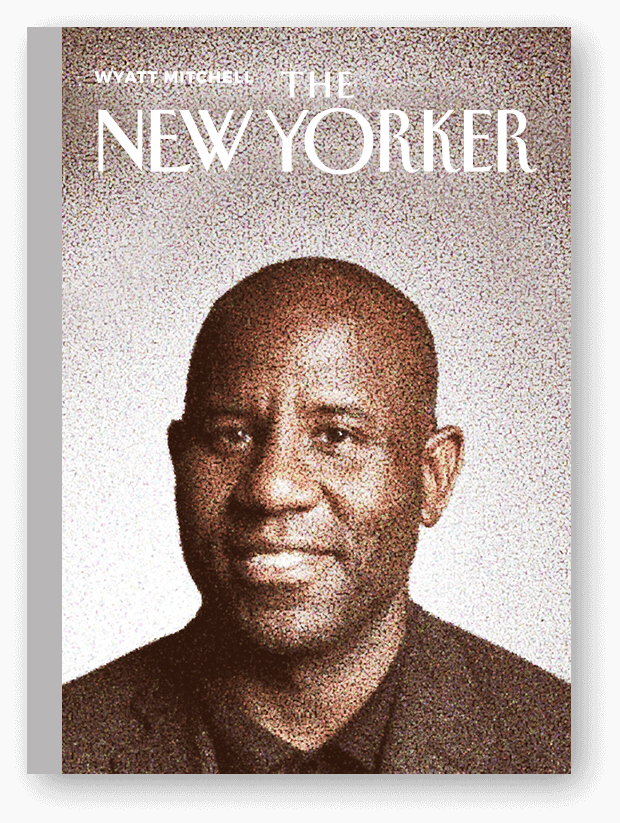
Since then, there’s been a steady flow of talent from One World Trade to One Infinite Loop. In June of 2015, Apple hired The New Yorker creative director, Wyatt Mitchell, then Wired’s creative director Billy Sorrentino, then Alex Grossman from Bon Appétit, who produced an entire issue using only iPhone photos. Last summer, Emersson Barillas, who’d been a designer at both GQ and The New Yorker, left his job as executive creative director of The Atlantic to join Apple as well. And then, a month ago, they lured away three creative talents from GQ, hiring two designers, art director Andre Pointe and Griffin Funk, as well as photography director Krista Prestek.
At least some of that creative fire power has already been dispatched to the App Store, which, you may have noticed, now includes curated photos, contemporary illustrations, and in some cases, write-ups that go way beyond a mere description of the app. With its commissioned photo shoots and mini profiles of developers, the App Store is starting to read like a front-of-the-book section of a magazine about apps. Is it a magazine? No, it’s an app catalog, but it’s an app catalog that aspires to be a magazine.
AR is Only As Cool As It Looks
Apple desperately wants to avoid the mistake Facebook did in fumbling tween loyalty to Snapchat. And that means producing lots of compelling, visual junk food, like the AR Animoji features they introduced last year. “Everyone is hustling to remake the camera,” Fast Company’s Wilson says, “that’s the arms race that’s happening now.” And what good is augmenting reality if you don’t bring a little magic to it? “There’s still something romantic missing with Apple,” says Rockwell Harwood, who was creative director of Details for more than a decade, “and I believe they think publishing has that answer.”
Content Needs Creators
After notably sitting on the sidelines as Amazon and Google cranked out award-winning TV series and YouTube originals, Apple is finally committing to making something other than hardware and beloved UX. And maybe a lot of it. The Wall Street Journal reported that the company will spend $1 billion to “procure and produce” content this year. And if you’re producing all that beautiful content, you have to market it and brand it beautifully, too, which is where magazine designers excel. “Apple wants to own the whole media experience,” says Wilson, “from the phone to the interface to the actual content. They are trying to own that in a pretty aggressive way.”
Adults Wanted
One of the company’s goals in moving to Apple Park was to consolidate their whole design team and achieve a cross-discipline synergy they never had before. Last year, Apple's Jony Ive said: “When we move into the new studio . . . the industrial team will finally come together with the UI team. What that will mean . . . is that an industrial designer will be sitting next to a font designer, who will be sitting next to a sound designer, who will be sitting next to a motion graphics designer, and a haptics expert . . . I’m really terribly excited about [where] that’s going to lead.” Of course, where it could lead is confusion, which is where the art directors come in. “They’ll need creative directors,” says Wilson, “a layer of creative level middle management to pull it together and make it cohesive.”
Big Screens Want Better Visuals
While it’s unlikely that Apple would be willfully stupid enough to get into the business of ad-supported journalism, they may start building magazine-like content that’s pre-loaded on their devices. Maybe it’s no accident that the acquisition of all this visual talent coincides with the company’s rumored plan for the largest iPhone screen to date (6.5 inches).
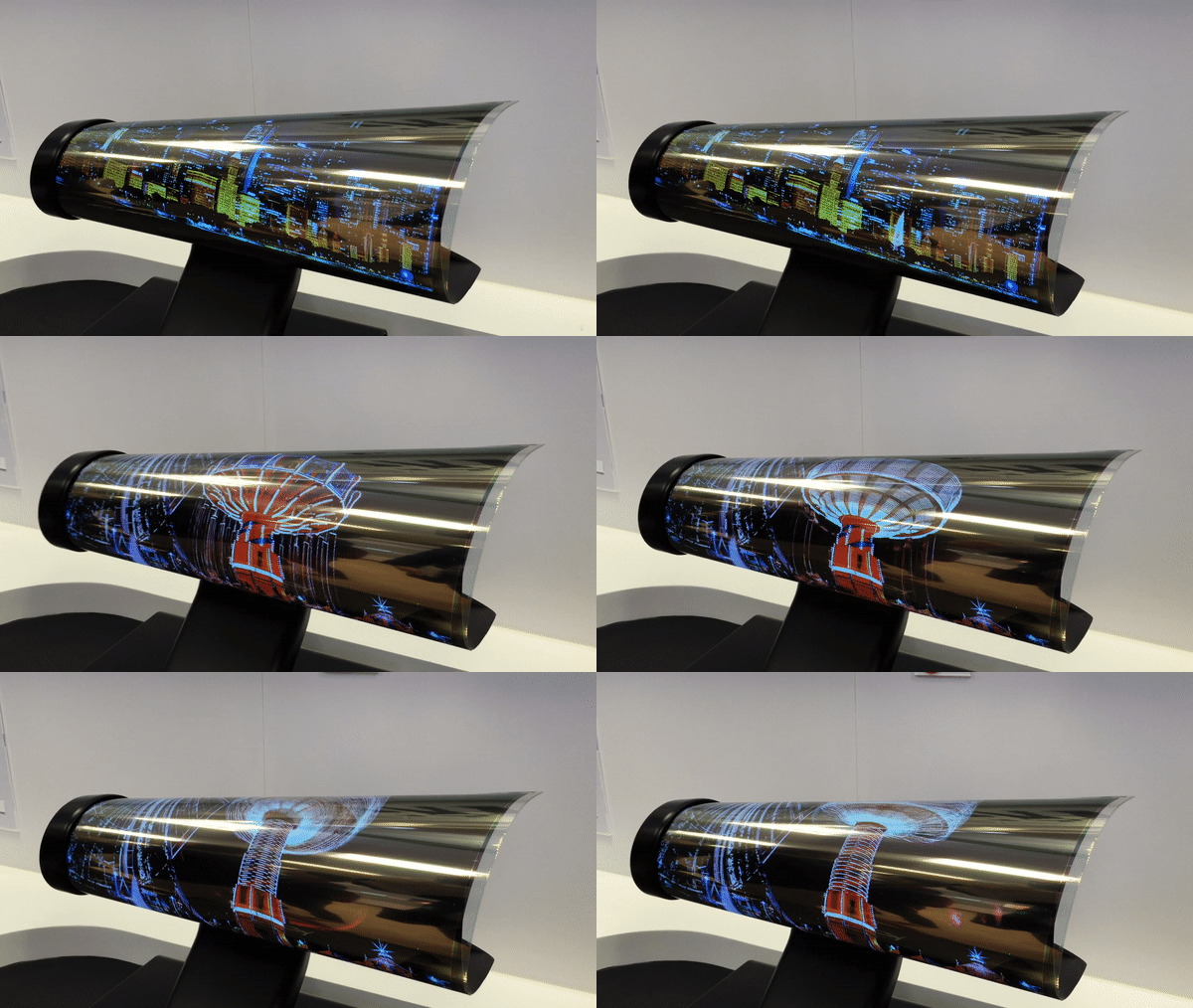
But what if there’s an even bigger screen coming? Last year, Apple took another step toward producing a tablet or large phone with a foldable, rollable screen. The Korean news site, The Investor, reported that LG filed a patent for a pliable screen they’ll produce for Apple. It would either fold or roll up and stash away, combining a big-screen tablet experience with the slimness of an iPhone. And what would go better with a sleek, portable screen than a raft of top-rate magazines? News that Apple is in talks to buy the magazine subscription company Texture (news that came a few days after we published) would explain both the hires and the company's intention to reinvent the tablet business.