


words by Alyssa Mercante • design by Martin Flores


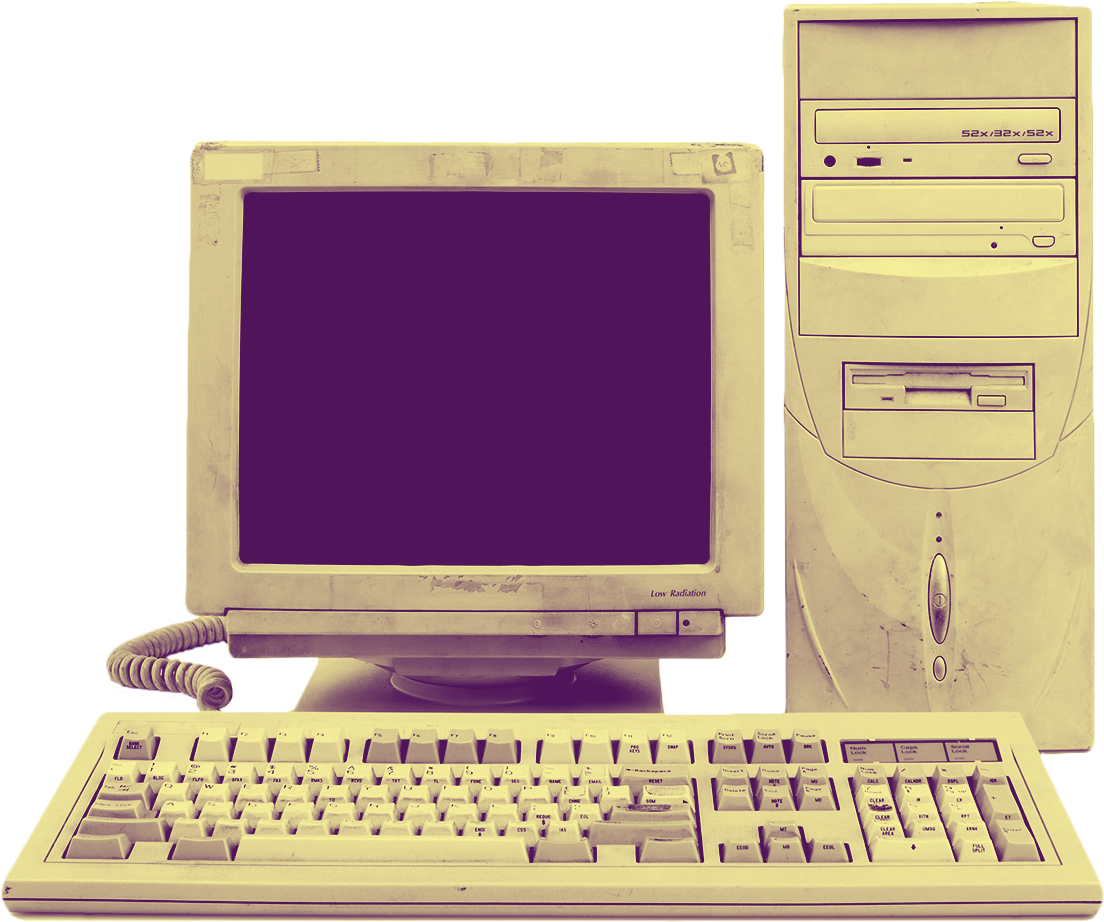


The contagions spread during the late eighties, with strains like the Jerusalem virus (which destroys files every Friday the 13th), and the AIDS trojan (the first ransomware, hidden on floppy discs, that demanded a $189 check be sent to an address in Panama) giving a glimpse of viruses' destructive potential.
By the ‘90s, PCs were just about everywhere, and so too were viruses. But the cyberattacks stayed true to the decade’s aesthetics: vibrant, flashy, and snarky. Take a look.
In 1971, program developers created Creeper, the first computer virus, to see if they could make a program move between computers without human interference. It did, and so they created Reaper, the antivirus, which went around deleting Creeper from any infected computer.
Viruses weren’t even called viruses until 1983, when computer scientist Frederick Cohen coined the term to describe programs that could self-replicate. Three years later, Brain, the first IBM PC compatible virus was released.

ast May, a computer virus called WannaCry spread
like digital Ebola. In the span of a week, it
infected nearly 200,000 Microsoft operating systems across 99 countries, causing billions of dollars in damage. The ransomware (allegedly launched by North Korean hackers) blocked banks, individuals, and even hospitals from accessing their digital files and could have provoked a widespread financial or health crisis. A month later, an especially malicious strain of ransomware (called NotPetya) trained its Russian-made wrath on the Ukraine, disrupting banks, energy companies, power grids, and airports, damaging some systems permanently.
The threat of a cyberattack is now just another terrifying fact of 21st century life, a terror we are resigned to live with, the way Cold War kids hid under their desks during atomic air raid drills. In a way, cyberattacks are this generation’s nuclear war. The Trump administration has roughly equated the two—a recently drafted strategy memo, the Nuclear Posture Review, justifies using nuclear weapons in retaliation to an unprovoked cyber attack. And in late January, the head of the British Army deemed cyber warfare with Russia to be more dangerous than terrorism.
Pretty scary stuff, huh? Believe it or not, there was a time when viruses were kinda cute and harmless—little bits of nerdy mischief, not catalysts for a nuclear attack. They started as science experiments in the seventies, cooked up by early programmers to test a CPU’s capability or to prank their peers. And when they eventually moved beyond the classroom or the lab, they were used to punish cyber theft (like the Brain virus, which downloaded itself onto any computer that pirated a heart-monitoring program) or to playfully boast superior coding skills (see some examples below).
We’ve come a long way from the days of swirling visual viruses and petulant PC infections. See the evolution for yourself.

-LSD
-Crash
-Phantom1
-Vanitas
-Magdzie


Select a Virus to view:

This is your PC on drugs. The LSD virus, created by Death Dealer, overwrote files on DOS systems and rendered PCs unusable. But the colors, man.
This bad boy attached itself to all .com/.exe files and either completely froze them or forced them to display random bars of color.
This virus liked to wait before showing its cards—after 20 minutes of keyboard inactivity, an ominous skull appeared. Then a text scroll congratulated you for getting infected by the “high performance” virus.
This remained undetected until May 27th, when it displayed its payload. It also contained a bug which could halt the entire system upon installation. Its display phrase: “Have a nice death.” Charming.
A birthday card in the form of a virus. Magdzie’s payload displayed an undulating visual on May 27th after this message: “Magdzie T - jutro Twoje urodziny!” For those who don’t speak Polish: “For Magda T- tomorrow’s your birthday!” Good, clean fun.
Videos from danooct1 and Alles Sandro from YouTube.
NOTE: Videos of viruses contain some flashing images. Those with ellipsy or sensitivity should avoid clicking through.


WannaCry terrorized the globe for four days straight. The Bitcoin wallets associated with the bug only made around $100,000, yet it reportedly caused billions in damages. WannaCry and other ransomware directed against large institutions—like Bad Rabbit, which caused airport delays in the Ukraine and infected Russian news agencies—show the dangerous, global nature of the modern computer virus.
This past February, the Director of National Intelligence, Daniel Coates, declared cyber attacks the top threat facing the United States, even more dangerous than traditional forms of terrorism. “Our adversaries are using cyber and other instruments of power to shape societies and markets, international rules and institutions, and international hotspots to their advantage,” he stated. We’ve come a long way from the swirling, psychedelic colors and nerdy snark of the mischievous coder’s nineties virus. And while those bugs were definitely pests in their day, in the face of nuclear conflict we find ourselves longing for them once more...
At the turn of the century, the purpose and content of computer viruses shifted— coders were no longer content with messing up systems and leaving virtual graffiti all over the web. At the same time, the amount of households with Internet access grew from 26.2% in 1998 to 41.5% in 2000, according to the U.S. Census Bureau. The combination of bored hackers and Internet novices proved to be explosive: more potent viruses were created, while newbies were duped into essentially holding open their front door and inviting malware in for a drink (i.e., social engineering).
Look at ransomware for example, which functions, as the name suggests, by extracting a payment in exchange for unlocking files. According to cyber security company Symantec, the virus is usually imparted via fake antivirus software or programs that block access to files. Ransomware is wielded against individuals, businesses, and sometimes entire countries.


Step 1/5
The ransomware gains access via a security flaw in Microsoft software that was discovered by the U.S. National Security Agency but spread widely by the hacker collective the Shadow Brokers.


Step 2/5
The ransomware uses another NSA discovery to both install and duplicate itself.

Step 3/5
Once WannaCry is successfully installed, it’ll encrypt the data on the infected computer, then spread via the internet.

Step 4/5
It’s ransomware, so naturally the virus demands payment— $300 in Bitcoin, then $600 three days later. The ransom increases as a clock ominously counts down.


Step 5/5


Either way, after seven days, you pay—in Bitcoin, or with your files.

How wannacry works:


MADE WITH LOVE BY