tweet

share

Share
tweet
share
Share
Get more stunning visual stories every week.
Words by Andrew Zaleski
Design by Peter Carlson












Remedies__________
The “right to repair” movement has made some recent strides. Wiki-based repair website iFixit releases crowd sourced guides to repairing cars, phones, cameras, and more, along with the specialty tools required to fix them. And new laws are on the horizon. In 2017, the European Parliament passed a resolution calling for more durable consumer products and more affordable replacement parts. And a handful of U.S. states are pushing “right-to-repair” legislation in the hopes of mandating manufacturers to provide device owners and independent repair businesses with access to service information, software updates, and replacement parts. But for now, consumers will have to keep trying to outwit the materials that complicate even the simplest of repairs.
Outdated Software____
That iPhone 5 may still be in perfect working order, but Apple’s software engineers have moved on. Even with intact hardware, companies stop supporting devices after a period of time––and without critical security updates and bug fixes, devices become useless or even dangerous to keep using. Apple stops releasing operating system updates for phones on average about every five years.
Even software that isn’t outdated is often verboten to tinker with. On an iPhone, messing with iOS will void the warranty. But with equipment like tractors–-which are now loaded with code–-trying to fix bugs can land you with a copyright violation, which carries fines of up to $500,000 and five years in jail.
Battery Removal___
In 2017, Apple came under fire for its battery-throttling program: the deliberate slowing down of older iPhones with depleted batteries. Class-action lawsuits and inquiries by regulatory bodies in several countries followed — along with assurances by Apple that battery replacements for out-of-warranty iPhones will cost just $29. But when it comes to batteries in consumer electronics, we’re not just talking about ones that slow over time. Some batteries can’t be removed, as was the case with the original iPhone and MacBook Air and as is the case in some Bluetooth devices, like wireless headphones. Phone companies say non-removable batteries allow for thinner designs. Even in devices with removable batteries, they’re sometimes glued or soldered into place, which not only makes them difficult to remove, but also makes them virtually impossible to recycle in large numbers.
Proprietary Screws___
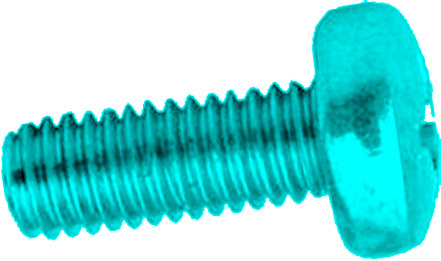
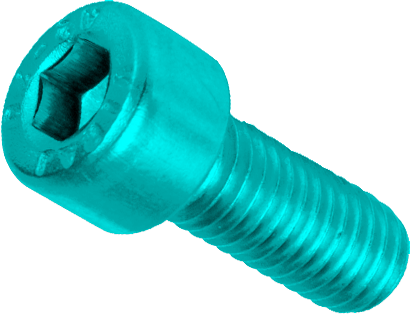
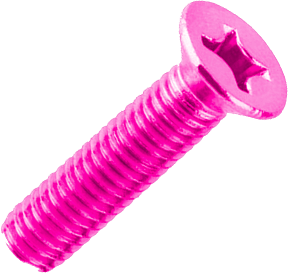
That’s no ordinary machine screw holding together some of your favorite consumer electronics. Pentalobe, Torx, and other proprietary screws are the cornerstone of device manufacturers’ schemes for planned obsolescence. They’re mercilessly tiny, which means they’re easy to lose if you do manage to unscrew them. But before you get there, you’ll need a specialty screwdriver. Here again a place like iFixit can help: They have a variety of toolkits complete with screwdrivers small enough to actually remove the screws you’re not likely to find at a local hardware store.
Displays___________
Since they were first released in 2007, damaged iPhones have cost Americans almost $11 billion, according to SquareTrade, the Some of the newest phones on the market, including Apple’s iPhone X, the LG G6, and the Samsung Galaxy S8 and S8+––which are covered in glass on the front and back––are especially susceptible, according to an iFixit report. And displays make for a pesky problem in DIY repairs. Some consumer electronics companies use adhesives to hold screens in place, which means even if the display isn’t cracked, it’s likely to become so should it need to be removed to get to parts inside the phone. For a display that’s cracked already, the key question is whether the display is fused into the device itself — like it is in the LG G6. If it is, the whole device needs to be replaced. And even if you manage to do it yourself, you’ve voided the warranty.
Adhesives__________
Glue, double-stick tape, and thermal pads are hallmarks of many of today’s consumer electronics. Device manufacturers often use a large amount of adhesive to hold batteries into place, making them difficult to remove and replace whenever they go dead. Try taking out the battery from the iPad, the Samsung Galaxy Note 8, or an Apple Macbook Pro, and you’ll be fighting with adhesives. iFixit, which advocates for repairability and maintains a repository of how-tos for fixing your stuff, effectively reverse engineered Apple’s own method of dealing with adhesives. One solution is the company’s iOpener, a reusable, microwavable device for safely melting adhesives. Failing that, try a blow dryer.
The typical family refrigerator is supposed to last about 15 years — that is, if it isn’t one of the smart variety. With tablet-like touch screens embedded into their front doors, smart fridges become obsolete as soon as the software is out-of-date, even if the fridge itself still keeps the milk cold.
To people like Gay Gordon-Byrne, this is unacceptable. Gordon-Byrne is director of the Repair Association and one of many people at the forefront of the “right to repair” movement, which criticizes tech companies for making devices with a mind toward planned obsolescence and for intentionally making them difficult to fix.
A wide nexus of repair professionals, environmentalists, and basement tinkerers are finally taking action. As of this year, “right to repair” bills have been introduced in 18 states, including California. If passed, the legislation would give people third-party options in fixing their devices against manufacturers who, they say, make disposability a key element of their products. “Companies get compensated for selling new products,” says Gordon-Byrne. “They don’t get compensated for selling new parts.”
The forces that vex repairers are myriad, but here are five big ones.

Your gadgets are a
nightmare to repair.
That’s not an accident.
BREAKING
BAD