Get more
stunning visual stories every week.

The tagline for Overwatch is “a future worth fighting for”, fitting a game that depicts a utopian vision of near-future Earth. “It’s portraying this idealized future where all of the problems that we’re going through now are eradicated,” says former competitive gamer and journalist Jonathan Lee. One of the game’s maps, Oasis, is set in a picturesque, technologically-advanced Iraq you’d never see on Call of Duty. “Oasis is what we want Iraq to be someday,” Jeff Kaplan told Kotaku. “Let’s stop showing it as dusty streets and bombed-out buildings.” And that’s a vision of the future millions of kids will not just see, but inhabit. Says Lee: “It’ll be a formative piece of media for a lot of kids playing this.”
7.
It gives us hope.

Okay, so it’s a stretch to rest the future of civilization on the Laker’s former big man, but everybody loves Shaq. J.Lo is pretty cool, too. The fact that the two of them, along with J.Lo's beau Alex Rodriguez and former Seahawk Marshawn Lynch, are investors in NRG (which owns the OWL's San Francisco Shock), shows the game may have some staying power.
6.
Shaq’s a fan. (So is J. Lo.)


Overwatch reminds us that change is good and personal growth is key to survival. “Blizzard has a lot of history and experience taking in feedback from the players and implementing them in their games” says Slasher, one of the first players to play to the game. Overwatch developers routinely roll out “patches” (updates that can adjust a hero’s skill set or introduce an entirely new hero) that have the potential to drastically change the game. Obstinate players who refuse to adapt will suffer in gameplay—like what happened with the New York Excelsior, who refused to incorporate a new hero into their wheelhouse, and are now watching the OWL finals from the sidelines. As Tolstoy once said, “Everyone thinks of changing the world, but no one thinks of changing himself.”
5.
It’s always evolving.

In a world of first person shooters like Call of Duty and Halo, lone wolves almost always prevail. Most matches are free-for-alls, with every person competing for individual kills—even team-based battles are often decided by body count. But Overwatch’s game types require teams to secure capture points or successfully escort a moving vehicle. The typical running and gunning style of FPS games has no place here, a point further supported by the drastically different gameplay styles of the 28 heroes. Tanks are slow-moving behemoths that block damage, heavily-armed damage heroes are fast but “squishy” (quick to die), and healers are responsible for keeping everyone alive. A team that has no healers will die quickly, while a team with no damage won’t get past opposing tanks, so you either work together or fail miserably.
4.
It rewards teamwork, punishes self-interest.


Even though the OWL is comprised of almost entirely male players, the lone female pro, South Korean teen phenom Kim “Geguri” Se-yeon, has inspired girls around the globe to get involved in the league, according to Dot Esports. And Geguri, who plays for the Shanghai Dragons, is so good, she was once wrongfully accused of cheating by other pros.
For starters, the game’s official mascot is a cheeky British lesbian named Tracer. She joins other Overwatch heroes like an Symmetra, who is autistic, and Pharah, a mixed-race woman of Egyptian and Native American descent, among others. Overwatch director and Blizzard Entertainment Vice-President, Jeff Kaplan, has promised that “the only people we want to exclude from our game is people who exclude other people.” As far as video games go, Overwatch is revolutionary— of the 28 heroes, 13 are women, six are from Asian countries, four are from Africa, one is from Mexico, and one is from Brazil. And almost all of the Overwatch voice actors are the same ethnicities as the characters they play.
3.
It’s radically inclusive.
One of the game's villians, Doomfist is Nigerian and can don outfits that honor "orishas" or spirits from the Yoruba religion.
Doomfist


Sombra (Spanish for "shadow") is a Mexican hacker. Players can choose to outfit her in an outfit honoring Día de Muertos.
Sombra

Rumors that he was initially meant to be Canadian aside, Lucio is a Brazilian character who speaks Portuguese during gameplay.
Lucio

When a 2016 comic revealed Tracer has a girlfriend, Jeff Kaplan responded to backlash with "normal things are normal."
Tracer

Her mother is Egyptian and her father is Native American.
Pharah

In a 2016 comic, Symmetra wonders where she fits "on a spectrum." Kaplan has confirmed she is autistic.
Symmetra


Overwatch was planned and built during the height of the GamerGate battle, where straight, white male gamers fought to maintain the status quo in the face of mounting diversity. Since multiplayer games require matching up online with random people, it leaves certain groups vulnerable to bullying, even (or especially) in a post-GamerGate world. Overwatch developers consistently seek to prevent that toxicity. The latest patch allows players to spread good vibes by endorsing others as “shot callers”, “good sports”, or “quality teammates”. Players can use the Looking for Game option to seek compatible teammates or avoid bad actors. “It actually has reduced toxicity,” says Rod “Slasher” Breslau, competitive gamer and top-tier OWL analyst.
2.
It’s a safe haven in a vast toxic swamp.


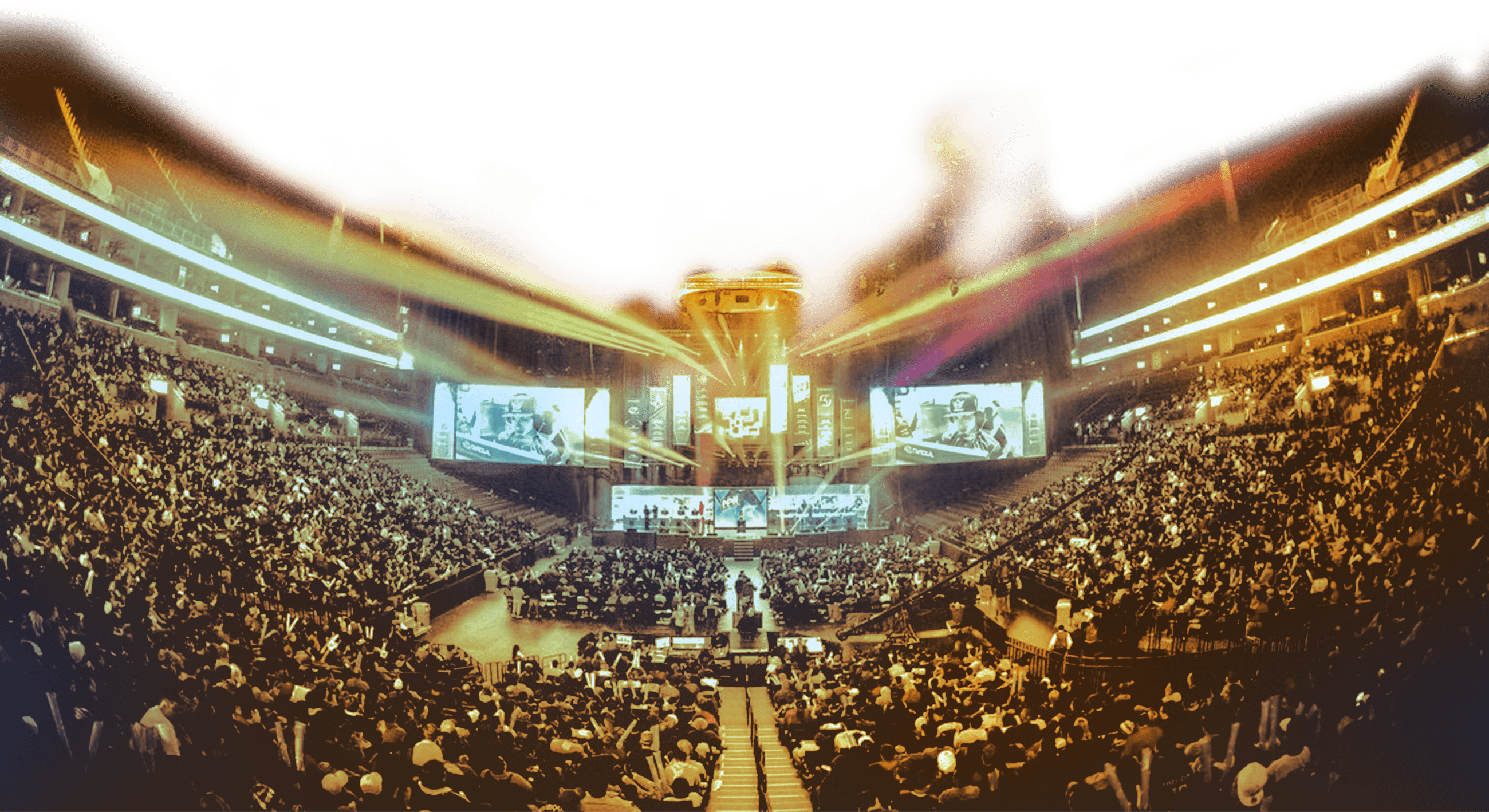
This weekend, over 20,000 people will gather at Barclays Center in Brooklyn to watch the Overwatch League Finals (or OWL) where twelve city-based teams will compete for a $1 million cash prize (with beats by DJ Khaled). Not all of them will be straight white nerds. There will be parents and kids in matching outfits, LGBTQ+ fans, attendees in cosplay armor crammed into seats, and fanatic team supporters. You might even catch the young boy who created ASL name signs to help deaf fans better understand what they’re watching.
1.
It brings people together.


In 2014, a teaser trailer for Overwatch boldly proclaimed that “the world could always use more heroes.” Two years later, gamers were introduced to a first person shooter like no other. Overwatch centers around a six-on-six competition with a colorful cast of heroes, part of an international task force which protects an Earth of the near-future. The world of Overwatch is vibrant, utopic, and diverse, and its characters drive home a sense of equality and compassion anyone would happily pass on to future generations. The call for heroes has not gone unheeded. In May, Variety reported that there were 40 million Overwatch players worldwide. So while the game might not exactly save the earth, it could certainly make it a better place.

How One of today's hottest video games Shows us we can be heroes
Words by Alyssa Mercante
Design by Martin Flores