Retailers to Watch in 2026
ach year, the retail industry is a dynamic arena of competition, innovation, and strategic shifts. While some large national chains remain dominant, others are making bold moves as they grow and navigate significant challenges that could reshape their businesses. The decisions made by these retailers will also have an impact on the private label marketplace in the coming year, driving trends in product development, marketing, and consumer loyalty. With Store Brands 2026 Retailers to Watch, the key theme with the 10 retailers selected is not just growth, but strategic transformation. The retailers selected are not just opening new stores; they are re-evaluating their entire business models. They are also leveraging their private label assortments as part of their individual growth strategies, using their own brands to build customer trust and stand out in a crowded market. The following profiles take a closer look at these 10 retailers, highlighting the pivotal role private label will play in their success in the year ahead.
E
Menu
Home
Aldi
Costco
CVS
H-E-B
Kroger
Michaels
Save A Lot
Sprouts Farmers Market
Target
Yesway
Start
By Greg Sleter
Retailers To Watch In 2026
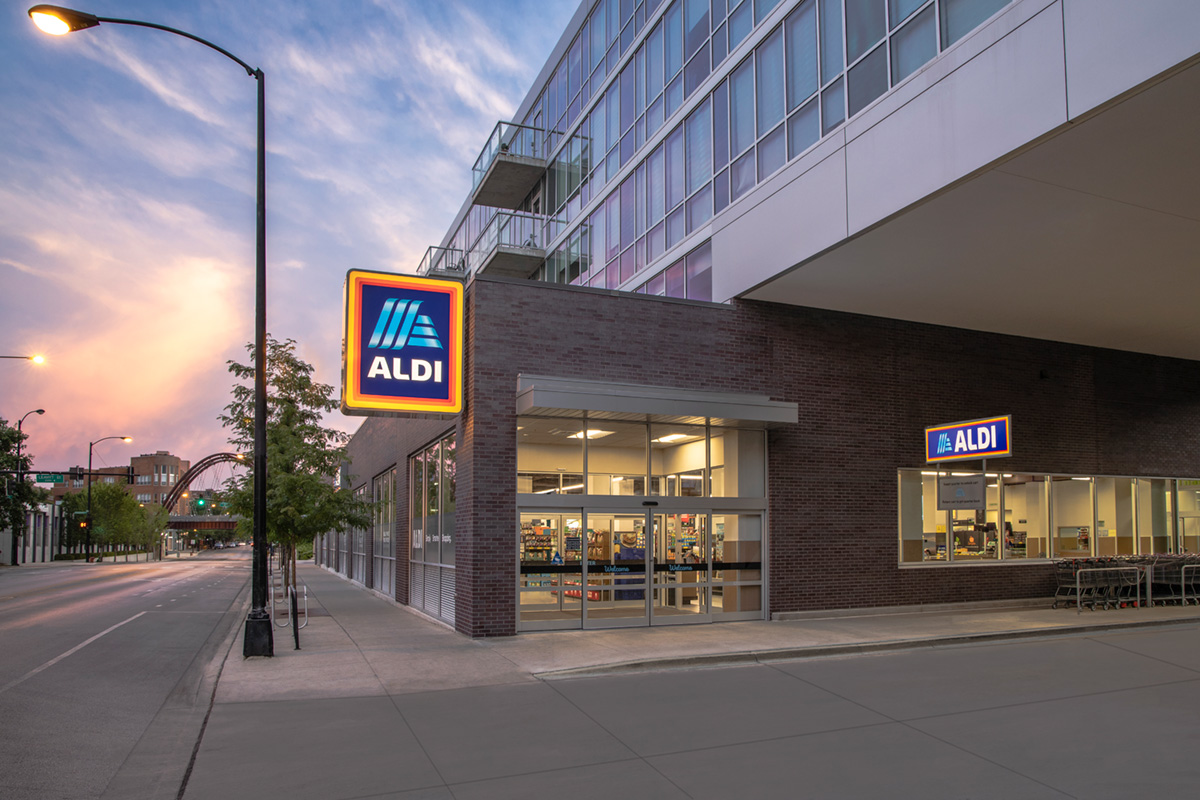
n the grocery world, few retailers have been as disruptive as Aldi. The German-based discounter has built its U.S presence on a simple, low-cost model, with private label products at the heart of its business. As the calendar turns to 2026, Aldi is a Retailer to Watch not just for its continued growth, but for a strategic shift in its brand identity that will define its future in the U.S. market. The company is in the midst of an aggressive expansion plan, opening more than 225 stores in 2025 alone. This includes a strategic push into new markets and the conversion of select Winn-Dixie and Harveys Supermarket locations acquired in late 2023. This rapid physical expansion, which will bring its total store count to around 2,600 by the end of 2025, has made it the third-largest supermarket chain in the U.S. by store count. This growth is a testament to the fact that its value proposition, with around 90% of its products being private label, continues to resonate with price-conscious consumers. The biggest story for the coming year, however, is a massive overhaul of its private label strategy. In late 2025, Aldi announced its largest packaging refresh to date, consolidating its numerous private brands under a unified "Aldi" brand. While popular names like Clancy's and Simply Nature will remain, their packaging will now prominently feature the "An Aldi Original" tagline, with many other labels being replaced entirely with the Aldi name. This move is a direct response to customer feedback and is aimed at creating a stronger, more recognizable brand identity. This strategic pivot is not without risk. While it capitalizes on the deep loyalty and trust customers have for the Aldi name itself, it moves away from the multi-brand strategy that has served it well for decades. The success of this rebrand will be a key indicator for 2026. Can Aldi successfully execute this change without alienating its dedicated shoppers? As the company continues its aggressive expansion and solidifies its position as a major player in the U.S. grocery landscape, all eyes will be on how its new, unified brand identity is received by consumers.
I
Aldi's 2026 future will be defined by aggressive U.S. expansion, including converting Winn-Dixie stores, and a massive overhaul of its private label. The company is consolidating its numerous private brands under a unified "Aldi" brand with the "An Aldi Original" tagline.
Go back home
ostco closed out its fiscal year 2025 with sales topping the quarter-of-a-trillion dollar mark, with its growth driven in part by a loyal customer base and an ever-expanding private label assortment. As a Store Brands Retailer to Watch in 2026, its Kirkland Signature brand enters year 31 as a retail powerhouse with annual sales of around $86 billion. This performance isn't just about offering a cheaper alternative; it's about leveraging the brand's reputation for quality to gain consumer trust and loyalty. Costco’s approach of having a single, high-quality own brand contrasts with other retailers that use a tiered or multi-brand strategy, and it’s a formula that has continued to work year after year. As the company enters 2026, it is doing so from a position of strength. Costco’s financial results for fiscal year 2025 were strong, with net sales increasing more than 8% to almost $270 billion. The company also announced plans to accelerate its physical footprint, with 35 new warehouses slated to open in the new fiscal year ending in August 2026. This expansion, both domestically and internationally, presents a significant opportunity for the Kirkland Signature brand to grow its presence and reach new customers. But the year ahead is not without its challenges. The retail landscape is increasingly competitive, and while Costco’s membership model provides a built-in advantage, other retailers are upping their private label game. Rival warehouse club Sam's Club, for example, has been innovating with its Member's Mark brand, including a community-based product development model that allows for direct member feedback. For 2026, the key question for Costco and its Kirkland Signature brand will be how it maintains its momentum. Can it continue to innovate and expand its own brands in new categories without diluting the quality that customers have come to expect? As consumers remain price-conscious, will Kirkland Signature's reputation for value and quality continue to be a powerful draw? These factors, coupled with the company's aggressive expansion plans, make Costco a must-watch retailer in the year ahead.
C
Driven by strong FY 2025 results (net sales approaching $270 billion) and its $86 billion Kirkland Signature brand, Costco plans to open 35 new warehouses in 2026. The key challenge is sustaining the brand's quality and momentum against increasing private label competition.
VS is a Retailer to Watch in 2026 because of its ongoing shift from a traditional drugstore chain to a comprehensive healthcare company. This strategic evolution, marked by a realigning of its physical footprint and a major rebrand of its private label products, will be a defining story in the coming year. The drug store chain is in the process of a significant restructuring, closing hundreds of underperforming stores since 2022 to optimize its retail footprint. This effort continued in 2025 with the planned closure of additional locations. Private label has always been a key component of CVS's business, and its importance is growing. The company is currently in the midst of a major packaging redesign for its own brand products. This initiative, which began in mid-2025 and is expected to be fully rolled out in 2026, aims to simplify the shopping experience. The new packaging will feature a clearer design, making it easier for customers to identify product benefits and key features. The company also announced plans to introduce new brands and expand its portfolio in the health and beauty categories in 2025, a move that will further differentiate its offerings. As CVS focuses on its healthcare services, its private brands will be crucial for maintaining profitability in the front of the store. By strengthening its own brand portfolio, CVS can increase margins and provide a value-driven alternative to national brands. This strategic emphasis on private label is a key part of its plan to compete with other retailers and online pharmacies. In 2026, CVS faces the twin challenges of operating in a highly competitive marketplace while also completing the refresh of its own brand assortment. The company will also need to navigate the broader healthcare landscape as the political climate in Washington, D.C, could lead to major changes. How it works through these macro issues and the consumer reception of the simplified private label packaging will be key indicators of whether CVS can successfully pivot from a pharmacy retailer to a leading healthcare provider in the years to come.
CVS's 2026 focus is the strategic shift to a healthcare company, supported by optimizing its store footprint and completing a private label packaging redesign for increased profitability. The redesign aims to simplify the shopping experience and increase margins.
n the fiercely competitive U.S. grocery market, H-E-B has long been an anomaly. A privately held, Texas-based powerhouse, it consistently outpaces national chains in customer loyalty and market share. As we look to 2026, H-E-B is a Retailer to Watch not because it’s a struggling underdog, but because its calculated expansion and unwavering focus on private label are poised to shake up a highly-contested grocery landscape in the Lone Star State. H-E-B’s private label program is a core pillar of its success. Its "Own Brands" have become synonymous with quality and value, a rare combination that has cultivated a loyal following among shoppers. This success is not accidental. H-E-B has a tiered own brand strategy, with its premium H-E-B brand often matching or exceeding the quality of national brands, while its Hill Country Fare brand provides a value-focused option. This approach has led to a significant portion of sales coming from private label products, with profit margins that are significantly higher than national brands. In 2026, H-E-B's aggressive expansion into North Texas, one of the most competitive grocery markets in the country, will be worth watching. For years, H-E-B’s presence was concentrated in other parts of the state, but in 2025, it doubled down on its North Texas push. The company opened several new stores and distribution hubs, a move that directly challenges long-established players like Kroger and Walmart. This expansion is a significant financial commitment and a strategic wager that H-E-B's unique blend of private label innovation, community connection, and exceptional customer experience will be enough to win over a new wave of shoppers. The challenge for H-E-B in 2026 will be maintaining its regional mystique and brand integrity as it scales. As it continues to grow its store count and distribution network, can it maintain the "H-E-B is Texas" mentality that has been so central to its success? Its performance in the North Texas market will be a key indicator of its ability to replicate its winning formula in new territories and will be a major storyline for the retail community to monitor.
H-E-B's strategic expansion into North Texas and powerful private label program are set to shake up the grocery landscape, directly challenging Kroger and Walmart. Its "Own Brands" drive high profit margins and customer loyalty. The key challenge is maintaining its unique "H-E-B is Texas" brand integrity as it scales.
roger is facing a pivotal year in 2026. After a tumultuous 2025 marked by the official collapse of its proposed merger with Albertsons and a series of strategic realignments, the company is set to embark on a new chapter defined by an accelerated focus on its private label business and a more streamlined physical footprint. These factors make Kroger a Retailer to Watch in the coming year. The biggest story for Kroger in 2026 is the aftermath of the failed Albertsons merger. The deal's termination in December 2024 has forced Kroger to pivot its growth strategy away from large-scale consolidation and toward internal efficiencies and organic expansion. This shift is already in motion. In 2025, Kroger announced plans to close approximately 60 underperforming stores by the end of 2026, a move aimed at boosting profitability and reinvesting savings into the customer experience. Kroger’s renewed focus on its "Our Brands" private label portfolio is central to this strategy. The company’s own brands are a major profit driver, generating more than $30 billion in sales in recent years. With a diverse portfolio that includes products sold under the Kroger brand, Simple Truth, and Private Selection, Kroger has a proven model for attracting and retaining customers across various price points. In 2026, the company is expected to lean even further into this segment, using its private label products to maintain an edge in a highly competitive marketplace. Looking ahead, Kroger faces the challenge of proving that its growth can be sustained without the Albertsons merger. While the company has a strong foundation, it must continue to innovate with its own brands, enhance its digital and e-commerce offerings, and effectively manage its store portfolio. Private label will continue to be a focus, and with Ann Reed, its new group vice president of Our Brands, now in charge, Kroger’s next steps within its own brand assortment will be closely watched.
K
Kroger is prioritizing its "Our Brands" private label portfolio for growth following the collapse of the Albertsons merger, with the private label business generating over $30 billion in sales in recent years and expected to be a central focus for the company in 2026 under the leadership of its new group vice president, Ann Reed.
ichaels, the North American arts and crafts giant, is in the midst of a transformative year that is set to redefine its business for 2026 and beyond. While the retailer has a long history of serving the creative community, its recent strategic moves to capitalize on the financial troubles of its rivals make it a Retailer to Watch in the coming year. The biggest story of 2025 for Michaels was its strategic acquisitions and expansion into new categories. Following the bankruptcy of both Joann and Party City, Michaels seized on the opportunity. In June, the company acquired the intellectual property and private labels of Joann, which set the stage for a dramatic in-store transformation. By late September, Michaels had rolled out "The Knit & Sew Shop" that features co-branded signage and an expanded assortment of threads, yarn, and fabric. This move not only filled a void in the market but also allowed Michaels to directly absorb Joann's loyal customer base. Simultaneously, Michaels expanded its party supply offerings with "The Party Shop," adding 700 new products and dedicated balloon bars in its stores. This initiative capitalizes on the closure of Party City, positioning Michaels as a one-stop shop for both creative projects and celebratory needs. Private label has always been a strength for Michaels, and the company's recent moves have only strengthened this focus. By acquiring Joann's private brands, Michaels is now able to leverage established names and a broader product portfolio to drive sales and customer loyalty. This is a savvy move that saves time and resources on product development while immediately capturing new customers. For 2026, the key challenge for Michaels will be the successful integration and execution of these new strategies. Can the company effectively manage the increased complexity of its assortment and supply chain? Will the new "shops" resonate with existing customers while attracting new ones? As it navigates this pivotal period, Michaels will be a prime example of a retailer using a private label-centric strategy to consolidate market share and emerge stronger from an industry shake-up.
M
Michaels is consolidating market share by acquiring Joann's IP and expanding party supplies, creating "The Knit & Sew Shop" and "The Party Shop." Its key 2026 challenge will be successfully integrating these new private label strategies and managing the increased business complexity.
n the volatile world of discount grocery, Save A Lot is a name that has often flown under the radar. Yet, as the calendar turns to 2026, the company is a Retailer to Watch, following a year of strategic realignments and digital innovation. A key part of this strategy was the launch of its first-ever loyalty program and app in late 2024. This initiative, a significant shift for a franchise-heavy discount model, is all about leveraging data. The company is working to gather consumer information to drive personalized offers and promotions, aiming to boost customer engagement and loyalty. The success of this app, particularly its adoption by independent retail partners, will be a major indicator of the company’s digital fluency in 2026. Beyond expanding its digital toolbox, private label remains a vital component of Save A Lot's business model, accounting for a majority of its sales. In 2025, the company reaffirmed its commitment to this segment by announcing plans to introduce more than 100 new own brand items. This expansion is designed to maintain its value proposition while appealing to evolving consumer preferences. As shoppers remain price-conscious, the success of these new private label products will be critical in driving sales and setting Save A Lot apart from its competition. Looking ahead to 2026, Save A Lot faces a mix of opportunities and challenges. Its new CEO, Bill Mayo, promoted in August 2025, is focused on an ambitious expansion plan that aims to triple the company's store count in the coming years. This includes an innovative micro-fulfillment center model in urban markets such as Brooklyn and a new Hispanic grocery store concept. However, the biggest challenge will be the execution of these initiatives. Can the company effectively scale its new digital tools and private label assortment across its vast and varied network of independent retailers? As it attempts to grow its physical footprint while building a new digital infrastructure, Save A Lot’s journey will be one to follow closely.
Save A Lot's focus for 2026 is an ambitious expansion plan under new CEO Bill Mayo, aiming to triple the store count, which will be challenged by the need to effectively scale new digital tools (like the loyalty app) and the expanded private label assortment across its vast network of independent retailers.
year after being named Store Brand Retailer of the Year, Sprouts Farmers Market remains a shining star in the grocery industry, continuing to expand store count while also growing its assortment of private label products. During 2025, the specialty grocer has continued to carve out a profitable niche, and its strategy over the last year has set the stage for 2026, making the Phoenix-based company a Retailer to Watch in the coming year. Sprouts' financial performance in 2025 has been strong, with net sales and comparable store sales seeing double-digit growth. The company has continued its aggressive expansion plan, opening new stores in existing and new markets. This physical growth is a key part of the story, with a pipeline of more than 130 approved locations and plans to expand into regions such as the Northeast and Midwest. Sprouts has been focused on its own brands, and the grocer’s private label offerings now account for around a quarter of total sales. This is a significant increase and demonstrates a continued commitment to developing unique, attribute-driven products that resonate with its health-conscious customer base. The company's agile approach to product development allows it to quickly introduce new items, keeping its assortment fresh and exciting for shoppers. Looking ahead to 2026, Sprouts faces a mix of opportunities and challenges. Its new loyalty program, which began its nationwide rollout in the second half of 2025, is a major initiative. The program's success will be a key metric for the company, as it seeks to increase customer engagement, drive repeat visits, and leverage data to personalize offers. At the same time, Sprouts is building out its self-distribution network for fresh meat and seafood, a move that is expected to improve margins and enhance product freshness. The primary challenge for Sprouts will be maintaining its differentiated position in an increasingly crowded market. With more traditional supermarkets expanding their own natural and organic offerings, Sprouts must continue to innovate with its own brands and enhance the customer experience to justify its premium pricing. The company's success in 2026 will hinge on how well it executes its strategic initiatives, particularly its new loyalty program and supply chain improvements, while fending off growing competition.
A
Sprouts Farmers Market continues its aggressive expansion with a pipeline of over 130 approved locations and strong financial performance in 2025. The grocer's private label offerings, which now account for about a quarter of total sales, are key to its differentiated position in the market.
n a retail landscape defined by shifting consumer habits and economic uncertainty, Target is a Retailer to Watch in 2026, not for what it's doing right, but for how it plans to overcome its recent struggles. After a challenging 2025, which saw declining comparable sales and a drop in net income, the company is placing a major bet on its private label business to drive a turnaround. Target's private label portfolio is already a retail powerhouse, boasting more than $30 billion in annual revenue. The Good & Gather food brand alone is on track to become Target's first private label to exceed $4 billion in sales. In 2026, the company will lean into this strength, with a focus on its grocery assortment. As part of a new strategic plan to drive more than $15 billion in sales by 2030, Target continues to boost its private label grocery assortment. This includes Good & Gather Collabs, a partnership with well-known chefs and tastemakers to create new products. The initiative, starting with James Beard Award-winning chefs Ann Kim and Rodney Scott, aims to create a sense of everyday discovery and delight for shoppers. While its private label assortment has been a silver lining for Target, the retailer has its challenges. In 2025, Target faced declining store traffic and a drop in customer satisfaction scores. The company's digital sales growth has also been underwhelming compared to rivals such as Amazon and Walmart. To combat this, Target plans to heavily invest in its supply chain, technology, and in-store experience, with a focus on using AI to improve personalization and optimize inventory. The effectiveness of these investments, alongside the performance of its private label innovations, will be critical in determining if Target can regain its footing and capture the more price-conscious consumer. As its CEO, Brian Cornell, prepares to step down in early 2026, the company will face a leadership transition at a pivotal moment. New CEO Michael Fiddelke will have the task of navigating ongoing macroeconomic pressures and an increasingly competitive market. Target's ability to maintain its brand identity while delivering exceptional value through its owned brands will be the ultimate test in the coming year, making it a key retailer to watch in 2026.
Target is placing a major bet on its private label business to drive a turnaround after a challenging 2025, with a focus on its grocery assortment and the $30 billion portfolio, including the growing Good & Gather brand.
n the fast-paced world of convenience retail, Yesway has carved out a name for itself with a rapid growth trajectory and a strategic focus on acquisitions. As 2026 approaches, the company is a Store Brands Retailer to Watch due to its ambitious plans for a public offering and a sharp realignment of its store portfolio, both of which will have a significant impact on its private label strategy. The biggest story for Yesway in 2025 has been the renewed buzz around a potential Initial Public Offering (IPO). After a previous attempt was withdrawn in 2022 due to market conditions, the company is reportedly working with major investment banks to list its stock. A successful IPO could raise hundreds of millions of dollars, providing Yesway with the capital needed to fuel its aggressive expansion plans and solidify its position as a top-20 U.S. convenience store chain. This financial move signals a new level of maturity and ambition for the company. At the heart of Yesway's business model is its robust private label offering. The company has skillfully leveraged its own brands, including its popular line of Yesway private-label snacks and, most notably, the iconic Allsup's World Famous Burrito, to drive customer loyalty and profitability. These products are a key differentiator in a crowded market, providing a high-quality, value-driven option that customers can't find anywhere else. The company's expansion strategy is built in part on the strength of these brands, with new large-format stores designed to prominently feature the food service and private label assortment. For 2026, the company faces a unique set of challenges and opportunities. While it has been aggressively building new Allsup's stores in the Southwest, it has also been quietly divesting from other markets. In 2025, Yesway began a process to sell its stores in Iowa and Kansas, a strategic retreat aimed at focusing resources on its most profitable and high-growth regions. The success of this move will hinge on whether the reinvested capital can drive even greater returns in its core markets of Texas and New Mexico. As Yesway navigates this pivotal period of portfolio optimization and potential public market scrutiny, its ability to execute its private label and expansion strategies will be watched closely.
Yesway is pursuing a potential IPO to fuel expansion and is strategically divesting from markets like Iowa and Kansas to focus on high-growth regions. Its robust private label offering is a key differentiator for driving customer loyalty and profitability.