You can quickly switch out imagery without losing its placement and animations by right-clicking on the image and selecting "Replace Image". This will ensure it is placed in the correct layer and location and also apply any animations that were on the original image.
Once you create one question, you can easliy duplicate it for the other sections by selecting all of the elements in the layers panel and use the keyboard shortcut CMD + C to copy and CMD + V to paste.
Each question is made up of 3 different layer groups - 1 for content, 1 for if they answer the question correctly, and 1 for if they get the question wrong. Simply set up the hotspots to show the "wrong" layer group for the incorrect answers, and the "correct" layer group for the right answers.
To achieve the cascading text effect in this section, we created four different text boxes and then used a "Fade in Up" animation with a small delay difference between the objects. Pro tip: Easily copy and paste animations by right clicking on the animated object and selecting "Copy Animation".
1024px x 5054px
Templates - Fashion Quiz
Share This
Caepudis sitis prore dolupturAquatem aliam quas invendi odit laborpore, odis enis mi, officid enecabo rrunto iur? Fugia volor audae cor aliat qui cor molor sustionsequo vel il il et reptamet aut raepro con por aut quatist et arum qui quid excerore dolupis voles eum est,
Try Again
Sponsored by:
Results
C What are virtual currencies?
B What are stuffed animals?
A What are auctions?
Flooz & Beenz were trying to push online these that never caught on and lost investors real money:
C What is Franklin Templeton?
B What is Fidelity?
A What is American Funds?
C What is "Curtain Falls on Wall Street"?
B What is "Billions Lost in Wall Street Horror Show"
A What is "Wall Street Lays an Egg"?
C What is beta?
B What is sigma?
A What is delta?
The alpha factor measures a stock’s own volatility; this Greek letter compares it to the entire market:
C What is a long order?
B What is a short order?
A What is a limit order?
To sell stock at the current price, investors use a market order; to specify a price, it’s this type of order:
COLOUR
On September 30, 2008 Daily Variety reprised this 5-word headline from October 30, 1929:
In 1972 Edward C. Johnson 3rd faithfully took over from his dad, the 2nd, as head of this big mutual fund company:
Kenneth Lay, of this company, admitted, “In hindsight, we made some very bad investments in non-core businesses”:
A What is Blockbuster Video?
B What is Lehman Brothers?
C What is Enron?
If you hold a bond as its price rises, this other 5-letter word falls, because you’re getting a lower return percentage:
A What is value?
B What is yield?
C What is basis?
From its founding in 1898 until 1919, this exchange was known as the Chicago Butter & Egg Board:
A What is the Chicago Mercantile Exchange?
B What is the Chicago Board of Trade?
C What is Chicago's International House of Pancakes?
From the Chinese for “ever growing,” the Hang Seng Index consists of stocks on this region’s exchange:
A What is Shenzen?
B What is Hong Kong?
C What is Shanghai?
Question 1/9
A stop order would have been acceptable as well. A market order is an order to buy or sell a stock immediately. A limit order instructs your brokerage to buy or sell a stock at a specific price or better. A stop order, or stop-loss order, tells your broker to sell once a stock hits a certain price.
Go to next question
That's the correct answer!
Sorry, that's the wrong answer!
The correct answer is...
The tricky part is that the clue writers don’t have this one exactly right. Alpha measures an investment’s excess return compared with the risk-adjusted return of a benchmark. Beta is a volatility measure that reflects how closely an investment’s performance tracks a benchmark. An investment with a beta of 1 theoretically moves in lockstep with a benchmark. A beta of less than 1 indicates that an investment is less volatile than the benchmark; a beta higher than 1 means a more volatile investment.
Question 2/9
Question 3/9
Known for its pithy headlines, Variety in 1929 used the showbiz phrase to describe the historic market crash that kickstarted the Great Depression. The lede read, “The most dramatic event in the financial history of America is the collapse of the New York Stock Market.” That’s still true today. Daily Variety, a sister publication to Variety that was added in 1933, went out of print in 2013.
A What is "Wall Street Lays an Egg?"
Question 4/9
Question 5/9
Question 6/9
Question 7/9
Question 8/9
Question 9/9
Edward C. Johnson II founded Fidelity’s advisory business in 1946 after taking the reins of the Fidelity Fund in 1943. His son Edward C. Johnson III (known as “Ned”) ran the famous Fidelity Magellan Fund from 1963 to 1977, when he became chairman and CEO of the company. Ned’s daughter Abigail took over as chief executive in 2014. Having started with just one fund, Fidelity now manages more than 500 mutual funds and $6.7 trillion in total customer assets.
On Beenz.com, users could earn the namesake digital currency for shopping, registering for services or taking online surveys. They could then spend their “beenz” at participating online retailers. The Whoopi Goldberg-touted Flooz.com featured its own currency (flooz) that could be purchased online and redeemed at partnering businesses – the conceit being that customers wouldn’t have to give retailers their credit card information. Both went bankrupt in 2001 after the dot-com bubble burst.
Under Lay’s leadership, Enron grew from a natural gas firm into a conglomerate boasting more than $100 billion in annual revenues. The firm filed for bankruptcy in 2001 after it was revealed that some of the company’s subsidiaries were little more than elaborately constructed shell corporations through which Enron was committing rampant accounting fraud.
Bond prices and yields move in opposite directions.
C What is yield?
An exchange for trading futures and options, the “Chicago Merc” merged with the Chicago Board of Trade in 2007 to become the CME Group. Today, CME is the world’s most diverse derivatives marketplace, with investors making bets on everything from foreign currencies to the price of live hogs.
Abbreviated HSI and established in 1969, the market-capitalization-weighted Hang Seng Index tracks the movements of the largest companies in the Hong Kong stock market. Hang Seng constituent companies include China Mobile, HSBC Holdings and internet giant Tencent Holdings.
See the Results
A recession is the scariest creature in the average investor’s closet of anxieties. Even though the last recession ended more than a decade ago, people fear recessions because they can mean lower home prices, lower stock prices – and no job. Any number of things can cause (or exacerbate) a recession: an exogenous shock, such as the Arab oil embargo of 1973; soaring interest rates; or ill-conceived legislation, such as the Smoot-Hawley Tariff Act of 1930.
The Recession Quiz
Start Quiz
Recessions are parts of the warp and woof of a dynamic economy, albeit unpleasant ones. If you’re prepared for a recession, there will be plenty of opportunities when the recession ends. Thus, the more you know about recessions, the better. How much do you know about recessions? Take this quiz to find out – and to learn a little more.
Why are they called “recessions?”
A. Because the economy recedes from its previous high.
B. Calling them "depressions" is too scary.
Question 1/10
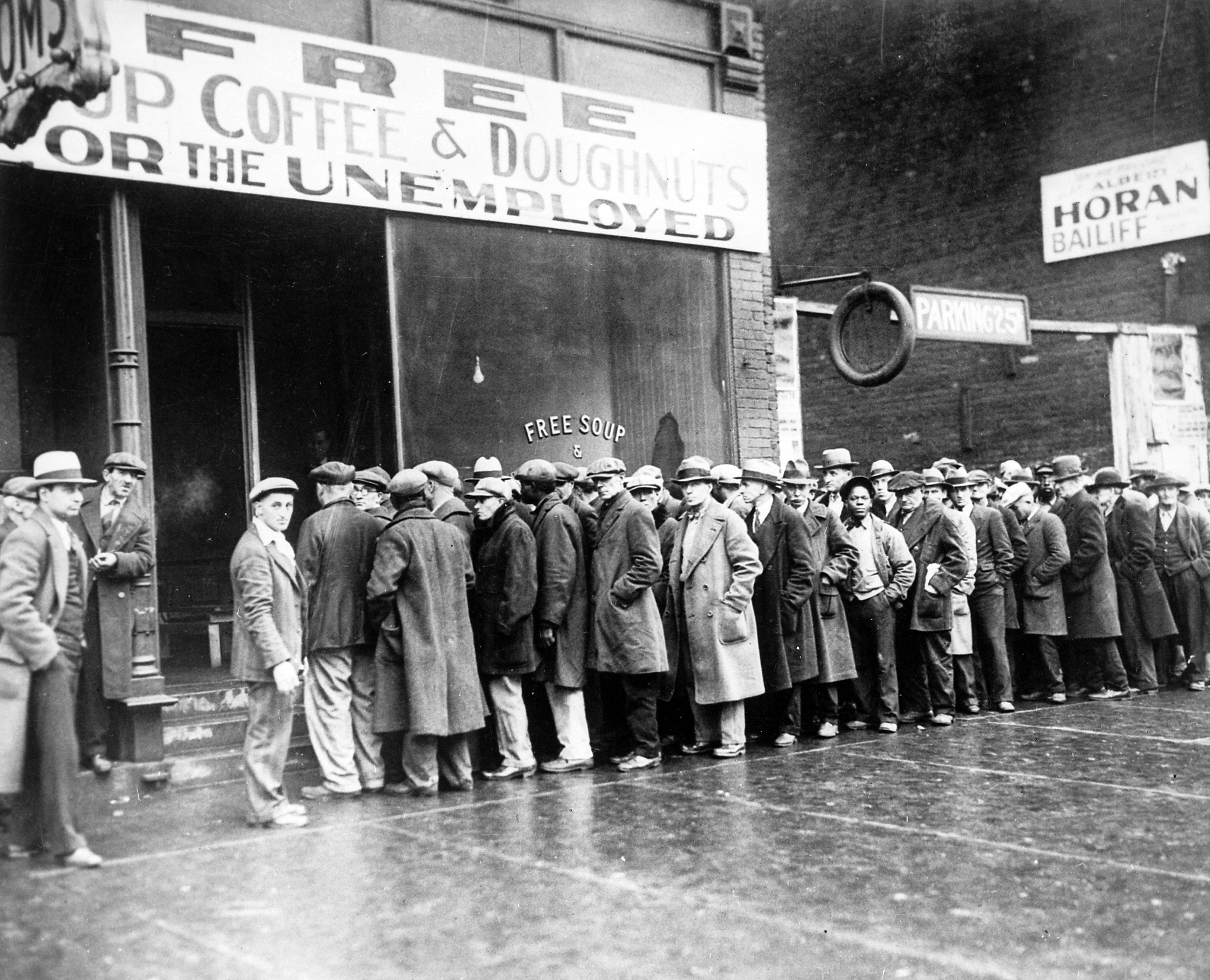
After the Great Depression – a term once considered milder than “panic” or “crisis” – the term “depression” for an economic downturn seemed particularly terrifying. Economists began to use the term “recession” instead. Currently, “depression” is used to mean an extremely sharp and intractable recession, but there is no formal definition of the term in economics. The 2007-09 recession certainly had uncomfortable similarities to the Great Depression, in that it involved a financial crisis, extremely high unemployment, and falling prices for goods and services. Economists now call it the Great Recession.
C. It's the opposite of "procession."
D. No one really knows.
What constitutes an official recession?
A. Two consecutive quarters of falling gross domestic product (GDP), adjusted for inflation.
B. Prolonged declines in production, employment, real income, and other indicators.
Question 2/10
Someone has to be the official arbiter of recessions and recoveries, and the Business Cycle Dating Committee of the National Bureau of Economic Research (NBER) is that someone. Although two quarters of consecutive GDP contraction is the standard shorthand for a recession, the NBER actually uses many indicators to determine the start and end of a recession. In fact, GDP is not the committee’s favorite indicator: It prefers indicators of domestic production and employment instead.
D. All of the above, as determined by the National Bureau of Economic Research.
C. Declines in real (inflation-adjusted) manufacturing and wholesale-retail trade sales and industrial production.
About how many months do recessions typically last?
A. 14
B. 8
Question 3/10
17.5 months (to be exact) is the average since 1857. Recessions actually have been shorter and less severe since the days of the Buchanan administration. The long-term average includes the 1873 recession – a kidney stone of a downturn that lasted 65 months. It also includes the Great Depression, which lasted 43 months. If we look at the period since World War II, recessions have become less harsh, lasting an average of 11.1 months. In part, that’s because bank failures no longer mean that you lose your life savings, thanks to the Federal Deposit Insurance Corporation, and because the Federal Reserve has gotten (somewhat) better at managing the country’s money supply. The longest post-WWII recession has been the most recent one, which began in December 2007 and ended in June 2009, a total of 18 months.
C. 17
D. 26
A. 24
B. 44
C. 39
Question 4/10
Again, this is since 1857, a recession occurred, on average, about every three-and-a-quarter years. Used to be, the government felt that letting recessions burn themselves out was the best solution for everyone concerned. Since World War II, we’ve gone an average of 58.4 months between recessions, or nearly five years. The last recession ended 124 months ago. We’re overdue.
D. 67
How many months, on average, between recessions?
When was the harshest recession?
Question 5/10
The recession of 1873 was known as the Great Depression until the 1929 recession rolled in. The recession started with a financial panic in 1873 with the failure of Jay Cooke & Company, a major bank. The event caused a chain reaction of bank failures across the country and the collapse of a bubble in railroad stocks. The New York Stock Exchange shut down for 10 days in response. The recession lasted until 1877.
D. 1873
A. 1929
B. 1981
C. 1973
What is the worst effect of a recession?
A. Increased bankruptcies
B. Unemployment
Question 6/10
An old economist joke is that a recession is when someone else loses their job, and a depression is when you lose your job. (Very few economists have transitioned to standup.) Your job is your main source of income, and that’s why it’s important to have a few months’ salary in cash as an emergency fund – especially since jobs are increasingly hard to come by in a recession.
C. Falling bond prices
D. Falling stock prices
When is the best time to buy stocks in a recession?
A. All the way through
B. At the bottom
C. When they announce the end of the recession
Question 7/10
It takes the NBER at least six months to determine if a recession has started; occasionally, it takes longer. The average post-WWII recession lasts 11.1 months. Often, by the time the bureau has figured out the start of the recession, it’s close to the end. Many times, investors anticipate the beginning of a recovery long before the NBER does, and stocks begin to rise around the time of the actual economic turnaround. For instance, the last recession was officially announced on Dec. 1, 2008 – a full year after it had started. The recession ended in June 2009; the bear market ended three months earlier, on March 6, 2009. The ensuing bull market has lasted for more than a decade.
D. When they announce the start of the recession
What’s the best thing to do with your money during a recession?
A. Pay off your credit card debt
B. Park it in cash
Question 8/10
Paying off a credit card that charges 18% interest is the rough equivalent of getting an 18% return on your investment, and you’re not going to get that from most other investments during a recession. That said, bonds typically rise in value during a recession – provided the recession isn’t sparked by rising interest rates.
C. Buy bonds
D. Buy international stocks
What is the best early warning sign of a recession?
A. The stock market
B. The index of leading economic indicators
Question 9/10
An inverted yield curve is when short-term government securities, such as the three-month Treasury bill, yield more than the 10-year Treasury bond. This indicates that bond traders expect weaker growth in the future. The U.S. curve has inverted before each recession in the past 50 years, with just one false signal. As of Oct. 1, the three-month T-bill yielded 1.82%, and the 10-year T-note yielded 1.65%. (To make matters a bit more complicated, some economists prefer using the two-year T-note yield instead of the three-month T-bill – in which case, the yield curve is not inverted, although it has been recently.) The index of leading economic indicators is a composite of 10 indicators (including our a, b, and c choices) and is useful for those who want a broader view of the economic picture.
D. An inverted yield curve
C. Consumer confidence
Does the Federal Reserve cause recessions?
A. Yes
B. No
Question 10/10
Officially, the Fed never wants to start a recession, because part of its dual mandate is to keep the economy strong. Unfortunately, the other part of the Fed’s dual mandate is to keep inflation low. The main cure for soaring inflation is higher interest rates, which slows the economy. In 1981, the Fed hiked interest rates so high that three-month T-bills yielded more than 15%. Those rates put the brakes on the economy and ended inflation – at the price of a short but sharp recession.
C. Maybe
You did it! Now learn more.
These three investing strategies could help prepare you for the opportunities that come with a market downturn:
Start Over
The 15 best recession-resistant stocks to buy Cyclical shares propel stock market to latest milestone 7 best REITs to buy for a recession
Visit the Investing Ideas overview page for the latest on stocks, bonds and funds, plus strategies to help manage your portfolio.
Unlike the typical required minimum distribution, or RMD, no taxes will be due on the qualified charitable distribution. Under the new federal tax law, fewer taxpayers are itemizing, thereby missing the opportunity to deduct charitable contributions.
The 15 best recession-resistant stocks to buy
Cyclical shares propel stock market to latest milestone
7 best REITs to buy for a recession