BACK to hOME




© 2025 Fortune Media IP Limited. All Rights Reserved. Use of this site constitutes acceptance of our Terms of Use and Privacy Policy | CA Notice at Collection and Privacy Notice | Do Not Sell/Share My Personal Information | FORTUNE is a trademark of Fortune Media IP Limited, registered in the U.S. and other countries. FORTUNE may receive compensation for some links to products and services on this website. Offers may be subject to change without notice. All rights reserved.
Who will own the future of cybersecurity?
TO DEFEND AND PROTECT WHAT MATTERS MOST
Back to home

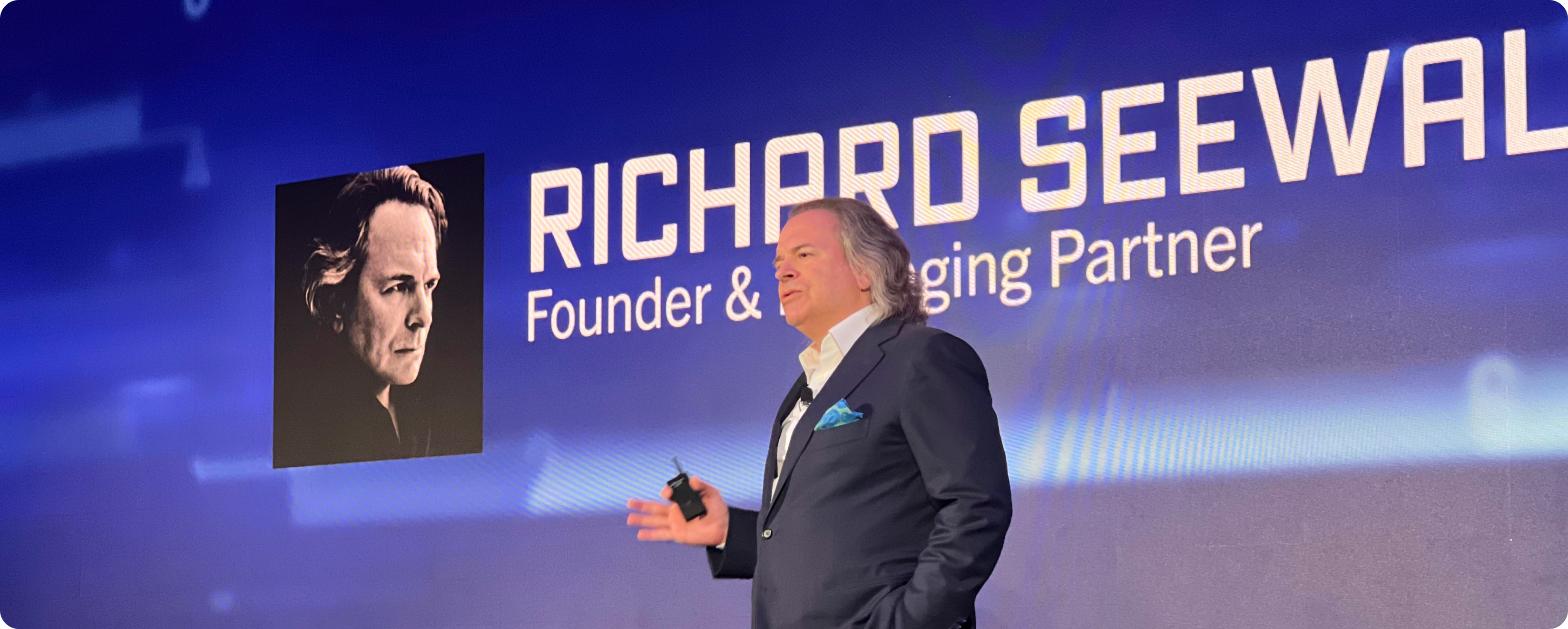
Richard Seewald of Evolution Equity Partners discusses the demand for cybersecurity, highlighting how both established firms and startups are vying to lead in the age of AI.





Explore more
Watch Now
How AI is reshaping the future of cybersecurity
WATCH NOW
How agentic AI will change cybersecurity forever


The cybersecurity landscape is undergoing a seismic shift. AI is fundamentally reshaping the dynamics of cyber defense, supercharging threat actors with new tools for speed, scale, and deception while empowering defenders with smarter, faster ways to detect and respond. But the fight remains inherently unbalanced: Attackers need only to succeed once, but defenders must be right every time.��As the digital attack surface grows, fueled by cloud adoption, AI agents, and hyper-connected systems, so too do the vulnerabilities. Technologies such as agent-based AI promise breakthrough efficiencies but also introduce new points of exposure that sophisticated adversaries are already targeting.�Amid this transformation, a new question is emerging: Who will define the future of cybersecurity?��Incumbent giants bring deep resources, global footprints, and embedded customer bases. But agile startups, purpose-built for this new age of AI, are moving fast, disrupting old models and reimagining what modern security should look like.��To explore who’s best positioned to lead in this era of accelerated change, Fortune Brand Studio sat down with Richard Seewald, founder and managing partner of Evolution Equity Partners, a global investment firm focused on next-generation cybersecurity and AI. With more than 50 high-growth companies in its portfolio, Evolution is at the forefront of backing the entrepreneurs shaping digital defense. In this conversation, Seewald unpacks the forces driving the industry forward—and what it will take to lead in the age of AI-powered security.

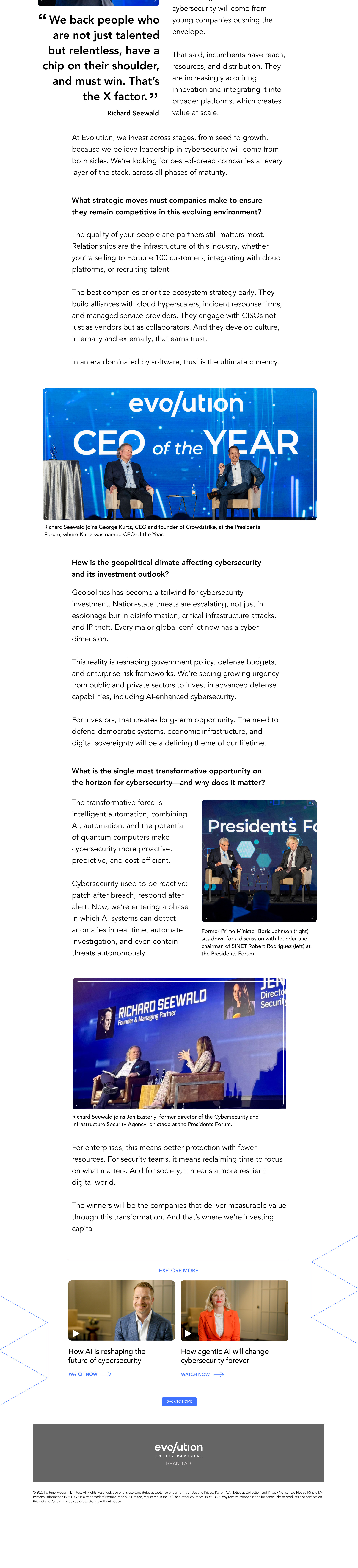


At Evolution, we invest across stages, from seed to growth, because we believe leadership in cybersecurity will come from both sides.
“
”
Richard Seewald
Founder and Managing Partner of Evolution Equity Partners
How is the cybersecurity industry responding to the rise of AI? What macro trends are shaping the landscape today?
AI is rapidly becoming the defining force in cybersecurity. But it’s not a monolithic shift—it’s a dual transformation. First, we’re seeing AI used as an offensive tool by threat actors: automating phishing, generating polymorphic malware, and launching highly adaptive attacks. Second, and more promisingly, AI is being deployed defensively to enhance detection, automate response, and reduce the time-to-containment for breaches.��At Evolution, we’re investing in companies tackling both sides of this equation: AI for cybersecurity, using machine learning to harden infrastructure, and cybersecurity for AI, securing the underlying models, data pipelines, and agentic interfaces that power modern AI systems.��For example, our investment in Protect AI, we led the Series A in 2023 and doubled down leading the Series B in 2024. This platform addresses the risks within the machine learning lifecycle, ensuring model integrity and security. Its acquisition by Palo Alto Networks speaks volumes about how urgent and strategic these capabilities have become. Protect AI has a fantastic team, led by Ian Swanson.�
We look for companies that don’t just ride trends—they intuitively shape them. That starts with a large and growing market but also requires a team that deeply understands the intersection of technology, customer pain points, and go-to-market execution.��Category leaders aren’t just feature-rich, they’re architecture-defining. They reimagine how security should work and are capable of building platforms, not just point solutions. They are also good at clearly articulating a vision that resonates with chief information security officers (CISOs), boards, and global enterprises.
It’s not enough to have strong tech. You need commercial sophistication, operational excellence, and the storytelling ability to earn trust and drive adoption at scale.
What characteristics define a “category-defining” cybersecurity company in today’s AI-driven market?
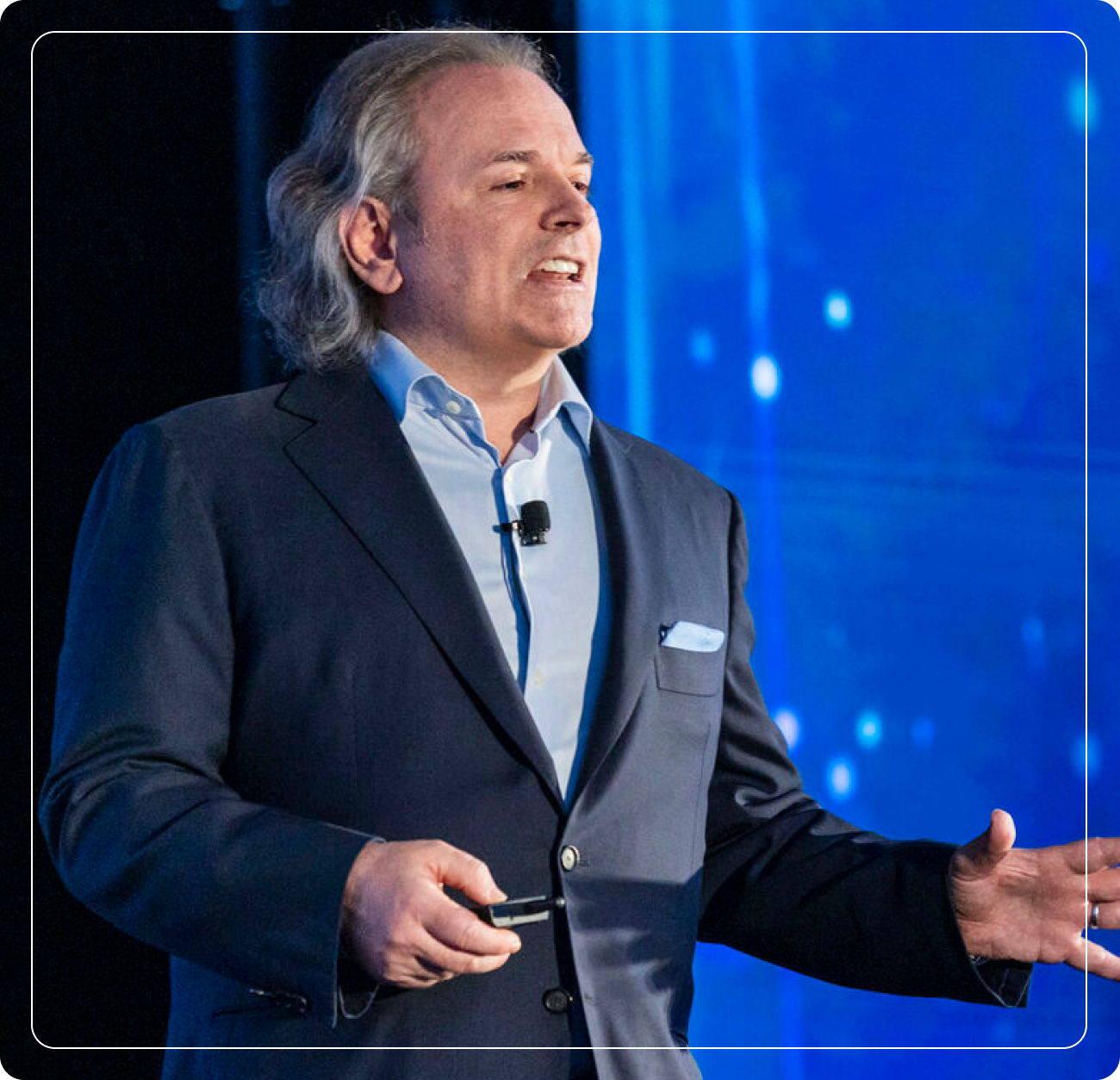
Evolution Equity Partners, cofounded by Richard Seewald and Dennis Smith, introduced the Presidents Forum in 2023 to provide a platform for global leaders and cybersecurity professionals to come together.
The technology might be differentiated, but execution is everything. The biggest obstacle we see is not technical but human. Founders must combine deep domain knowledge with resilience, leadership, and a growth mindset.��You need a team that’s comfortable navigating ambiguity, iterating on product-market fit, and building enduring customer relationships. If that drive isn’t there, if the founders aren’t obsessed with solving the problem better than anyone else, it’s hard to break through in such a competitive market.��We back people who are not just talented but relentless, have a chip on their shoulder, and have to win. That’s the X factor.
And what’s the biggest reason some companies fail to get there?
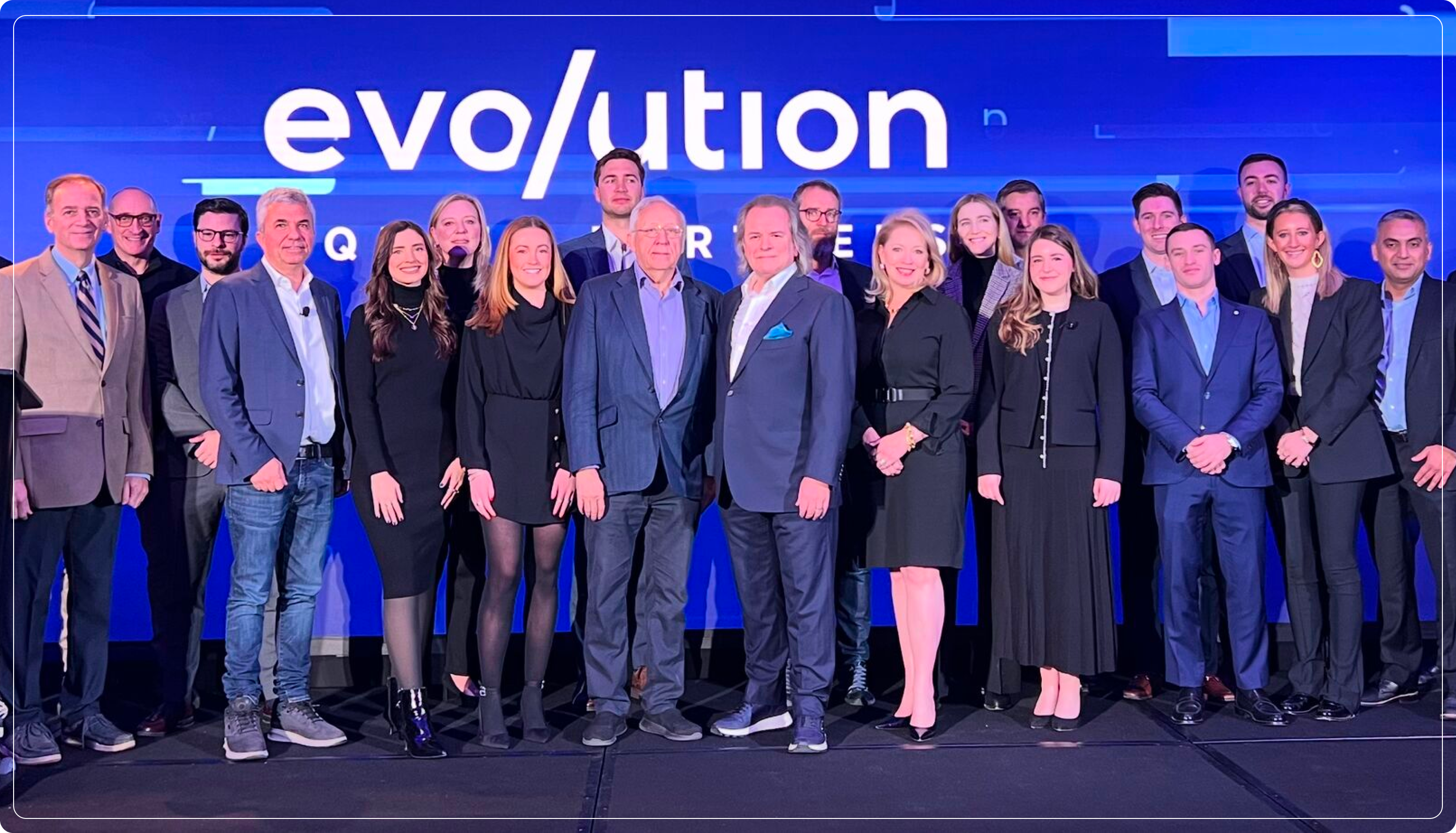
Evolution Equity Partners team 2025
One of the most consequential shifts is the rise of agentic AI, systems that act autonomously on behalf of users, whether that’s executing financial transactions, managing workflows, or interacting with application programming interfaces across the enterprise.��These agents introduce an entirely new attack surface. If compromised, they can be manipulated to cause real damage, without human intervention. Securing this layer is a priority. We expect an explosion of startups and platform extensions focused on agent behavior, trust frameworks, identity verification, and runtime monitoring.��Another area is the convergence of hyperautomation and AI. As security operations center teams become overwhelmed by alert volume and resource constraints, intelligent automation platforms such as Torq are helping security teams scale without scaling headcount.��The opportunity lies in technologies that reduce complexity while enhancing speed and precision. That’s what drives return on investment and adoption.
Where are the next high-impact investment opportunities in cybersecurity AI?
It’s not a binary outcome. Startups are essential for innovation. They’re unencumbered, fast-moving, and willing to rethink first principles. Many of the breakthroughs in AI-driven cybersecurity will come from young companies pushing the envelope.��That said, incumbents have reach, resources, and distribution. They are increasingly acquiring innovation and integrating it into broader platforms, which creates value at scale.
Who’s better positioned to lead this next wave, established players or startups?
We back people who are not just talented but relentless, have a chip on their shoulder, and must win. That’s the X factor.
“
”
Richard Seewald
At Evolution, we invest across stages, from seed to growth, because we believe leadership in cybersecurity will come from both sides. We’re looking for best-of-breed companies at every layer of the stack, across all phases of maturity.
The quality of your people and partners still matters most. Relationships are the infrastructure of this industry, whether you’re selling to Fortune 100 customers, integrating with cloud platforms, or recruiting talent.��The best companies prioritize ecosystem strategy early. They build alliances with cloud hyperscalers, incident response firms, and managed service providers. They engage with CISOs not just as vendors but as collaborators. And they develop culture, internally and externally, that earns trust.��In an era dominated by software, trust is the ultimate currency.
What strategic moves must companies make to ensure they remain competitive in this evolving environment?
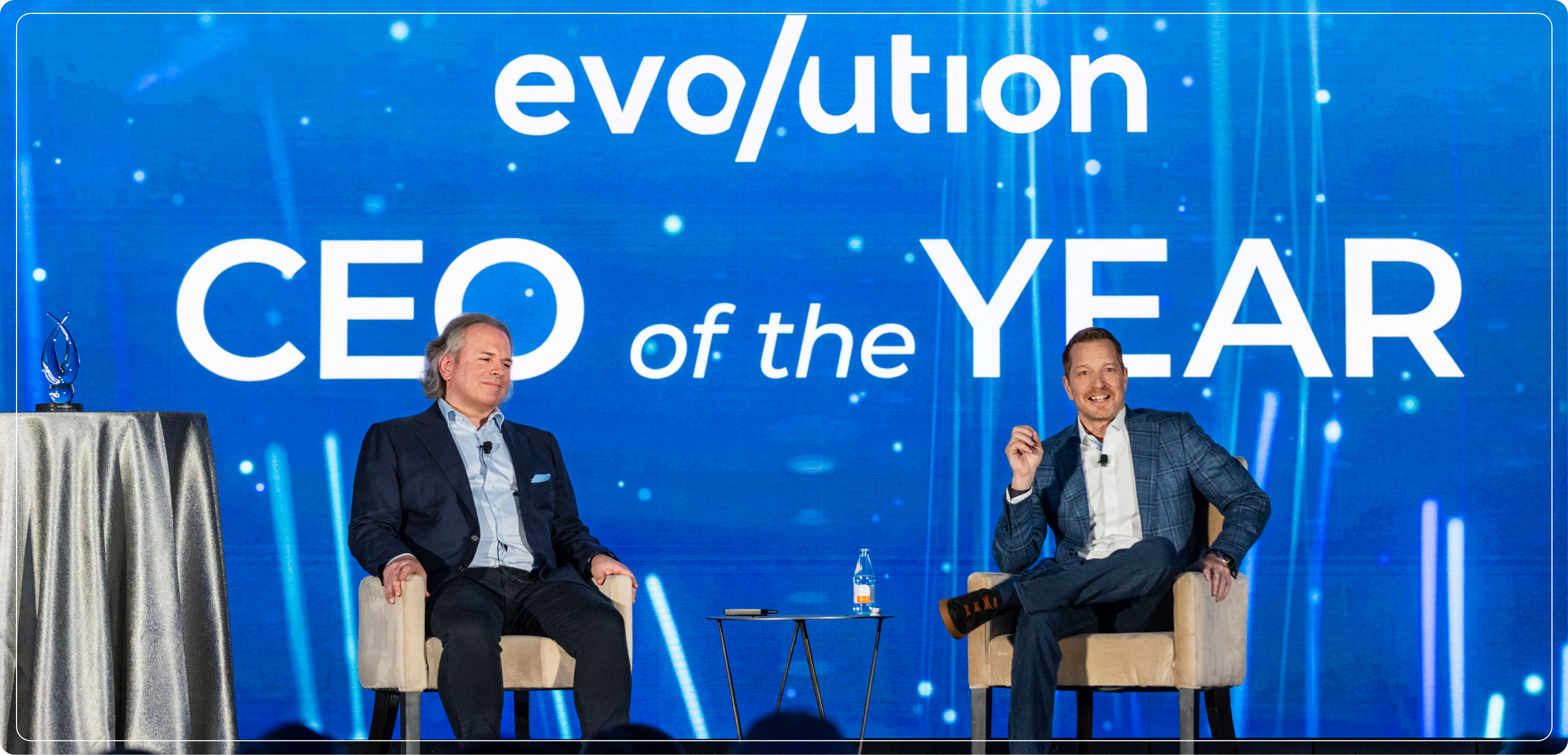
Richard Seewald joins George Kurtz, CEO and founder of Crowdstrike, at the Presidents Forum, where Kurtz was named CEO of the Year.
Geopolitics has become a tailwind for cybersecurity investment. Nation-state threats are escalating, not just in espionage but in disinformation, critical infrastructure attacks, and IP theft. Every major global conflict now has a cyber dimension.��This reality is reshaping government policy, defense budgets, and enterprise risk frameworks. We’re seeing growing urgency from public and private sectors to invest in advanced defense capabilities, including AI-enhanced cybersecurity.��For investors, that creates long-term opportunity. The need to defend democratic systems, economic infrastructure, and digital sovereignty will be a defining theme of our lifetime.
How is the geopolitical climate affecting cybersecurity and its investment outlook?
The transformative force is intelligent automation, combining AI, automation, and the potential of quantum computers make cybersecurity more proactive, predictive, and cost-efficient.��Cybersecurity used to be reactive: patch after breach, respond after alert. Now, we’re entering a phase in which AI systems can detect anomalies in real time, automate investigation, and even contain threats autonomously.
What is the single most transformative opportunity on the horizon for cybersecurity—and why does it matter?
Former Prime Minister Boris Johnson (right) sits down for a discussion with founder and chairman of SINET Robert Rodriguez (left) at the Presidents Forum.
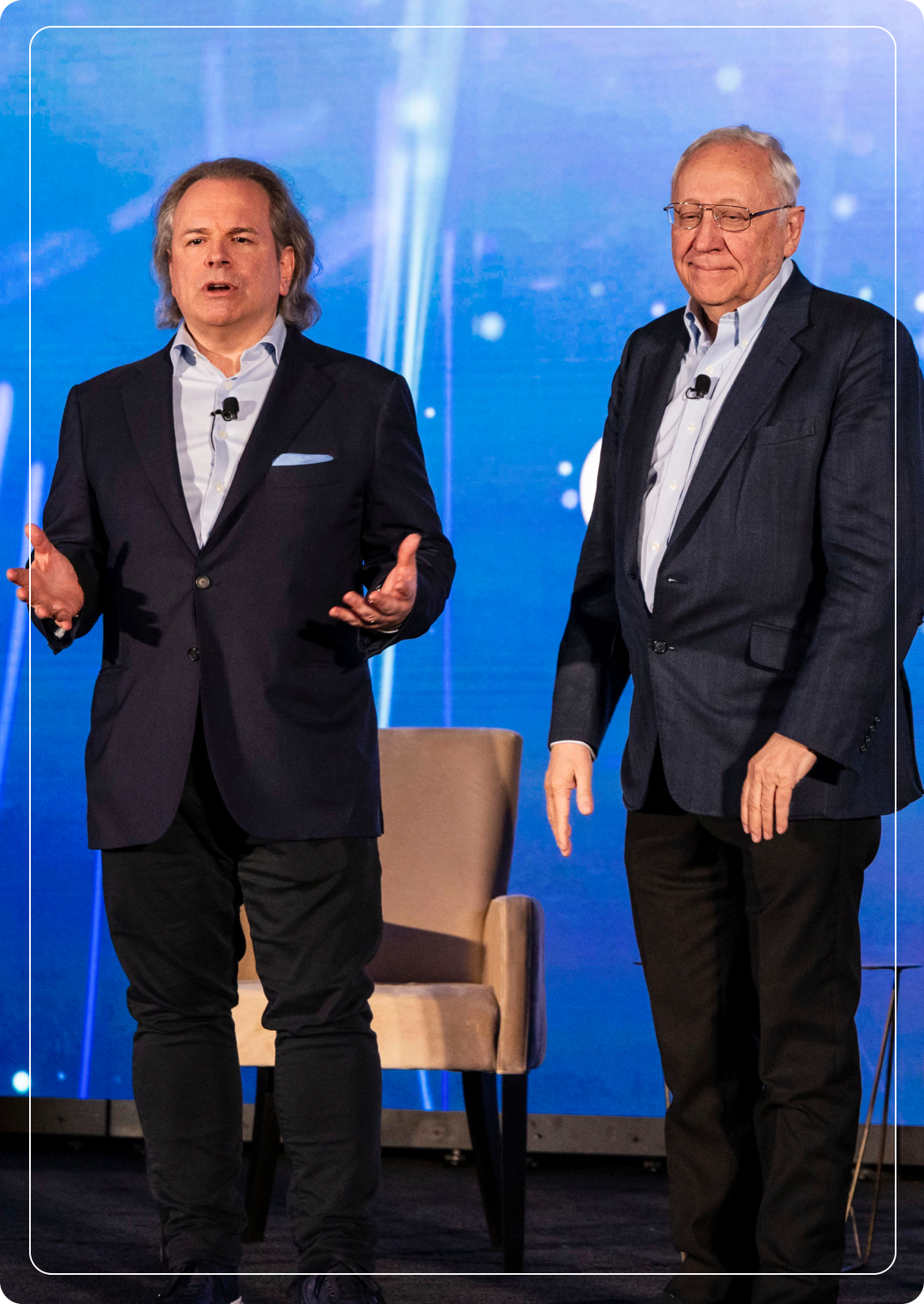
Richard Seewald joins Jen Easterly, former director of the Cybersecurity and Infrastructure Security Agency, on stage at the Presidents Forum.
For enterprises, this means better protection with fewer resources. For security teams, it means reclaiming time to focus on what matters. And for society, it means a more resilient digital world.��The winners will be the companies that deliver measurable value through this transformation. And that’s where we’re investing capital.