




By supplementing cows’ food with SeaGraze™, the cleantech company is driving the animal agriculture industry closer to carbon neutral.
As meat consumption rises around the world, the demand for livestock grows in tandem—as does the environmental impact of the industry. The UN Food and Agriculture Organization estimates that livestock production, primarily cows, produces around 14.5% of global greenhouse gas emissions—the equivalent of about 650 million cars. The majority of those emissions come in the form of methane, a potent greenhouse gas that is a product of their normal digestion process and has 28 times the warming capacity of carbon dioxide, making it especially harmful by comparison.

Back to home
Back to home


Eco•pre•neur: an environmentally minded entrepreneur who leads and drives climate action worldwide
©2023 Fortune Media IP Limited. All Rights Reserved. Use of this site constitutes acceptance of our Terms of Use and Privacy Policy (Your California Privacy Rights) | CCPA Do Not Sell My Information Fortune may receive compensation for some links to products and services on this website. Offers may be subject to change without notice. Quotes delayed at least 15 minutes. Market data provided by Interactive Data. ETF and Mutual Fund data provided by Morningstar, Inc. Dow Jones Terms & Conditions: S&P Index data is the property of Chicago Mercantile Exchange Inc. and its licensors. All rights reserved. Terms & Conditions. Powered and implemented by Interactive Data Managed Solutions. | EU Data Subject Requests
The “magic” seaweed transforming agriculture


Listen to Marcela Saracco Balleza on the challenges of the algae growing process.

[FPO Looping Video]
Founder & CEO, Symbrosia
ALEXIA AKBAY
“
Read More
BEHIND THE SCENES: Episode 10
of The Ecopreneurs in Hawaii.
Explore More
Read More


Read More
MEET THE ECOPRENEUR: Alexia Akbay of Symbrosia.
How Symbrosia is curbing methane emissions through sustainably grown seaweed
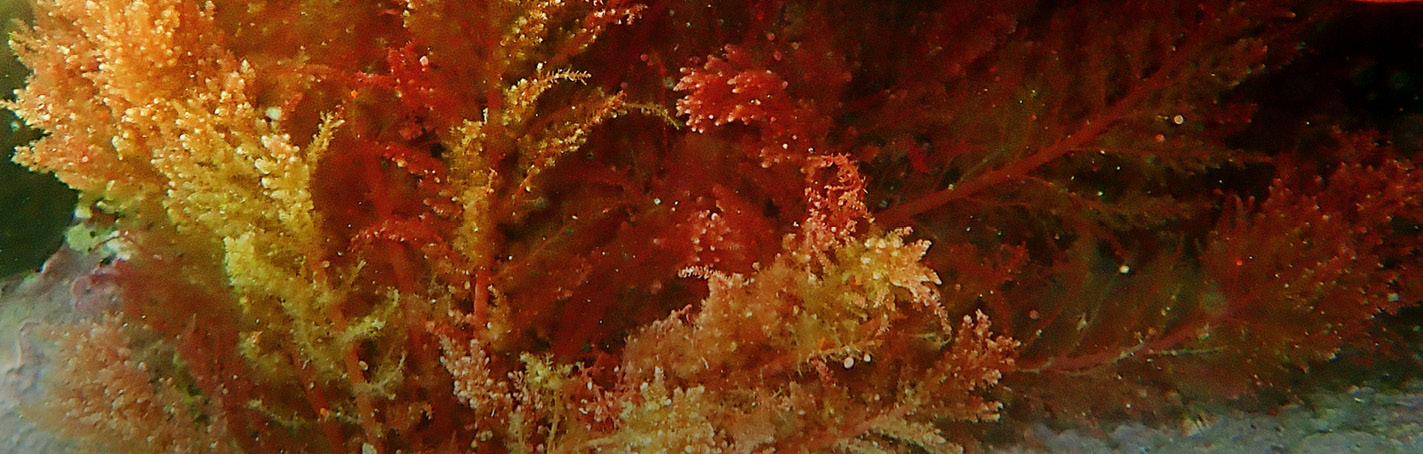
With the stakes so high, the agriculture industry is facing increasing pressure to find new solutions for curbing its carbon emissions. Symbrosia, a Hawaii-based cleantech startup, has answered the call with SeaGraze™, a sustainable feed additive made from the red algae asparagopsis taxiformis that is designed to reduce emissions by altering the animal’s diet. When added to the feed of ruminant livestock—beef and dairy cows, as well as smaller animals like sheep and goats—the supplement can reduce their methane output by more
than 80%.
“This seaweed prevents the formation of methane during the fermentation process in the cow’s gut,” explains 27-year-old Alexia Akbay, who founded Symbrosia in 2019. “Our goal is to sustainably produce enough seaweed at scale so that every cow and dairy farmer has access to it. Implementing this solution globally could reduce almost 10% of total greenhouse gas emissions and really abate climate change.”
Unlocking a greener future through red algae
Symbrosia’s research on red algae began when Akbay was still a graduate student at Yale. Akbay had stumbled upon an Australian study that found that red algae could significantly reduce methane emissions when fed to livestock. Intrigued by the potential, Akbay and a team of her peers began experimenting with the aquatic plant. Together, they designed an aquaculture system that allowed them to grow the seaweed on land using a controlled environment. But the species was notoriously difficult to farm, due to its unique reproductive cycle.
“When we first started farming seaweed, we thought it was going to be a lot easier than it was,” explains Akbay. “We had all these models depicting how it’s going to multiply over time, but we quickly found that developing a new crop from the ground up required a lot of foundational work.”
Much of this work began in 2019, when Symbrosia relocated to the Natural Energy Laboratory of Hawaii Authority in Kailua-Kona, as part of an aquaculture business accelerator. The program was strategically positioned on the island to take advantage of the consistent climate and weather, which are conducive to growing the photosynthetic organism.
“When we started at this location, our first challenge was building a seed bank of the species,” says Akbay. “We snorkeled the coastline of four different Hawaiian islands and brought in over 500 different strains of seeds to our laboratory to begin screening them for traits that would be advantageous for SeaGraze.”
Our goal is to sustainably produce enough seaweed at scale so that every cow and dairy farmer has access to it. Implementing this solution globally could reduce almost 10%
of total greenhouse gas emissions and really abate climate change.”
Once harvested from the sea, Symbrosia grows the algae inside a lab using a sustainable aquaculture system fueled by solar power and seawater. The seaweed starts off in a small flask before eventually ending up in a larger vessel called a photobioreactor that stores the seaweed in vertical columns. Once the algae is inoculated, the team can scale the growing process across a series of larger ponds, splitting the algae into batches so it can multiply.
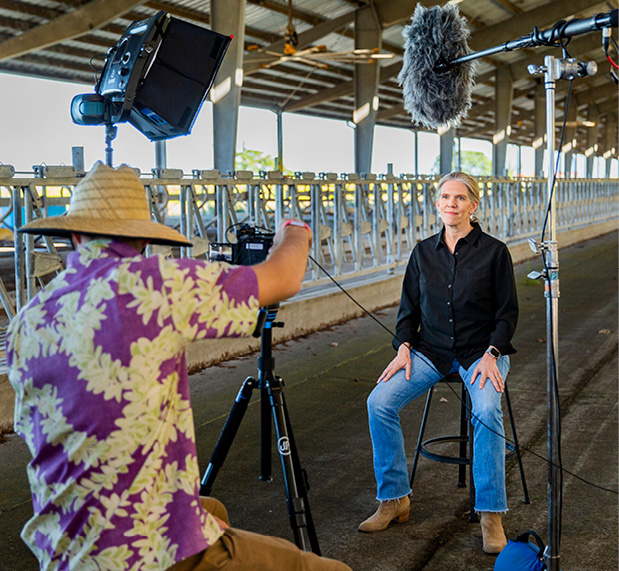
“I have been growing algae for 20 years, but this is an especially hard process because we are domesticating a wild seaweed,” says Marcela Saracco Balleza, the company’s lead cultivation specialist. “We need to constantly monitor it to ensure it stays healthy.”
For Balleza, technology is crucial in this process. Her team leverages sensors to monitor everything from pH levels to temperature to determine how the algae is growing or not growing. While the complex lifestyle and physical fragility of asparagopsis make it generally difficult to commercialize, Symbrosia is uniquely positioned to determine the algae’s
ideal growing conditions and not just farm it but do so efficiently and sustainably.
After two years of research, breeding, and cultivation, the team has developed strains of the algae that are significantly more productive, potent, and resilient than wild populations—giving it the potential to transform the agriculture industry—starting
in Hawaii.
“Hawaii is a good place, not just for us, but for the algae,”
says Balleza.
Building community in Kailua-Kona
For Hawaiians in the agriculture industry, Symbrosia’s presence has been transformative—as has its product. While SeaGraze’s primary purpose is to drastically reduce methane emissions, it isn’t without other tangible benefits to the farmers themselves.
“Hawaii is one of the most isolated places on Earth,” says Stephanie Buck, chief financial officer of the Hawaii Food Alliance and owner of O’okala Dairy. “We bring in most of our food from the continent, but it’s vitally important that we start producing our own food wherever possible.” O’okala, on the Big Island’s Hamakua Coast, is one of the most fertile lands in the state. For Buck—who is working to revitalize the island’s dairy industry for local production—partnering with Symbrosia has helped make her business less greenhouse gas intensive.
Her existing land is the former site of Big Island Dairy, a traditional dairy producer whose methods weren’t conducive to the health of the local climate—the animals were contained, and the byproducts resulted in a waste stream that repeatedly ended up in the town below over a five year period. “We’re transforming all of that,” she says. “We believe
that pasture-raised livestock will alleviate local concerns. We’ll be better stewards of this land with a smaller-scale.” Now the cattle are in the fields and only come in for milking and maintenance.
In addition to reduced methane emissions, Buck finds that
her cows are actually more productive with SeaGraze in their system—the supplement helps them digest more efficiently, which means they can produce up to 15% more milk because they’re using their energy more effectively. She says the nutritional and probiotic benefits of seaweed are noticeable.
“Everybody knows that you need protein in your cattle feed,
and you can’t just find that at the nearest store here in Hawaii,” says Pomai Freitas, president of Hui Ho’olako for Hawaiian Initiatives. “Historically, they say it’s cheaper to send the cows
to the feed than to bring the feed to the cows, which is a huge problem we have in Hawaii. That’s why Symbrosia is such a game changer. Alexia and her team have the opportunity to single-handedly change the cattle industry in Hawaii itself,
along with reducing methane from cattle around the world.
It’s endless.”
Freitas notes that the agriculture industry in Hawaii has taken
a huge hit since the 1970s and 1980s, when it was largely dependent on farming. The road to sustainability was visible—
and then tourism took over, and the farming industry fell off a cliff. “Everybody chased money,” he says. “Tourism is 100% money-driven.” The COVID-19 pandemic provided a reality check: The sudden lack of tourists had dire economic implications for local residents. “The silver lining was that it made it clear that we needed to focus on agriculture and self-sustainability again,” he adds. “If we get another COVID, who knows what’ll happen to us?”
For Freitas and Buck—both of whom were born and raised in Hawaii—the impacts of climate change are more visible and concerning. Rising sea levels have a direct impact on the land; the more land they lose, the less they can sustain their livelihoods. Similarly, warming ocean temperatures have prompted a drastic migration of fish. With so much at stake, Symbrosia’s efforts on the island make them hopeful for
the future.
“She’s taking something native to Hawaii and making it available for tons of people here, because the product she’s working with and deriving is native to here,” Freitas says. “Alexia is basically knocking down the door to sustainability on this island.”


Listen to Stephanie Buck on revolutionizing the dairy industry.


EXPLAINER: See how Symbrosia is bringing the animal agriculture industry closer to carbon neutral.



[CUSTOM BANNER AD]
Back to home
Founder & CEO, Symbrosia
ALEXIA AKBAY
“
[FPO Looping Video]
The power of younger generations in fighting the climate crisis
Eco•pre•neur: an environmentally minded entrepreneur who leads and drives climate action worldwide
Back to home
Unlocking a greener future through red algae
Symbrosia’s research on red algae began when Akbay was still a graduate student at Yale. Akbay had stumbled upon an Australian study that found that red algae could significantly reduce methane emissions when fed to livestock. Intrigued by the potential, Akbay and a team of her peers began experimenting with the aquatic plant. Together, they designed an aquaculture system that allowed them to grow the seaweed on land using a controlled environment. But the species was notoriously difficult to farm, due to its unique reproductive cycle.
“When we first started farming seaweed, we thought it was going to be a lot easier than it was,” explains Akbay. “We had all these models depicting how it’s going to multiply over time, but we quickly found that developing a new crop from the ground up required a lot of foundational work.”
Much of this work began in 2019, when Symbrosia relocated to the Natural Energy Laboratory of Hawaii Authority in Kailua Kona, as part of an aquaculture business accelerator. The program was strategically positioned on the island to take advantage of the consistent climate and weather, which are conducive to growing the photosynthetic organism.
The “magic” seaweed transforming agriculture
Our goal is to sustainably produce enough seaweed at scale so that every cow and dairy farmer has access to it. Implementing this solution globally could reduce almost 10% of total greenhouse gas emissions and really abate climate change.”