



Starting in the Peruvian highlands, Acción Andina is leading a forest restoration movement that’s securing water, encouraging biodiversity, and promoting livelihoods across South America.
Today, the effects of climate change are being felt around the world, especially for the most vulnerable populations. The top-down approach of hammering out climate agreements among governments, major nongovernmental organizations (NGOs), corporations, and academic powers has failed. Many scientists and activists are calling for an urgent reallocation of resources to hands-on, bottoms-up, local programs and initiatives.
One organization that’s providing action over analysis is Acción Andina, an environmental program helping to save the planet through conservation and forest restoration throughout the Andes Mountains. Though not even five years old, Acción Andina has already planted more than 3.7 million native Polylepis trees, promoting climate resilience and water security throughout the region. The organization’s goal is to restore millions of acres of critical high-altitude Polylepis forests and other related native ecosystems throughout the Andes—the more than 5,500-mile-long mountain range spanning seven South American countries—through a grassroots effort that embraces ancient traditions.

©2022 Fortune Media IP Limited. All Rights Reserved. Use of this site constitutes acceptance of our Terms of Use and Privacy Policy (Your California Privacy Rights) | CCPA Do Not Sell My Information Fortune may receive compensation for some links to products and services on this website. Offers may be subject to change without notice. Quotes delayed at least 15 minutes. Market data provided by Interactive Data. ETF and Mutual Fund data provided by Morningstar, Inc. Dow Jones Terms & Conditions: S&P Index data is the property of Chicago Mercantile Exchange Inc. and its licensors. All rights reserved. Terms & Conditions. Powered and implemented by Interactive Data Managed Solutions. | EU Data Subject Requests
Grassroots action to solve a global issue
Forests are also critical to Indigenous Quechua communities of the Andes, including in Peru, where Inca descendants make up approximately one-third of the country’s population. Helping these communities sustain their culture and livelihoods through ongoing forest restoration and protection is the driving force for the leaders of Acción Andina, Constantino “Tino” Aucca, president of Asociacion Ecosistemas Andinos (ECOAN), the NGO he cofounded in 2000 to restore threatened Andean ecosystems, and partner Florent Kaiser, CEO of Global Forest Generation (GFG), a U.S.-based NGO focused on empowering local leaders to regenerate and protect the world’s forest ecosystems.
For more than two decades, Aucca has been inspiring Indigenous communities to revive the ancestral principles of Ayni and Minka, based in a deep commitment to work together for the common good. He continues to demonstrate that the highest and best uses of Ayni and Minka are to protect “Pachamama” (Mother Earth) for the long-term well-being of his people and their culture.
In 2014, Aucca and his colleagues met with villagers and demonstrated what Ayni and Minka could achieve in a single day on a single mountainside.
“We planted more than 57,000 trees in a single day, ”he says. “We showed the world what could be done.”
This was the birth of the Queuña Raymi, a yearly Polylepis community planting festival that continues to this day as part of Acción Andina’s approach to fighting climate change. This successful, replicable community reforestation model centered around the core Inca principles is an integral motivation for villagers of all ages to work together to bring back their lost and degraded forests.
It was at the 2017 Queuña Raymi that Kaiser met Aucca and the idea for Acción Andina was born. They, along with other GFG leaders, agreed that the program would entail a network of on-the-ground partners guided by the conservation expertise and experience of ECOAN and GFG. It would unite many local Andean conservation leaders across vast landscapes, enabling them to scale up their projects while providing tangible social and economic benefits to their communities.
FIGHTING CLIMATE CHANGE ISN’T JUST CRITICAL FOR PLANET EARTH. REFORESTATION BRINGS RESOURCES, INNOVATION, TECHNOLOGY, AND TRUSTED RELATIONSHIPS TO LOCAL COMMUNITIES WHO NEED IT MOST.”
Back to home
Back to home
restoring forests:



Eco•pre•neur: an environmentally minded entrepreneur who leads and drives climate action worldwide

Listen to Florent Kaiser on Acción Andina's approach to forest restoration.

The Polylepis tree: An at-risk Andean hero
In the high elevations of the Andes, Polylepis forests are crucial members of the ecosystem. The hearty, shrub-like trees are some of the highest-altitude tree species in the world, capable of thriving above the general tree line at 5,000 meters (approximately 16,000 feet) above sea level, where bitingly cold air and nightly frost followed by blazingly hot days would decimate most other types of flora. Nicknamed the “paper-bark tree,” this special species grows bark in thin layers that curl up off the stem-like sheets of paper, successfully insulating it against low mountain temperatures.
In addition to providing homes for more than 50 bird species—including the endangered Andean Condor—native Polylepis forests are a major contributor to the Andean water system. Their branches act as combs that harvest mist and precipitation from the clouds. Beneath the trees, Sphagnum moss sequesters water, restraining its downhill flow, creating permanent freshwater streams that feed into the Amazonian watershed.
But these magical trees are not invincible.
For half a millennium, human behavior such as burning and overgrazing has destroyed millions of Polylepis trees. Today, less than 10% of the original native forests remain. “The landscape would have once been naturally covered, but today, Polylepis forests are an oasis in the desert of grassland,” says Jon Fjeldså, also known as the “Godfather of the Polylepis,” who has been conducting research in South America since the 1980s. “In some areas, the forest now only exists as tiny patches here and there in rocky terrain, where the cattle won’t go to graze and fires don’t usually spread.”
With the disappearance of these trees comes less fertile land and a less reliable water supply, a major ecological problem because water security is becoming a huge issue both for mountain communities and for major South American cities such as Lima and Quito. As glaciers in the region melt, trees, peats, and mosses capture water in the upper wetlands, making these forests the only natural substitutes for storing water like glaciers can—and key to South America’s fight against climate change.
“
CEO, Global Forest Generation
Florent Kaiser
Salesforce is on a mission to drive meaningful climate action at scale, leveraging the full power of the company to help create a more sustainable and equitable future for all.
That’s why, as a part of the 1t.org movement and in support of its mission, Salesforce has a goal to support and mobilize the conservation, restoration, and growth of 100 million trees by the end of 2030. We do so for humans and other life on this planet, to help mitigate climate change, to improve livelihoods, and so much more.
But we know we can’t do it alone. That’s why teamed up with Global Forest Generation to support the ambitious reforestation Acción Andina project. We’re working with on-the-ground conservation leaders and Indigenous communities to plant more than 1 million native trees and reforest priority watersheds for climate, biodiversity, and people across the Andes mountains of Peru, Ecuador, Bolivia, Chile, and Argentina.
How protecting the Andes
can temper our climate crisis—
and support a culture
“Fighting climate change isn’t just critical for planet Earth,” says Kaiser. “Reforestation brings resources, innovation, technology, and trusted relationships to local communities who need it most.”
Through Acción Andina, a new restoration economy is emerging in remote, high-mountain communities, where economic opportunities are sparse to nonexistent. Since its inception, Acción Andina has provided jobs, primarily for women, tending to community nurseries. The crop yield for fruit trees, medicinal plants, and the thousands of Peruvian potato varieties that villagers rely on for income and sustenance has increased thanks to the soil stabilization brought about by repopulated Polylepis forests. And other microbusinesses are increasing as well, such as eco-tourism and wool and textile production.
“Tino had an amazing dream of restoring the entire Andes—of bringing back trees across an entire continent,” says Kaiser. “This was so inspiring to me, as it is this kind of grand thinking—turned into practical action—we need to reverse the climate crisis. This is the kind of locally led movement, attracting the participation of people, businesses, governments, donors, and investors, that will truly help save the planet.”
VANESSA TORRES PAUCAR
Environmental Educator, Acción Andina
IT GIVES ME HOPE. I KNOW THAT THESE KIDS, WHEN THEY GROW UP, ARE GOING TO TEACH THEIR BABIES HOW TO PROTECT THE FOREST.”
“
A legacy and a “lighthouse”
Across the Andes, the realities of climate change only continue to intensify. With GFG providing guidance and know-how, as well as mobilizing restoration finance that actually reaches the ground, Acción Andina is adding to its list of ever-expanding environmental restoration projects by spearheading several quality-of-life initiatives for local and Indigenous communities, such as bringing dental and health care professionals to the highlands. It also enables local conservation leaders to provide solar panels, alternative fuels, and clean-burning clay stoves that reduce exposure to toxic fumes from traditional cooking practices—while also reducing harmful effects on forests. Acción Andina also assists Indigenous communities in securing titles to their lands, providing legal protection from exploitation by timber, mining, and fossil fuel interests that threaten Andean culture and livelihoods.
On a broader level, Acción Andina is also sparking a legacy of environmental activism. Vanessa Torres Paucar, an environmental educator at Acción Andina, says she teaches children and their families “how to save Mother Earth … because we are all one huge family.” As she works throughout the mountains in Peru, she feels optimistic about her climate-saving mission. “It gives me hope,” she says. “I know that these kids, when they grow up, are going to teach their babies how to protect the forest.”
The fight to restore the Andes and to mitigate the effects of climate change is going to be a long one, lasting for generations. Fortunately, Acción Andina is just getting started. This year already, it has brought together more than 15,000 people for reforestation, and an ambitious Andes-wide plan to protect the last remaining native forests is underway with a goal to restore and protect 2.5 million acres throughout South America over the next 25 years. Acción Andina is also looking at setting up new carbon programs and incorporating additional water funds and government programs that will help finance the initiative in the long-term.
“More and more partners and local communities are eager to join us to restore watersheds and landscapes,” says Kaiser, who hopes that big corporations and their millions of customers will join the charge. “The power of this movement is not only how many forests we’re able to grow and protect today—it’s how many people, young and not so young, we can mobilize globally. There is no easy way out, and we have to make up for many decades of destruction.”
Acción Andina is not only an ambitious conservation project. It’s a lighthouse, guiding actions around the world. After decades of doom and gloom around climate change, loss, and extinction, Acción Andina is becoming a symbol that healing the planet is possible.
Read More

Read More
EXPLAINER: Discover why Polylepis forests are critical in the fight against climate change.

Read More
BEHIND THE SCENES: Episode 3 of The Ecopreneurs in Peru.
Explore More

MEET THE ECOPRENEUR: Tino Aucca of Acción Andina.


Listen to Jon Fjeldså on the Andean high plains ecosystem.


Listen to Florent Kaiser on modern ecopreneurship.


Eco•pre•neur: an environmentally minded entrepreneur who leads and drives climate action worldwide
Back to home
Read More
BEHIND THE SCENES: Episode 3 of The Ecopreneurs in Peru.
Explore More
Read More
MEET THE ECOPRENEUR: Tino Aucca of Acción Andina.
Read More
EXPLAINER: Discover why Polylepis forests are critical in the fight against climate change.
Back to home
©2022 Fortune Media IP Limited. All Rights Reserved. Use of this site constitutes acceptance of our Terms of Use and Privacy Policy (Your California Privacy Rights) | CCPA Do Not Sell My Information Fortune may receive compensation for some links to products and services on this website. Offers may be subject to change without notice. Quotes delayed at least 15 minutes. Market data provided by Interactive Data. ETF and Mutual Fund data provided by Morningstar, Inc. Dow Jones Terms & Conditions: S&P Index data is the property of Chicago Mercantile Exchange Inc. and its licensors. All rights reserved. Terms & Conditions. Powered and implemented by Interactive Data Managed Solutions. | EU Data Subject Requests
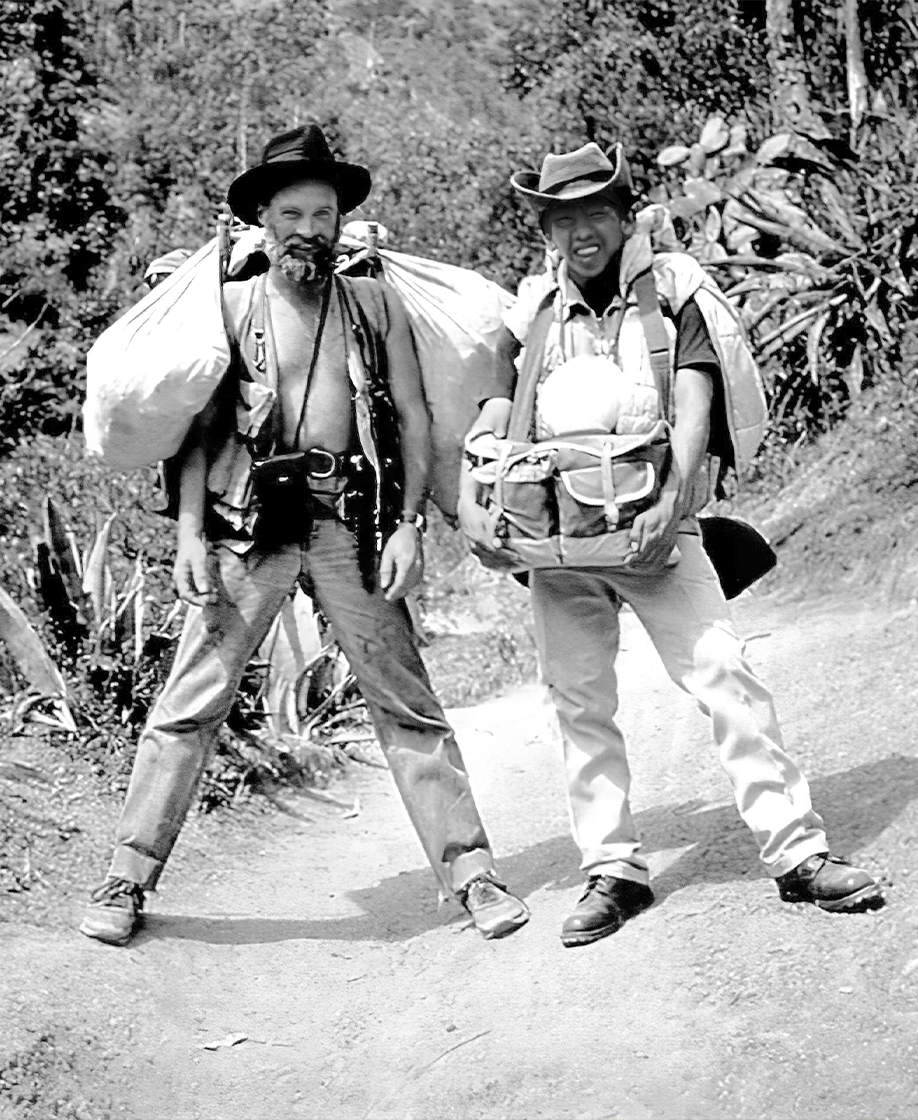
FROM THE ARCHIVES: Tino Aucca and John Fjeldså in the field in Abancay, Peru, in Nov. 1989.