



How Grab designs for millions in Asia, from Singapore


Back to Home




Navigating Southeast Asia
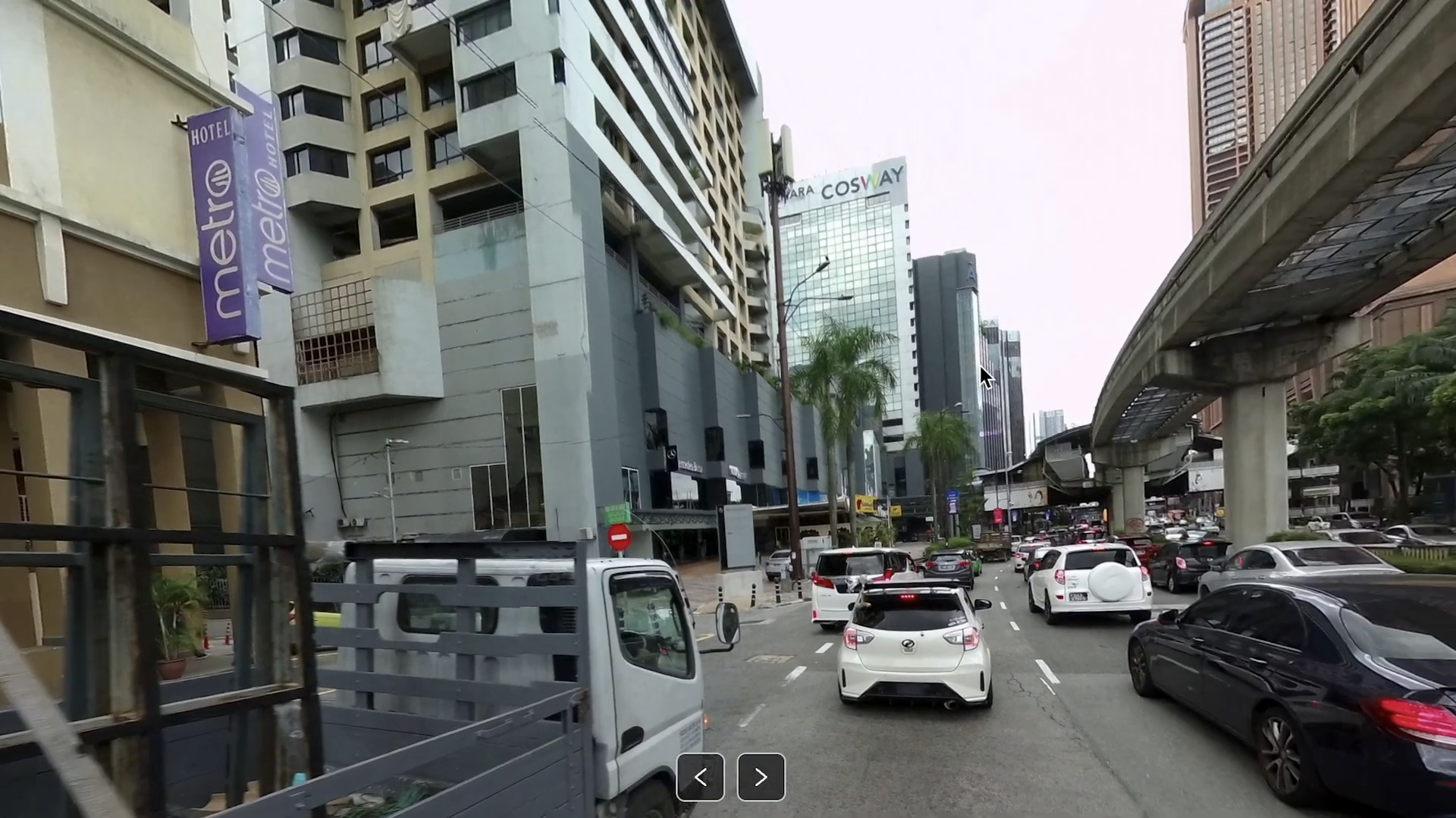
One perennial issue that has stood in the way of riders and passengers in Southeast Asia is navigational inaccuracies and inefficiencies. In the region, cars jostle with motorcycles, tuk-tuks, and jeepneys while food carts often spill into the roads. There are hidden alleys and informal lanes often not reflected on tech giant–powered maps—many which are not wide enough for a car but adequately sized for a motorbike. Amid this tangle of traffic, especially during peak hours, the ability to navigate through the narrow passageways can get someone to a destination far quicker than inching along the highways.
That’s why Grab decided to take the wheel and set out to build the most accurate map of Southeast Asia. The vision for GrabMaps is not only to determine the fastest route, but also to pinpoints the exact entrances to restaurants or rental villas, even if they are tucked along a back alley.
Designing ways forward
To build an accurate map of Southeast Asia, Grab first introduced KartaCam in 2021. It is an action camera mounted on bike helmets or car windshields that collects street-level imagery by driver-partners as they ferry passengers or deliver goods. The latest iteration, KartaCam 2, marks a big leap forward in localized mapmaking.
The Singapore-based company is not just the region’s leading ride-hailing firm and super app—it is also a driver of innovation in the digital economy.
Founded in 2012, Grab got its start as a taxi-booking app, guided by the modest vision to help passengers find safer rides in Kuala Lumpur, Malaysia. Today, the Singapore-headquartered company is listed on Nasdaq and is the region’s leading super app, operating across mobility, deliveries, and digital financial services in more than 500 cities throughout eight countries. Today, Grab has more than 30 million monthly users who use the app to hail a ride, order food or groceries, and send packages.
Against this backdrop, Grab recently launched its first AI Center of Excellence (AI COE) at its One-North campus. The AI COE focuses on building AI-driven products that enhance accessibility, productivity, and quality of life across Southeast Asia, with potential applications in international markets. The center is expected to generate 50 high-value roles by 2025 across engineering, product development, data science, and analytics.
“Singapore serves as a springboard for developing integrated, AI-driven services that can scale responsibly across Southeast Asia as digital adoption deepens,” says Patrick Jean, head of design at Grab.
This environment set the stage for Grab’s development of KartaCam 2, one of the world’s smallest AI-powered mapmaking camera system. Designed and engineered in Singapore, KartaCam 2 features a fully reimagined mounting system now compatible with more than 80% of motorcycles in Southeast Asia.
How Singapore became�a nation by design
Back to Home


As Singapore’s national agency for design, we champion the use of design to grow business, spur innovation, and improve lives.
© 2025 Fortune Media IP Limited. All Rights Reserved. Use of this site constitutes acceptance of our Terms of Use and Privacy Policy | CA Notice at Collection and Privacy Notice | Do Not Sell/Share My Personal Information FORTUNE is a trademark of Fortune Media IP Limited, registered in the U.S. and other countries. FORTUNE may receive compensation for some links to products and services on this website. Offers may be subject to change without notice.
Follow us:

Back to Home
Discover More
Singapore Design
Receive news on the latest design happenings.
Find out how Singapore can power �your design ambitions.�Connect with us at info@designsingapore.org
WATCH NOW
How design is giving Singapore a global edge


Watch Now
How design is driving innovation across Singapore—and beyond


Explore More


Follow us:
As Singapore’s national agency for design, we champion the use of design to grow business, spur innovation, and improve lives.
© 2025 Fortune Media IP Limited. All Rights Reserved. Use of this site constitutes acceptance of our Terms of Use and Privacy Policy | CA Notice at Collection and Privacy Notice | Do Not Sell/Share My Personal Information FORTUNE is a trademark of Fortune Media IP Limited, registered in the U.S. and other countries. FORTUNE may receive compensation for some links to products and services on this website. Offers may be subject to change without notice.
Back to Home
Receive news on the latest design happenings.
Discover More Singapore Design
Find out how Singapore can power your �design ambitions.
Connect with us at info@designsingapore.org
WATCH NOW
How design is giving Singapore a global edge
Watch Now
How design is driving innovation across Singapore—and beyond
Explore More

Asia’s capital for design and innovation
Singapore’s rise as a regional innovation hub provides the foundation that enables Grab to develop and scale breakthrough technologies. The country’s strong support for research, talent development, and industry collaboration has created one of the most dynamic environments for tech innovation in Asia.

Designing for business impact
“At Grab, design goes beyond just the aesthetics,” says Jean. “It’s a common misunderstanding that design deals primarily with the surface level. What it’s really about is removing friction for our consumers, and, in doing so, delivering tangible strategic business impact.”
Since KartaCam 2’s rollout, Grab Maps’ coverage has expanded significantly, improving route accuracy, shortening pickup times, and contributing to increased earnings for driver- and delivery-partners.
The impact of this small-but-mighty camera was recognized in July 2025 when Grab’s geo product design team received Singapore’s President’s Design Award (Design of the Year), the nation’s highest honour for design and innovation. The award underscores Singapore’s broader vision: that meaningful innovation often begins with well-crafted solutions designed to address the region’s most complex infrastructural challenges.
“The first version used a single lens camera, but KartaCam 2 has more sensors, and we combined them with 360-degree imaging to create even more detailed maps,” says Jean. Designed for wide, immersive shots, it is ideal for detailed street-level imagery. The upgraded system produces panoramic images that are comparable in quality to professional cameras but at only a fraction of the cost.
Working with a multidisciplinary team in Singapore with both deep-tech and product design expertise, KartaCam 2 harnesses edge computing and AI to perform real-time image analysis. “The edge AI capability in KartaCam 2 is five times more powerful than its predecessor, KartaCam, and only uploads high-quality images to the server when it detects changes in the road segment, which helps to reduce the cost of building maps,” says Jean. It has automatic blurring capabilities for faces and license plates to ensure privacy and has light detection and ranging (LiDAR) compatible, enabling it to deliver detailed spatial information.