


Reshaping the Workplace for All
Michael Puck, SHRM-SCP, HR innovation fellow, UKG Human Insights Group, explains why there’s a better way to attract, engage, and retain today’s employees.
Back to home
Back to home
READ MORE
Creating a hybrid work system that’s built to last

READ MORE
It's time to close the pay gap—
here's how to start
READ MORE
Purpose predicts if employees will stay or quit their jobs


MORE FROM UKG & GREAT PLACE TO WORK
Looking beyond pay and benefits to
meet employees’ wholistic needs
You are offering competitive wages and a variety of solid benefits, so you are all set—correct?
There is nothing to worry about—right? Your company should be well-positioned to attract talent, engage employees, and retain them for years to come—
not quite.
While fair pay and relevant benefits represent the highest-rated single expectation of today’s employees, this only accounts for about one-third of what U.S. employees are looking for, according to research conducted by UKG.

Today’s talent wants more—much, much more. Out of 12 unique employee expectation categories identified by the research, only one has a monetary focus. The other 11 expectations reflect employees’ growing desire to feel heard, seen, and connected. Your people want to be uniquely valued and to feel safe bringing their whole selves to work. They want to do meaningful work. And they want leaders who are authentic, trusting, fair, and invested in helping their people grow and thrive in their careers.
Companies that ignore these nonmonetary expectations struggle to attract, engage, and retain the best people for the job. And, if you can’t bring in or hang on to the right people to move your business forward, you may not be in business too long. There’s always a company ready to take your high-performers and your market share.


Michael Puck, SHRM-SCP, HR innovation fellow, UKG Human Insights Group, explains why there’s
a better way to attract, engage, and retain
today’s employees.
Now more than ever, leaders must prioritize employee experience
Reshaping the Workplace for All
Back to home
©2022 Fortune Media IP Limited. All Rights Reserved. Use of this site constitutes acceptance of our Terms of Use and Privacy Policy (Your California Privacy Rights) | CCPA Do Not Sell My Information Fortune may receive compensation for some links to products and services on this website. Offers may be subject to change without notice. Quotes delayed at least 15 minutes. Market data provided by Interactive Data. ETF and Mutual Fund data provided by Morningstar, Inc. Dow Jones Terms & Conditions: S&P Index data is the property of Chicago Mercantile Exchange Inc. and its licensors. All rights reserved. Terms & Conditions. Powered and implemented by Interactive Data Managed Solutions. | EU Data Subject Requests
©2022 Fortune Media IP Limited. All Rights Reserved. Use of this site constitutes acceptance of our Terms of Use and Privacy Policy (Your California Privacy Rights) | CCPA Do Not Sell My Information Fortune may receive compensation for some links to products and services on this website. Offers may be subject to change without notice. Quotes delayed at least 15 minutes. Market data provided by Interactive Data. ETF and Mutual Fund data provided by Morningstar, Inc. Dow Jones Terms & Conditions: S&P Index data is the property of Chicago Mercantile Exchange Inc. and its licensors. All rights reserved. Terms & Conditions. Powered and implemented by Interactive Data Managed Solutions. | EU Data Subject Requests


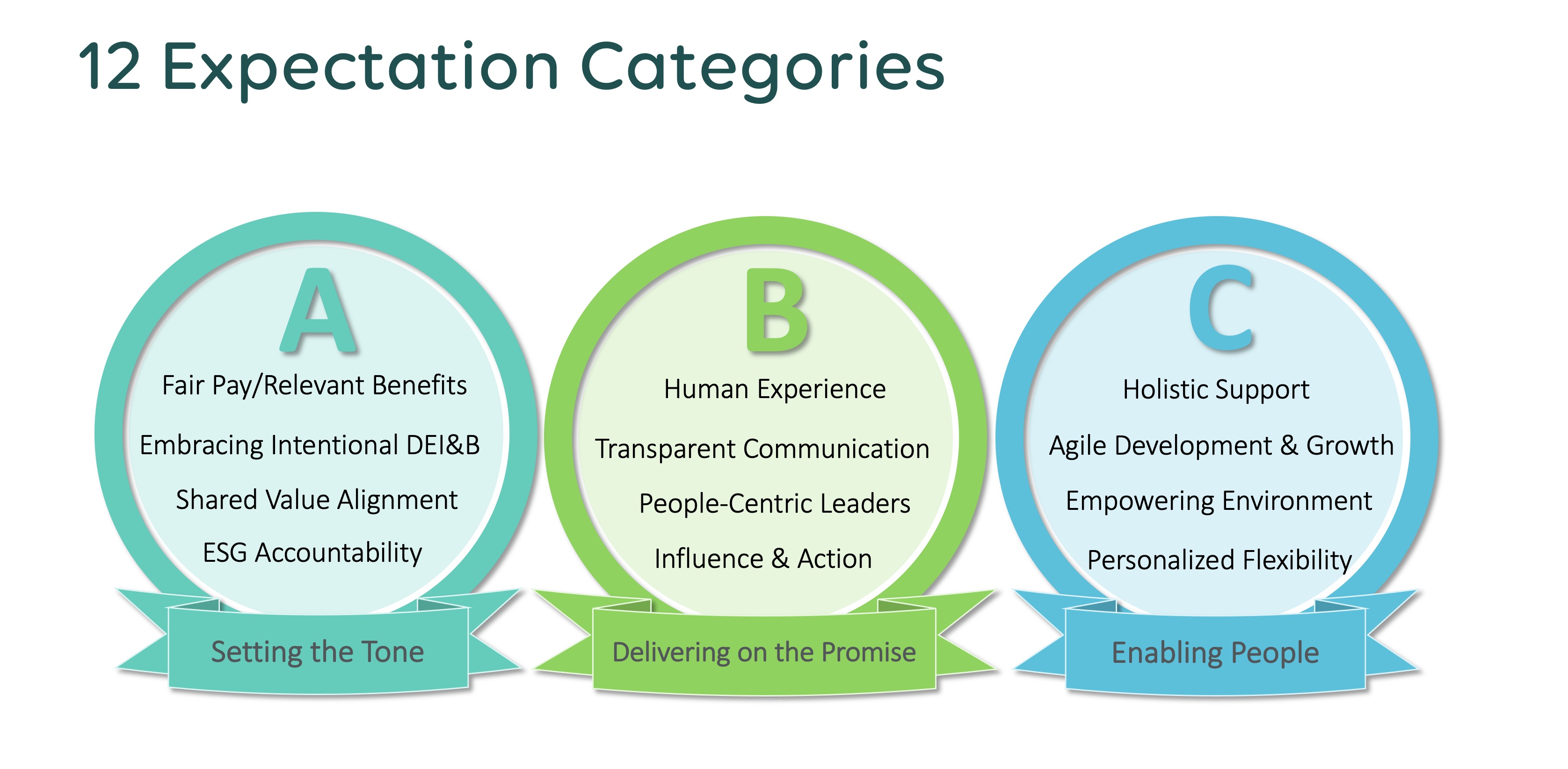
Address employee expectations to elevate business performance
The most critical differentiator for performance, innovation, and diversity of thought are your people and the culture you build to support them. It is no coincidence that the Fortune 100 Best Companies to Work For® outperform the market by a factor of 3.36, according to a long-term performance comparison from 1998 to 2022. The better your business can align with employee expectations, the more productive your people will be while driving more revenue in the door. This will hold true for decades to come, even with recent breakthroughs in generative artificial intelligence.
Companies that embrace the vital importance of employees in today’s business world avoid reducing their people to a function or a role—which inevitably leads to their employees quitting, ‘quietly’ or otherwise. Instead, the 100 Best are focused on understanding and addressing employees’ expectations and laying a foundation of trust. In fact, employers that create an employee-centric culture where employees feel heard, seen, and connected are far more likely to receive discretionary efforts from their people:
88% of employees at the 100 Best companies report giving extra effort, compared to 52% of workers at a typical workplace.
While it might feel as if today’s employees want everything and then some, you will find that most expectations fall neatly into one of the 12 categories above. This dynamic field of employee expectations is always evolving and has the potential to blindside companies that don’t have their fingers on the pulse of what employees need to thrive at work.
Considering the overwhelming evidence that companies can achieve substantially higher business performance by addressing employee expectations, contemplate the following action steps:
Employee expectations are the benchmark for the employee experience
Understand what today’s employees expect.
Gaining a comprehensive picture of what today’s employees expect is an essential first step in closing potential gaps between their expectations and the realities of their workplaces. You can determine how effectively your organization addresses employee expectations with this six-minute employee expectation–experience gap analysis (Triple E), receiving a practical roadmap to create an environment that attracts and retains top talent.
Double down on diversity, equity, inclusion, and belonging.
Take a second look at the 12 employee expectation categories above and you’ll find the majority are deeply rooted in diversity, equity, inclusion, and belonging (DEI&B) principles and values. This means that to meet employee expectations across the board, companies must commit to understanding, expanding, and measuring the impacts of their DEI&B efforts. Depending on where you are in your journey, you might start by making a business case for DEI&B to executive leaders, focusing on the business benefits of creating a culture built on trust, equity, and belonging for all.
Ask this one question every week to become a more people-centric leader.
While this sounds simple, many managers are reluctant, uncomfortable, or scared to have personal conversations with their employees. An effective way to bridge this gap—and to help you lead with more empathy at work—is by making it a habit to ask the same question of all your direct reports weekly. While the front end of the question always stays the same, managers should vary the back end of the question from week to week: What is one thing that would make your work more fun, more productive, less stressful, more engaging?
Here are two vital steps to make this approach successful:

Today’s talent wants more—much, much more. Out of 12 unique employee expectation categories identified by the research, only one has a monetary focus. The other 11 expectations reflect employees’ growing desire to feel heard, seen, and connected. Your people want to be uniquely valued and to feel safe bringing their whole selves to work. They want to do meaningful work. And they want leaders who are authentic, trusting, fair, and invested in helping their people grow and thrive in
their careers.
Companies that ignore these nonmonetary expectations struggle to attract, engage, and retain the best people for the job. And, if you can’t bring in or hang on to the right people to move your business forward, you may not be in business too long. There’s always a company ready to take your high-performers and your
market share.
Today’s talent wants more—much, much more. Out of 12 unique employee expectation categories identified by the research, only one has a monetary focus. The other 11 expectations reflect employees’ growing desire to feel heard, seen, and connected. Your people want to be uniquely valued and to feel safe bringing their whole selves to work. They want to do meaningful work. And they want leaders who are authentic, trusting, fair, and invested in helping their people grow and thrive in
their careers.
Companies that ignore these nonmonetary expectations struggle to attract, engage, and retain the best people for the job. And, if you can’t bring in or hang on to the right people to move your business forward, you may not be in business too long. There’s always a company ready to take your high-performers and your
market share.
Address employee expectations to elevate
business performance
The most critical differentiator for performance, innovation, and diversity of thought are your people and the culture you build to support them. It is no coincidence that the Fortune 100 Best Companies to Work For® outperform the market by a factor of 3.36, according to a long-term performance comparison from 1998 to 2022. The better your business can align with employee expectations, the more productive your people will be while driving more revenue in the door. This will hold true for decades to come, even with recent breakthroughs in generative artificial intelligence.
Companies that embrace the vital importance of employees in today’s business world avoid reducing their people to a function or a role—which inevitably leads to their employees quitting, ‘quietly’ or otherwise. Instead, the 100 Best are focused on understanding and addressing employees’ expectations and laying a foundation of trust. In fact, employers that create an employee-centric culture where employees feel heard, seen, and connected are far more likely to receive discretionary efforts from their people:
While it might feel as if today’s employees want everything and then some, you will find that most expectations fall neatly into one of the 12 categories above. This dynamic field of employee expectations is always evolving and has the potential to blindside companies that don’t have their fingers on the pulse of what employees need to thrive at work.
Considering the overwhelming evidence that companies can achieve substantially higher business performance by addressing employee expectations, contemplate the following action steps:
Employee expectations are the benchmark for the employee experience
Understand what today’s employees expect.
Gaining a comprehensive picture of what today’s employees expect is an essential first step in closing potential gaps between their expectations and the realities of their workplaces. You can determine how effectively your organization addresses employee expectations with this six-minute employee expectation–experience gap analysis (Triple E), receiving a practical roadmap to create an environment that attracts and retains top talent.
Double down on diversity, equity, inclusion,
and belonging.
Take a second look at the 12 employee expectation categories above and you’ll find the majority are deeply rooted in diversity, equity, inclusion, and belonging (DEI&B) principles and values. This means that to meet employee expectations across the board, companies must commit to understanding, expanding, and measuring the impacts of their DEI&B efforts. Depending on where you are in your journey, you might start by making a business case for DEI&B to executive leaders, focusing on the business benefits of creating a culture built on trust, equity, and belonging for all.
Ask this one question every week to become a more people-centric leader.
While this sounds simple, many managers are reluctant, uncomfortable, or scared to have personal conversations with their employees. An effective way to bridge this gap—and to help you lead with more empathy at work—is by making it a habit to ask the same question of all your direct reports weekly. While the front end of the question always stays the same, managers should vary the back end of the question from week to week: What is one thing that would make your work more fun, more productive, less stressful, more engaging?
Commit to consistency. While it might not instantly lead to feedback, if you continue to ask weekly, you will eventually receive incredibly valuable input.
Act based on the feedback you receive. This doesn’t mean that you must solve all the issues, but you should investigate all the information you receive and provide timely feedback (within a week or two) whether you have positive feedback or not.
Hoping to ride out the employee market is not a viable solution. Instead, recognize that your employees have expectations that need to be met for you
to unlock their full potential and maximize productivity.
It doesn’t matter how much or how little you have paid attention to employee expectations in the past. Today, you have the opportunity to set a new course:
It’s never too late to pause, reset, and reshape the workplace to best reflect
their evolving needs.
Note: This article was created by UKG.
1.
2.
Here are two vital steps to make this
approach successful:
Hoping to ride out the employee market is not a viable solution. Instead, recognize that your employees have expectations that need to be met for you to unlock their full potential and maximize productivity.
It doesn’t matter how much or how little you have paid attention to employee expectations in the past. Today, you have the opportunity to set a new course:
It’s never too late to pause, reset, and reshape the workplace to best reflect their evolving needs.
Note: This article was created by UKG.