How Daktronics Is Reshaping the Modern MLB Ballpark Experience


By — Front Office Sports
Posted — June 18, 2026
Share —


Sponsored by


The modern ballpark no longer revolves around a single screen. For decades, the main video board defined the in-game experience. It delivered replays, scoreboard updates, and the occasional moment of spectacle.
Today, that role has expanded into something far more complex. The ballpark has become a fully connected environment, where every surface, from the outfield wall to the concourse to the team store, contributes to how fans experience the game.
Daktronics has been building toward this moment for decades. Since its founding in 1968, the company has grown alongside the sports industry, evolving from scoreboards to fully integrated LED and audio systems. In 2026 alone, Daktronics provided products and services for 11 of Major League Baseball’s 30 teams, helping reshape how fans engage with the game across multiple touchpoints.
Across those installations, more than 40 displays combine for 91.7 million pixels and over 65,000 square feet of digital space. It is enough to cover the infield of a baseball field eight times. Five main video displays installed this year alone total 38,250 square feet, roughly five times the size of a baseball infield.
At Yankee Stadium, Daktronics upgraded the main video board to deliver twice the resolution of its predecessor, powered by 8.55 million LEDs, roughly equal to the population of New York City. The goal was not just clarity, but flexibility. A sharper canvas allows for more dynamic storytelling, more immersive graphics, and more ways to connect fans to the action.
“Throughout the planning and execution of this enormously complicated project, Daktronics has been a wonderful partner,” said Yankees Senior Vice President of Stadium Operations Doug Behar.
In Arizona, the Diamondbacks introduced the largest video display in the state, increasing its size by 52 percent and placing it among the top 10 in Major League Baseball. In Seattle, the Mariners’ upgraded display is large enough that, if turned vertically, it would stand taller than the Seattle Great Wheel at Pier 57.

Throughout the planning and execution of this enormously complicated project, Daktronics has been a wonderful partner.”
Doug Behar, Yankees Senior Vice President of Stadium Operations
But the headline numbers only tell part of the story. The real transformation is happening in how those displays are used.
The most valuable surface in any of these buildings is not the showpiece in center field. It is the wall behind home plate. Backstop displays sit in the frame of every nationally televised pitch, which means they are no longer signage. They are media. A logo on that wall is buying eyeballs in living rooms in Philadelphia, and Cleveland, and Houston, half innings at a time, with the production flexibility to rotate inventory across an entire game.�
Fans expect more than replays. Sponsors expect measurable exposure. Teams expect systems that can adapt as quickly as the game itself. And increasingly, that environment is being built on the systems Daktronics has spent decades refining.
Go to Daktronics
Back to Top
Once you accept that logic, it does not stay in the bowl. It walks the concourse, opens the door of the team store, and enters into the clubs.
In Philadelphia, the Phillies built LED into their new retail space, on the simple premise that fans linger longer in environments that feel alive, and longer dwell time turns into merchandise revenue.
In San Diego, the Padres paired new displays in their club spaces with an audio control upgrade, on the equally simple premise that fans do not separate what they see from what they hear, and a premium experience has to land on both channels at once.
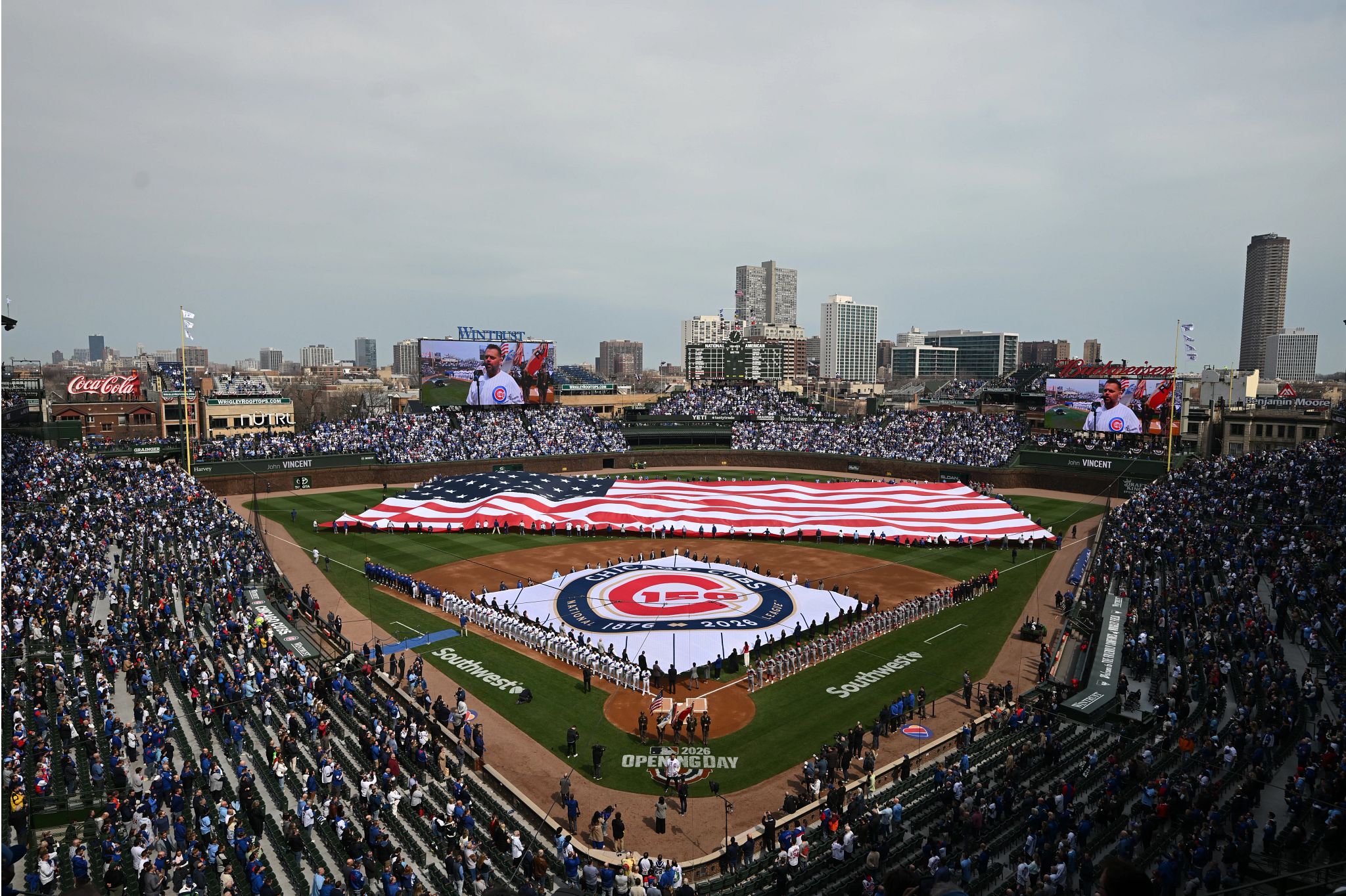
Then there is Wrigley Field, where historical constraints require a different approach. Rather than replacing the structure entirely, the Cubs upgraded the existing board using Daktronics’ Renew solution, installing a new system within the framework already in place. The result: a display powered by more than seven million LEDs that balances modern performance with preservation.
“Video boards play a key role in driving fan engagement at the Friendly Confines, and our partnership with Daktronics ensures we continue to raise the bar,” said Cubs Vice President of Content and Production Matt Romito.
Together, these changes point to a broader evolution in how teams think about the ballpark.
It is no longer just a place to watch a game. It is a connected environment designed to hold attention, create immersion, and deliver value across multiple audiences.


Video boards play a key role in driving fan engagement at the Friendly Confines, and our partnership with Daktronics ensures we continue to raise the bar.”
Matt Romito, Cubs Vice President of Content and Production
In Anaheim, the Angels rolled out Camino, a real-time rendering platform that lets production teams build and change graphics on the fly, matching the live nature of the games. A walkoff home run, a pitching change, a bat flip that takes the internet by surprise, all of it can now trigger custom content the moment it happens. The board stops being a slideshow and starts being a teammate. That is a meaningful shift in what an MLB production crew is even capable of doing inside a game.