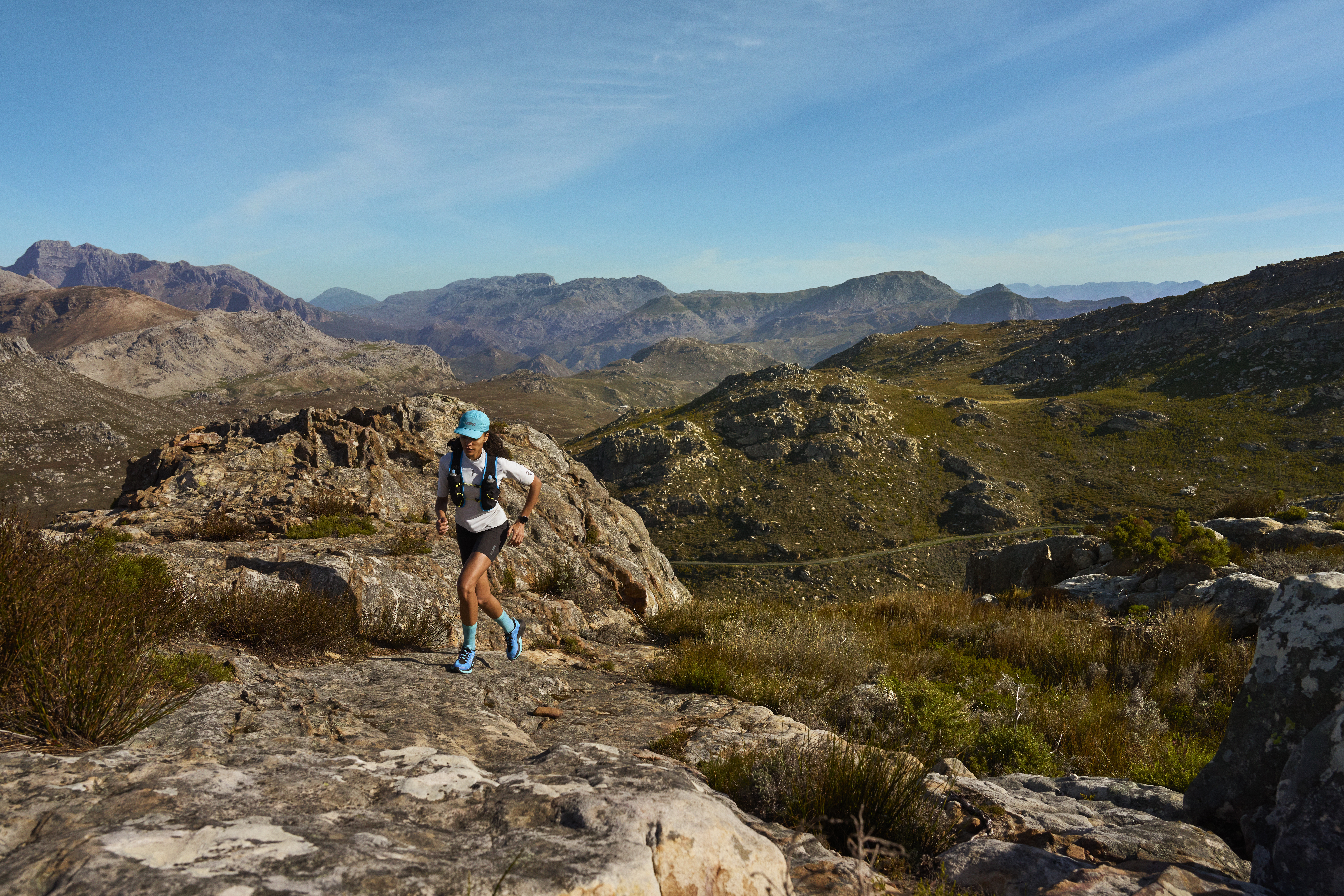
‘Run With the Competition’: Ultra Trail Runner Lotti Brinks Is Back With Big Goals

By — Front Office Sports
Posted — August 14, 2025
Share —


Sponsored by

Lotti Brinks was introduced to distance running in high school. Although her native Germany doesn’t offer organized school-sponsored sports like in the U.S., her natural talent earned her a scholarship to run at the Savannah College of Art and Design (SCAD).
�
She trained under ultra-running legend Patrick Reagan, a three-time winner of the Javelina Jundred, who heavily influenced her running career and later trajectory to the trails. Though she excelled during her first two years, Brinks struggled with injuries later in college and transitioned into cycling—a sport that still serves as an important part of her training today.

Now 29, Brinks balances her training with a full-time job in marketing as well as her side hustle, a custom design studio that she runs out of her garage with her husband in Boise, Idaho. This summer, Brinks, who is a HOKA-sponsored athlete, is preparing for a huge challenge: the CCC (Courmayeur-Champex-Chamonix).
It’s a 100-km ultra-trail race that traverses Italy, Switzerland, and France—and is considered to be one of the most challenging events of the Ultra-Trail du Mont-Blanc (UTMB) series. Last year, Brinks placed ninth overall, and this year, she’s been laser-focused on the mental side of the sport to place even higher—and hopefully hit the podium.
This interview has been lightly edited and condensed for clarity.
Front Office Sports: How is your training going?
Lottie Brinks: It’s been going really well; I’m really excited for it. I raced it last year and placed ninth, but I think I left a lot of time on the table in the early part of the race, so I’m trying to correct some of my mistakes from last year.
I raced twice this year: two 100Ks. I did Tarawera in February [in New Zealand] and Desert Rats in April [in Colorado]. After Desert Rats, I consciously decided not to race again and just really focus on having a long, consistent, very fun training block for CCC. I've been stacking the miles, stacking the work. I ran a 35-miler this morning and felt great. I can’t wait.

I’m excited to put some miles on the Mafate 5. HOKA made a lot of good upgrades to it. With the Mafate, you can go really fast, and I like doing some speed quality workouts in non-plated shoes, typically like a one-minute-off, one-minute-on type of workout on the trails. It feels really good on my feet to switch it up.
Lotti Brinks, Pro trail runner

Learn More about the Mafate 5
Go to HOKA
Back to Top

The German native—who works full time and bikes as much as she runs—is gunning for the podium at CCC this summer.


Lotti Brinks and her dog
FOS: When you say you left time on the table, what does that mean? What would you do differently?
�LB: A lot of it was kind of mental. The first 10 miles were actually great, I was in a really great position—I think I was fifth or sixth. And then from mile 10 to probably mile 30, I just dug myself this huge mental hole and dropped back to like 25th place. I had to claw my way back into the top 10.
I think that was partially because I had just come off Western States [100-Mile Endurance Run], and I was still kind of mentally drained from that. That’s part of why I didn't want to race as much this summer and really focus on keeping the fire going and doing a lot of mental training to actually show up to CCC completely fresh. Not just in-the-legs fresh, but also keeping my mind fresh.

I'm proud of how I made my way back into the top 10 by the end [last year], but I can't help but wonder what would have happened if I didn't let everyone go for 20 miles in the middle. I'm coming back with big goals and [a plan] to execute them from start to finish.
FOS: How does CCC compare to other endurance races?
�LB: There's a lot of hype. It's huge. There's arguably more pressure because there are more eyes on you. It's a big event—but that's also what makes it really exciting. It has a good amount of climbing and hiking. Most of the races that I run here in the States don't require poles, and they're not quite as steep, so that is something that makes CCC different and intriguing for me, too.


FOS: Do you have a race plan? For such a long trail, do you race against the competition, or do you have an idea of what your ideal pace is?
�LB: At this point, you have to race the competition. Every race these days, course records are being broken, and people run faster than they've ever run before. Going by time is just not flexible enough; people may be running 30 minutes to an hour faster than they have ever run before. If you want to be competitive, you have to run with the competition. My plan is to get in a good position early on, stay in it the whole time, and then close hard.
FOS: What is the strategy behind using poles in the race?
LB: For me, the poles really help to keep my cadence up. It's kind of like a metronome. It keeps you in your rhythm, it keeps you hiking fast. Also, the reason why most people use it is because it takes some of the stress off of your legs, especially on the steep uphills. You can really drive through with your arms and just take some of the effort off of your quads.
But some people don't like to run with poles at all because they're another thing you have to carry. If you're not training with poles, they just kind of get in the way, but I've learned that they help more than they hurt, and I like [them for] CCC.
FOS: You mentioned you ran 35 miles this morning. What does a typical week of training look like for you?
LB: This week is a little bit upside down. I don't usually run that long midweek.
Regularly, I have my normal easy days. Usually, my big workout is on Tuesday or Wednesday, and then usually on Thursday or Friday, I have a smaller fast workout. For instance, maybe on Tuesday, I would do hills and flat tempos, mixed, and then on Thursday or Friday, I would sprinkle in long strides, one minute on, one minute off. And then on weekends, I always reserve [time] for long runs, between 20 and 28 miles. [Mileage-wise], my baseline is usually 75 miles per week, and I’ll go up to 100 or 110.
I do a lot of mountain biking, between five and eight hours per week, and three hours a week of strength training. However, my mountain biking is less endurance-based and more skill-based. I do a lot of downhill and enduro mountain biking, so it goes back to the mental game and understanding your body, but it's not so much an aerobic stimulus.

FOS: What are you excited about with the HOKA Mafate 5?
�LB: I put a lot of miles on that shoe, and I love that shoe. It’s probably my main training shoe. I’m excited to put some miles on the Mafate 5. HOKA made a lot of good upgrades to it. With the Mafate, you can go really fast, and I like doing some speed quality workouts in non-plated shoes, typically like a one-minute-off, one-minute-on type of workout on the trails. It feels really good on my feet to switch it up.
FOS: You have a full-time job as well as a custom design and textile studio right in your house. How do you balance training with the rest of your life?
LB: I have running and mountain biking as my physical outlet. The design work is my creative outlet, and then I have my brain outlet with my day job. It definitely gets tricky at times, but it's good to be busy.