"I feel way more empowered now that I have an actual face and identity."
24 hours later, the chaos is gone, and I’m speaking with PinkPantheress under much different conditions—namely, my couch. She’s just wrapped a full-day shoot, and still sounds slightly out of breath when she dials in. She talks quickly in her lilting British accent, sometimes doubling back on herself, as if her thoughts are sprinting ahead and she’s trying to catch up. “It was exciting to work without autotune, because I never really get to do that,” she says of her recent NPR Tiny Desk concert, before admitting she was terrified.“I didn't really know what to expect.”
�
�
It’s Saturday night in New York City, and PinkPantheress is writhing in front of a crowd of sweaty fashion people. “Hey, ooooh is this illegal?” she croons. “HEY,” she yells, and the crowd answers: “This feels illegal!” She darts across the stage, body twisting to the frenetic drum-and-bass drop, caramel-streaked hair flying. I raise my phone for a video, but a wall of iPhones blocks the view. A bead of water (sweat?) flicks onto my arm; I try not to think about its source. “New YORK!” she yells, and the room erupts. I marvel at her stage presence, and also at how she’s surviving the sauna-like conditions of this fashion week party draped in a fur stole.
Depending on your level of online-ness—and whether your birth year starts with “20”—you may or may not need an intro to the artist known as PinkPantheress. Government name, Victoria Beverley Walker; Vicky, if you’re close. Even if you don’t think you know her, you’ve likely heard her music. Maybe she first appeared on your TikTok FYP in 2021: a whisper-soft voice floating over ten seconds of heartbroken-yet-cheerful drum and bass. Or maybe you’re blissfully offline (jealous) and only heard the synthy chorus—“My name is Pink and it’s really nice to meet you”—from her song “Illegal” echoing around you all summer.
PinkPantheress isn’t offended if you don’t know her, by the way. In fact, she’s not really doing any of this to get famous. “I don't know if I necessarily have the pop star thing,” she muses. “The insane, rigorous dancing and huge events, TV performances…I can definitely do some of them, but I think my mind isn’t built for it. I might have the physical resilience, but not the mental one.” ��It’s a lesson she learned the hard way. Before the viral hits, the artist known as PinkPantheress was young Vicky in Bath, England, a self-described “emo girl” sampling beats on GarageBand between classes, recording her airy vocals on top, and uploading the tracks to SoundCloud. “Oh my God, the things I used to do,” she laughs. “I would follow people and then unfollow them just so that they'd follow me back, because I was really desperate to get people that would listen to my music.” Somehow, it worked. In under three years, PinkPantheress went from making songs in her bedroom to winning BBC Sound of the Year (an honor previously given to Adele and Sam Smith). Her hit with Ice Spice, “Boy’s a Liar Pt. 2,” became a global anthem, racking up hundreds of millions of streams. Olivia Rodrigo tapped her to open her tour; Rosalía passed her the Billboard Women in Music producer crown.
�
�
�

"I like to pace myself and
I like to keep myself comfortable."
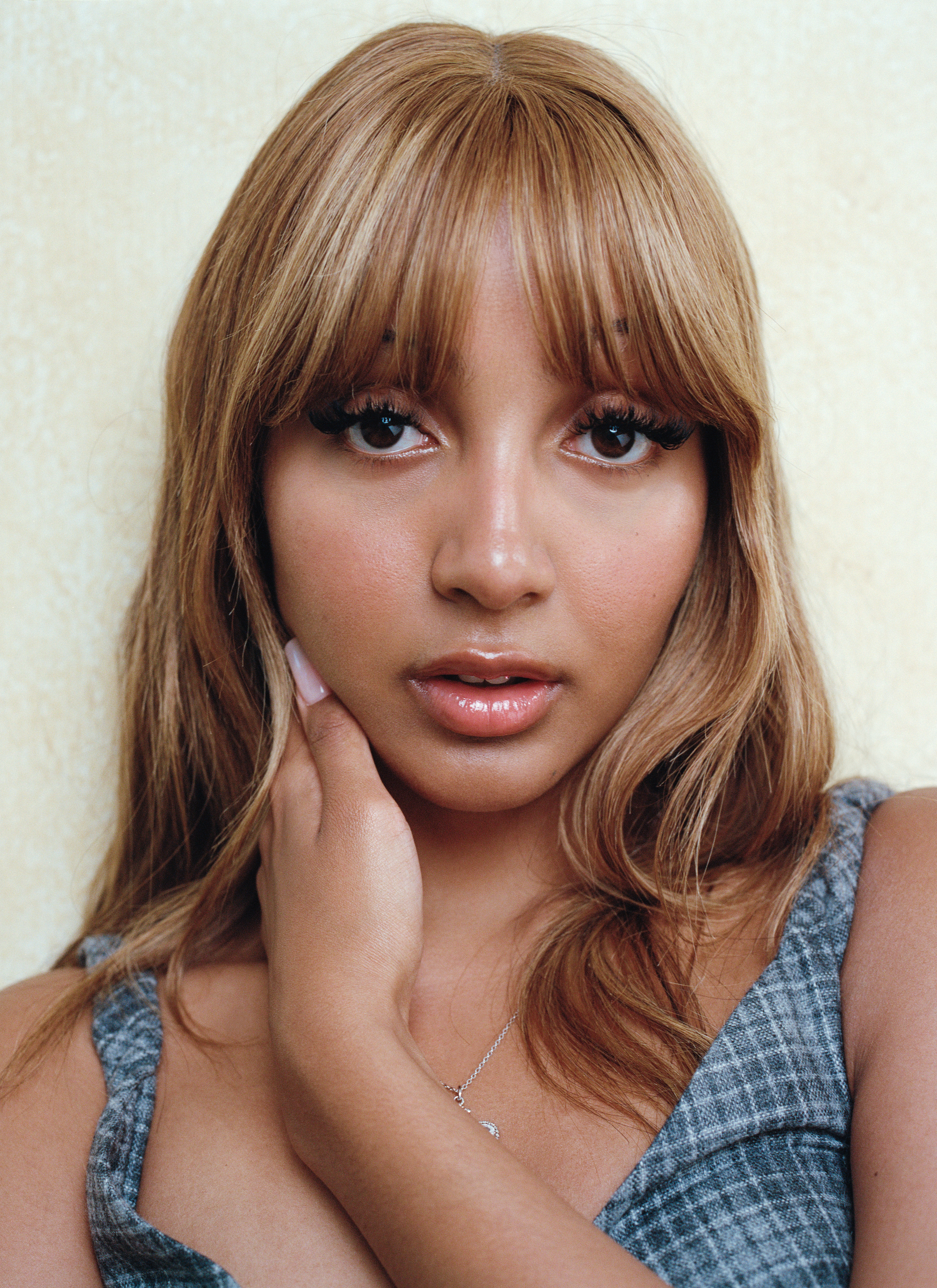


HER NAME IS PINK
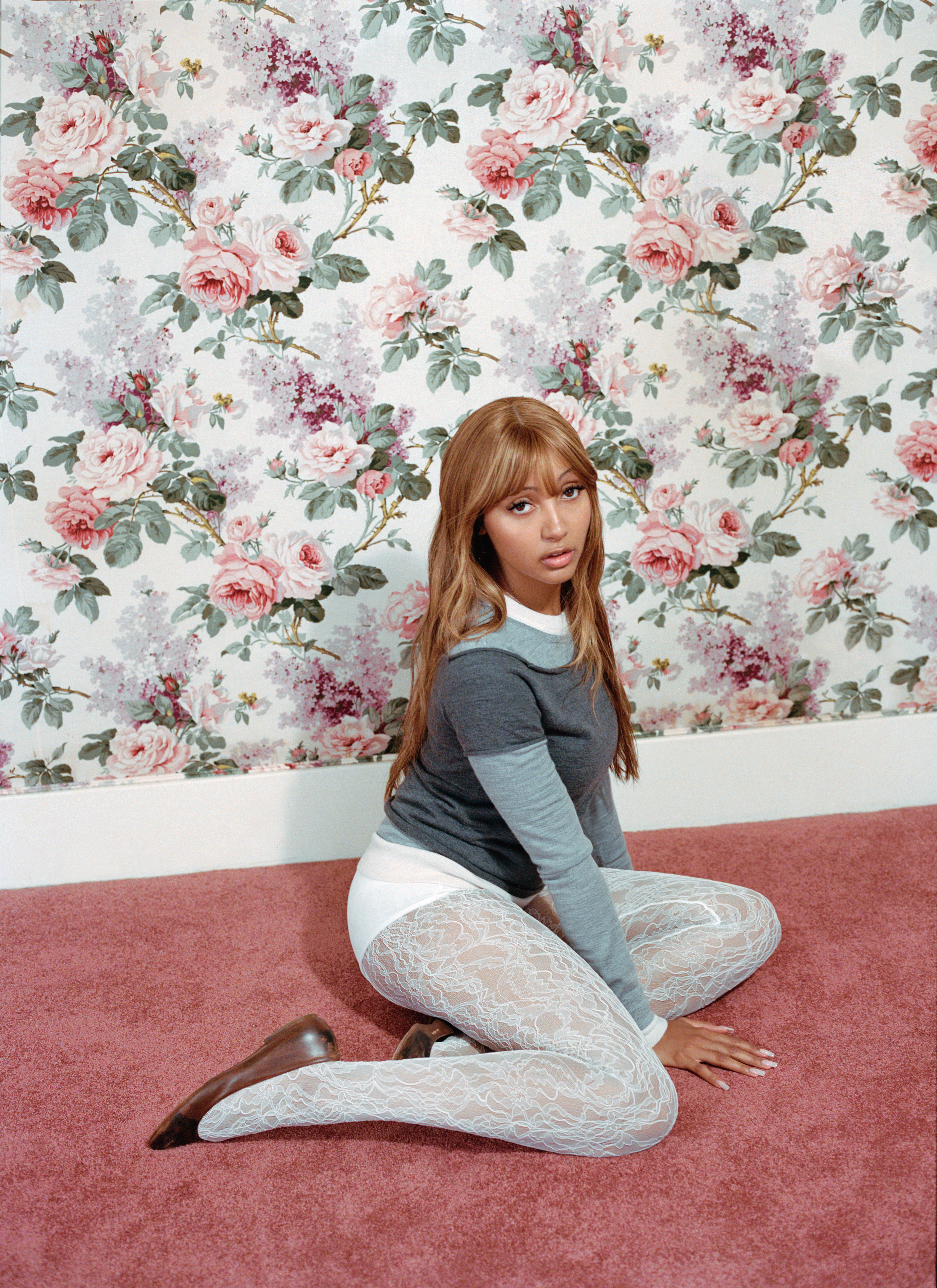
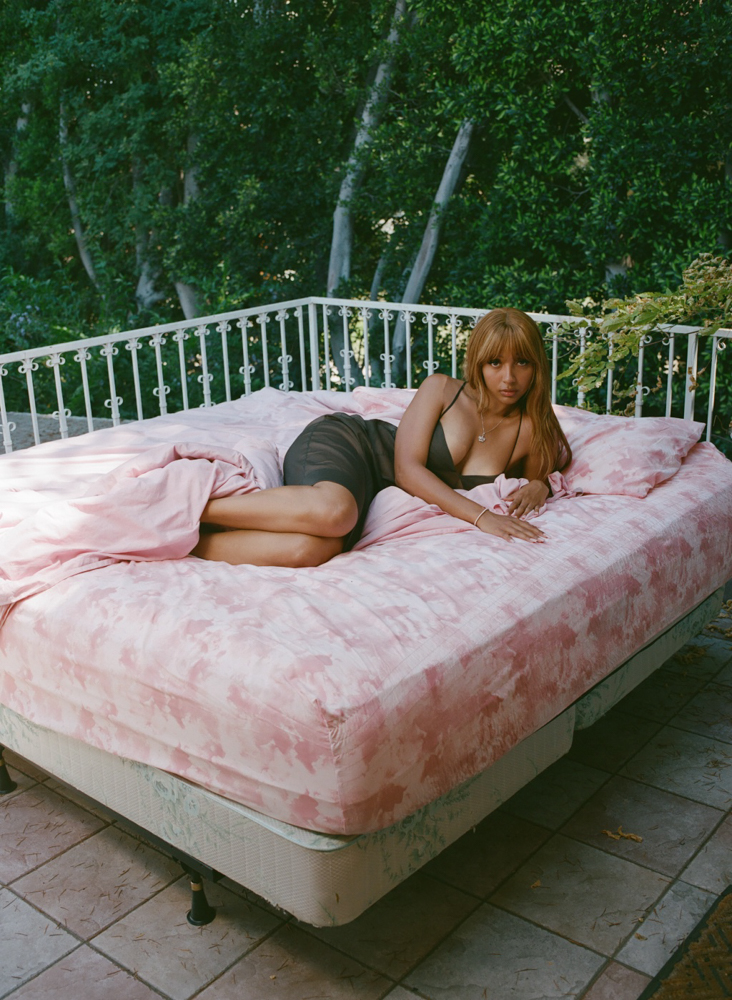
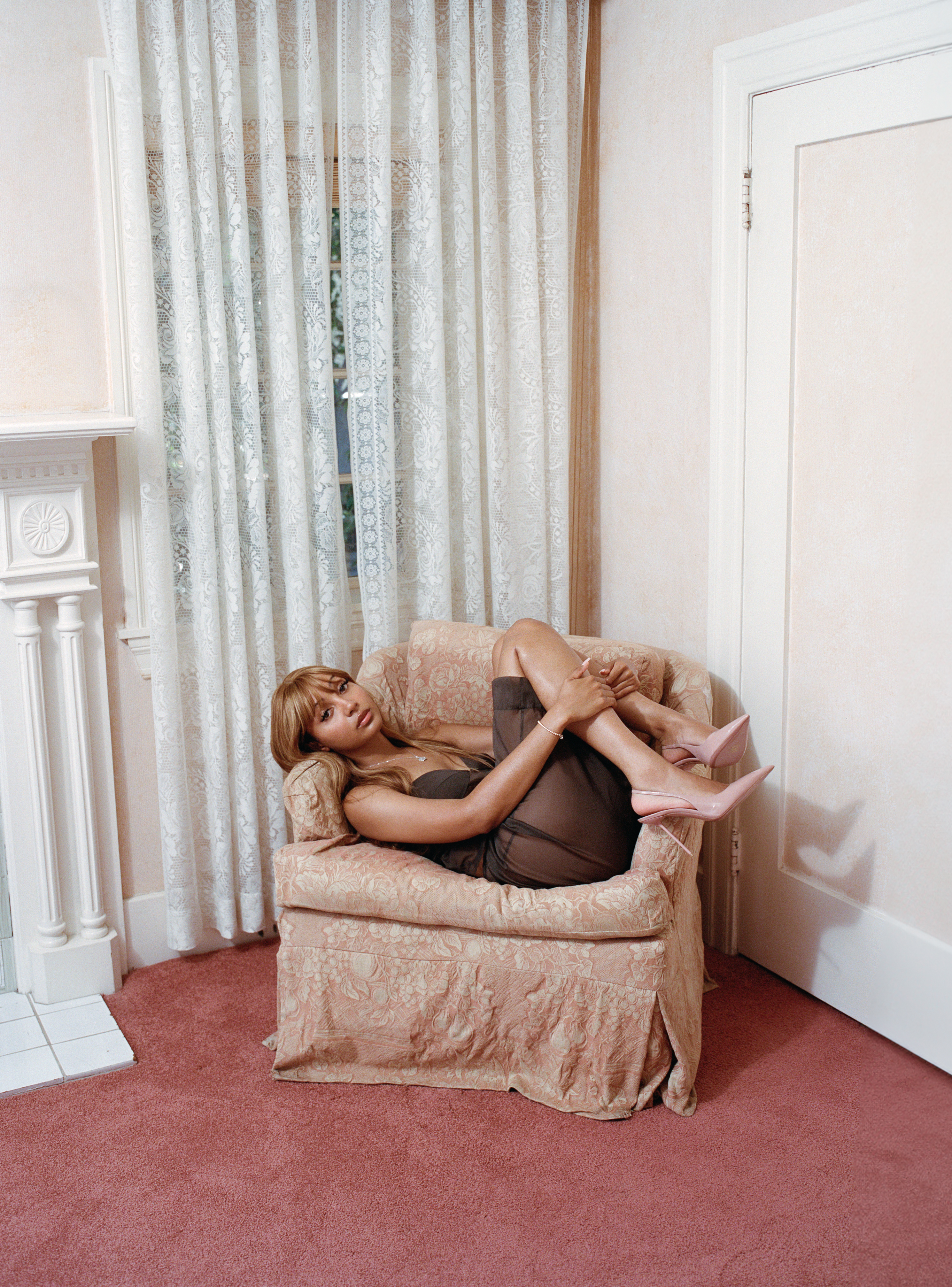

"I WANTED THE CONFIDENCE TO FEEL LIKE [PINK PANTHERESS] EVERY DAY."
"I like to pace myself and
I like to keep myself comfortable."
"I WANTED THE CONFIDENCE TO FEEL LIKE [PINK PANTHERESS] EVERY DAY."
HER NAME IS PINK
Tell me—what were you like as a child?
In lower secondary school, I probably wasn’t that cool. I was really emo and I wanted to be different. Then when I got older, 15 or 16, I started being more sociable and I ended up being quite popular in my year. I just tried to make friends with everybody—I didn’t care who anyone was. I just wanted everyone in the UK to know who I was. But I wasn’t the popular, bitchy type. I was friendly popular.
I love that. A lot of people lean into the whole ‘I was an outcast’ thing, but you’re like, no—I was well-liked.
I definitely was in my younger years, like, that girl. But as I got older, I was like, no, I can’t be bothered to be the outcast anymore. It doesn’t get you anywhere.
When you first started releasing music, you were a bit anonymous. What was that decision like?
I wasn’t really interested in people knowing too much about what I looked like. I wasn’t interested in people from home knowing who I was because even though I got on with people, I still felt quite held back by my creative output at the time. I wasn’t sure if it was going to be ridiculed. So I kept a low profile until I knew I was doing well enough to have people not make fun of me.��Eventually, I started showing my face and at some point people couldn’t really say anything because it was like—well, she’s doing a good job. I took my time. I’m really happy I did it that way.���Do you ever miss those anonymous days?
I feel way more empowered now that I have an actual face and identity. At the beginning it was hard to have a direction with my creativity, to even market myself, because if you’re not forward-facing, it’s hard to market someone that’s not. But I think it was endearing to some people that I wasn’t trying to show myself.
And even now, I still let the music speak. I’m not super forward-facing in the way some artists are.
"I'm not necessarily trying to have people know too much about what I'm doing."
�This summer, your song Illegal blew up everywhere. Were you surprised by how it took off?�
I wasn’t sure which song was going to do well, if any. My manager told me it was picking up, so we decided to make the handshake trend [for TikTok]. The handshake's quite funny, isn't it? I've never really tried to lead a trend before, but I was like, how funny would it be if I just did something a little bit cute? And then I just did. People don't realize that [the song and trend] actually came from me. I was gassed.���You’ve said you don’t really want pop star fame. What does success look like to you instead?�
I think what I'm trying to be is something a little bit below the tier of pop star where it's like, where you're comfortable with your fan base and you're able to release and not have to worry about how well it does. But on the flip side, I do read a lot of people [online] that say, “Wow, I've just discovered PinkPantheress yesterday and I don’t know where she's been all my life.” More people might be looking for an artist that make music like I do, or some people might identify with me, but they just haven't discovered who I am—that's what I'm looking for.”���You canceled some tour dates last year for mental health reasons, and the response was overwhelmingly positive. A lot of young musicians feel the pressure to keep going in order to “break through,” so what you took a lot of courage.. How did you feel when you made the decision to take a step back?�
The insane rigorous dancing and huge events, TV performances…I can definitely do a few of them, but I think my mind and body isn't built for it. I just think if you don't have that resilience, which I can safely say I don't, when I push myself to do something, it just ends up being a complete disaster. And I've done it before where I've just pushed my mental [state] to a point where I'm like, yeah, I'm fine with this. This is what I'm meant to do. I want to be this pop star, and then I'll do what a successful pop star does but then I realize I don't have the resilience for it mentally.
�
I never want to let anybody down, but I think in that one moment, I decided it was just too much. I learned a lot. Weirdly, it gave me more confidence. And ever since that happened, I've actually been delivering the best shows of my career.���How do you take care of your mental health on the road now?��
Having my best friends around me helps the most. That, and being open about what I need. I think it’s important to talk about it.�

��How do you decide what parts of your life you share publicly?
I don’t really talk too much about my private life. I don’t talk about my family, or people I’m dating. If I’m in public, I’m not trying to be seen for anything other than the creative stuff.���You’ve talked before about representation and being one of the few women of color in the electronic music space. What has that experience been like?
At the beginning of my career, I didn’t think about representation too much. I always felt like I was too small to represent anybody. I didn’t think anyone was going to look at me and think, okay, she did it, so I can too.��But as I’ve gotten older, I feel like I’m solidifying myself more. I have a lot of East African fans who say, “You’re doing this for us.” That makes me so happy because when I was growing up, there weren’t that many people I could look at and feel that way about.�
Kelela was one of the first. She’s East African too, makes electronic music, is true to herself. She was one of the reasons I started writing the way I did.���Your mom is from Kenya—did that shape your sense of identity growing up?�
I think it gave me a sense of confidence. Where I grew up wasn’t super diverse, but I leaned into being Kenyan because I was treated like I was African first. I had a cousin from Kenya who I spent 90% of my time with outside school—she taught me how to do my hair, to love my body, to get into sports.
I think a lot of mixed girls sometimes feel torn between identities, but I never felt that way. I always felt very confident in who I was.
�
I have to ask about your personal style—because you’ve become a bit of a style icon. A journalist once called your style “department store manager.” How would you describe it?�
I’d say kitsch. It's quite messy, but it's still something that adds to my personality. It’s comfortable. When I was younger, the way that I dressed was a direct correlation with what music I was enjoying. I was absolutely obsessed with wearing merch from my favorite bands, wearing things that virtue signaled what I was about. Now that I’m older, the way I dress doesn’t necessarily signal who I listen to. But I do think it signals that there's a comfortability in looking a bit silly. For me, it just gives me a layer of confidence—I don't really care what people have to say.���Do you have any favorite brands?�
I really like Acne, I love wearing Miu Miu a lot. I’ve also really enjoyed Sketchers for some reason.
�
How do you shop?
I'm Depop all the way. I go and scroll. I don't save. I just go crazy. When I say go crazy, I mean I literally just add, add, add, add. But I generally don't spend that much money at all. I'm very scared of going broke! I think it’s the African in me.��
What would you tell young Victoria, alone in her room uploading music to Soundcloud?
�
I would say that you should be super proud of yourself. I'm a big manifester and when I was younger, I would be going crazy trying to manifest even the most basic things, or manifesting some level of success. I'd write down, 'You're going to have a huge song by the time you're 19’ in my diary 50 times. I would go outside and speak to the stars. Oh my God, I used to go crazy with it. I even thought I missed my shot once because an A&R messaged me on SoundCloud and I didn’t see it until days later. He didn’t respond when I finally replied and I thought, that was my chance, my manifestation happened, and I blew it. A year later, the same A&R tried to sign me. It all worked out.
�
What are you manifesting now?
�
A good tour. That will do for now.
Photographs by Daria Kobayashi Ritch
Styling by Mindy LeBrock
Written by Faith Xue, Editor-in-Chief
�
Hair: Fitch Lunar
Makeup: Emily Cheng
Manicure: Marielle Co
Photo Assistant 1: Derek Patrick
Photo Assistant 2: Jabari Wimbley
Creative Producer: Czar Van Gaal
On-Site Producer: Sara Jameson
Designer: Sierra Cook
Senior Fashion Editor: Ella O'Keeffe
Social Strategy Lead: Kala Herh
Social Creative Lead: Natasha Sheridan
�
ST AGNI TOP AND SKIRT, PARIS TEXAS SHOES
REPLIKA VINTAGE TOP
STYLIST'S OWN DRESS AND SHOES
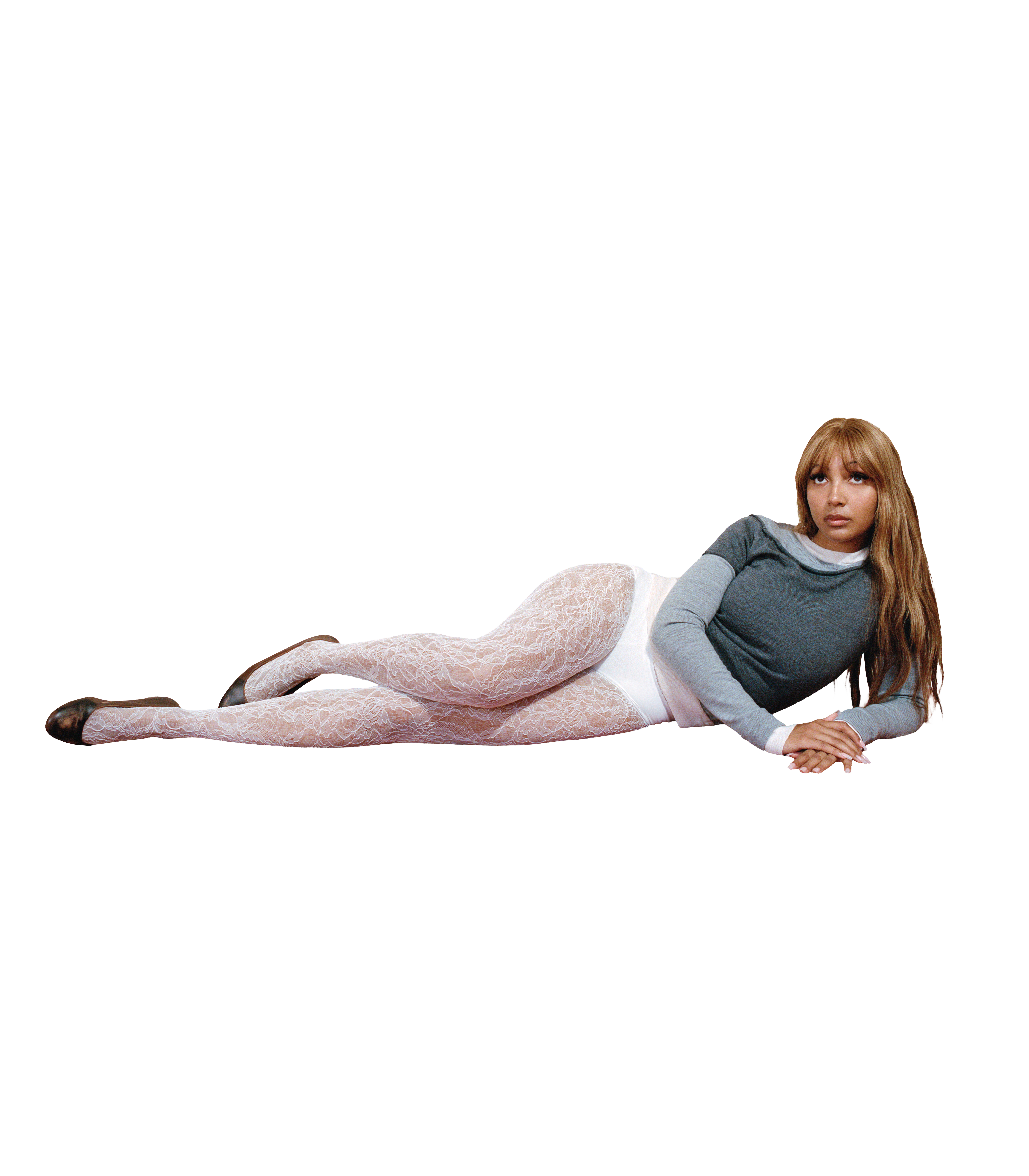
STAUD TOP, WOLFORD UNDERWEAR, STYLIST'S OWN TIGHTS, REPLIKA VINTAGE SHOES
HER NAME IS PINK
HER NAME IS PINK
Then, she had to walk away from it all, citing health reasons and how she had "reached a wall" that she was struggling to "penetrate through.” Fans rallied around her, and the response was overwhelmingly supportive. “It was a tough decision because obviously when you do that stuff, you’re letting someone down,” she says.. “I was upset that I had to do it, but at the end of the day, it was still the right thing. And I'll never forget the amount of support that I had from other artists who told me, ‘Wow, I wish that I had the strength to do what you did and just step down when I knew it was enough.’”�
It’s this push-and-pull—viral fame versus real-life boundaries—that defines PinkPantheress right now. She resists pop formulas (her new album, “Fancy That,” clocks in at just 20 minutes), keeps her personal life private, and still gushes about her idols. “I’m the biggest Rema fan,” she says, practically vibrating through the phone. “I would die for Rema. I shake when I see him. I shake, I shake, I'm shaking. I’m obsessed.” She’s already collaborated with him, along with KAYTRANADA, Ice Spice, and Kelela, the latter of which describes listening to Pink’s songs for the first time as “cathartic.” “Hearing someone who cites me as an influence while also carving out such a distinct lane of her own…it felt like having the ball thrown back,” Kelela tells me about working with PinkPantheress. “When we finally made a song together, it felt less like meeting for the first time and more like a reunion."
One dream collaborator remains, however: “I think Doja Cat is the best pop writer we have,” PinkPantheress says. “I would love to do a song with her because her thing for melodies is incredible. When I hear something she's written, I can always tell it’s her.
Soon, she’ll be embarking on the North American leg of her tour. I ask her if it feels like déjà vu to last year, or if any old anxieties are resurfacing, but she swears things feel different this time. “In my previous tours, before going onstage, I’d dread it and think, what if I let everyone down, or what if something goes wrong?” she says. “But this time, it’s just such a different headspace for me; I’m looking forward to everything. I think it's going to be fun.”
Ahead, I sit down with the reluctant pop star and discuss everything that’s changed in the past year, dealing with newfound visibility, and what happens when you manifest your dream life…and actually get it.
�