Learn more about how SAP is helping agencies modernize across government missions.
Learn more
We’re in a world now where generative AI is driving tremendous accessibility to innovation. It’s taking out the cost to innovate and helping agencies to realize the outcomes we’ve long envisioned.

David Robinson has been waiting a long time for this moment.
For nearly two decades, he’s been encouraging government agencies to innovate — and now technology can deliver like never before. “Federal agencies struggle with the complexity of IT modernization, which often is perceived as a costly and time-consuming challenge,” said Robinson, president of Cloud ERP and managing director of U.S. public services at SAP. “Today, I see a whole new range of opportunity.”
�
Technology is making it possible to accelerate modernization in support of true mission impacts. “We’re in a world now where generative AI is driving tremendous accessibility to innovation,” Robinson said. “It’s taking out the cost to innovate and helping agencies to realize the outcomes we’ve long envisioned.”
�
To take advantage of this opportunity, Robinson said, agencies need to adopt a new operating model — one centered on continuous innovation and efficiency and powered by a unified digital foundation.
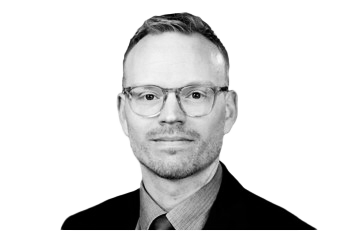
Leadership Voices
David Robinson
How government can rethink its approach to IT modernization



Sponsored by:


Challenges to modernization
Robinson has watched agencies struggle to modernize under the current operation model — the way in which IT professionals make systems function — much of which has remained stagnant. Methodologies and tools haven’t changed for years, if not decades, nor has the way the government evaluates, procures and deploys new technologies.At the same time, agencies are bogged down by technical debt. “For years, applications were designed with on-premise architectures,” he said. “With the way these customizations were done and the level of non-standard capability, the complexity in these environments has made them nearly impossible to change.”
A new operating model could move the needle here, by leveraging cloud architecture and AI capabilities specifically with an eye toward IT modernization. Thanks to these cutting-edge tools, many of the costs associated with modernization are shrinking.�
Agencies need to take advantage of this evolution, or else risk being outpaced in the IT space. “The longer government does not get to a state of modernization, the further behind they will fall,” he said. “Now’s the time to disrupt that.”
�
�
�
The longer government does not get to a state of modernization, the further behind they will fall. Now’s the time to disrupt that.
Changing the focus
While the current operating model has worked well enough in an on-premises environment, the cloud has introduced a faster rate of change. Interoperability is no longer a nice-to-have but a must-have.�
In a new operating model, “we get away from building applications, to composing applications. We get away from customizing and we focus on building extensions and building interoperability,” he said.�
Rather than focus on merely launching and sustaining systems, agencies need a model that puts the emphasis on “how they extend those applications to meet unique mission requirements,” he said. “That is how all IT leaders and organizations in the future will operate.�
In Robinson’s vision, “we’re thinking about an IT professional’s work being less focused on commodity functions — infrastructure, building and operating systems, ensuring that the systems are available and secure,” he said. “That’s all now engineered into the application delivery, which gives time back to IT professionals and business leaders to focus on looking for new opportunities to innovate.”�
In this model, rather than focusing on making the systems work, IT leaders can instead ensure that the systems work for the mission. Technology, he said, is supposed to drive outcomes.”�
In a new operating model “you can implement 10 incredibly innovative capabilities in a year, where in the past you could do two. That changes how the enterprise functions, not just from an IT spend, but in terms of results, in terms of the value realized,” Robinson said. “It frees government to actually start realizing the benefits of technology.”
�
�
�
�

AI is freeing people up to do things that require more of that human touch.
Pathway to modernization
The tools of technology today are more efficient and more accessible. No-code solutions and AI-driven approaches reduce the cost to innovate and increase the velocity at which change can be implemented. This results in a new and more effective pathway to modernization. It enables a persistent innovative state, through which IT teams agency leaders can more quickly identify new opportunities and respond to new mission and business requirements.�
The SAP Business Suite can help to bring that vision to life. “For decades, we have focused on end-to-end business and mission process integration,” Robinson said. Areas like HR, supply chain, procurement, finance and citizen engagement: “All of those are connected together with a common data model and a common user experience.”
With SAP, agencies can get the latest capabilities while still addressing differentiated or non-standard requirements. “You can do two things at the same time,” he said, “fit the standard and protect the clean core. You’re always getting the very latest capability, feature and function, and you can innovate without disrupting the core.”
�
The speed of modernization
�
AI and real-time data will play a key role as government agencies look to this new operating model to help accelerate much-needed modernization efforts. In IT environments where documentation tends to be woefully lacking, for example, Gen AI services can bring greater understanding to current environments, current technical debt and all of the capabilities that have been built over time.
“It helps you map your business needs against the target environments in days or weeks, rather than months,” Robinson said. “That changes the speed at which modernization can happen.”
Looking ahead, a new operating model can empower agencies to modernize once and innovate every day, paving the way for lasting impact across the federal enterprise. “By leveraging AI along with proven methodologies to deploy and operate these large government enterprise estates, it allows us to consolidate existing systems that may be redundant, with duplicative costs,” Robinson said. “Step one is to consolidate and step two is to modernize. Then, once you modernize, you can innovate. Now we have the ability to drive all of that, in a way that gets to true mission success.”
�
�

President and Chief Revenue Officer, Cloud ERP, SAP