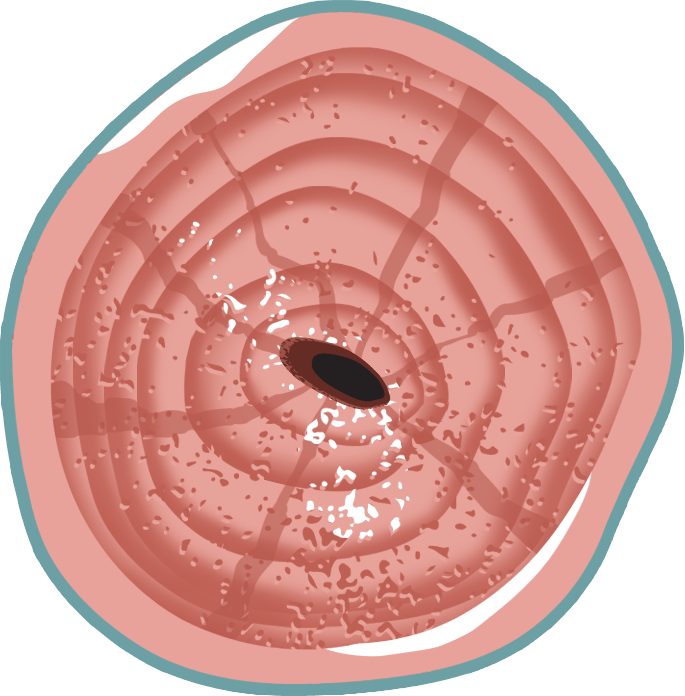
EoE Progression Guide


Inflammation
Esophageal remodeling
Fibrostenosis


Click the "pages" button at the bottom left and choose a layout you want (ranging from 4 — 8 Stages)
�Delete the pages you don't need + this instruction box
Eosinophilic esophagitis (EoE) is a progressive disease that begins with inflammation in the esophagus.
It involves the buildup of immune cells and inflammatory molecules, typically in response to a food or environmental trigger. Inflammation can contribute to symptoms of EoE, but they may be difficult to recognize. This can lead to delays in diagnosis. You may need dietary changes and medication to help manage inflammation in EoE.
If left untreated, chronic inflammation in EoE can cause lasting changes to the esophagus. Fibrosis, or scarring, starts to develop, and medications or dietary changes cannot reverse this.
An endoscopy can help doctors monitor changes to
the esophagus. These changes may cause additional symptoms as swallowing or passing food or liquids through the esophagus becomes more difficult.
Fibrostenosis is the narrowing of the esophagus caused
by scar tissue buildup. There is no treatment to reverse scar tissue, but esophageal dilation can help manage the narrowing of the esophagus. This involves inserting a flexible tube through the mouth and into the esophagus, then inflating a small balloon to stretch the esophagus. The likelihood of having esophageal narrowing due to fibrosis doubles for every 10-year increase in age, highlighting the importance of early diagnosis and treatment.
est. read time: 5 min