Leading-edge solution for enlarged prostate brings restful nights and the freedom to do what you love, or what makes you happy.
Michael Stack had always been concerned when it came to his prostate health. His father had prostate cancer, so Michael was vigilant in getting his blood tested for the dreaded disease. And while Michael avoided cancer, he did develop Benign Prostatic Hyperplasia (BPH), a non-cancerous enlargement of the prostate. He took medication, but through the years, the meds only helped so much.
In fact, Michael had been suffering with his BPH for what seemed like an eternity. Every night, he’d wake up four to six times just to stand there and hope to pass a tiny bit of urine. He was losing a lot of essential sleep and experiencing discomfort that followed him throughout his groggy days. The ache and inconvenience eventually became so intense that Michael began looking into possible surgical procedures that might help.
Then, Michael learned about a leading-edge, minimally invasive solution to his problem.
Prostate artery embolization, or PAE, is a nonsurgical outpatient procedure for an enlarged prostate that alleviates symptoms while preserving much of the gland.
A fast, safe, and comfortable procedure
While these symptoms are not deadly, they are serious and cause a lot of suffering and discomfort. And there’s no reason any man should have to live with BPH.
Traditional treatments include medications, which can have side effects, and surgery that can be very hard for the patient. But there are also easier options that can alleviate symptoms while being quicker and more comfortable with minimal side effects. One of the most effective and leading-edge of these treatments is PAE.
SCROLL
Prostate artery embolization reduces an enlarged prostate. After a consult and a diagnostic MRI, the patient is scheduled for the procedure. During the procedure, the interventional radiologist makes a tiny incision in the groin or wrist and uses a moving X-ray to guide a catheter through blood vessels to the arteries supplying blood to the prostate. Once positioned, the radiologist deposits tiny beads to block off some of the blood vessels, which causes the prostate to shrink over the next week to three months, reducing pressure on the urethra and relieving the symptoms.
The procedure is fast, safe, and since “twilight” sedation is used instead of general anesthesia, patients can return home the same day.
“The procedure lasts one or two hours, there’s no pain involved, and following the procedure, the patients will go home a few hours later to continue their recovery at home,” says Dr. Bouchareb. “After the procedure, men can experience a relief of symptoms in as little as a few days. The full effect occurs at about three months.”
Lorem ipsum dolor sit amet consectetur adipiscing elit.




Subtitle goes here
75
Lorem ipsum dolor sit amet consectetur adipiscing elit
%
lorem ipsum dolor
94.4
%
lorem ipsum dolor set amit
“The best thing I ever did”
For anyone in Central Texas considering this procedure, ARA Diagnostic Imaging is a natural place to start. ARA specializes in cutting-edge imaging and standards of care. But more than that, they emphasize the personalized approach to medicine and the importance of empathy and compassion in the patient experience.
“To do this procedure safely, accurately, and set yourself up for the most success, you do rely on a lot of technology. And here at ARA, we have all the bells and whistles, the state-of-the-art machinery, and I use it to its full effect,” says Dr. Bouchareb. “But we also expect the highest level of expertise, professionalism everywhere from the physicians to the nurses, medics, and coordinators. Everyone is involved with making the process as smooth and pain-free as possible, with the maximum benefit to the patient."
Learn More

"The procedure lasts one or two hours, there’s no pain involved, and following the procedure, the patients will go home a few hours later to continue their recovery at home."
- Dr. Marouane Bouchareb, ARA Diagnostic Imaging
“The more I learned about PAE, the more excited I became, because it seemed to be a very easy procedure to have,” says Michael. “That’s why I went out and started to investigate various sources here in Austin and happily came across ARA Diagnostic Imaging and Dr. Marouane Bouchareb.”
ARA Diagnostic Imaging is a radiology group that provides medical imaging services to Central Texas through 17 outpatient centers and in 24 hospitals within the region. Michael and his wife went to ARA Midtown and met with Dr. Bouchareb, an interventional radiologist, who answered all their questions and concerns about PAE.
Dr. Bouchareb’s confidence, compassion, and clear explanation of the procedure were enough for Michael.
“I said right then and there, ‘Let’s do it,’” says Michael.
"Everyone is involved with making the process as smooth and pain-free as possible, with the maximum benefit to the patient."
- Dr. Marouane Bouchareb, ARA Diagnostic Imaging
5.6
%
By Monica Vanover on Nov 21, 2025
Michael is far from alone. All men’s prostates continue to grow throughout their lifetimes. By age 50, about half of men have what is considered an enlarged prostate. And by age 80, that number jumps to roughly 80%.
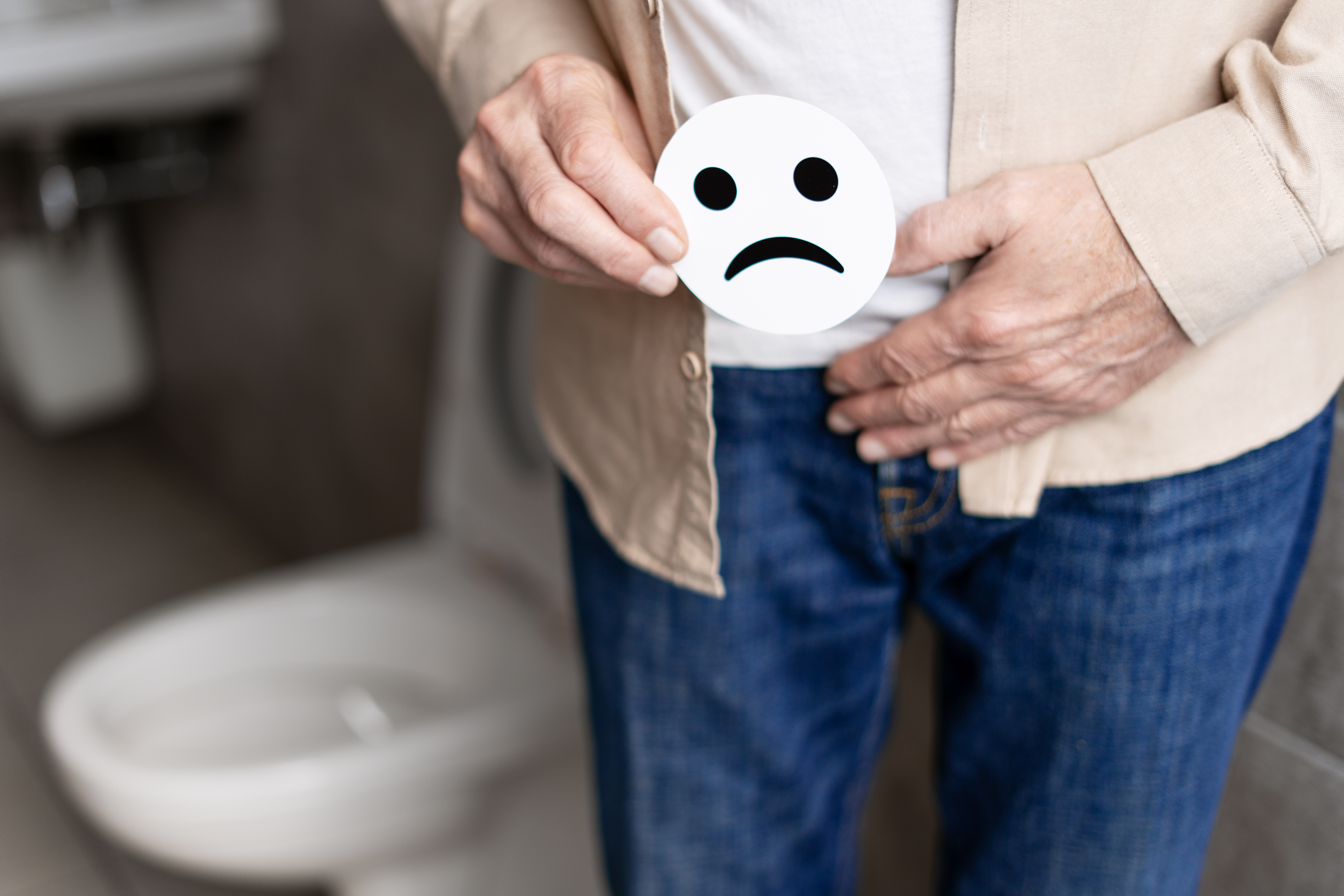
As the prostate becomes enlarged, it can exert pressure on the bladder and urethra. Men with BPH suffer from many symptoms that can range from those that are merely annoying to those that can destroy their overall quality of life. These symptoms include:
PAE significantly relieves symptoms in more than 90% of patients. The procedure can also allow men to avoid taking medications or needing more invasive methods of treatment. Compared to many other treatments, PAE has a lower risk of urinary incontinence and sexual side effects. If symptoms return, the procedure is repeatable. And generally, insurance companies will cover PAE if they cover prostate surgery. (ARA interventional case coordinators will help patients navigate the insurance process.)
“If I had a friend or relative who had symptoms of BPH, I would ask, ‘Why wouldn’t you consider a procedure like this?’” says Dr. Bouchareb.
So if you are experiencing the symptoms of an enlarged prostate and are tired of endless bathroom stops and nighttime sleep interruption, please consider taking care of yourself. Take this quick PAE survey so our team can assess your enlarged prostate status.
Michael Stack is certainly glad he did. Following his PAE, Michael has experienced significantly reduced symptoms. He can now go places without worrying about a sudden urge to urinate and can even hold it in without concern. He is more confident. And perhaps most importantly, he is more energetic because he’s finally getting a solid night’s sleep.
“My procedure was one of the best medical experiences that I’ve had in my entire life,” he says. “If you’re suffering from BPH, this is something you have to investigate and do for yourself. It was the best thing I ever did. I’d do it all over again in a heartbeat.”
sponsored by: ARA Diagnostic Imaging

If you're wondering if PAE is right for you, take this quick survey from ARA Diagnostic Imaging. Get back on your feet and get back to living the active life you love.
Learn More
Quick SURVEY
Problems emptying your bladder because your ureter is squeezed
A constant feeling of needing to urinate
Waking up frequently at night to urinate
Not being able to sit through a movie or concert or go anywhere that doesn’t have a convenient nearby bathroom
Difficulty traveling, especially over long distances
Pain and burning when urinating
Blood in the urine
Michael Stack’s PAE Story