Lorem ipsum dolor sit amet, consectetur
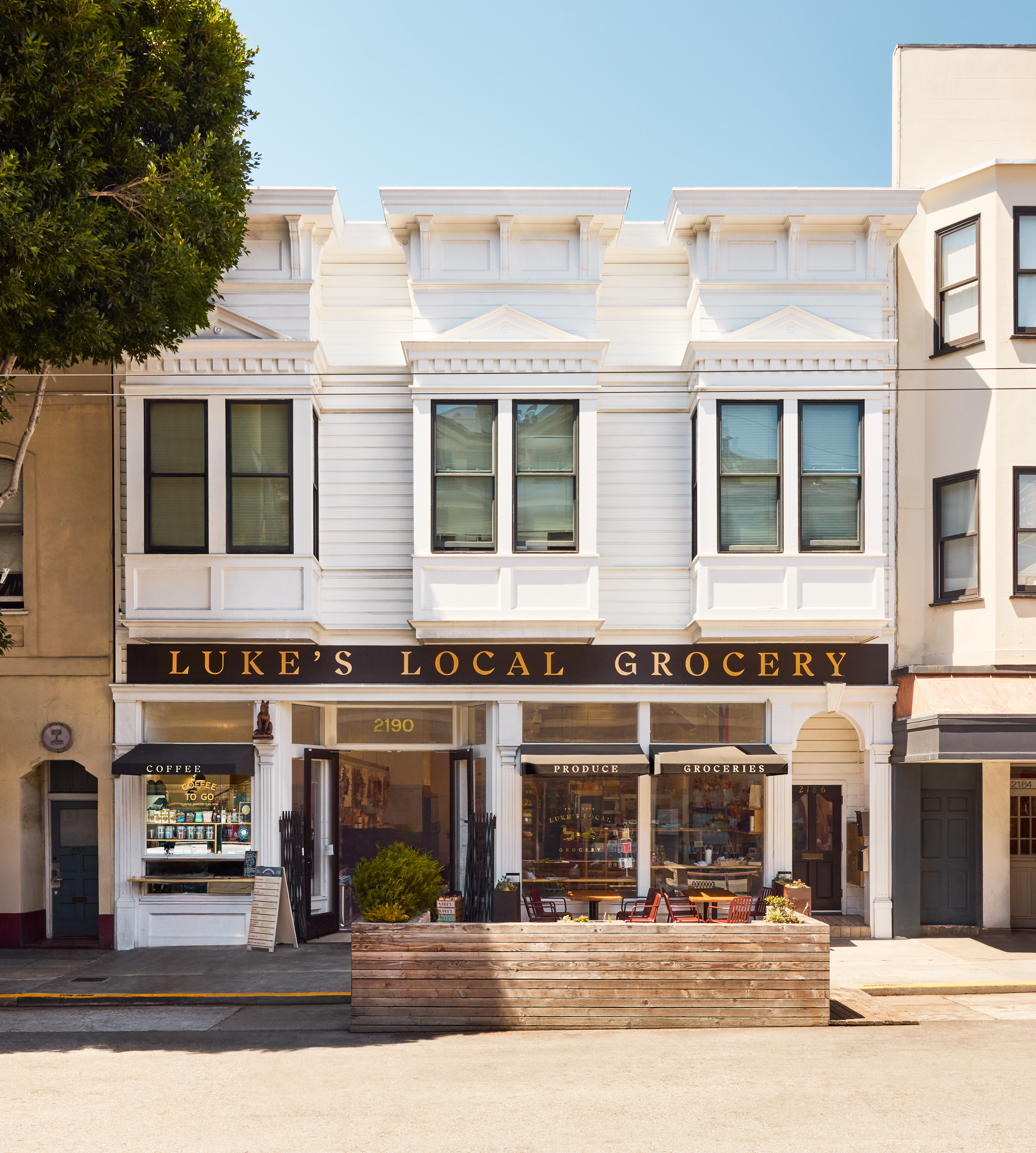
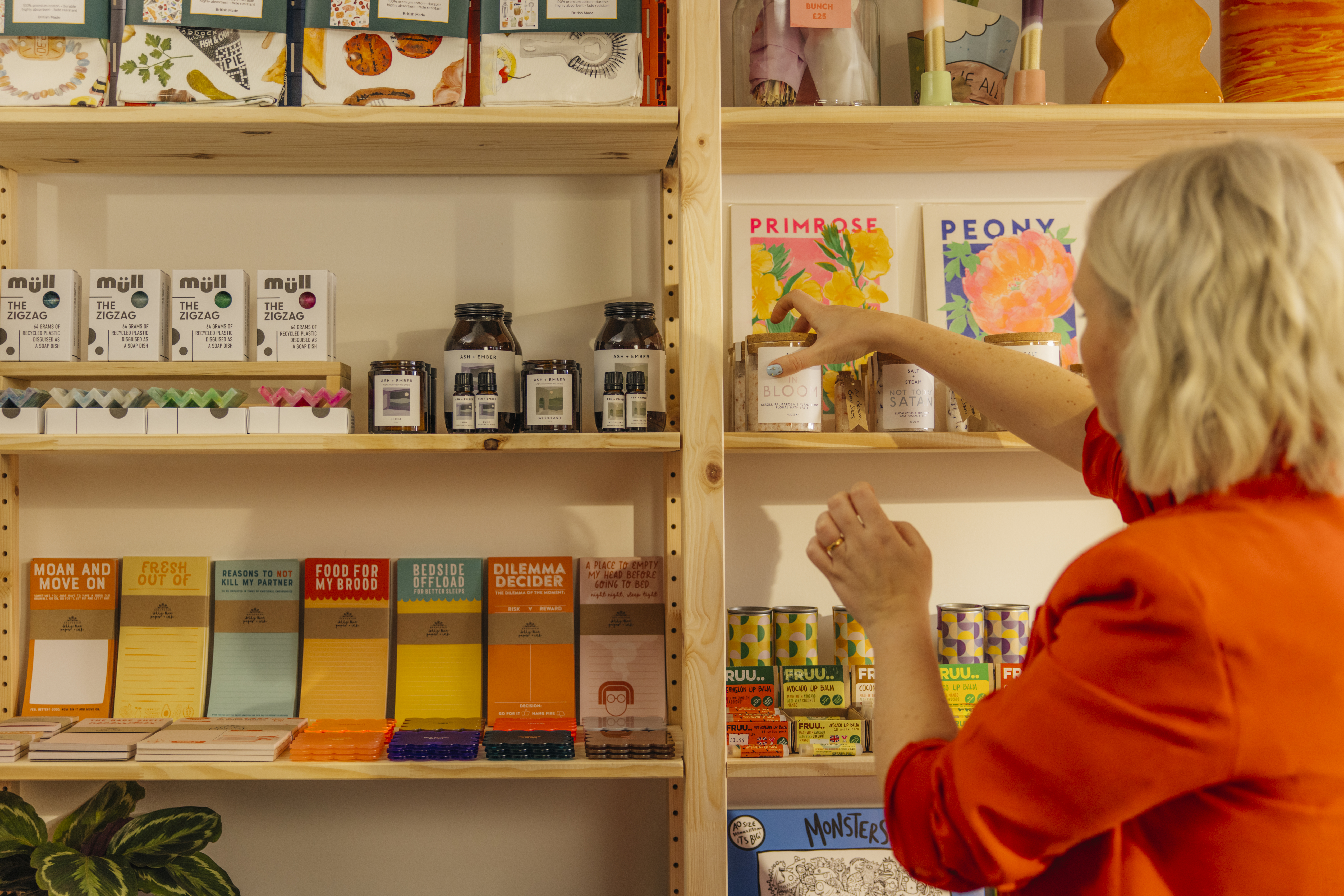
On a quiet corner in San Francisco’s North Beach neighborhood, Luke’s Local feels like the kind of grocery store every neighborhood wishes it had, with local produce, sandwiches made to order, friendly staff, and a few curated home goods you didn’t know you needed. What’s less obvious is how a store like this keeps its shelves fresh with products from across the country and beyond. The answer lies in a platform that blends global reach with tools designed to keep each store’s local character intact.
That platform is Faire.
Founded in 2017, Faire was built to flip the script on how independent retailers source their inventory by creating a platform to connect them directly with emerging brands around the globe. Today, that network spans everything from Paris concept shops to Kyoto bookstores, with hundreds of thousands of brands and retailers using the platform to discover what’s next for their shelves. More than 20,000 of those brands and retailers are right here in the Bay Area. But Faire’s reach isn’t confined to any one region; what started local has grown into a global engine for independent retail.
each with a slightly different character based on what the surrounding community needs. Oppenheim and his team source from more than 200 small vendors, often managing 50,000 invoices a year to do it.
“We could find emerging brands ourselves,” he says. “But we can also find them through Faire, or a vendor can find us because of Faire. That connection really helps.”
With a catalog of more than 100,000 brands across 120+ countries, Faire opens the door for local stores to stock global products with ease. That accessibility works both ways: brands get discovered by retailers who might otherwise never find them, and retailers get tools to filter, favorite, and reorder without juggling spreadsheets or shipping estimates.
Faire empowers global localization, the idea that discovery and distribution at scale can remain local, personal, and true to a store’s identity. A market in Oakland can carry handmade ceramics from Mexico City and still feel like a neighborhood spot. A florist in Barcelona can stock tea towels from Toronto and still speak the language of local design.
This is the democratization of access in action. Wholesale is a trillion-dollar global industry, but for decades it remained largely offline, limiting small brands to local reach and leaving retailers without easy access to unique products. Faire is changing that. By bringing this market online for the first time, the company is opening doors for entrepreneurs everywhere, fueling billions of dollars in transactions each year and $8 billion dollars in brand sales to-date.
This is not a small corner of commerce, nor merely a niche market. Since launching, Faire has raised more than $1.5 billion from world-class investors including Sequoia Capital, Founders Fund, and Khosla Ventures, achieving a $5 billion valuation. Along the way, it has created over 10 million new connections between brands and retailers, each one a potential relationship that can transform a business.
For small brands, that means visibility without sacrificing identity. For retailers, it means a smarter way to discover. And for both? It means a chance to stay independent without staying small.
Faire’s mission is deceptively simple: empower brands and retailers to strengthen the unique character of local communities. But what started as a smart tool for indie retail has grown into something with much broader economic impact.
”Faire isn’t just a marketplace,” says Max Rhodes, co-founder and CEO. “It’s a platform to build stronger partnerships, smarter operations, and businesses that thrive together.”
That vision is scaling fast. Faire now powers tens of millions of cross-border transactions each year, with recent expansions into Australia and New Zealand extending its footprint across North America and Europe. Supporting that growth demands technology that flexes across languages, currencies, fulfillment models, and the realities of small business everywhere.
But growth is about more than entering new markets. Each region brings its own complexity—pushing Faire’s product and engineering teams to stay agile and evolve infrastructure to stay competitive and meet the needs of its growing community.
“Right now is an incredibly exciting time to be an engineer—AI is evolving faster than ever, and the opportunities ahead are massive,” says Faire co-founder and chief architect Marcelo Cortes. “We’re only in the early stages of harnessing AI to help our customers make smarter business and buying decisions, and I believe this technology will be a game-changer for the independent retail community.”
From logistics and payment terms to real-time insights and intuitive discovery features, Faire is investing in a future where small businesses can play big—without losing what makes them different.
learn more
SPONSORED BY FAIRE

Luke Oppenheim
Founder & CEO, Luke's Local
Shop Local, Think Global: How Faire Powers Bay Area Retail and Stores Around the World
Luke’s Local Shows How Independent Stores Source Smarter
"We could find emerging brands ourselves, but we can also find them through Faire, or a vendor can find us because of Faire. That connection really helps."
Scaling Independent Retail Into a Global Force
From San Francisco to São Paulo:
Scaling the Local Economy
By Ryann Swift on August 20, 2025
Luke Oppenheim didn’t set out to start a brick-and-mortar chain like Luke’s Local. His original concept was a meal delivery box packed with pasture-raised eggs, local bread, and CSA produce. But as he tells it, something important was missing: connection.
“There was this lack of any kind of community-building,” Oppenheim says. “You do all this work behind the scenes and then someone clicks a button, and the experience is basically just a box on a doorstep.”
Today, Luke’s Local is a neighborhood market with four locations across San Francisco—
Marine Malta, owner of San Francisco’s beloved boutique Rare Device, is one of those retailers who knows the value of curation. When she took over the shop in 2023, she brought a new perspective and a deep respect for the store’s existing DNA.
“I try to keep local artists and brands,” she says. “It’s the legacy of Rare Device. But I also bring in pieces that reflect more of my own style.” She sources through travel, word of mouth, and Instagram. But when something catches her eye, she checks Faire first.
“Faire is just really easy to use,” Malta says. “You can see stock, shipping dates, total costs—and I can search for local makers directly on the platform. That’s helpful when I’m trying to keep the store grounded in the community.”
Rare Device was one of the very first retailers to use Faire, back when the platform launched in January 2017. Since then, they’ve placed over 2,000 orders on Faire—an average of 4-5 orders a week.
In September, she plans to relaunch the store with a new look and updated logo. The shelves will change, too—though not too much. “It’ll still be Rare Device,” she says. “Just a little more mine.” Faire’s flexible sourcing tools help Malta adapt the store without losing sight of its roots.
Rare Device Evolves With a Little Help From Faire
Retailers change shop by a range of filters including product category, preferred region, brand values, and target price. From there, Faire’s machine learning recommendation engine takes over, powered by the largest data set of independent retailer purchasing behavior in the world. Millions of transactions flow through the platform every year, allowing Faire’s algorithm to constantly refine and anticipate what will perform best in a given store. With every order placed on the platform, the recommendations get smarter—helping retailers make confident, high-return buying decisions that grow their business.
Results can be sorted by what matters most to a store’s strategy, such as best-selling status, delivery speed, or locally made designation. Once a product is selected, Faire’s platform shows the full picture, including minimum order, estimated delivery date, payment terms, along with tools for reordering, vendor communication, and consolidated invoicing.
For emerging brands, that intelligence translates directly into more visibility, more orders, and faster growth. For retailers, it’s a data-driven way to discover products that fit their unique vision, supported by a platform that manages the details so they can focus on serving their customers.
How It Works:
The Faire Discovery Journey

"Faire isn’t just a marketplace, it’s a platform to build stronger partnerships, smarter operations, and businesses that thrive together."
Max Rhodes
Co-founder & CEO, Faire
“And for small brands just starting out, that admin can be overwhelming. So the more Faire builds into the platform to make that easier? The better for everyone.”
The people behind that work bring experience from some of the most advanced logistics, commerce, and AI companies in the world, drawn to Faire by the chance to solve problems with visible, human impact. Whether reimagining product search or untangling the complexities of global fulfillment, they design systems that quietly empower retail entrepreneurs.
From personalization algorithms to cross-border payments and search ranking systems, every solution is built with a deep fluency in how design, data, and infrastructure intersect.
At Faire’s San Francisco HQ, engineers, data scientists, and product teams work together to build the infrastructure that powers independent retail across the globe. That can mean developing tools to help retailers test new inventory risk-free, or designing algorithms that let brands reach buyers in new countries. Every improvement cascades through storefronts, supply chains, and communities. The work is complex and deeply grounded in real-world impact.
“There will always be a need to create efficiency around the administrative burden of sourcing,” says Luke Oppenheim, owner of Luke’s Local.
Building the Platform That Builds Community
Faire is tackling technical challenges with real-world consequences—creating the technology that gives small businesses the tools to succeed on their own terms. Whether it’s enabling natural language search so retailers can find products the way they actually speak, building image search that matches a single photo to thousands of relevant items, or architecting AI-driven buying tools for enterprise clients, Faire’s teams are designing one of the most ambitious retail platforms of the future.
It’s the kind of work that draws people who want more from their careers, people who want to build something that really moves the needle in business, in communities, and in the world.
If that mission resonates with you, Faire is hiring in San Francisco. Learn more at faire.com/careers.
Help Engineer What’s Next


Scaling Independent Retail Into a Global Force
Faire empowers global localization, the idea that discovery and distribution at scale can remain local, personal, and true to a store’s identity. A market in Oakland can carry handmade ceramics from Mexico City and still feel like a neighborhood spot. A florist in Barcelona can stock tea towels from Toronto and still speak the language of local design.
This is the democratization of access in action. Wholesale is a trillion-dollar global industry, but for decades it remained largely offline, limiting small brands to local reach and leaving retailers without easy access to unique products. Faire is changing that. By bringing this market online for the first time, the company is opening doors for entrepreneurs everywhere, fueling billions of dollars in transactions each year and $8 billion dollars in brand sales to-date.
This is not a small corner of commerce, nor merely a niche market. Since launching, Faire has raised more than $1.5 billion from world-class investors including Sequoia Capital, Founders Fund, and Khosla Ventures, achieving a $5 billion valuation. Along the way, it has created over 10 million new connections between brands and retailers, each one a potential relationship that can transform a business.
For small brands, that means visibility without sacrificing identity. For retailers, it means a smarter way to discover. And for both? It means a chance to stay independent without staying small.

Luke Oppenheim didn’t set out to start a brick-and-mortar chain like Luke’s Local. His original concept was a meal delivery box packed with pasture-raised eggs, local bread, and CSA produce. But as he tells it, something important was missing: connection.
“There was this lack of any kind of community-building,” Oppenheim says. “You do all this work behind the scenes and then someone clicks a button, and the experience is basically just a box on a doorstep.”
Today, Luke’s Local is a neighborhood market with four locations across San Francisco—each with a slightly different character based on what the surrounding community needs. Oppenheim and his team source from more than 200 small vendors, often managing 50,000 invoices a year to do it.
“We could find emerging brands ourselves,” he says. “But we can also find them through Faire, or a vendor can find us because of Faire. That connection really helps.”
With a catalog of more than 100,000 brands across 120+ countries, Faire opens the door for local stores to stock global products with ease. That accessibility works both ways: brands get discovered by retailers who might otherwise never find them, and retailers get tools to filter, favorite, and reorder without juggling spreadsheets or shipping estimates.
Luke’s Local Shows How Independent Stores Source Smarter
Marine Malta, owner of San Francisco’s beloved boutique Rare Device, is one of those retailers who knows the value of curation. When she took over the shop in 2023, she brought a new perspective and a deep respect for the store’s existing DNA.
“I try to keep local artists and brands,” she says. “It’s the legacy of Rare Device. But I also bring in pieces that reflect more of my own style.” She sources through travel, word of mouth, and Instagram. But when something catches her eye, she checks Faire first.
“Faire is just really easy to use,” Malta says. “You can see stock, shipping dates, total costs—and I can search for local makers directly on the platform. That’s helpful when I’m trying to keep the store grounded in the community.”
Rare Device was one of the very first retailers to use Faire, back when the platform launched in January 2017. Since then, they’ve placed over 2,000 orders on Faire—an average of 4-5 orders a week.
In September, she plans to relaunch the store with a new look and updated logo. The shelves will change, too—though not too much. “It’ll still be Rare Device,” she says. “Just a little more mine.” Faire’s flexible sourcing tools help Malta adapt the store without losing sight of its roots.
Rare Device Evolves With a Little Help From Faire
Faire’s mission is deceptively simple: empower brands and retailers to strengthen the unique character of local communities. But what started as a smart tool for indie retail has grown into something with much broader economic impact.
”Faire isn’t just a marketplace,” says Max Rhodes, co-founder and CEO. “It’s a platform to build stronger partnerships, smarter operations, and businesses that thrive together.”
That vision is scaling fast. Faire now powers tens of millions of cross-border transactions each year, with recent expansions into Australia and New Zealand extending its footprint across North America and Europe. Supporting that growth demands technology that flexes across languages, currencies, fulfillment models, and the realities of small business everywhere.
From San Francisco to São Paulo:
Scaling the Local Economy
But growth is about more than entering new markets. Each region brings its own complexity—pushing Faire’s product and engineering teams to stay agile and evolve infrastructure to stay competitive and meet the needs of its growing community.
“Right now is an incredibly exciting time to be an engineer—AI is evolving faster than ever, and the opportunities ahead are massive,” says Faire co-founder and chief architect Marcelo Cortes. “We’re only in the early stages of harnessing AI to help our customers make smarter business and buying decisions, and I believe this technology will be a game-changer for the independent retail community.”
From logistics and payment terms to real-time insights and intuitive discovery features, Faire is investing in a future where small businesses can play big—without losing what makes them different.
Retailers change shop by a range of filters including product category, preferred region, brand values, and target price. From there, Faire’s machine learning recommendation engine takes over, powered by the largest data set of independent retailer purchasing behavior in the world. Millions of transactions flow through the platform every year, allowing Faire’s algorithm to constantly refine and anticipate what will perform best in a given store. With every order placed on the platform, the recommendations get smarter—helping retailers make confident, high-return buying decisions that grow their business.
Results can be sorted by what matters most to a store’s strategy, such as best-selling status, delivery speed, or locally made designation. Once a product is selected, Faire’s platform shows the full picture, including minimum order, estimated delivery date, payment terms, along with tools for reordering, vendor communication, and consolidated invoicing.
For emerging brands, that intelligence translates directly into more visibility, more orders, and faster growth. For retailers, it’s a data-driven way to discover products that fit their unique vision, supported by a platform that manages the details so they can focus on serving their customers.
How It Works:
The Faire Discovery Journey
"Faire isn’t just a marketplace, it’s a platform to build stronger partnerships, smarter operations, and businesses that thrive together."
Max Rhodes
Co-founder & CEO, Faire
At Faire’s San Francisco HQ, engineers, data scientists, and product teams work together to build the infrastructure that powers independent retail across the globe. That can mean developing tools to help retailers test new inventory risk-free, or designing algorithms that let brands reach buyers in new countries. Every improvement cascades through storefronts, supply chains, and communities. The work is complex and deeply grounded in real-world impact.
“There will always be a need to create efficiency around the administrative burden of sourcing,” says Luke Oppenheim, owner of Luke’s Local.
“And for small brands just starting out, that admin can be overwhelming. So the more Faire builds into the platform to make that easier? The better for everyone.”
The people behind that work bring experience from some of the most advanced logistics, commerce, and AI companies in the world, drawn to Faire by the chance to solve problems with visible, human impact. Whether reimagining product search or untangling the complexities of global fulfillment, they design systems that quietly empower retail entrepreneurs.
From personalization algorithms to cross-border payments and search ranking systems, every solution is built with a deep fluency in how design, data, and infrastructure intersect.
Building the Platform That Builds Community
Faire is tackling technical challenges with real-world consequences—creating the technology that gives small businesses the tools to succeed on their own terms. Whether it’s enabling natural language search so retailers can find products the way they actually speak, building image search that matches a single photo to thousands of relevant items, or architecting AI-driven buying tools for enterprise clients, Faire’s teams are designing one of the most ambitious retail platforms of the future.
It’s the kind of work that draws people who want more from their careers, people who want to build something that really moves the needle in business, in communities, and in the world.
If that mission resonates with you, Faire is hiring in San Francisco. Learn more at faire.com/careers.
Help Engineer What’s Next
SPONSORED BY FAIRE