A dancer is back in the spotlight after her rare disease diagnosis
By StoryStudio on April 14, 2025
Dance is an intensely physical art form. Performers must be in tune with their bodies, keeping them strong, in shape, and healthy. But in the fall of 2017, when Hannah was a college student studying theater art, her body started telling her something was wrong.
“The conversation with my body changed.”
Hannah, a dancer diagnosed with AHP

SCROLL


What is GIVLAARI® (givosiran)?
GIVLAARI is a prescription medicine used to treat acute hepatic porphyria (AHP) in adults.
Severe allergic reaction
Tell your doctor or nurse right away if you experience any of the following signs or symptoms of a severe allergic reaction during treatment:
Swelling – mainly of the lips, tongue or throat which makes it difficult to swallow or breathe
Breathing problems or wheezing
Feeling dizzy or fainting
Rash or hives
Itching
If you have a severe allergic reaction, your doctor or nurse will stop GIVLAARI treatment right away and you may need to take other medicines to control the symptoms.
Liver problems
Your doctor will check your liver function by doing blood tests:
Before you start using GIVLAARI
Once a month for the first 6 months of treatment
And when they think it is needed
If these tests show abnormal results, your doctor or nurse will decide whether to temporarily interrupt or stop treatment with GIVLAARI.
Kidney problems
Your doctor will check how your kidneys are working while you are using GIVLAARI.
Injection site reactions
GIVLAARI is given as an injection under the skin (called a “subcutaneous injection”). Reactions to this injection may happen during treatment with GIVLAARI.
Tell your doctor or nurse right away if you experience any of the following symptoms of an injection site reaction during treatment: redness, pain, itchiness, rash, discoloration, or swelling around the injection site.
Increased blood homocysteine levels
GIVLAARI may cause increased levels of homocysteine (a type of amino acid) in your blood. Your doctor will check your homocysteine levels before and during treatment by doing blood tests. If your levels are increased, your doctor may check your folate, vitamins B12 and B6, and tell you to take a vitamin B6 supplement.
Inflammation of the pancreas (pancreatitis)
Cases of acute pancreatitis including some that were severe, have been reported in patients receiving GIVLAARI. If you have a severe case of acute pancreatitis your doctor or nurse will decide whether to temporarily interrupt or stop treatment with GIVLAARI.


Hannah is an Alnylam Pharmaceuticals Patient Ambassador.
GIVLAARI and its associated logo are trademarks of Alnylam Pharmaceuticals.
©2025 Alnylam Pharmaceuticals, Inc. All rights reserved. AS1-USA-01649
sponsored by: Alnylam Pharmaceuticals
Sponsored content supplied by Alnylam Pharmaceuticals
Hannah choreographed an original dance to represent her experience with AHP, from the onset of her debilitating symptoms to her struggle in finding a diagnosis to ultimately beginning treatment. Each movement in the dance represents a pivotal moment in her journey.
She has always felt most comfortable expressing herself through dance. Each limb, digit, muscle, and ligament serves as a finely tuned instrument through which she can convey emotions and thoughts beyond anything words can capture. In short, Hannah’s body is her art.
“I’ll never forget the pain in my stomach, the fatigue, the dizziness and the nausea. This part of my dance represents that experience for me. The hand twisting into a sharp point, jabbing and stabbing my abdomen, represents the excruciating and relentless pain I experienced.”
Hannah danced through the pain for days — and then weeks. Trips to the gastroenterologist, the OB/GYN, the emergency room, and even intensive care didn’t stop the agony or lead to discovery of its source. She lost 15 pounds in one week and was too dizzy to even stand in first position in ballet class. “I was a musician who had lost their instrument,” she says. “I tried to find a sense of normalcy, but living with an unsolved health mystery left me feeling lonely, anxious, and afraid. I told myself to keep going — the show must go on."

“I was a musician who had lost their instrument.”
Hannah, a dancer diagnosed with AHP
“These movements represent how I was stopped in my tracks by that AHP attack in London, with intense fear of navigating an unfamiliar healthcare system. I felt alone and confused. Where I’m looking around, observing: that represents when the doctor told me my diagnosis of AIP. Me reaching right, left and center represent that my future and my past felt separated by this diagnosis. The chaîné, passé and jump in the air then leaping and rolling to the ground, walking stage right lifting my hands in the air symbolizes the hope after my diagnosis.”
She fought through the semester, went home for the holidays and celebrated her 21st birthday on her parents’ couch as swells of abdominal pain rushed over her. Hoping to leave her troubles behind her and enjoy life, Hannah embarked on a 12-day trip to London with her class. That’s where an intense episode of stabbing abdominal pain sent her to the hospital. There, thousands of miles from home, a doctor in England finally provided the answers she had been looking for. Hannah was diagnosed with acute intermittent porphyria (AIP), the most common type of AHP.
Reducing AHP attacks with GIVLAARI®(givosiran)
Fortunately, once Hannah was properly diagnosed with AIP, she could work with her doctors on a management plan that would help her get back to doing what she loved: dancing.
After Hannah returned home from her trip abroad, she met with her doctor to work on a plan to manage her AHP. Her doctor recommended GIVLAARI (givosiran), a medicine used to treat AHP in adults.
In a six-month study, on average, patients with AHP saw their attacks reduced by
The nonspecific nature of AHP signs and symptoms is what makes it so difficult to diagnose. It is often misdiagnosed as gastrointestinal disorders, gynecological disorders, neurological/neuropsychiatric disorders or abdominal conditions.
“After 6 months without an AHP attack, I started to feel like the spotlight was back on me instead of my AHP. The fouettes showcase growth and moving forward with fewer AHP attacks. Of course, this is just my experience, and everyone’s will be different. When I choreograph, I visualize what I want the dance to be, and with consistent practice and effort, I am able to turn the dance into a beautiful expression of art. I think about GIVLAARI in a similar way – staying the course with treatment allows me to continue to express my art through dance.”
Back in the spotlight
With the spotlight back on Hannah instead of her AHP, she has hiked the Great Smoky Mountains, the Grand Canyon, and Zion National Park. Most importantly, she’s back on stage and in the studio, teaching her fourth consecutive year of dance, choreographing numerous pieces, and pursuing her master’s degree.
Now more than ever, Hannah sees her body as a work of art, carrying her through life’s journey, enabling her to teach others to dance, and continuing to be her instrument of self-expression.
“I want patients and doctors who encounter this condition to know that, while the pain is real, so is the strength to overcome it through hope and perseverance,” she says. “Of course, this is just my experience, and everyone’s experience will be different. But finally, it feels like the spotlight of my life is back in my control.”
"While my pain is real, so is my strength to overcome it."
Hannah, a dancer diagnosed with AHP
Before her first dose of GIVLAARI, Hannah’s doctor told her about the potential side effects known at the time, such as severe allergic reactions, liver problems, kidney problems, and injection site reactions. The doctor also told her that the most common side effects of GIVLAARI seen in the clinical trial were nausea and injection site reactions. Hannah decided to give GIVLAARI a try.
“Within the first year, my mind and body began to feel like one again. And since starting on GIVLAARI, I’ve had fewer AHP attacks. I feel like I have more time and freedom to live my life,” she says. “When I receive my GIVLAARI injections, I sometimes experience a little stinging at the injection site and fatigue.”
“The conversation with my body changed,” says Hannah. “I started to feel an intense, sharp stabbing pain in my abdomen that I thought at first was period cramps. I had nausea and chills that persisted for days. Everything hurt and I felt like I was shriveling. My energy level dropped, and I felt nauseous, but I just continued to think it had something to do with my menstrual cycle. So, I went to sleep, and I told myself that the show must go on, though the curtains were looming just in the distance.”

What are the common side effects of GIVLAARI?
For a dancer, the most freeing feeling is allowing their body to convey every emotion and thought in their mind. That’s why, for Hannah, there is no better way to share the story of her journey with acute hepatic porphyria (AHP), a family of rare, genetic diseases that can cause severe and potentially life-threatening attacks.
80
%
AHP can affect people of all genders and ages but
of cases are in women between the ages of 15 and 45.
Central
Nervous System
Confusion
Anxiety
Seizures

Peripheral
Nervous System
Limb Weakness
Gastrointestinal
Constipation
Diarrhea
Autonomic
Nervous System
Abdominal Pain
Back or Chest Pain
Nausea
Vomiting
Other
Dark or Red Urine
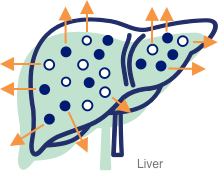
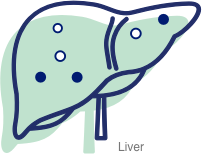

When ALAS1 is activated, the heme production process is unable to keep up, causing toxic substances to build up.
These toxins are associated with attacks and other AHP symptoms.
*Attacks were defined as those that required hospitalization, urgent healthcare visit, or intravenous (IV) hemin administration at home.
GIVLAARI reduces the amount of ALAS1 in the liver, thereby reducing the levels of toxins.
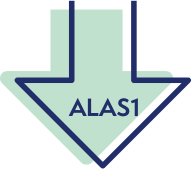
In people with AHP, a genetic mutation causes the heme production process in the liver to not work properly. This process is controlled by an enzyme called aminolevulinic acid synthase 1 (ALAS1).
after receiving GIVLAARI compared to patients receiving placebo.*
80
%
70
%
70
%
Swelling – mainly of the lips, tongue or throat which makes it difficult to swallow or breathe
Breathing problems or wheezing
Feeling dizzy or fainting
Rash or hives
Itching
Before you start using GIVLAARI
Once a month for the first 6 months of treatment
And when they think it is needed

Please revisit on a desktop device!
This experience is not yet optimized for your mobile screen.
Signs and Symptoms of AHP

The nonspecific nature of AHP signs and symptoms is what makes it so difficult to diagnose. It is often misdiagnosed as gastrointestinal disorders, gynecological disorders, neurological/neuropsychiatric disorders or abdominal conditions.
In a six-month study, on average, patients with AHP saw their attacks reduced by

To learn more about AHP and GIVLAARI, visit GIVLAARI.com
Do not use GIVLAARI if you have ever had a severe allergic reaction to GIVLAARI.
GIVLAARI can cause:



IMPORTANT SAFETY INFORMATION
The most common side effects of GIVLAARI are nausea and injection site reactions. These are not all the possible side effects of GIVLAARI. Talk to your doctor about side effects that you experience. You are encouraged to report negative side effects of prescription drugs to the FDA. Visit http://www.fda.gov/medwatch, or call 1-800-FDA-1088.
For additional information about GIVLAARI, please see the full Prescribing Information.
Hannah, a dancer diagnosed with AHP