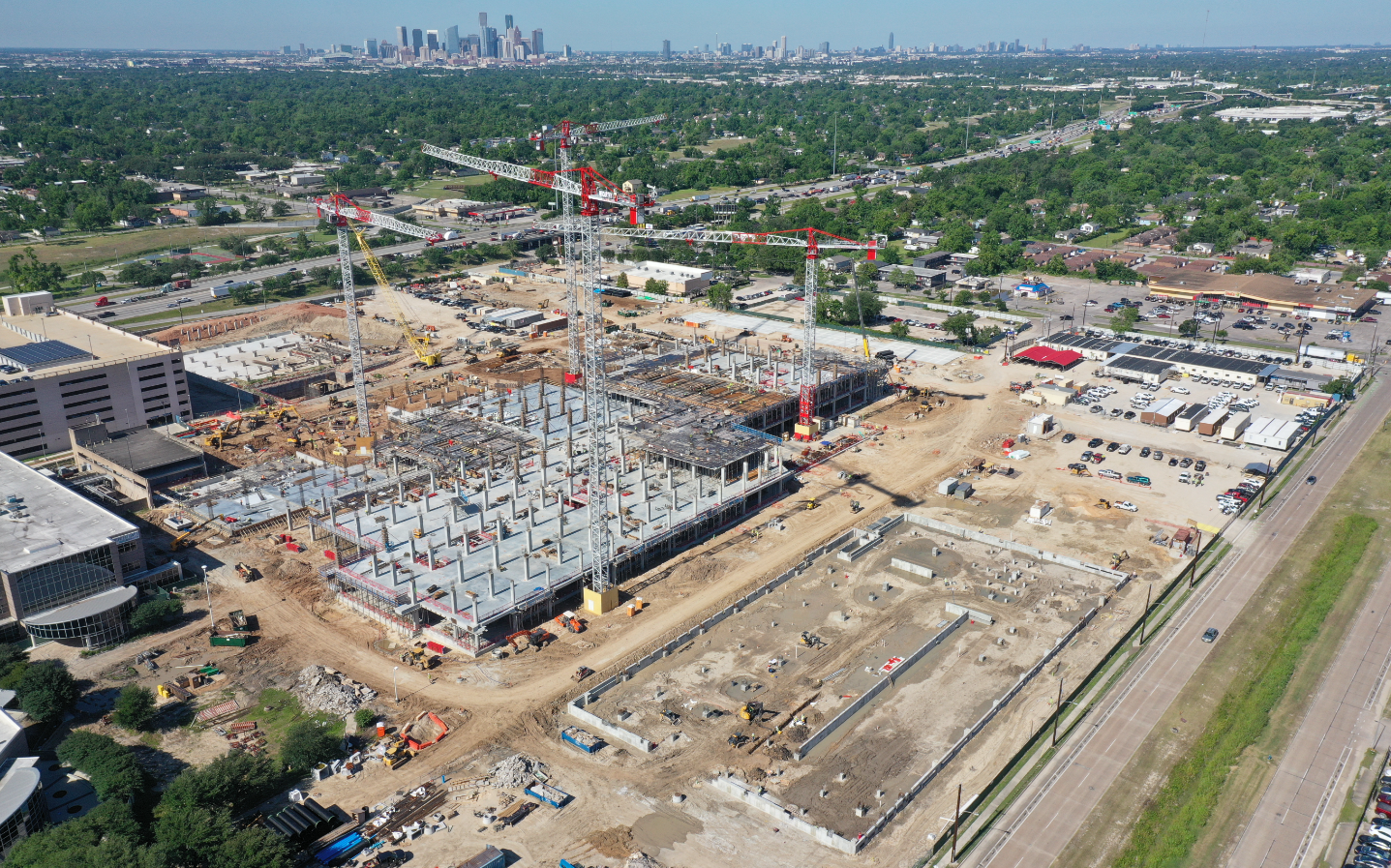
It’s been one year since construction began on Harris Health’s new Level I trauma capable hospital on the campus of Lyndon B. Johnson Hospital in northeast Houston and already, the future of Harris County healthcare is taking shape. From an office onsite, Soudabeh Eskandari, director, Construction Operations, Harris Health, has perhaps the best view of anyone. She oversees the building’s progress daily as concrete is poured level by level, columns are solidified and the vision for a healthcare facility designed to serve the community for the next half-century steadily materializes.
“See our four tower cranes?" Eskandari asks, pointing to the bustling construction site where approximately 400 workers labor daily—a number expected to increase to nearly 1,000 as interior work begins in the coming months. “We’re literally watching the hospital of the future form from the ground up."
A Year after Breaking Ground, Harris Health Shares a Construction Update of Its New Hospital
By Monica vanover on MAY 20, 2025
SPONSORED BY Harris Health
"We're creating a powerful symbol of our investment in the community," Casey explains. “But without the bond, there'd be no project. The support of Harris County voters was crucial in making this vision a reality.” Voters approved a $2.5 billion bond package in 2023 to fund Harris Health’s $2.9 billion multi-year facilities plan with new construction and expansive renovation.
The 1.3 million square-foot facility will double the size of the current LBJ Hospital, which at 36 years old is operating well past its end-of-life capacity. The hospital will feature a new emergency and adult Level 1 trauma center, diagnostic labs, a pharmacy, nuclear medicine, cardiovascular services, a labor and delivery center, and a modern inpatient tower, including two floors at the top of the tower that will remain shelled for future needs.
"Currently less than 50% of those suffering cardiac arrest receive bystander CPR. Training more bystanders in CPR could double the survival rate."
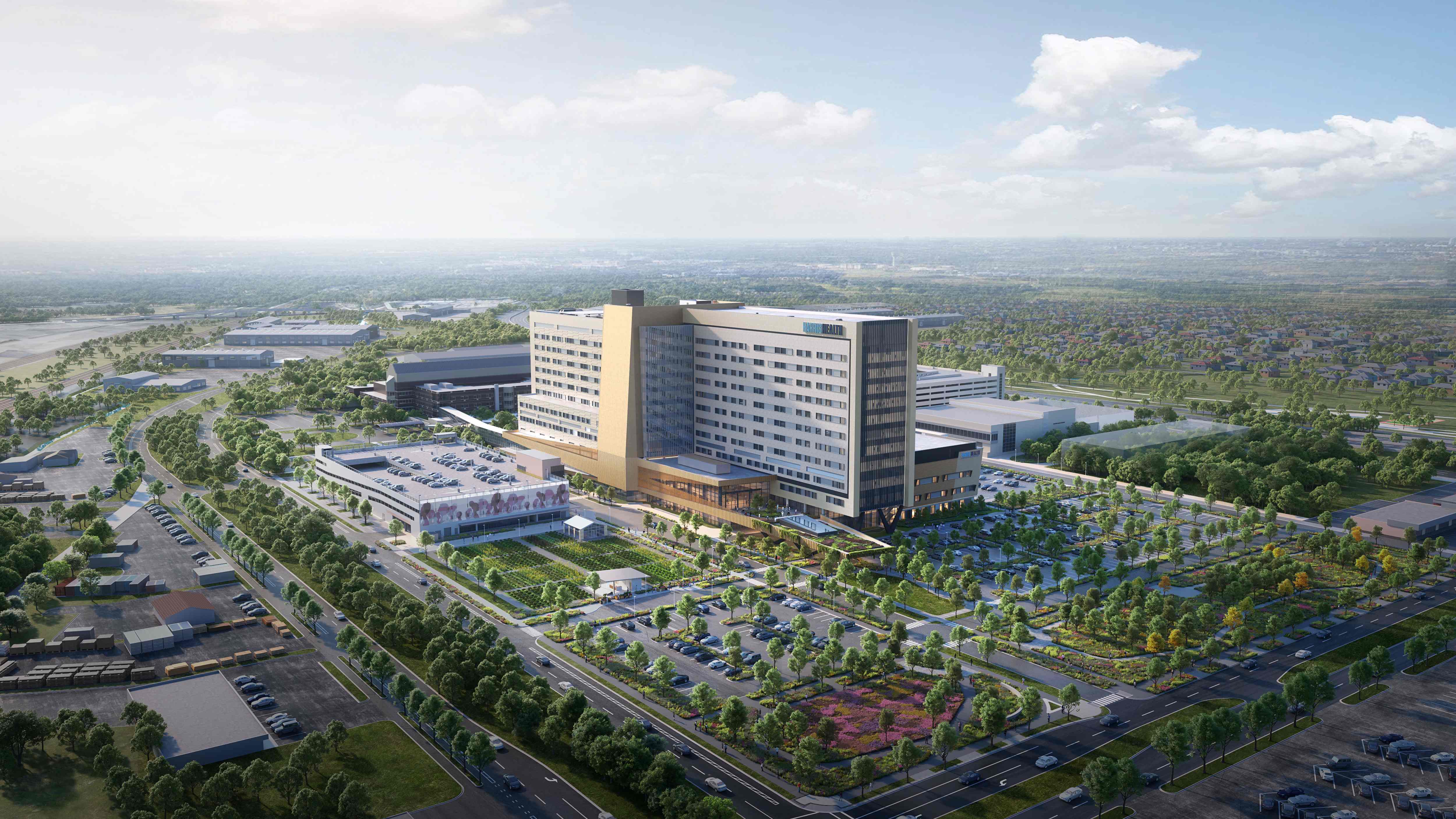

The new hospital, which at 12 stories will be the tallest structure for miles, symbolizes hope and renewal for an underserved community. “It’s a testament to Harris Health's commitment to addressing health disparities and providing quality care to all residents regardless of their ability to pay,” says Eskandari, citing Harris Health’s mission of providing high-quality care to those who need it most as the main reason she joined the Harris Health team.
At the helm of this ambitious project—made possible by Harris County voters—is the other reason Eskandari relocated from Florida: Patrick Casey, senior vice president, Facilities Construction and System Engineering, Harris Health. With an extensive background in healthcare architecture and construction management, Casey brings valuable experience from previous mega-projects, including Parkland Hospital in Dallas and the recovery of University of Texas Medical Branch (UTMB) Hospital in Galveston after Hurricane Ike in 2008.
Soudabeh Eskandari, director, Construction Operations, Harris Health
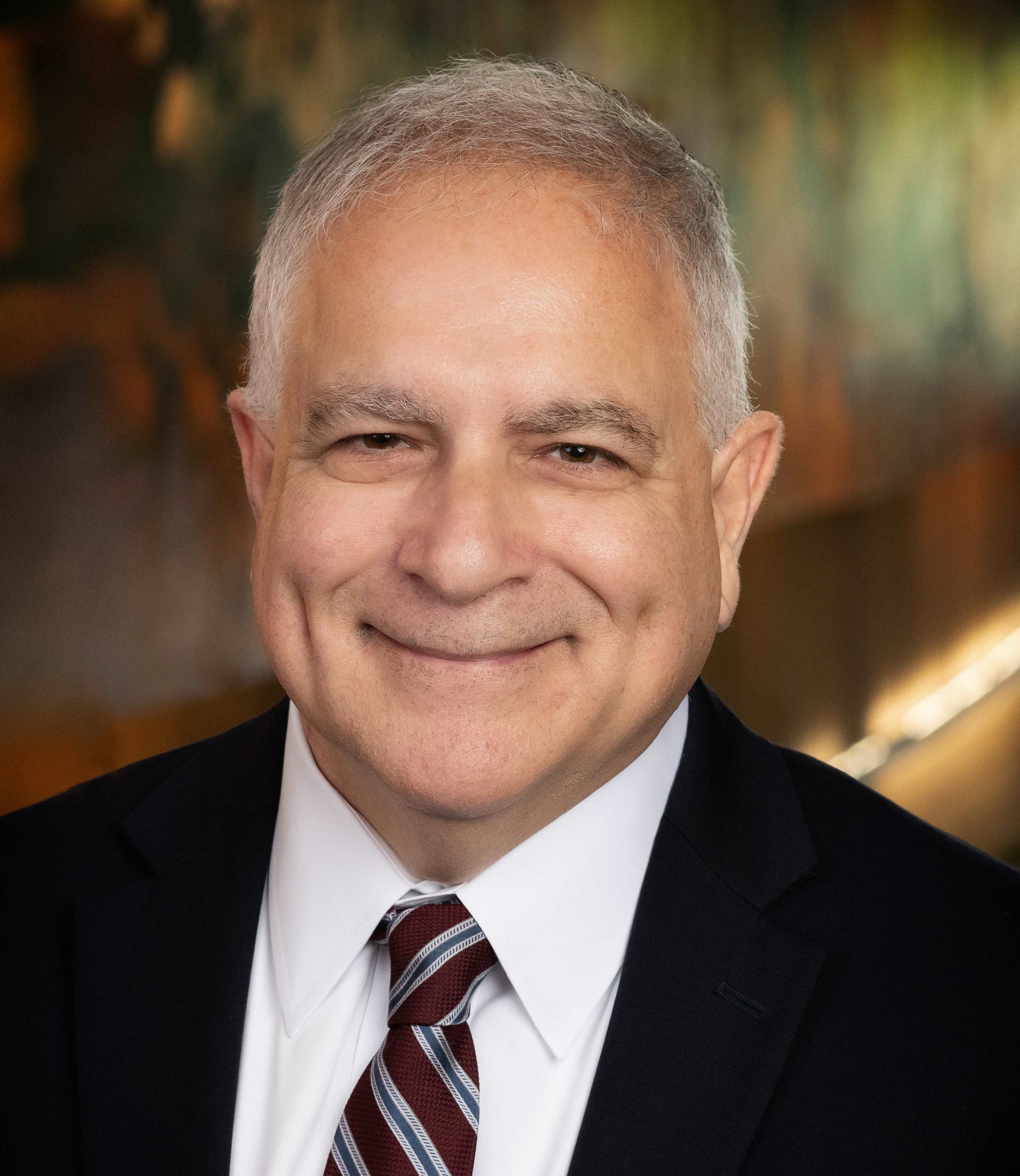
Patrick Casey, senior vice president, Facilities Construction and System Engineering, Harris Health
In concert with these elements is a key innovation, the hospital's design of the "on-stage and off-stage" concept—a Disney-inspired approach that separates patient and visitor circulation paths from staff and materials movement. "The current LBJ Hospital has patients and staff sharing elevators and hallways," Casey explains. "The new hospital will have a separation between the back of the house and the patient/visitor circulation areas."
This thoughtful design not only improves operational efficiency, but enhances the patient experience by reducing exposure to behind-the-scenes activities like moving of supplies and equipment.
The future hospital is a LEED Silver-certifiable project, making it as green as it is groundbreaking. The project extends beyond medical facilities to include significant green space, sustainably transforming the surrounding neighborhood.
Two acres of the redesigned campus will become a community farm, doubling the size of its previous farm. Eskandari describes it as "the largest farm in this area" that will support Harris Health’s innovative Food Farmacy program where doctors “prescribe” fresh fruits, vegetables and proteins at no cost to patients diagnosed with diabetes or other chronic conditions.

A year after breaking ground, the project is approximately 30% complete in construction, with 100% of the design work finished. The team is now focused on what Eskandari calls their "smart strategy," a comprehensive approach to building a healthcare facility for the future.
"This hospital is designed to be here for 50 years," Eskandari explains. Energy efficiency is a major component for the new hospital with an overall consumption estimated to be 30% less than other regional and smaller hospitals. This is achieved through features like heat recovery HVAC systems and cogeneration technology that reduces carbon emissions by 34%.
"Currently less than 50% of those suffering cardiac arrest receive bystander CPR. Training more bystanders in CPR could double the survival rate."
Smart Strategy in Action
Already, approximately 60% of the first-floor concrete is poured, 30% of the second floor and 10% of the third floor. With only eight foundation piles left to be grouted, the site showcases every stage of the construction process simultaneously.
Looking ahead, Eskandari has January 2026 circled on her calendar—the targeted date for the "topping out" ceremony, a significant milestone marking completion of the building's concrete structure at its tallest point. “Our goal is to get there by the first week of January,” she says.
For Eskandari, who requested an office with an unobstructed view of the construction site, the most rewarding aspect is seeing architectural plans transform into physical spaces. "When you see a line on a blueprint convert to a wall, it’s very exciting," she says.
“We’re not just building a hospital,” Casey adds. “We’re building a legacy for the community and our entire region.”
Progress and Milestones
Graduates of the program come away as one of the top practitioners in their respective field as well as close-knit relationships with fellow colleagues. DeArman was Worth’s mentor during her time in Harris Health’s ortho PT residency, the program she now oversees. To her, a native Houstonian, the residency programs are symbolic of an important aspect of Harris Health that often gets overlooked. While most know Harris Health as a medical healthcare system, not enough recognize Harris Health as a top teaching and training facility, partnered with four of the most prestigious medical schools in the country—Baylor College of Medicine, McGovern Medical School at UTHealth Houston, MD Anderson Cancer Center and the Tilman Fertitta Family Medical School at the University of Houston. Acknowledging this distinction means understanding Harris Health’s deep commitment to providing the highest quality care to the residents of Harris County.
“I’m extremely proud of the work we do here,” Worth says. “We're providing excellent, top-tier care in all departments, and we're training more physicians, nurses and PTs to do the same.”
A new central utility plant will supply the hospital with primary and emergency power, as well as steam and chilled water. Its cutting-edge cogeneration system will make it one of the most energy-efficient plants in the region, recovering heat and water to reduce emissions and cut utility costs. This feature, combined with full generator backup systems, ensures the facility can maintain operations during power outages or natural disasters—a critical consideration in hurricane-prone Houston.
Flood mitigation represents another crucial element of the smart strategy. Six retention tanks beneath the campus can collect up to 7.5 million gallons of rainwater to allow for gradual release into the city/county sewer system as weather clears up. The design is based on FEMA's 500-year flood elevation standards. Additionally, a crawl space beneath the tower will provide added protection against rising water.
A Design That Heals
The new hospital incorporates “evidence-based design” with elements that research shows to improve patient outcomes, Casey says. Unlike the utilitarian healthcare facilities of decades past, the future hospital embraces what he calls "building with purpose." Interior spaces feature warm comfortable finishes and carefully selected artwork designed to create a calming environment. At its center is “The Hearth,” a dramatic vertical space housing public elevators and lobbies, designed to feel warm, welcoming, and like “home.” For Casey, it’s a visual metaphor: a place where people gather, feel cared for and are part of something larger.
Transforming the Neighborhood Sustainably
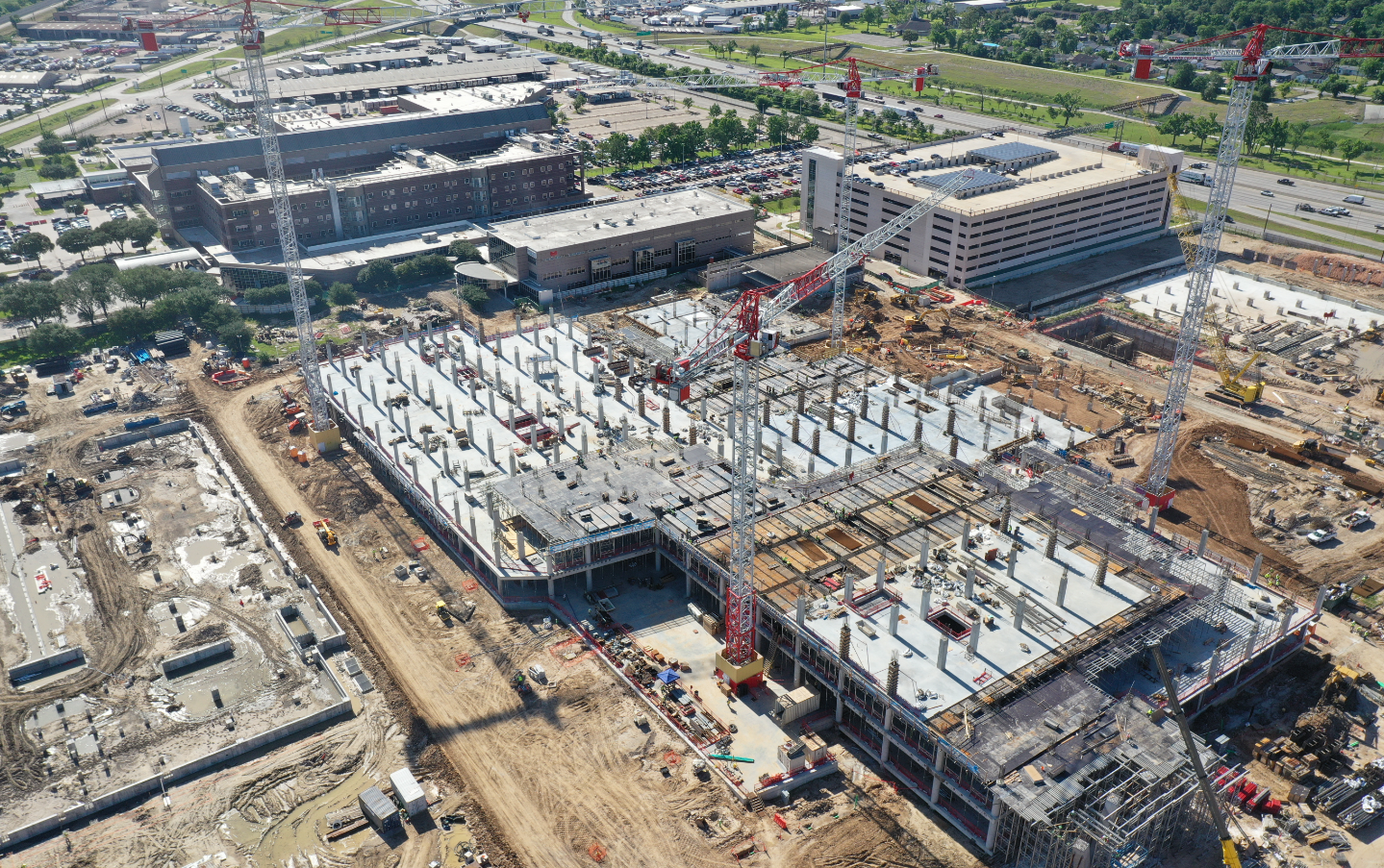
Click to View Live Progress of the Hospital Construction