Historic Beverly in Three Houses
This nuanced understanding of American Revolutionary history—complex, contradictory, human—is what separates Beverly's approach from the more theatrical presentations found elsewhere along the colonial tourism trail. The three properties that make up Historic Beverly offer visitors a chance to experience history through objects that witnessed it firsthand.
At the John Cabot House, built in 1781 and now serving as Historic Beverly's headquarters, visitors can see Noah Cressy's Brown Bess musket, carried by the Beverly resident from the first day of the Revolution until its end. "This musket was taken up by Noah Cressy on April 19, 1775... Cressy didn't lay it down until the war's end," Battis notes. "For six long years, this musket was carried through battles, marches, and moments of quiet resolve."
The Reverend John Hale House, dating to the late 17th century, offers a different kind of historical encounter. Here, visitors can stand in the study where Hale penned his influential 'A Modest Enquiry into the Nature of Witchcraft' in 1697, the first published criticism from someone involved in the Salem witch trials. "To stand in this room is to stand where history turned inward, where doubt challenged doctrine," Battis reflects. The room embodies the kind of moral reckoning that defines the best of American self-examination.


SPONSORED BY HISTORIC BEVERLY


Celebrating 250 Years of American Freedom at Historic Beverly’s Once-in-a-Lifetime Exhibition
Sometimes the most profound discoveries happen with a simple search query.
"To stand in this room is to stand where history turned inward, where doubt challenged doctrine"
By Monica Vanover on June 27, 2025
Sometimes the most profound discoveries happen with a simple search query. During historian and filmmaker, Ken Burns’ research for his upcoming PBS Revolutionary War documentary, he looked to Beverly, Massachusetts, an important cornerstone of American independence located 40 miles north of Boston. It was here in the collection of Historic Beverly, a local non-profit dedicated to preserving Beverly’s history, that Burns and his team found 44 paintings commissioned over a century ago by U.S. Senator Henry Cabot Lodge.
Featuring vivid tableaus of Revolutionary War battles, these paintings are a unique and profound visual narrative of America’s founding struggle. It was a serendipitous moment that makes curators' hearts race and documentarians' eyes light up. Now destined to appear in Burns’ The American Revolution, Historic Beverly will display 28 of the 44 artworks in a once-in-a-lifetime preview exhibit “The American Revolution: a Story of the War in 28 paintings,” opening this fall at their John Cabot House location. The exhibition serves as both the perfect opportunity to celebrate our nation’s independence and a chance for Beverly to secure its rightful place in the American Revolution story.
"Beverly played a vital and often underrecognized role in the American Revolution," explains Abby Battis, Director of Historic Beverly, whose own roots in the community stretch back to the 17th century through her 8th great-grandfather, Reverend John Hale. Since joining the organization in 2017, Battis has made it her mission to illuminate the stories that have been overshadowed by Salem's more commercially successful witch-trial narrative. Now, with the upcoming 250th anniversary of the American Revolution in 2026 providing a national stage, Historic Beverly is ready to showcase its place in history.
The claim isn't hyperbole. In 1775, the Hannah, the first vessel to sail under Continental command, was outfitted and launched from Beverly's harbor. The town's three companies of militia didn't just cheer on the war from the sidelines of Beverly. Their own "minutemen" marched to Lexington and Concord and Bunker Hill, carrying their Brown Bess muskets (one such musket is on display at Historic Beverly’s John Cabot House location) and their conviction that liberty was worth dying for. It's this authentic Revolutionary pedigree that gives Historic Beverly's upcoming exhibition, "The American Revolution: a Story of the War in 28 paintings," special resonance.
Sed ut perspiciatis unde omnis iste natus error sit voluptatem accusa ntium doloremque laudantium, totam rem aperiam, eaque ipsa quae ab illo inventore veritatis et quasi architecto beatae vitae dicta sunt explicabo nemo enim ipsam.
statistic from the organization
XX
Sed ut perspiciatis unde omnis iste natus error sit voluptatem accusa ntium doloremque laudantium, totam rem aperiam, eaque ipsa quae ab illo inventore veritatis et quasi architecto beatae vitae dicta sunt explicabo nemo enim ipsam.
statistic from the organization
XX
Sed ut perspiciatis unde omnis iste natus error sit voluptatem accusa ntium doloremque laudantium, totam rem aperiam, eaque ipsa quae ab illo inventore veritatis et quasi architecto beatae vitae dicta sunt explicabo nemo enim ipsam.
statistic from the organization
XX
"Beverly played a vital and often underrecognized role in the American Revolution"
SCROLL DOWN
QUICK FACTS
Abby Battis,
Director of Historic Beverly
Inside the Exhibition
Whether you’re a Revolutionary War history buff or someone looking for a memorable way to celebrate America’s 250th Anniversary, a visit to Beverly and Historic Beverly’s three locations for this iconic upcoming exhibition is a must. Commissioned around 1898 by Senator Henry Cabot Lodge to accompany his two-volume work, The Story of the Revolution, the oil paintings showcased in the exhibition capture pivotal moments of the American Revolution—the Battles of Bunker Hill, Yorktown, Bennington, et al.— These paintings transform historical events into dynamic visuals. Six years later in 1904, Susan Day Parker donated 44 paintings to the then Beverly Historical Society. Until now, many of these paintings have not been seen by the public, except for an exhibit of all 44 paintings destined to a hapless fate that opened in February of 2020 but abruptly closed the following month due to the pandemic.
The exhibition will feature 28 of these paintings as well as a first edition copy of Lodge’s The Story of the Revolution and other historical Revolutionary War artifacts, including muskets, soldier's gear, and the reading copy of the Declaration of Independence, the document that was read to residents by General John Glover at Independence Park in Beverly on July 17, 1776, one day before the people of Boston heard the news! Seven of the paintings will also appear in the book, The American Revolution, by Geoffrey C. Ward, accompanying Burns' documentary, creating a multimedia conversation between past and present that feels both scholarly and cinematic.
Beverly, MA Is Part of American History
Historic Beverly’s commitment to authentic storytelling has positioned Beverly, Massachusetts as something of a cultural tourism pioneer. While Salem has become synonymous with Halloween crowds in October and commercialized spookiness, Beverly offers free admission to its John Cabot House and a more contemplative approach to engaging with the past. "Beverly is ahead of the curve in commemorating the 250th anniversary of the American Revolutionary War," Battis notes. "It's the only institution on Boston's North Shore mounting a Revolutionary War exhibit of this scope in 2025."
The timing couldn't be more perfect. As America approaches its semiquincentennial, there's a growing hunger for historical experiences that go beyond surface-level patriotism to explore the messy, complicated, inspiring reality of the Revolutionary generation. Beverly's exhibition offers exactly that—a chance to see the Revolution through the eyes of Gilded Age painters and a senator who understood that visual storytelling could make history feel immediate and urgent.
The collaboration with Ken Burns adds another layer of cultural validation. In an era when historical programming competes with infinite digital distractions, Burns has maintained his reputation as America's most trusted documentary film maker and visual historian. His decision to feature Beverly's paintings in his documentary affirms their importance in the national conversation about our past.
About the Artists of
“The Story of the Revolution”
Although Henry Cabot Lodge’s book The Story of the Revolution, originally did not credit the individual artists, their work was cited in the January 1898 edition of Scribner’s Magazine where Lodge’s book was printed in sections throughout the year.
Artists whose work is on display at Historic Beverly’s once-in-a-lifetime exhibition include the following:
Asked to choose a favorite from the paintings commissioned by Henry Cabot Lodge, Director Battis laughs. "Asking a the director of a museum with over 1 million objects this question is like asking them who their favorite child is!" But press a little harder and you’ll find she does have one: "Bayonet Charge at the Battle of Camden" by Edward Henry Potthast. This moving work is a striking black-and-white grisaille painting from 1898 that depicts the fierce bayonet charge by the Second Maryland Brigade against British forces under General Cornwallis on August 16, 1780.
"Though rendered in a limited palette, the piece is rich in dynamic movement and emotional intensity," Battis explains. "While the overall battle resulted in a significant American defeat under General Horatio Gates, Pollhast's interpretation focuses on one of the rare moments of valor and resistance in an otherwise disastrous engagement." The painting captures something essential about the Revolutionary War—the path to independence was paved with as many defeats as victories.
The 1680 John Balch House, one of the oldest surviving wood-frame houses in North America, houses artifacts like a hand-carved samp grinders that speaks to the daily rhythms of colonial life. "This simple tool tells a rich and tactile story of survival, sustenance, and the enduring legacy of Beverly's earliest settlers," Battis explains. It's a reminder that history isn't just made in battlefield moments but in the quiet persistence of ordinary people building extraordinary lives.

"Beverly is ahead of the curve in commemorating the 250th anniversary of the American Revolutionary War"
Abby Battis,
Director of Historic Beverly
To celebrate this important cinematic event, Historic Beverly will host a public screening of Burns' documentary at The Cabot, a local theater, creating a community event that brings together residents, visitors, and history enthusiasts. It's the kind of civic engagement that Battis believes is essential to her organization's mission, "making history accessible and engaging for the community."
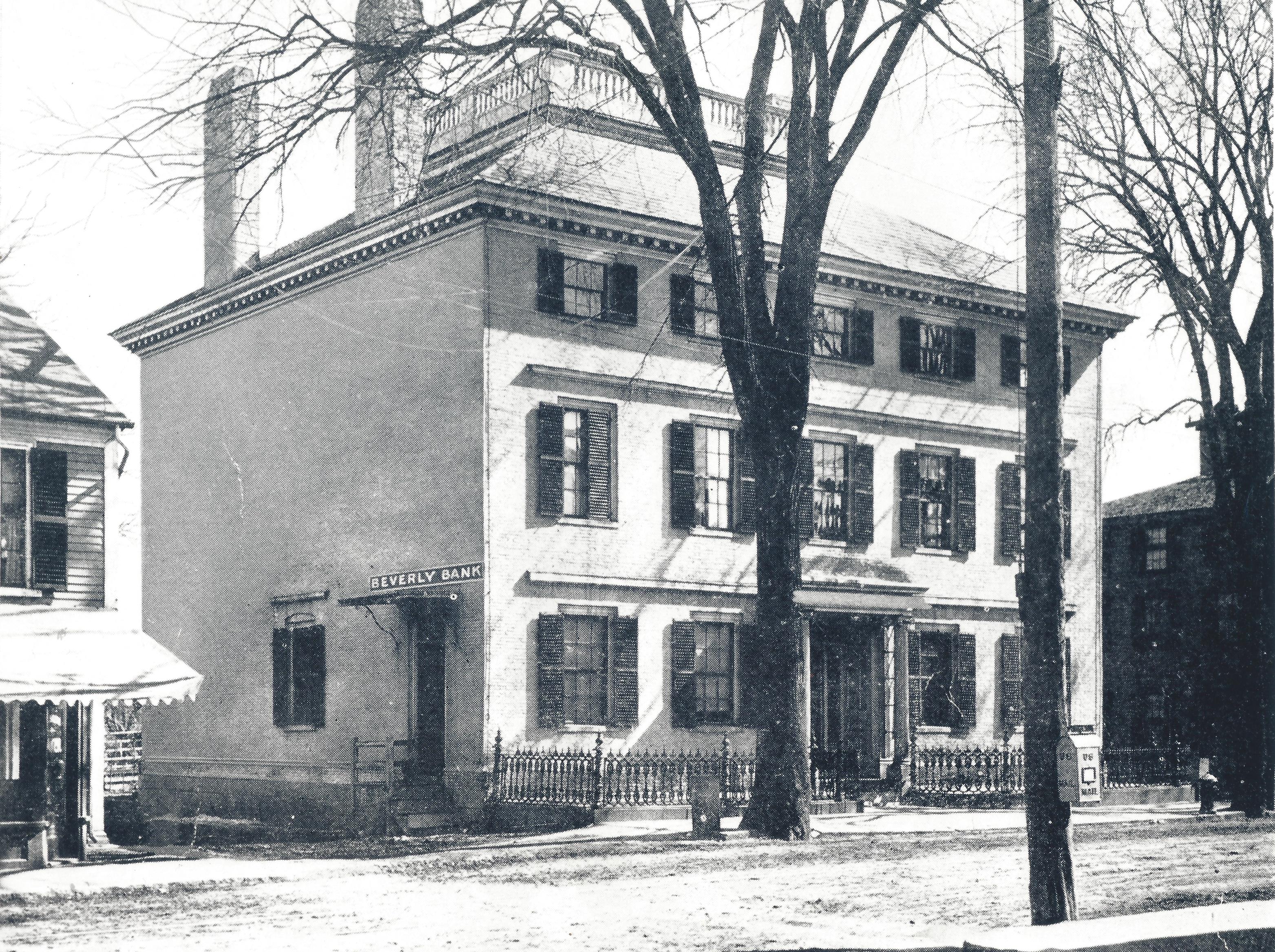
The paintings themselves will be displayed nearby in the John Cabot House, where they'll join Noah Cressy's musket and countless other artifacts in telling Beverly's Revolutionary story. Visitors will be able to experience them for free, part of Historic Beverly's commitment to making history available to all. It's a fitting tribute to the democratic ideals that those Revolutionary battles were fought to defend—and a reminder that the best way to honor the past is to share it generously with the present.
Learn more about Historic Beverly at historicbeverly.net.
Carleton T. Chapman, a painter and illustrator who was commissioned by several publications across his lengthy career to paint depictions of naval events, including the War of 1812 and the Spanish American War.
Benjamin W. Clinedinst, a Paris-educated and award-winning artist elected to the National Academy of Design in 1894.
Hugh W. Ditzler, was a prolific illustrator of magazines and books, including commissioned work displayed in the 1893 Columbian Exposition in Chicago.
Arthur I. Keller, a designer and illustrator for the New York Herald in the mid-1890s. By 1912 Keller had illustrated roughly 150 books, and more than 600 issues of leading magazines had carried his illustrations.
Ernest C. Peixotto, primarily known for his murals and travel literature, with artwork that regularly appeared in Scribner's Magazine.
Thure de Thulstrap, a Swedish-born émigré known as a leading American illustrator with contributions to numerous magazines, including three decades of work for Harper's Weekly. Thulstrup primarily illustrated historical military scenes
Frederick Coffay Yohn, a career military and frontier life painter whose specialty was accuracy of expression. At 23, in 1898, his illustrations were included in part of a touring exhibition, "Story of the Revolution," where he was credited as a star of the show.
Edward Henry Potthast, American Impressionist painter of "Bayonet Charge at the Battle of Camden"
And finally, the mysterious G.A. Shipley of whom little is known.