With a new hurricane season already underway, Texans near the Gulf Coast are once again bracing for potentially challenging months ahead. Climate research released by the National Oceanic and Atmospheric Administration (NOAA) shows 2025 as the second-warmest May on record since NOAA’s records began in 1850. What makes this particularly significant is warmer global temperatures, especially in the oceans, which directly fuel hurricane development and intensity.
This year alone, NOAA forecasts an active season with over 13 named storms predicted, including up to 10 hurricanes, of which somewhere between 3 and 5 could be Category 3 or higher. Heightened predictions of this magnitude are an undeniable reason why residents should prioritize hurricane preparedness today and prevent unnecessary stress and danger tomorrow.
Fortunately, the Houston-Galveston Area Council (H-GAC) serves as a go-to resource for readiness, offering evacuation maps, checklists, and planning tools to help individuals and families stay safe before, during, and after a storm.
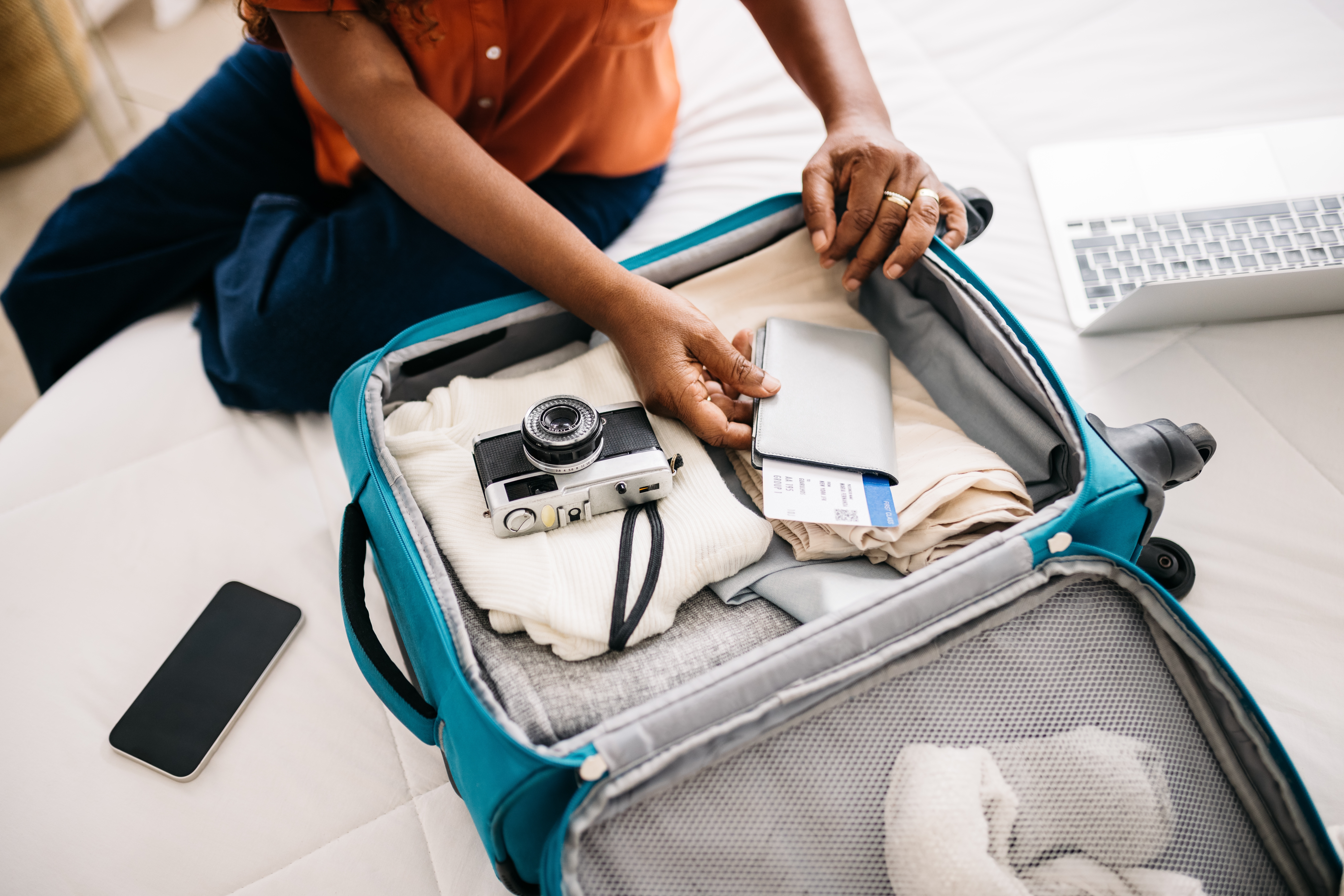
Don’t wait until it’s too late: get ready for hurricane season now


Et harum quidem rerum facilis est et expedita distinctio. Libero tempore, cum soluta nobis est eligendi optio cumque nihil impedit quo minus id quod placeat.
LOREM IPSUM SIT

DISCOVER
History has shown that hurricanes can escalate quickly, and the importance of proactive planning cannot be overstated. Waiting until the last minute can leave you and your loved ones vulnerable, with essential resources quickly becoming scarce as a storm approaches. Stocking emergency supplies well in advance can significantly reduce anxiety and risk during severe weather events.
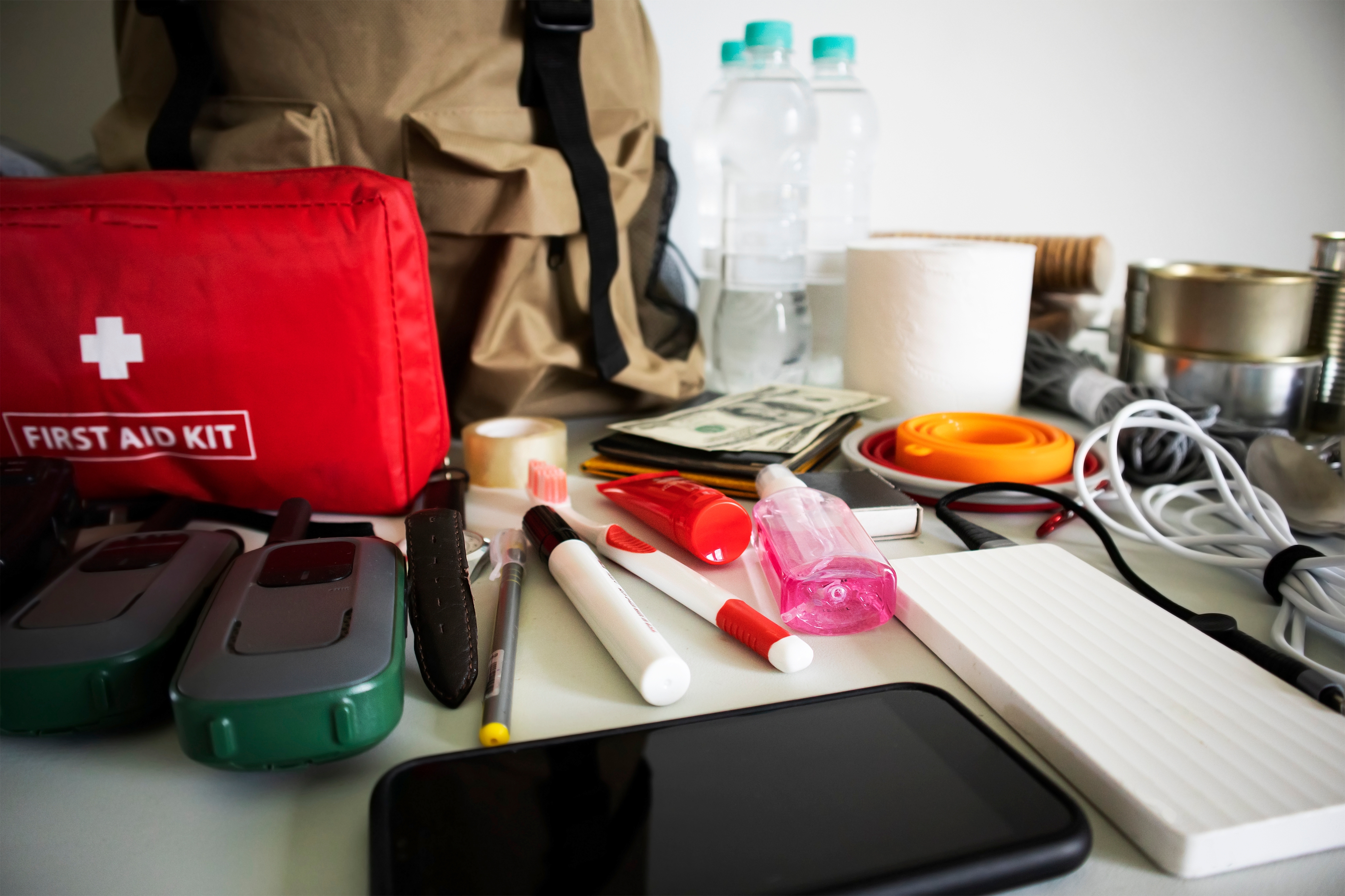
Every household should have a well-stocked emergency kit that includes:
• Nonperishable food (7-day supply per person)
· One gallon of water per person per day (for at least 7 days)
· Disposable plates, bowls, utensils
· First aid kit
· Flashlights and extra batteries
· Portable power banks and phone chargers
· Waterproof matches
· Hand sanitizer and personal hygiene products
· Battery-operated radio
Lorem Ipsum
Lorem ipsum dolor sit amet, consectetur adipiscing elit, sed do eiusmod tempor incididunt ut labore et dolore magna aliqua. Ut enim ad minim veniam, quis nostrud exercitation ullamco laboris nisi ut aliquip ex ea commodo consequat. Duis aute irure dolor in reprehenderit in voluptate velit esse cillum dolore eu fugiat nulla pariatur. Excepteur sint occaecat cupidatat non proident, sunt in culpa qui officia deserunt mollit anim id est laborum.
Create your emergency kit
Special consideration must be given to vulnerable populations as well, including the elderly, individuals with disabilities, pregnant women, and those with chronic medical conditions. These groups often have unique needs that require more detailed planning. Ensure an adequate stock of medical supplies, medications, assistive devices, and any other specialized items needed to help keep them safe.
Lastly, community support plays a crucial role during emergencies. Actively check in on neighbors, friends, and family who may require extra assistance or support. Do not assume that someone else will step in either. Your proactive involvement could be the determining factor in their safety and well-being. In fact, the H-GAC specifically created the website Together Against the Weather to serve as an additional resource for aiding vulnerable populations.
The Houston-Galveston Area Council (H-GAC) and local emergency management offices provide more hurricane preparedness information so you’ll be able to respond quickly when a threatening storm approaches. It’s also wise to stay informed by signing up for local alerts and keeping tabs on announcements from county officials and the National Weather Service.
By Monica Vanover on July 22, 2025
Sponsored by Houston Galveston Area Council


Sponsored by Houston Galveston Area Council
Plan multiple routes: Don’t count on a single path out. Hurricanes are unpredictable. Roads can flood, construction can cause blockages, and storm paths can shift. Prepare two or three alternate routes using highways and backroads.
Familiarize yourself with traffic patterns: Learn how TxDOT uses contra-flow lanes on I-45 and US-59 that allow traffic to flow away from the coast in both directions. Also, keep printed maps handy in case your GPS fails.
Keep your tank full: Fuel shortages are common before storms. Always keep your gas tank at least half full during hurricane season and top it off early if a storm approaches.
Evacuate promptly when ordered: Evacuation zones are cleared in stages. If you delay, you risk getting trapped in worsening weather. Leaving when your zone is called helps traffic flow and protects everyone’s safety. If you are not in the evacuation zone currently being called, remain in place to allow a smoother evacuation for those at greater risk.
When a storm is near
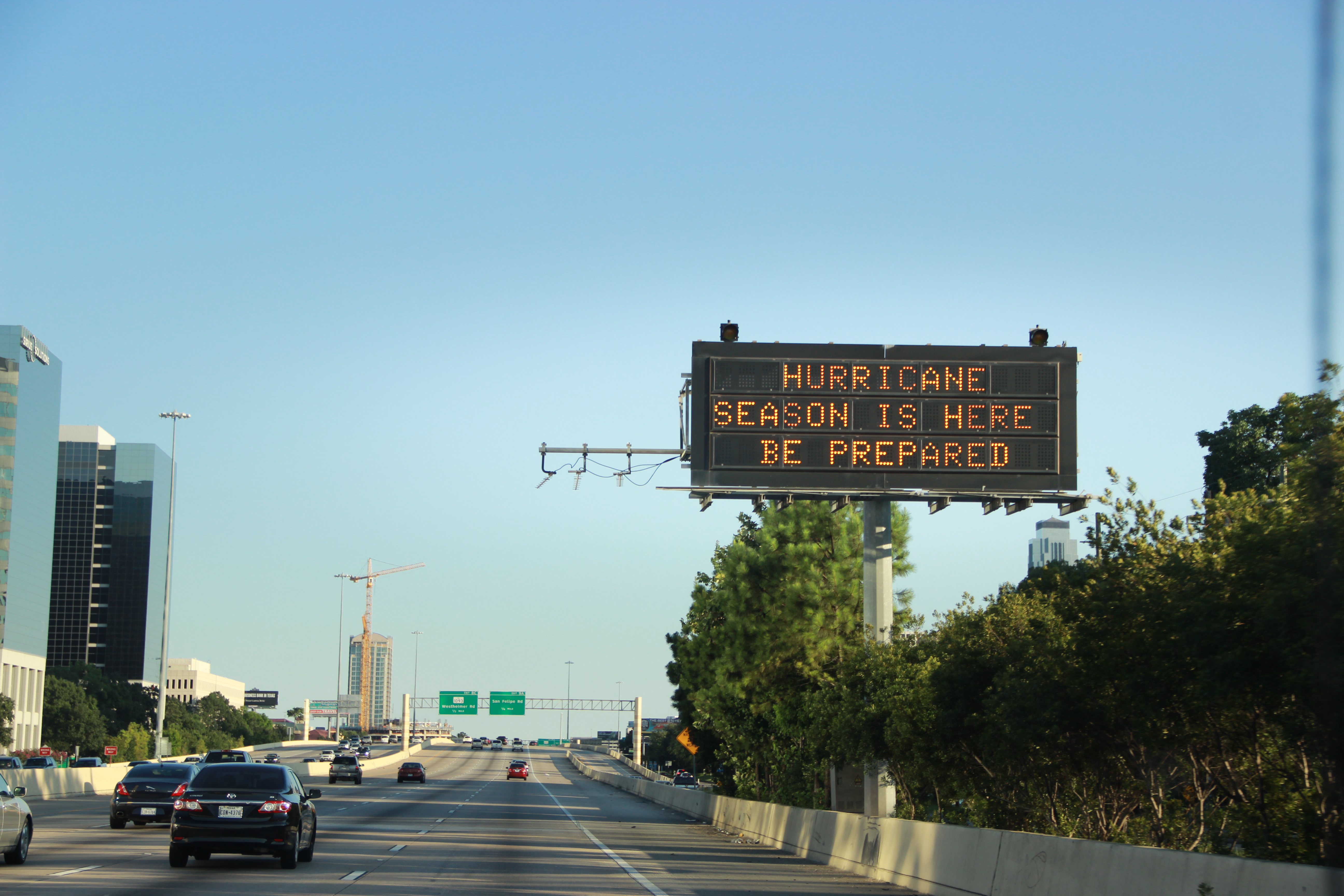
Having a solid evacuation plan can mitigate the risks associated
with hurricanes.
Having a solid evacuation plan
can mitigate the risks associated with hurricanes.

Please revisit on a desktop device!
This experience is not yet optimized for your mobile screen.
Don’t overlook personal items
When preparing for weather-based emergencies, it’s also crucial not to overlook vital personal items that can significantly impact your family’s comfort and safety during and after the storm.
For example, ensure you have an ample supply of extra medications and copies of prescriptions. Pharmacies may close or become inaccessible during severe weather, leaving you without necessary treatments. Having an extra supply on hand ensures continuity of care during already challenging circumstances.
If your household includes babies or young children, stock up on essential baby supplies. Items like diapers, baby formula, and wipes are often among the first to run out when a storm approaches. Ensuring you have enough of these supplies can prevent unnecessary distress and help maintain children’s health during disruptions.
Securing important documents is another critical yet frequently overlooked aspect of disaster preparedness. Insurance policies, identification papers, birth certificates, custody agreements, and medical records should be stored safely in waterproof containers. This precaution will help expedite recovery efforts in the aftermath of the storm.
Pet owners also need to make preparations to safeguard their animals. Pack sufficient pet necessities, including food, medications, leashes, and a kennel or carrier. It’s also wise to have your pet’s microchip information readily available in case you become separated during the chaos of evacuation or relocation.
Considerations for the vulnerable population
Plan your evacuation route early
When a major storm takes aim at the Gulf Coast, knowing when and how to evacuate is imperative. For residents in the Houston-Galveston region, having a well-thought-out evacuation plan can be the difference between safety and chaos. Some local residents might recall Hurricane Rita in 2005, which remains a stark reminder of what can happen when evacuation efforts are rushed and disorganized.
Hurricane preparedness is a shared responsibility that starts with each of us. For those living in the Houston-Galveston region, early action is critical to safeguarding your home, your family, and your neighbors. By assembling a thorough emergency kit, planning evacuation routes ahead of time, and staying informed, we can reduce the dangers posed by hurricanes and strengthen our community’s resilience.
For up-to-date resources, checklists, and evacuation maps, visit the Houston-Galveston Area Council's website on Hurricane Evacuation Planning, along with TogetherAgainstTheWeather.com.

As nearly three million Texans attempted to flee Rita, the gridlock on roadways stretched for hundreds of miles and lasted for up to 20 hours in some cases. Tragically, more than 100 people died as a result of the evacuation itself. Worst of all, those deaths could have been avoided with better planning and coordination.
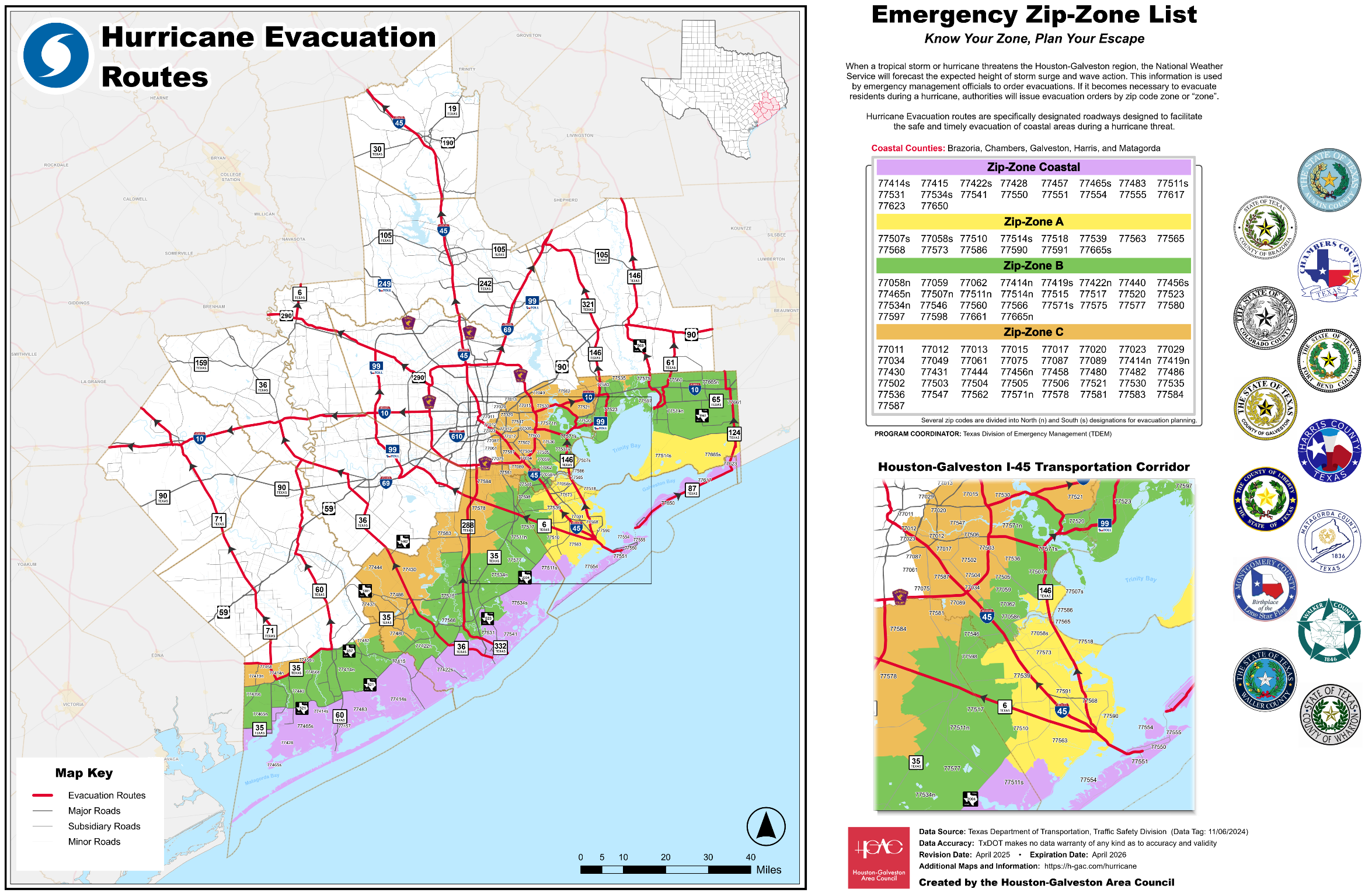
In the two decades since, emergency systems and infrastructure have dramatically improved, but their success still depends on individuals taking responsibility. One of the first and most important steps is to determine your designated evacuation zone. These zones are determined based on factors like storm surge risk and proximity to the coast, and they dictate the order in which residents are asked to evacuate.
Here are a few tips for preparing for potential evacuation:
Lorem ipsum dolor sit amet, consectetur adipiscing elit, sed do eiusmod tempor incididunt ut labore et dolore magna aliqua. Ut enim ad minim veniam, quis nostrud exercitation ullamco laboris nisi ut aliquip ex ea commodo consequat. Duis aute irure dolor in reprehenderit in voluptate velit esse cillum dolore eu fugiat nulla pariatur. Excepteur sint occaecat cupidatat non proident, sunt in culpa qui officia deserunt mollit anim id est laborum.
Lorem Ipsum
Special consideration must be given to vulnerable populations as well, including the elderly, individuals with disabilities, pregnant women, and those with chronic medical conditions. These groups often have unique needs that require more detailed planning. Ensure an adequate stock of medical supplies, medications, assistive devices, and any other specialized items needed to help keep them safe.
Lastly, community support plays a crucial role during emergencies. Actively check in on neighbors, friends, and family who may require extra assistance or support. Do not assume that someone else will step in either. Your proactive involvement could be the determining factor in their safety and well-being. In fact, the H-GAC specifically created the website Together Against the Weather to serve as an additional resource for aiding vulnerable populations.
The Houston-Galveston Area Council (H-GAC) and local emergency management offices provide more hurricane preparedness information so you’ll be able to respond quickly when a threatening storm approaches. It’s also wise to stay informed by signing up for local alerts and keeping tabs on announcements from county officials and the National Weather Service.