Understanding Stroke�
Sponsored by Memorial Hermann
By Monica Vanover on May 1, 2025

May is National Stroke Awareness Month. According to the Centers for Disease Control and Prevention, nearly 800,000 Americans suffer a stroke each year, which amounts to one stroke every 40 seconds. Dr. Ninan, a Clinical Neurophysiologist who is double board-certified in neurology and clinical neurophysiology, talks about the importance of stroke prevention and treatment.
�Q: What exactly is a stroke?
�A: A stroke happens when the blood flow to part of the brain is stopped or slowed down, or there is sudden bleeding in the brain. There are two types: ischemic stroke, which happens when a blockage cuts off blood flow, and hemorrhagic stroke, which occurs when there is sudden bleeding in the brain. In an ischemic stroke, brain cells start to die
Knowing the signs of a stroke and what to do can save lives and reduce the damage strokes can cause."
"
— Rony Ninan, M.D.
When to talk to your doctor about your concerns

Time is crucial in the treatment of a stroke because the longer blood flow is blocked to the brain, the greater the damage."
— Rony Ninan, M.D.
"
Rony Ninan, M.D.
Dr. Rony Ninan is a Neurologist and Outpatient Medical Director of Current Neurology Solutions, affiliated with Memorial Hermann Mischer Neuroscience Associates.
because they can't get oxygen and nutrients from the blood. With a hemorrhagic stroke, the leaked blood puts pressure on brain cells, causing damage. Understanding strokes, their causes, and how to prevent them is very important.
Q: Why is it important to understand strokes?
A: Stroke is a medical emergency and the leading cause of long-term disability in adults. It is the fifth leading cause of death and often strikes without warning. Patients recount doing seemingly normal daily activities and then suddenly experience numbness, weakness or even an inability to speak. It manifests suddenly, which is why it’s important to know the symptoms and receive urgent medical attention.
Q: What are some of the long-term effects a stroke can cause?
�A: A stroke can cause serious problems, like making it hard to talk, move, or think, and can even lead to death. Knowing the signs of a stroke and what to do can save lives and reduce the damage strokes can cause.
Q: Are there risk factors we can’t control?
A: Yes. For example, you can’t change a family history of stroke or certain genetic factors. However, many stroke risks are related to lifestyle and can be controlled.
Q: What are the main controllable risk factors?
A: The factors we can change are:
•
•
•
•
•
•
•
Q: How can people lower their risk of stroke?
�A: Living a healthy lifestyle can lower the risk of having a stroke. Eating fruits, vegetables, whole grains, and lean meat helps keep your weight, cholesterol, and blood pressure under control. Moving your body at least 30 minutes a day helps your heart stay healthy. Quitting smoking lowers stroke risk a lot. Going to the doctor to keep your blood pressure, diabetes, and cholesterol in check is important. All of these lifestyle changes are essential to reducing your stroke risk and staying healthy.
Q: What is the best way to recognize the signs of a stroke?
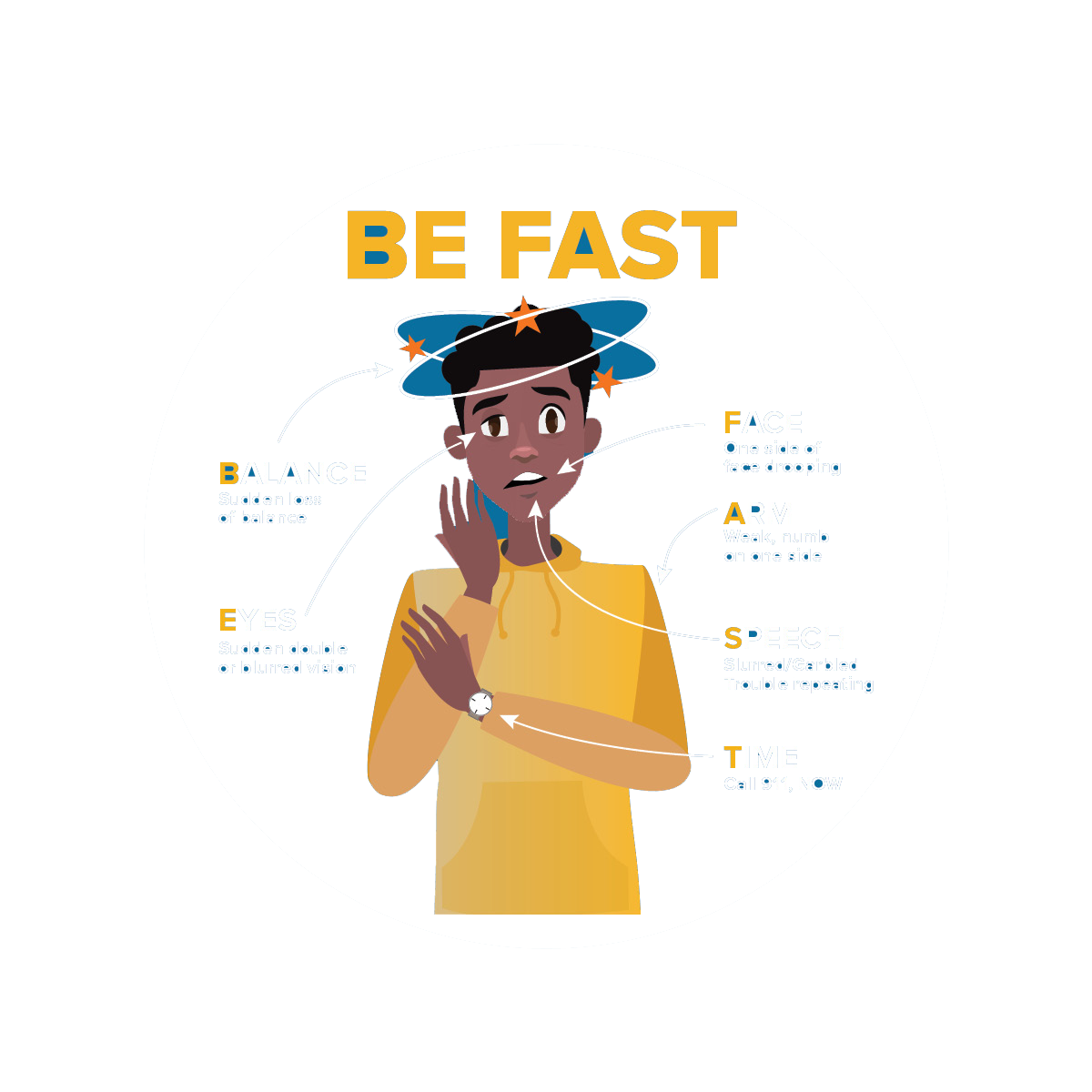
A: Recognizing stroke signs promptly can make a significant difference. The acronym BE FAST helps us remember the signs:
Q: Why is acting fast so important?
�A: Time is crucial in the treatment of a stroke because the longer blood flow is blocked to the brain, the greater the damage. Most strokes are caused by a blocked artery in the brain, and we can get rid of that blockage with medication. Immediate treatment can help minimize the effects of a stroke and improve the chances of recovery. The faster we give that medicine after the symptoms start, the more likely it is that the patient is going to recover.
Q: What’s the main takeaway?
A: Understanding how a stroke happens, knowing the risk factors, adopting healthy habits, and recognizing the signs can save lives and help people recover better. Every step taken towards a healthier lifestyle is a step towards preventing strokes and ensuring a better quality of life.
As Houston’s leader in stroke care, Memorial Hermann Mischer Neurosciences manages all types of strokes and uses advanced technology to quickly diagnose and treat complex stroke patients. To learn more, visit memorialhermann.org/stroke.

High Blood Pressure: This is the top cause of strokes. Keeping blood pressure under control is a must.�Heart Disease: Problems like atrial fibrillation can make blood clots that cause strokes.�Diabetes: It can damage blood vessels and raise stroke risk.�High Cholesterol: It can block arteries and stop blood flow.�Smoking: Damages blood vessels and raises stroke risk.�Obesity: Being overweight raises the chances of having high blood pressure, diabetes, and heart disease.�Not Enough Exercise: Not being active can lead to weight gain, diabetes, and high blood pressure.
B - Balance: Sudden loss of balance or coordination.�E - Eyes: Trouble seeing from one or both eyes.�F - Face: One side of the face drooping or an uneven smile.�A - Arms: Weakness in one arm or not being able to raise both arms.�S - Speech: Slurred speech or trouble speaking.�T - Time: Time to call 911 right away.