Article created in partnership with Hearst StoryStudio.
In New York City, nonprofits keep things running in ways most people only notice when they’re missing: the food pantry that fills the gap before rent is due, the arts organization that keeps a corridor lit after dark, the legal clinic that helps a family stay housed, or the youth program that keeps a school-week from sliding off the rails.
Right now, many nonprofit organizations are being asked to stretch further while funding feels less predictable and needs keep rising across the five boroughs. In a moment like this, the difference between simply surviving and staying strong often comes down to whether nonprofit leaders have timely information, practical tools, and a wider network to lean on, especially when the challenges aren’t confined to any one mission or neighborhood.


Since 1984, Nonprofit New York (NPNY) has worked in the space between individual organizations and the broader conditions they all share—policy and regulatory shifts, public funding realities, workforce pressures, and the constant need to do more with less. It’s a membership organization and a sector intermediary: a place where nonprofits, businesses, and funding partners turn for practical tools, shared learning, and a clearer read on what’s changing around them. For the nonprofit sector across the five boroughs, NPNY is the go-to resource and the collective voice.
Nonprofit New York organizes its work through four lanes—advocacy, capacity building, convening, and research—then applies those approaches across the key management areas nonprofit leaders have to manage day to day: advocacy, communications, equity, finance, fundraising, governance, programs, talent, and technology. The framework reflects what leaders already know: even the strongest mission can get stalled by a broken hiring pipeline, a compliance question, or a communications moment that demands speed and clarity.
At its core, NPNY’s work is about building a well-resourced, united nonprofit sector across the five boroughs; not only helping individual organizations get sharper and more stable, but also developing the coherence and collective strength the moment calls for. In other words, a relentless, collective force for good.
—Jacqueline M. Ebanks,
Nonprofit New York President & CEO


Equity is called out as a distinct focus, but it also runs through the rest of the key areas of nonprofit management framework. Decisions in advocacy, finance, fundraising, talent, governance, budgeting, communications, technology, and program design shape who is represented, who has access, and who benefits. That’s why equity can’t be treated as a standalone topic—it’s embedded in day-to-day management decisions that all nonprofit organizations make. And research is one way Nonprofit New York makes those patterns easier to see and act on, turning lived experience into shared, usable insight.
Consider one pattern the research has surfaced: in its 2023 report In Every County, Across All Budget Sizes, Nonprofit New York and research partners found that 64% of nonprofit CEOs were White compared to 39% of the area’s population, while 36% of nonprofit CEOs were BIPOC compared to 61% of the population. That gap doesn’t close on its own; it closes through the kind of deliberate, embedded work the framework is designed to support.
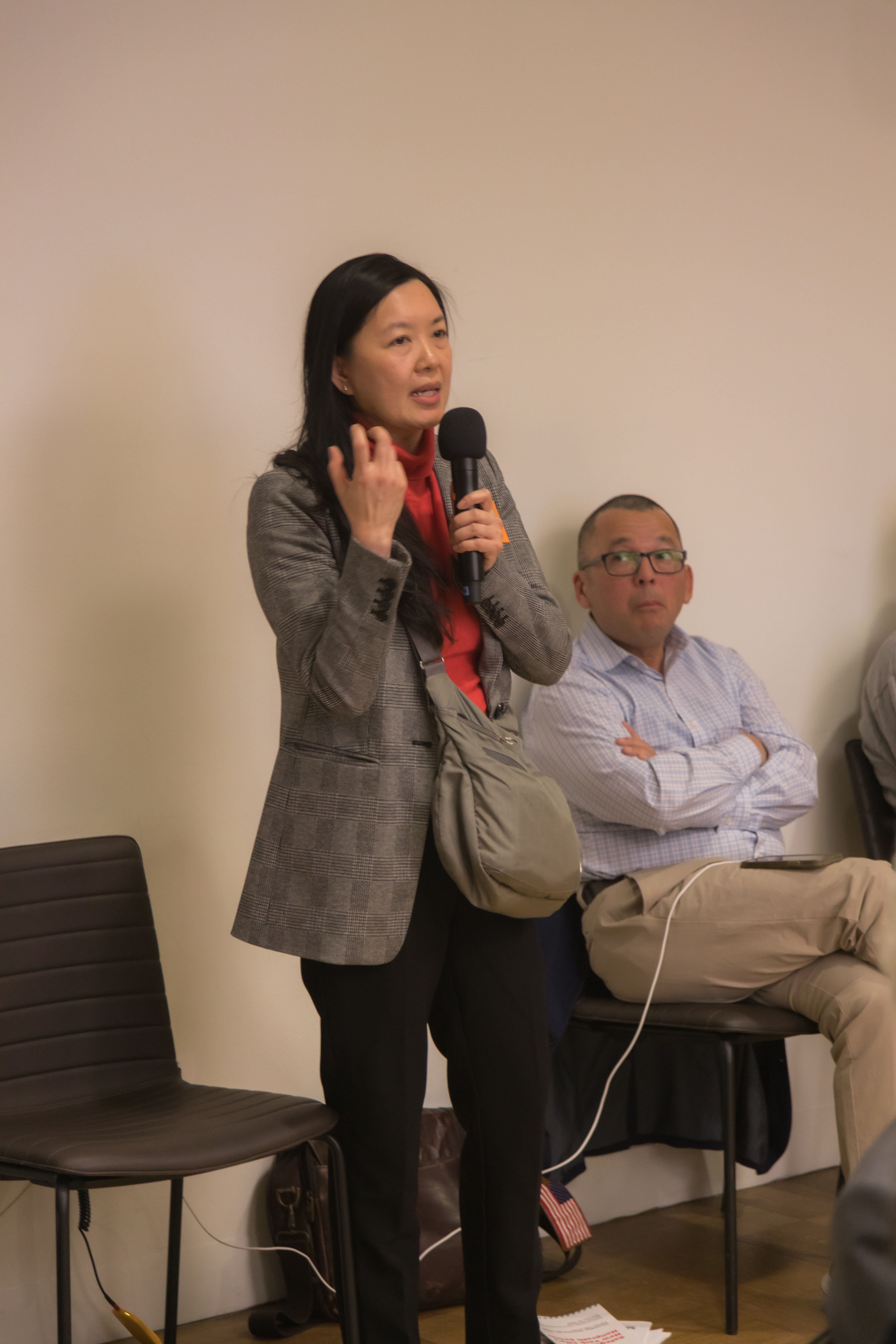
When the environment shifts fast, having somewhere to align matters—not just for information sharing, but for the kind of community and movement building that turns individual organizations into a collective force. Nonprofit New York’s convening role was visible in the Safeguarding New York City’s Nonprofit Sector forum, which brought together more than 200 participants in January 2025 for a rapid-response conversation—surfacing emergent risks, sharing practical guidance, and mapping out how nonprofits can advocate alongside business and government stakeholders.
The same connective energy shows up at scale in the annual conference, a full-day gathering of roughly 1,000 nonprofit professionals most recently held under the theme “Onward … Together." It’s a sentiment NPNY Board Chair Lisa Pilar Cowan captures directly: “We think our best strategy is to stand together, fight back together, comfort one another, and celebrate each other.”
—Sophie Silverman, Nonprofit New York Membership Manager

In the first 30–60 days, membership helps nonprofits clear the kinds of backlogged work that builds up when teams are already stretched. Members can plug into the Knowledge Center for ready-to-use toolkits, templates, and guides, and reach the Helpline with pressing questions. When the question is “who can we trust to help?”, the Referral Center offers a vetted starting point, connecting nonprofits with providers across core functions.
For HR and compliance, members can access HR Advance (powered by Mineral), including training resources and a “smart” employee handbook tool designed to help organizations stay aligned with city, state, and federal guidelines. One member noted the platform “saved them 40 hours of work and $18,000” by reducing back-and-forth with outside consultants.
Sponsored by
Practical Tools, Collective Power, Real Impact
The City’s Nonprofit Connector
Nonprofit New York exists to help make possible a strong, connected, and effective nonprofit sector that can serve New Yorkers and advocate for the communities that depend on it. That matters right now because nonprofits are being asked to do more at a time when funding is unstable and the needs across New York City are only growing.
Equity, Woven Through the Work
The Practical Side of Membership
A Place to Compare Notes and Move Faster
If you are succeeding in your mission, we are succeeding in ours.

A Stronger Sector
Starts Here

Join the Movement
In New York, nonprofits are part of how the city functions. But when pressure rises across the board, no single organization can face it alone. That’s where an intermediary matters, working alongside government, funders, and private-sector partners who help shape what’s possible. Rich Leimsider, NPNY Board Member and Director of the AI for Nonprofits Sprint and Entrepreneur-in-Residence at the Fund for the City of New York, frames the need plainly: “No single nonprofit can fix the structural problems we all face—underfunding, workforce crises, regulatory complexity. Nonprofit New York works on the ecosystem itself.”
How the Sector Moves Together
Beyond the day-to-day tools, membership includes longer-term infrastructure, too. The E.A.R.N. 403(b) Plan is designed to make retirement benefits more accessible in a sector that often can’t offer them. Structured as a pooled employer plan, the more organizations that participate, the more affordable it becomes for everyone. The throughline is practicality: support that meets nonprofits where they are.
Nonprofit New York Membership Manager Sophie Silverman sums it up: “Nonprofit New York membership connects your organization with a community of extraordinary nonprofits and provides concrete tools and resources to help your organization excel.” They add, “If you are succeeding in your mission, we are succeeding in ours.”

Nonprofit New York is more than a programming provider—membership means plugging into a community, joining an advocacy effort, and adding your organization’s weight to a collective force for the sector. It’s a way to stay connected to the wider sector—what’s shifting in policy and where collective advocacy is headed—while also accessing practical support. For Wayne Francis, Chief Operating Officer of JASA and a longtime member, the value is straightforward: “Nonprofit New York offers multiple, relevant and cutting-edge resources, information and strategies to keep nonprofits on top of the issues they face every day.”
Funding support is the next layer of that same idea. Amar Rajwani, Nonprofit New York’s Board Vice Chair, sees it as an investment in sector-wide capacity: “By supporting Nonprofit New York—whether as a funder or a member—you’re supporting and strengthening thousands of organizations. You’re building the capacity, confidence, and collective voice of nonprofits across the city, ultimately translating into better outcomes for New Yorkers most in need.”
Join the Network. Sustain What Works.
If New York City’s nonprofit sector is going to stay strong in a volatile moment, it will take more than individual organizations pushing through on grit alone. It will take shared infrastructure, shared information, and a collective voice that can advocate for what communities need.
This kind of strength gets built together—over time, and on purpose. To learn more, become a member, enroll in the E.A.R.N. 403(b) Plan, attend our annual conference, or support the work, visit nonprofitnewyork.org.

I’d encourage readers to join Nonprofit New York as members—and for those who can—to support our work so we can keep organizing, advocating, and building the collective strength this moment demands.
You can see that work in efforts like #WHY15, when Nonprofit New York organized a sector-wide response to proposed city budget cuts—pushing for transparency and meaningful engagement, and making a simple argument: you can’t make decisions that affect nonprofits without nonprofits in the room. It’s also visible when Nonprofit New York collaborates on advocacy efforts led by other nonprofits such as the #JustPay campaign, which focuses on stabilizing pay for the human services workforce that delivers essential care under city and state contracts. Efforts like these reflect a core conviction: a stronger nonprofit sector isn’t only about strong individual organizations. It’s about having a backbone and a voice that helps those organizations move together.